The Fight Against the Ambler Road in Alaska Is Far From Over
Despite a wave of recent victories for project proponents, numerous obstacles remain
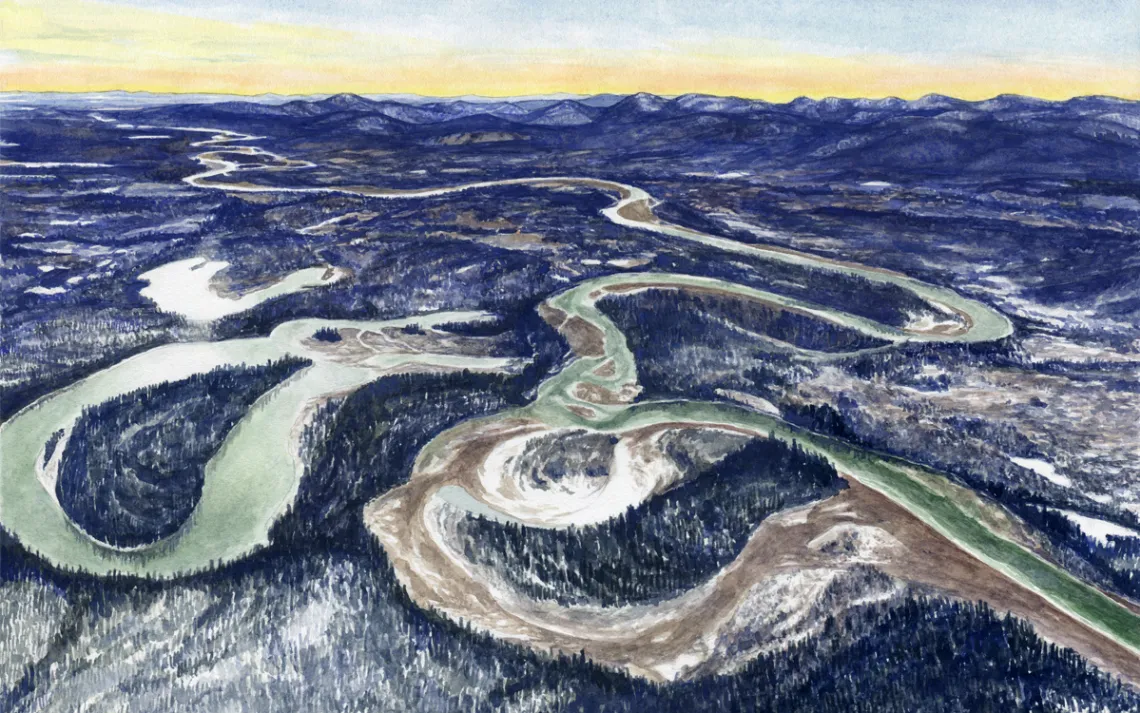
The State of Alaska wants to build a 211-mile road across the southern toe of the Brooks Range, currently one of the largest remaining roadless wildlands on Earth. The so-called Ambler Access Project would enable a series of mines for copper and other metals. President Donald Trump and other road proponents are acting like it’s a sure thing. But is it?
In October, Trump reversed a 2024 federal decision to reject the Ambler Road. His administration then reissued the project’s permits under an obscure provision of the 1980 law that created most of Alaska’s national parks and wildlife refuges. The administration also bought a 10 percent stake in a Canadian mining company that’s working claims along the proposed route, and even announced that it may help finance road construction—putting the federal government in the position of both developer and regulator.
Meanwhile, the Trump administration lifted key protections from 2.1 million acres of Bureau of Land Management land along the Dalton Highway north of the Yukon River. The move paves the way to transfer most of that land to the state of Alaska, including the portion that the first 19 miles of the Ambler Road would cross. That would negate the need for one of the permits the Feds just reissued, effectively cutting off one major point of leverage that activists have used to fight the project.
The Alaska Industrial Development and Export Authority (AIDEA)—the quasi-governmental state economic development agency seeking to build the road—even attempted to start work on the project. In December, it quietly issued a call to contractors to submit bids for clearcutting a 20-foot-wide corridor for about 205 miles of the proposed right of way, starting as early as this February. Then, it quietly canceled the request.
“It appears that the administration is taking a real belt-and-suspenders approach,” says Jim Adams, senior regional director of the Alaska office of the National Parks Conservation Association. “Frankly, they want people to think this is a done deal. They don't want people to have time to argue or fight back.”
But the fight against the Ambler Road persists, and plenty of obstacles—not least of which is the administration’s habit of playing fast and loose with the law—still stand in the project’s path.

*
In 2020, when the first Trump administration issued permits for the road, a nonprofit consortium of tribes called the Tanana Chiefs Conference (TCC) and a handful of tribal governments filed one lawsuit, and a coalition of environmental groups filed another. Each challenged the project’s rushed and haphazard environmental review, and both are still active. Among other things, the suits flag the administration’s failure to adequately consult with tribes or consider the road’s sweeping impacts to declining caribou herds and salmon runs, as well as staples like sheefish and whitefish. Dozens of Alaska Native communities in the region rely on these for nutritional and cultural sustenance.
After Joe Biden was elected president in 2021, his Interior Department asked for a remand from the court, pausing the lawsuits to address those concerns. Ultimately, after extensive additional tribal and public input, the Interior canceled the permits in 2024 on the grounds that the Ambler Road would cause extensive, irreparable harm.
Now that the Trump administration has reissued the permits based on the first Trump administration’s original analysis, those lawsuits are back in play. In January, Trustees for Alaska, the nonprofit firm representing groups in the environmental lawsuit, filed a supplemental complaint to account for recent developments, including the use of an appeals process under the Alaska National Interest Lands Conservation Act to reissue the permits. On March 30, TCC and tribes did the same. Among other things, the new complaints charge that the president exceeded his authority by forcing federal agencies to ignore their legal obligations to publicly assess impacts to the environment and historic sites and artifacts.
“This (appeals process) has never been used before, but it's important to note that it doesn't override all other laws,” says Trustees’ senior staff attorney Bridget Psarianos. The court has not yet decided whether it will allow the 2020 cases to proceed with amendments. But even if it doesn’t, Psarianos says, Trustees could simply file a new lawsuit.
On March 10, on behalf of 10 state and national environmental groups, Trustees also challenged the Trump administration’s decision to remove protections from BLM land in the Dalton Highway corridor. Alaska is entitled to select 5 million more acres of federal land to complete the allotment awarded by its statehood act. Until recently, the federal government has consistently protected land around the Dalton Highway and the Trans-Alaska Pipeline System that carries oil alongside it with two public land orders—PLO 5150 and PLO 5180. These orders prevented the lands from being transferred out of federal ownership and prohibited development like mining and drilling that would interfere with the nationally significant utility corridor. They also conserved important wildlife habitat, recreational and scenic areas, and hunting grounds. Now that the BLM has lifted those orders, the state anticipates receiving nearly 1.5 million acres from the area.
The new lawsuit flags a near-total lack of legally required public process to account for and receive feedback on the ramifications of that transfer. The suit also notes the administration’s failure to adequately consider the impacts to the mostly Indigenous subsistence hunters and fishers who live in the state’s vast rural North, who have priority access to wildlife on federal lands, but lose it on state lands under Alaska’s constitution.
*
Tribal opposition to the project and its potential consequences appears to remain strong, beyond just the recent lawsuit amendment. At TCC’s annual convention in March, a resolution brought by Evansville Village and the Native Village of Tanana for TCC to oppose two massive mineral exploration projects along the proposed road’s eastern alignment passed with the support of the vast majority of tribal delegates. There are other ways to get jobs for people than tearing up ancestral land, Frank Thompson, first chief of the Evansville Tribe, told the crowd as the discussion became an impromptu forum for concerns about the Ambler Road.
According to NPCA Arctic and Interior Alaska campaign director Naawéiyaa Tagaban, a few hundred attendees stopped by his table at the convention to sign letters asking the state legislature not to fund the state agency that wants to build the road. Tagaban also gave out 500 “No Road to Ambler” hoodies.
Other activists, like John Gaedeke of the Brooks Range Council, are mobilizing around the Alaska governor’s race this fall. Current governor Mike Dunleavy, a major proponent of the Ambler Road and other Alaska megaprojects, is term-limited, leaving an opening for a candidate who could steer in a different direction. Native Movement, a movement-capacity building group that works with those who want to fight the road, meanwhile, continues to train organizers from affected communities.
“They leave us with no other option but to stand up continuously to stop these industries,” says Native Movement executive director Enei Begaye.
Those who are doing so and doing so loudly “are trying to look generations into the future, and provide for their children, grandchildren, great-grandchildren, and great-great-great-grandchildren,” adds April Monroe, a community organizer deeply involved in the Ambler Road fight.
Beyond the opposition movement, the road’s astronomical costs remain one of its largest obstacles. And those are likely to be far higher than official estimates have yet accounted for, according to a report commissioned by Defend Brooks Range—a coalition of tribes, community organizations, and environmental nonprofits that mobilizes resistance to the road.
When the federal government’s official cost estimates for road construction, maintenance, and reclamation are adjusted for inflation, they come to at least $1.48 billion. If bond interest from financing is included, the number surpasses $2 billion. And that’s without knowing the true costs of necessary mitigation on the 11 major rivers and thousands of streams the road would cross, since fisheries data for the route is still largely lacking, writes report author Lois Epstein, of LNE Engineering and Policy. It also doesn’t account for regionally high labor costs and other factors.
Compare those figures with the $1.1 billion the state anticipates receiving from the project in revenue from mining, license tax, corporate income tax royalties, and claim rent.
With climate change driving extreme weather and permafrost melt across the Arctic, the costs of operating there are likely to grow, even as cheaper copper sources and alternative materials for some critical minerals come online. Cobalt, for example, another mineral present in claims along the proposed road, is rapidly losing favor as a component in electric car batteries.
“So, what are we even doing this for?” asks Aaron Mintzes, deputy policy director and senior policy counsel for Earthworks, a mining reform advocacy group and plaintiff in the environmental lawsuit against the road. “We're going to have much easier, cheaper alternative sources for these metals than this risky, expensive boondoggle of a project.”