The Gap Between Climate Targets and Fossil Fuel Production Is Wider Than Ever
The world’s top greenhouse-gas-emitting countries are failing to take a path that avoids catastrophic warming
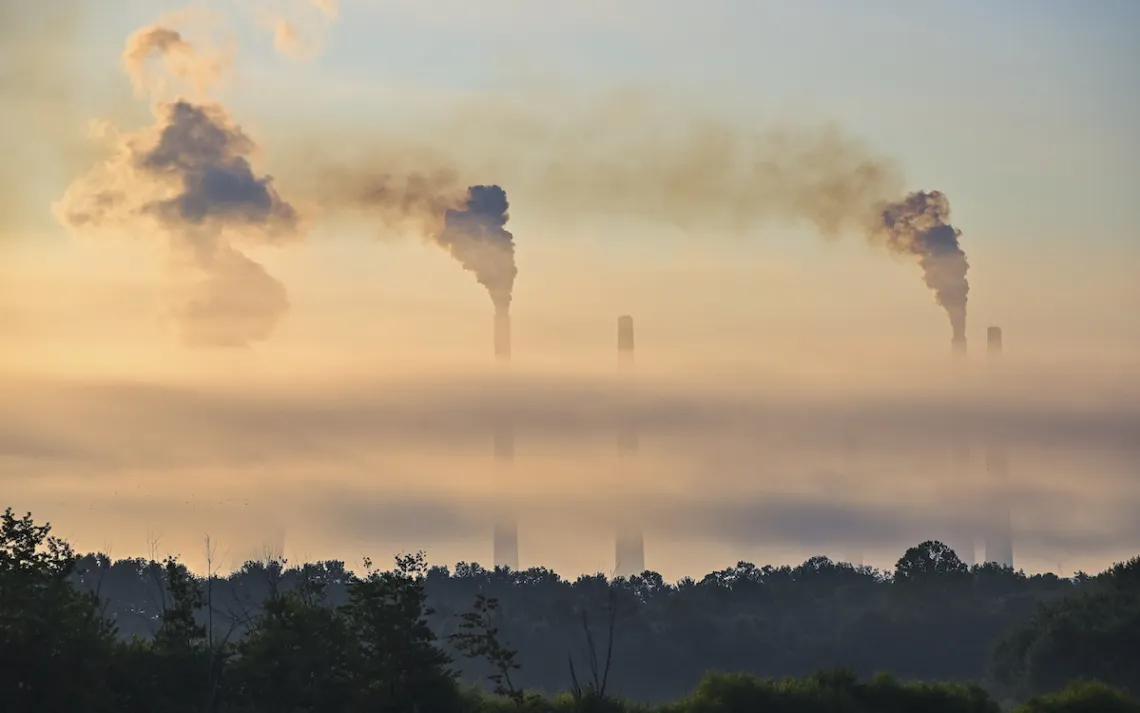
Pollution rises from the stacks of the Miami Fort Power Plant along the Ohio River in Cincinnati. | Photo by Jason Whitman/NurPhoto/AP
The world’s top fossil-fuel-producing countries are planning to unleash levels of coal, oil, and gas by 2030 that are more than double the levels consistent with limiting global warming to 1.5°C, according to the latest Production Gap Report—an assessment of whether industrial nations are on track to meet climate targets enshrined in the Paris Agreement.
The report—a peer-reviewed study issued in collaboration with the Stockholm Environment Institute (SEI) and other leading climate institutions—shows that the gap between fossil fuel production and climate targets is wider than ever.
“Not only is there a production gap, but it is close to 10 percent higher than what we had projected in 2023,” Emily Ghosh, director of the equitable transitions program at SEI’s US center and a coordinating lead author, told Sierra. “There is an urgent need to address this gap and rapidly reduce fossil fuel production to the lowest levels possible.”
“Countries are now collectively planning even more fossil fuel production than two years ago,” added Derik Broekhoff, climate policy program director at SEI US and another coordinating lead author of the report.
The report finds that planned fossil fuel production by 2030 is more than 120 percent higher than it would need to be to limit global warming to 1.5°C, and 77 percent higher than is consistent with limiting warming to 2°C. In the previous report, released in 2023, planned production was 110 percent more than it would need to be to achieve the 1.5°C, and 69 percent above the 2°C pathway.
The analysis focuses on 20 countries that together account for over 80 percent of global fossil fuel production. However, just three of those countries, China, the United States, and Russia, accounted for over half the greenhouse gas emissions in 2022—a stark reminder that the responsibility to act on climate change lies in the hands of a few.
None of those three countries are living up to that responsibility, according to the report. The opposite, in fact, is the case.
“The United States offers the starkest case of a country recommitting to fossil fuels.”
The United States, already the world’s largest oil and gas producer before Donald Trump was reelected president, is aggressively doubling down on fossil fuels while abandoning international climate commitments (Trump immediately withdrew the US from the Paris Agreement on his first day back in office) and rescinding environmental protections and regulations at home (including a pursuit to torpedo the endangerment finding). The Trump administration has disbanded the working group tasked with producing the US National Climate Assessment, scrubbed government websites of previously published climate reports, and even moved, via the Environmental Protection Agency, to stop requiring greenhouse-gas-polluting facilities to report their emissions to the government.
“The United States offers the starkest case of a country recommitting to fossil fuels, with plans to scale up its oil and gas production, arrest the decline of coal, slow clean energy development and electrification, and turn away from international cooperation on energy and climate change,” the report states.
Since the 2023 Production Gap Report, US projections for oil production by 2030 have risen by 9 percent, with gas production by 2030 forecast to rise by 12 percent. But those projections could already be out of date: The authors of the new report point out that these projections are based on the Energy Information Administration’s latest outlook, issued earlier this year, and therefore do not account for the Trump administration’s announced plans and policies to unleash more fossil fuels.
The Trump administration is not only pushing to ramp up fossil fuel production domestically, but it is also trying to force a global realignment back toward greenhouse-gas-emitting sources of energy. Energy Secretary Chris Wright, a former gas company executive, recently was in Europe, where he lobbied leaders to support US oil and gas and particularly US LNG exports.
“If the Trump administration does manage to make its rhetoric into reality, then that on its own will increase the production gap and continue to send us in the wrong direction,” said Neil Grant, a senior climate and energy analyst at Climate Analytics.
China and Russia are following similar paths. China continues to dominate in coal production, though it projects a slower growth pace. Russia, on the other hand, projects its coal production to grow by 20 percent through 2030, with gas production spiking by 25 percent from 2024 to 2030.
The Production Gap Report comes as many government representatives are meeting this week at UN headquarters in New York City for the UN General Assembly, where Trump is scheduled to speak today. The UNGA High-Level Week also coincides with Climate Week NYC and takes place just six weeks ahead of the next UN climate summit, COP30, which will be held in Belem, Brazil, in November.
“Political leaders already know the solutions for ending fossil fuel dependence and know that further delay is indefensible—all that is required is political courage.”
“For generations, addressing emissions was often framed as a false choice between protecting the environment or protecting economic progress or growth, but the truth is we can do both at the same time," Loren Blackford, executive director of the Sierra Club, told Sierra. "Donald Trump and the fossil fuel loyalists he’s installed may not care about lowering emissions to protect public health or energy access and affordability, but the Sierra Club certainly does. We’ll continue to organize communities and advocate for healthy air, clean water, and lower costs for families.”
Kelly Trout, research director at Oil Change International, said that it is “not yet too late to act” on climate change.
“With the US driving the majority of global projected oil and gas expansion over the next decade, governments must resist bowing to the Trump administration’s pro–fossil fuel agenda, and instead seize the chance to rapidly shift course,” she said in an emailed statement. “Countries can still deliver the just energy transition away from fossil fuels they promised us two years ago, with other rich Global North producers taking the lead. As world leaders prepare for climate talks in Belém, countries must champion concrete pathways to deliver a collective road map for equitable, differentiated fossil fuel phase-out dates, and address the systemic barriers preventing Global South countries from transitioning to renewable energy, including by mobilizing real public finance on fair terms.”
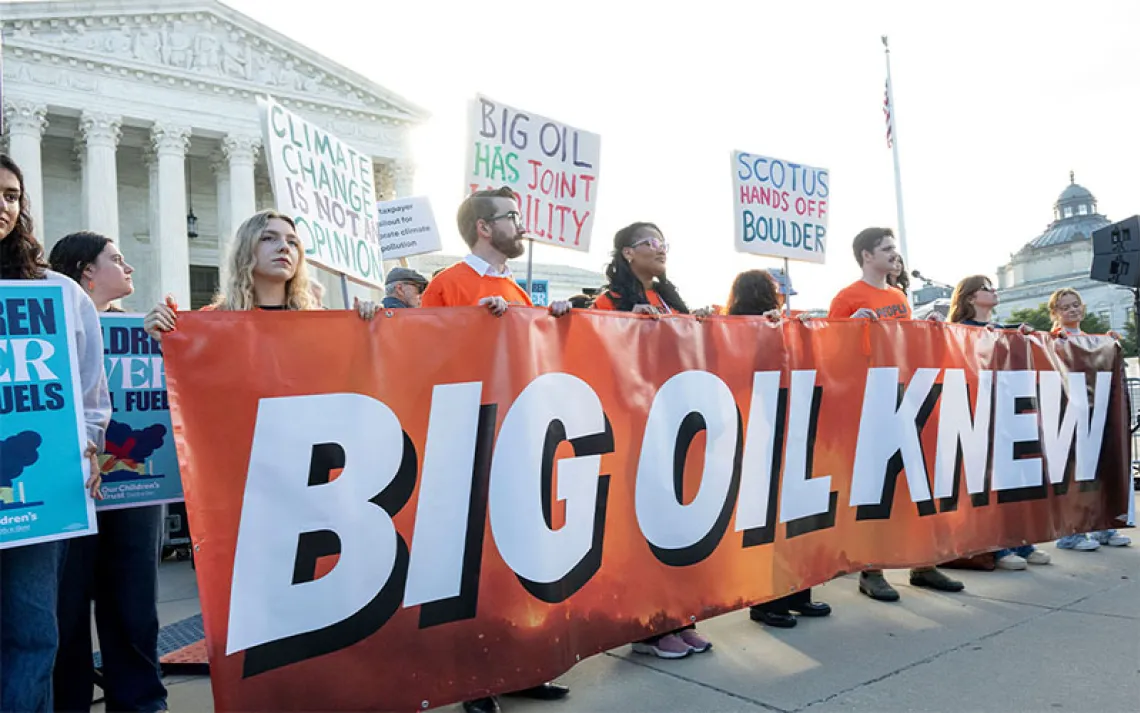
The Trump administration is currently facing a new lawsuit brought by a group of 22 young Americans challenging Trump’s executive orders that unleash fossil fuels, undermine renewable energy, and suppress climate science. The case, Lighthiser v. Trump, came before a federal court last week in a two-day hearing that featured live witness testimony from some of the youth plaintiffs and half a dozen expert witnesses explaining how the fossil fuel orders will cause irreparable harm to the nation’s children.
In July, the International Court of Justice explicitly called out countries’ ongoing support of fossil fuels in a landmark climate change advisory opinion, suggesting that boosting fossil fuels could be considered an “internationally wrongful act.”
The Production Gap Report comes as public health experts published an analysis last week, Cradle to Grave: The Health Toll of Fossil Fuels and the Imperative of a Just Transition, warning of the extensive detrimental impacts of fossil fuels on human health. “Not only are they a climate problem, fossil fuels are driving a global public health emergency,” said Shweta Narayan, campaign lead at the Global Climate and Health Alliance—a consortium of over 200 health professionals and civil society organizations—which issued the report.
“Around the world, policymakers must put an end to the damage the outrageous and irresponsible ongoing pursuit of fossil fuel production is inflicting upon our health,” said Jeni Miller, executive director of the Global Climate and Health Alliance. “No one is exempt from the toxic exposures caused by our addiction to fossil fuels. Political leaders already know the solutions for ending fossil fuel dependence and know that further delay is indefensible—all that is required is political courage.”