How Mayan Communities Created Mexico’s First Long-Distance Trail
These residents blended conservation and recreation to help keep their culture alive
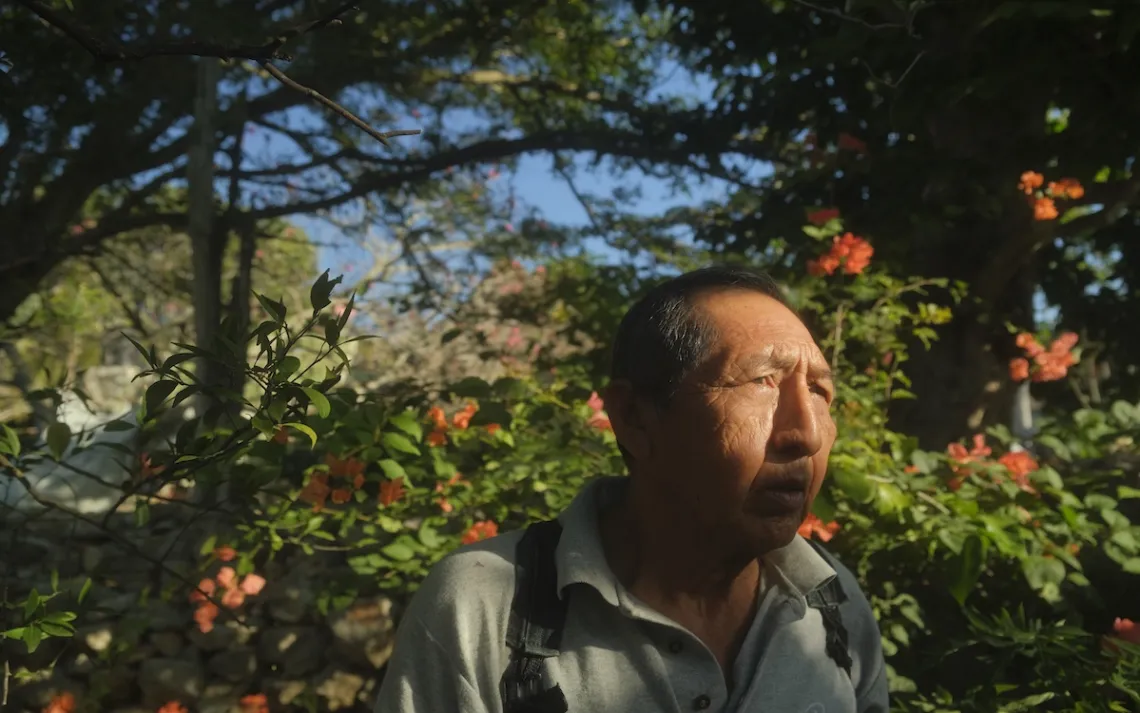
Don Octavio served as a local guide on the Camino del Mayab trail. He had cultivated agave fiber for decades. Now that the industry has dried up, he commutes three hours to the nearest city to work as a gardener.
Sixty-six million years ago, an asteroid weighing trillions of tons crashed into Mexico’s Yucatán Peninsula. The impact caused huge fires, a mega-tsunami, and the extinction of approximately 75 percent of the world’s species. For many of the Mayan communities who call this land home, it feels like another extinction event is on the horizon.
Widespread migration to cities is erasing the region’s ancient Mayan language and culture within just two generations. In parallel, multibillion-dollar hotel chains threaten to take over and deforest their land for mega-resorts.
But one collective of 14 Mayan villages believes it might be able to prevent the destruction. The villages' defense? Creating Mexico’s first long-distance hiking trail. Aptly named the Camino del Mayab, the trail is composed of 68 miles of ancient paths and tucked-away trails used by villagers to collect food and firewood.
A long-distance path meant for leisure might not seem like the strongest deterrent. But as I embarked on a five-day through-hike of the Camino del Mayab in February, I quickly realized that the camino is not just a trail but a movement. My guide, Emiliano Mendez Diaz, a student with an encyclopedic knowledge of the region’s flora and fauna, told me the story of the Camino del Mayab between identifying a spiky red flower (chak kuyché) and an echoing squawk (a West Mexican chachalaca bird).
The past few decades, Mendez Diaz told me, had not been easy for the region’s Mayan residents. The once-booming henequen trade, which employed (and often exploited) the majority of villagers to farm this agave plant, had dried up. People started to migrate to the cities, leaving behind their homes and land.
Meanwhile, Xcaret, Hard Rock, and other resorts, besieged by rising crime rates and rampant drug use in Cancun and Tulum, were seeking to expand. The Mayan villagers’ land seemed to be ripe for the taking—unspoiled and cheap. They offered previously unheard of sums of money to the villagers to sell their land, but what they didn’t mention was that they would likely chop down the forest, drain the water table, and steamroll anyone in their way. In the nearby town of Mucuyché, Mendez Diaz told me, Xcaret used dynamite to blow up a cenote, obliterating the plant and animal life to create a lazy river for tourists.
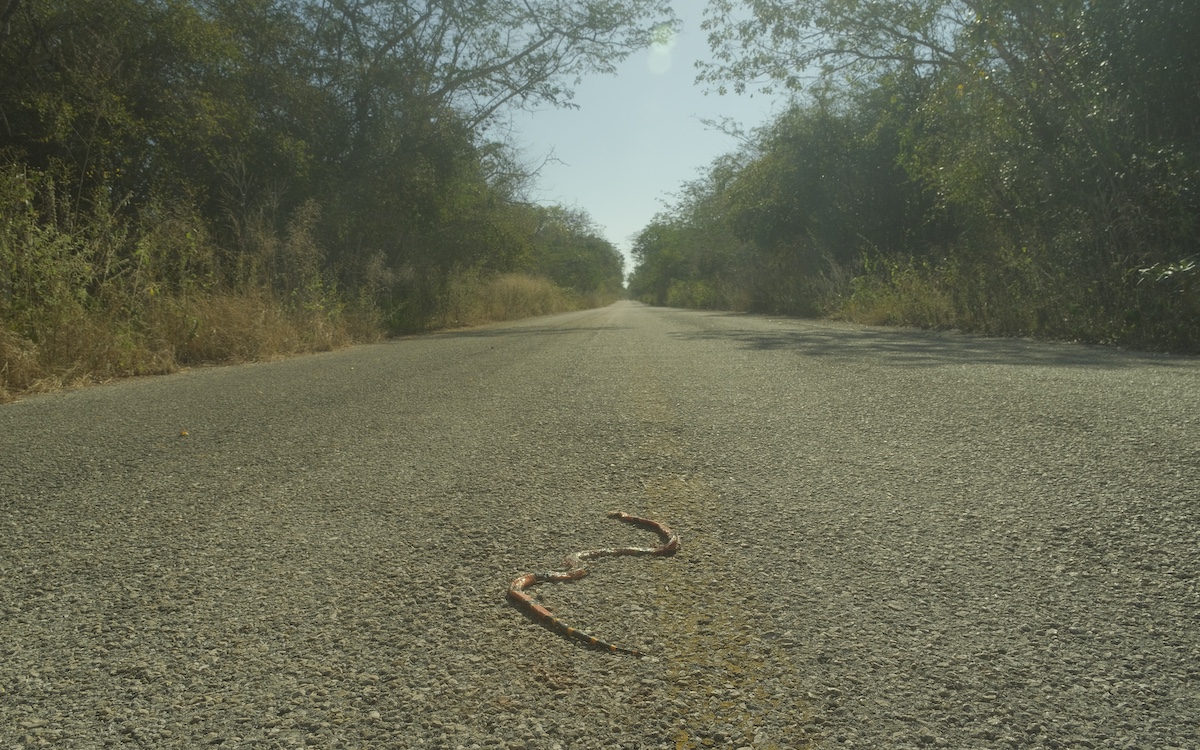
The construction of roads through the Yucatán Peninsula has killed thousands of animals, many endangered. This coral snake is one victim. The Camino del Mayab aims to designate the region as a biological corridor, preventing more road construction.
Many villagers held their ground against the offers, but for others, the money was too life-changing to reject. Some individual villages tried to generate income and secure an official conservation status for their land by creating sustainable tourism ventures. But due to a lack of resources and marketing, these projects fell apart.
In 2016, the leaders of 14 Mayan communities joined Mexican conservationists to formulate a plan. Inspired by the Camino de Santiago in Spain, they landed on the idea of a long-distance trekking route, stringing together the ancient trails the villagers used to travel, access their farms, and collect firewood.
Creating the camino wasn't easy. Among the many questions that arose: How many trekkers should be allowed? How should the profits be distributed? Which homes should trekkers eat meals in? The answer to that last question often leads to a valuable source of income for the host family. The group discussed, debated, and formulated an equitable set of policies before finally opening the trail.
Five years later, the Camino del Mayab started welcoming visitors from around the world to the newly opened, community-run trail. It now provides income to more than 530 villagers, who are able to stay on their land.
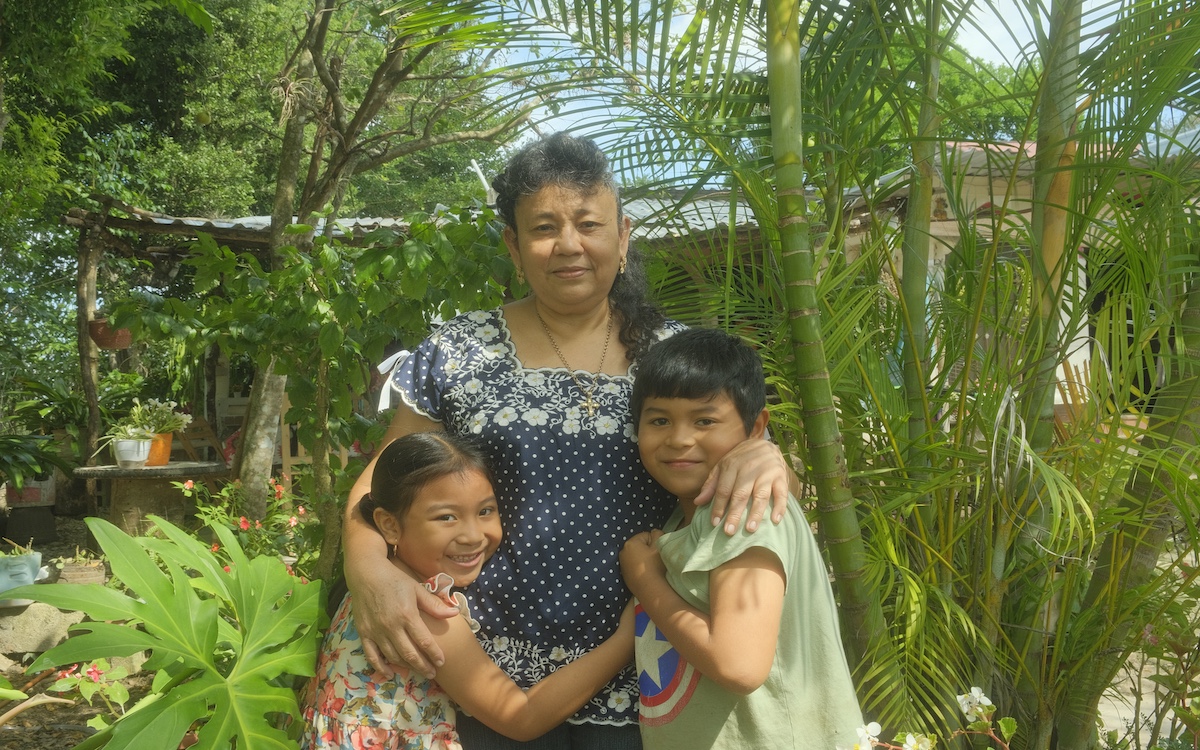
The family at Dona Isabela's house. Isabela tried to pass on her Mayan vocabulary and traditional herbal knowledge to her son and granddaughter. She said the camino provides invaluable income for the family.
And while the camino prioritizes Mayan villagers’ needs first and foremost, the trail is also a way for trekkers to know their outdoor adventure is contributing to a social and environmental movement. “You allow the traveler to have more exposure,” said Alberto Gutierrez Cervera, one of the conservationists who helped create the Camino del Mayab. “They have this meaningful experience of slow tourism, responsible tourism, regenerative tourism.”
Over the duration of my trip, the Camino del Mayab never ceased to amaze me. One moment, I was floating in an aquamarine cenote, staring in awe at the bats and swallowtails swooping overhead. Next, I was walking beneath the arches of a grand hacienda, discolored with age and speckled with bougainvillea. Soon after, I was following the path of an overgrown narrow-gauge railway that was once used for transporting henequen.
Not every section resembled a typical trail—sometimes, it morphed into a road with cars whizzing by. The roads and trails were often bordered by the loud colors of litter, such as discarded bags of chips and water bottles.
Mendez Diaz explained that these eyesores for visitors are the realities these communities face. Many of the villages don’t have trash collection, much less basic health care, or accessible public transportation on the roads that are built. “There are places with a lot of luxury, just for a couple of people who come to visit the area,” he said. “At the same time, there is this reality that no one wants to see.”
The communities united by the Camino del Mayab are also campaigning for basic services. While each small community has limited political power on its own, a united front can exert more pressure on the government, Mendez Diaz explained.
Along the trail, there are countless reminders of how the Camino del Mayab has empowered communities to stay on their ancestral land despite economic pressure. In the village of Tzacalá, I met Cristian Jesus Sulubaca, a 24-year-old second-term mayor. We spoke in a library lined with books, papers, and art documenting the village’s history. The building was funded by the camino’s profits, of which 70 percent are reinvested into social projects, including the library, a school, and an environmental research program.
Sulubaca explained that the library has been essential to preserving his community’s cultural identity. “Our elders are dying,” he said in Spanish. “And when they die, the story of who we are, how we are, where we’re from, how we think, and who we love also dies.”
The next morning, we met a man with sun rays of wrinkles emanating from his twinkling eyes. Almost 70, Octavio Díaz was born and raised in the village we were walking through. Like Octavio Díaz, the majority of Camino del Mayab guides are from the communities that created the trail.
Octavio Díaz led us through the forest adjacent to his home, hacking away stray branches with his machete and pointing out where he played baseball as a child, where he collects firewood, and where he finds medicinal herbs. He said he loves caring for each corner of the land.
“I’ve never abandoned the roots I originated from,” he told me with pride.
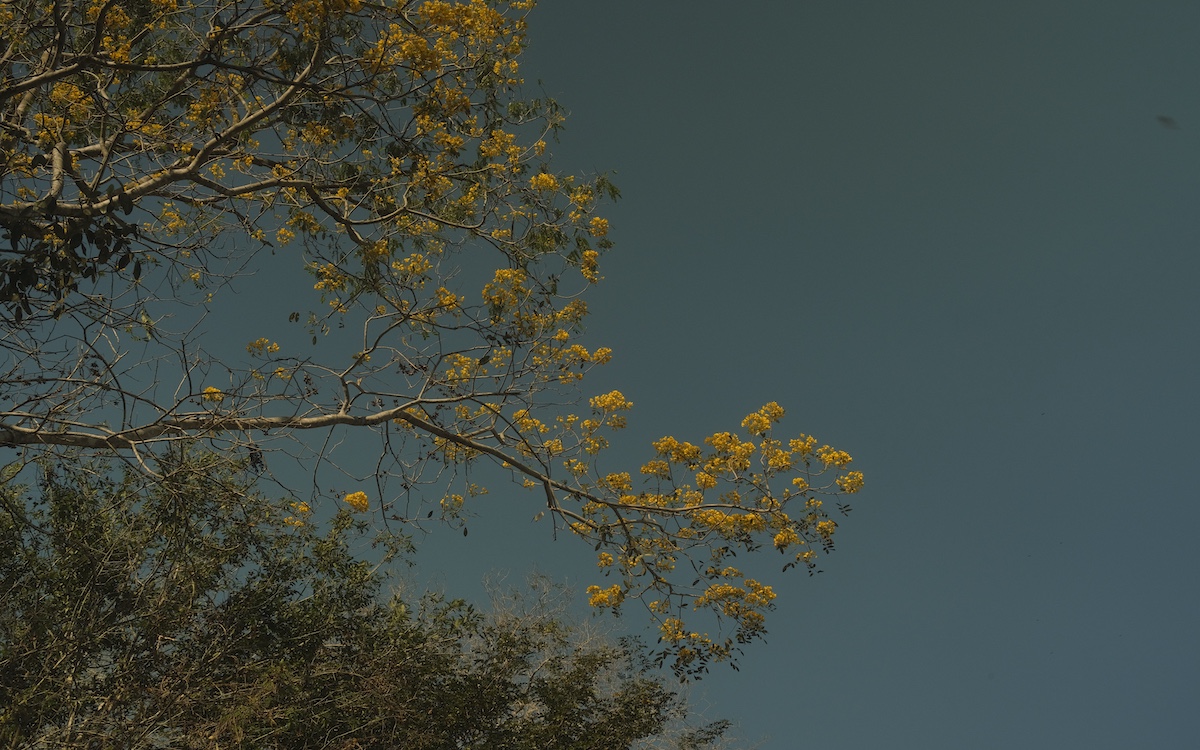
Golden yellow guayacan trumpet trees along the Camino del Mayab.
The home-cooked food, which we eat with families in their front yards, lovingly integrates traditional Mayan ingredients like maize, squash, and cacao. One camino chef, a grandmother named Isabela Varguez, offered to show us her garden after lunch. Her son and her granddaughter giggled as the touch-me-nots shrank at her caress and babbled off the names of various scented blooms.
Although all of her neighbors have left to find work in the city, Varguez hopes she never has to abandon her home. Rather, she is excited to pass along her native Mayan knowledge to her children and treat their illnesses with traditional herbs. She told me that the income she receives from Camino del Mayab trekkers has been enormously helpful in sustaining her family.
“Many of my family members who moved away are now coming back,” she said. “In the city, you have to pay for water. Here, oranges, plums, lemons—I grow them all from the earth.”
Encouraged by the success of the Camino del Mayab, its creators hope other conservationists and Indigenous communities across the world will use it as a model. Their next goal is to secure an official biological corridor status for the route to ensure it is never destroyed by outsiders for profit. They believe that by uniting under the principle of mul mayab—in Mayan, “working together with the heart”—they can preserve their treasured land.
“It’s not just the joining of the trail,” said Gutierrez Cervera. “It’s also a louder voice.”