New York County Agency Tries to Force Data Center on Locals
The Tonawanda Seneca Nation tries to protect its land and cultural traditions from a massive, polluting complex

Bird Logan, a citizen of the Tonawanda Seneca Nation, standing in the Big Woods. | Photo by Lindsey Botts
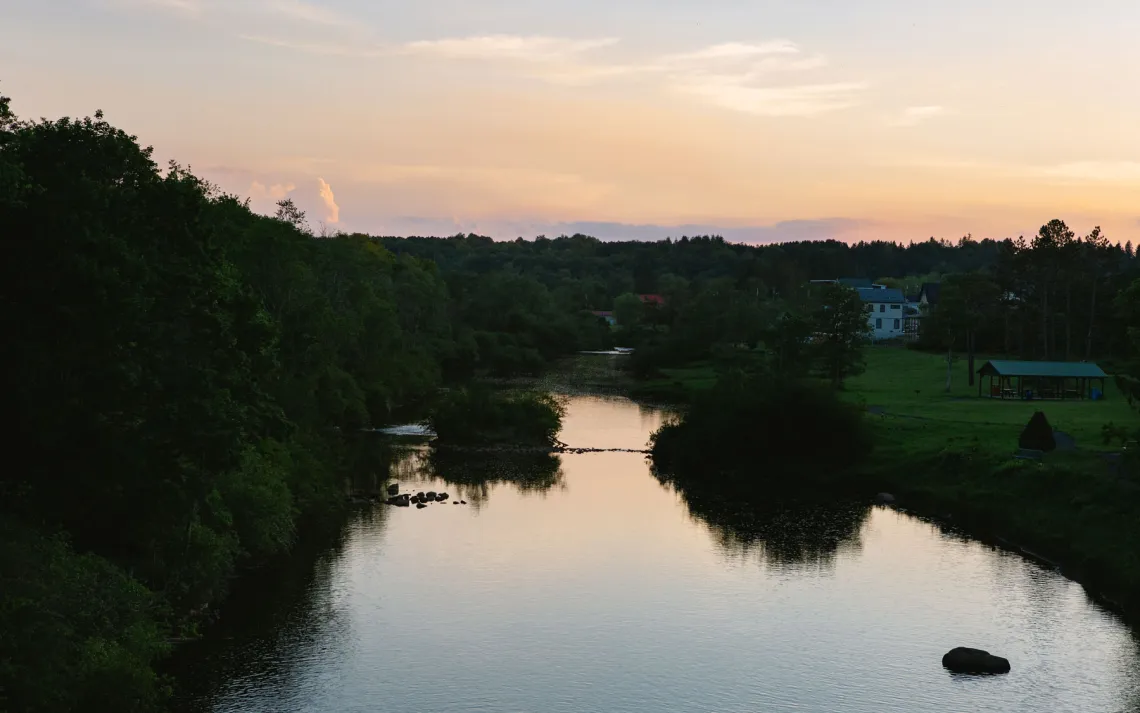
Bird Logan, a citizen of the Tonawanda Seneca Nation, has spent most of his adult life trying to keep an industrial development from polluting his nation’s reservation. The latest threat comes from a proposed 2-million-square-foot data center between Buffalo and Rochester, New York, that would abut roughly 1,000 acres of his nation’s land called the Big Woods. It's a maze of wetlands, hemlock, maple, and walnut, where there are no paved roads or even hiking trails. It’s also where nation members find medicines, hunt, and practice their traditions. Despite the data center’s proximity to this culturally significant ecological hotspot, Logan said the developer has yet to hold meaningful discussions with his nation.
“This entire time, they've been saying they've been consulting with us, that they've been speaking with us, and for the most part, some of it has just been sending emails,” Logan, who is also the nation’s spokesperson, said. “We have a treaty that was signed and ratified by George Washington. . . . And in Article Six, Section Two of the United States Constitution, it says all treaties are the supreme law of the land.”
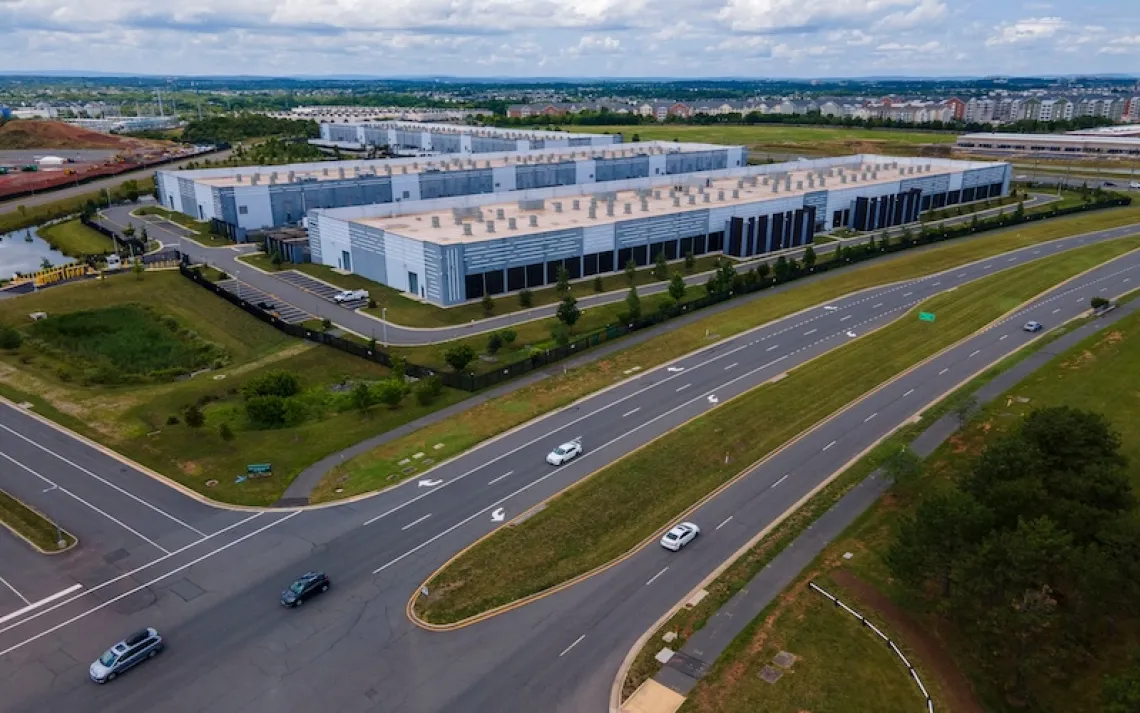
Most of the land proposed for development—called the Science, Technology & Advanced Manufacturing Park (STAMP)—is owned by the Genesee County Economic Development Center, a local industrial development agency. It’s been trying to develop the site, currently an agricultural field, since 2012. In January 2025, a Texas-based company called Stream Data Center came in with a plan to build a hyperscale data center: Project Double Reed. The tenant signed a non-disclosure agreement with the GCEDC, so residents have no clue what may come in. Some speculate that it will power crypto mining or AI.
In recent months, the GCEDC board has tried to convey that this project is a done deal. For example, the agency released a press release on June 3 saying it could “have shovels in the ground in a matter of weeks.” But on paper, a different story emerges. There are still several holes in the plan’s proposal that the Indigenous community says need to be addressed before project approvals are considered. In addition, the state environmental regulator has noted that there are still state laws that must be followed to prevent toxic pollution from spilling over into the surrounding environment.
“That press release was astounding to me,” Sarah Howard, an environmental-justice organizer with the Tonawanda Seneca Nation, said. “It seems extraordinarily premature to put out that statement and also seems to belie [GCEDC’s] repeated claim that they are giving [Stream’s] application a long, hard look.”
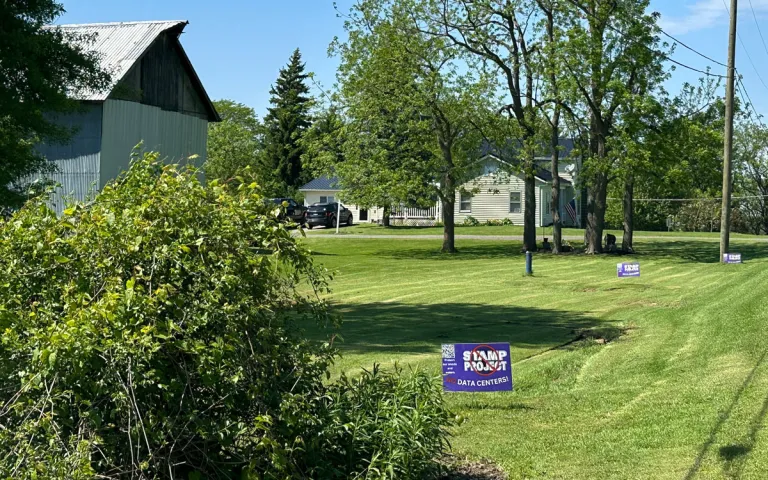
A residential street lined with anti-STAMP signs. | Photo by Lindsey Botts
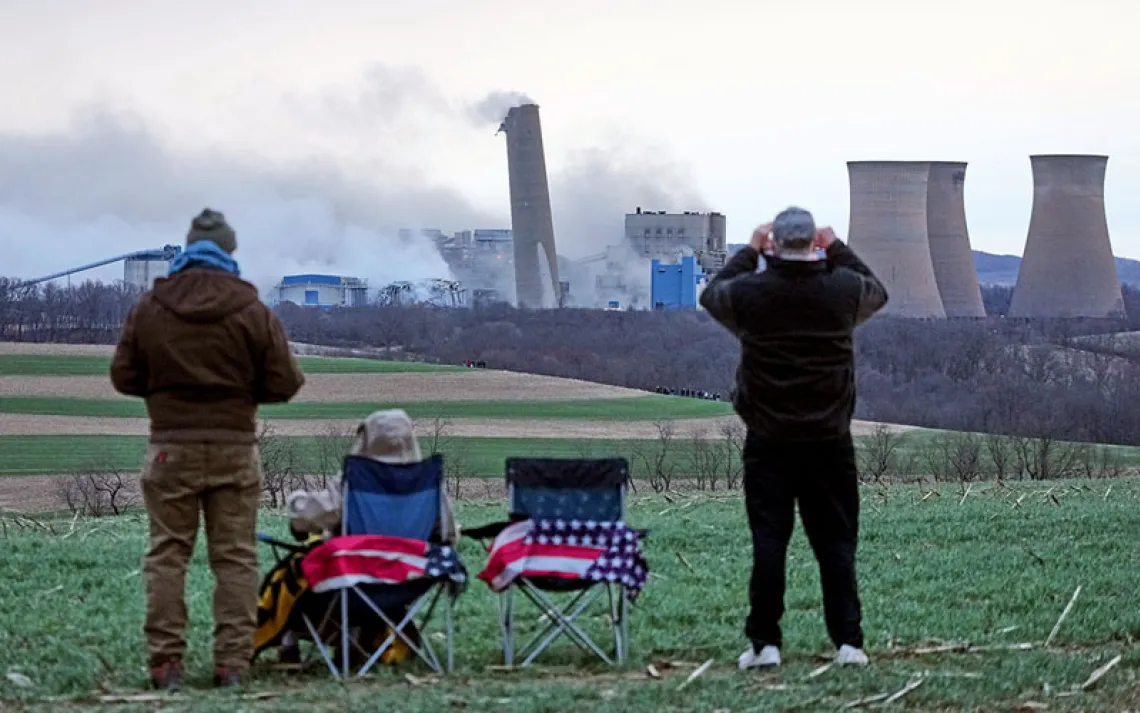
In many ways, the rush to build the data center in the town of Alabama, New York, mirrors what’s happening across the country. Developers enter rural communities with big promises, massive energy and water needs, and little transparency. From Oregon to Maine, this has led to resentment that crosses political, economic, and racial divides. As of this year, more than 100 municipalities are considering data center moratoriums. And according to Data Center Watch, at least 75 projects were blocked or delayed in the first three months of 2026 due to local opposition.
The STAMP site is the only location east of the Mississippi River where a data center is slated to be built on the doorstep of an Indigenous reservation. Residents and community organizers argue that lamps meant to illuminate the facilities for night workers would create light pollution in an area where the northern lights are known to glow. The generators meant to serve as backup power would emit diesel fumes that cause asthma. The chillers to cool the servers, which would run constantly, would shatter the otherwise quiet of bird songs and waving trees. And rural roads would crumble under the weight of traffic they are ill-equipped to carry.
In terms of energy, Stream intends to use roughly 500 megawatts of power, more than what’s used by the combined population of five regional counties. For water, it would need 20,000 gallons per day for restrooms and climate control. And even though Stream has said it plans to use a closed-loop cooling system, which recycles water, that’s done little to assuage fears of contamination.
“Of particular concern to the Nation is the possibility that liquid from the closed-loop cooling system, which will contain glycol, would enter the stormwater system in the event of a leak, spill, or other accidental discharge,” Roger Hill, a Tonawanda Seneca Nation chief, wrote. “If this occurs, glycol can contaminate surface water and groundwater.”
In New York, applicants who want to build large projects must follow the New York State Environmental Quality Review Act. The statute requires developers to identify negative impacts while simultaneously offering alternatives to alleviate harm. The GCEDC prepared and approved an environmental assessment for a different industrial project on the site over a decade ago, well before a hyperscale data center was being considered. Rather than complete a new environmental assessment, GCEDC has repeatedly applied for new applications when the project’s scope changes.
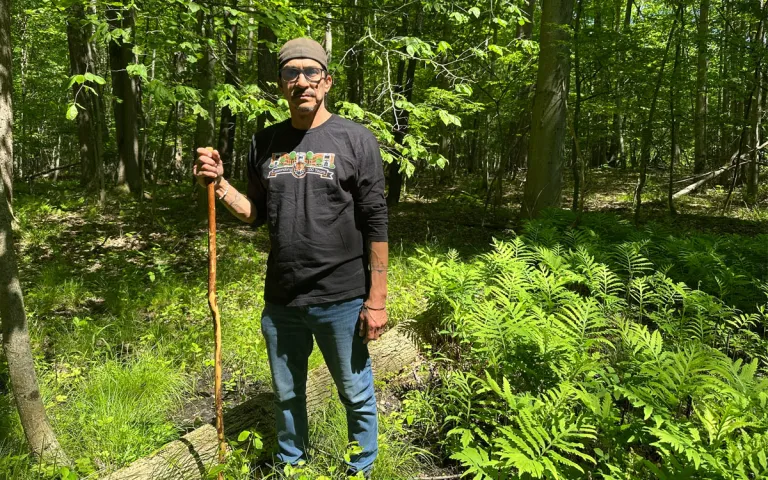
Scott Logan, Bird's dad, stands in the Big Woods. | Photo by Lindsey Botts
Earlier this month, the New York State Department of Environmental Conservation sent a letter to GCEDC, recommending a supplemental environmental review, given the various ways the project has evolved—from being the site of a high-tech manufacturing facility to housing a 900,000-square-foot data center, which then more than doubled in size last year. If the project needs additional permits and GCEDC fails to follow through on the recommendations, the county agency will have to explain its reasoning for why it won’t conduct further reviews.
In the supplemental review, the agency would like to see more details on how Project Double Reed would impact wetlands, which cover most of the area. It also says that the project is subject to the state’s Environmental Justice Siting Law (EJSL), which requires developers of large projects to determine their impact on disadvantaged communities, such as the Tonawanda Seneca Nation. Lastly, it needs to abide by the state’s Climate Leadership and Protection Act, which requires the state to ramp down its reliance on fossil fuels.
“Double Reed should not be permitted to move forward absent a thorough review of the potential impacts to the Nation, its citizens, and treaty-protected resources, all of which are required to be analyzed under the EJSL,” Hill wrote in his comments to Stream.
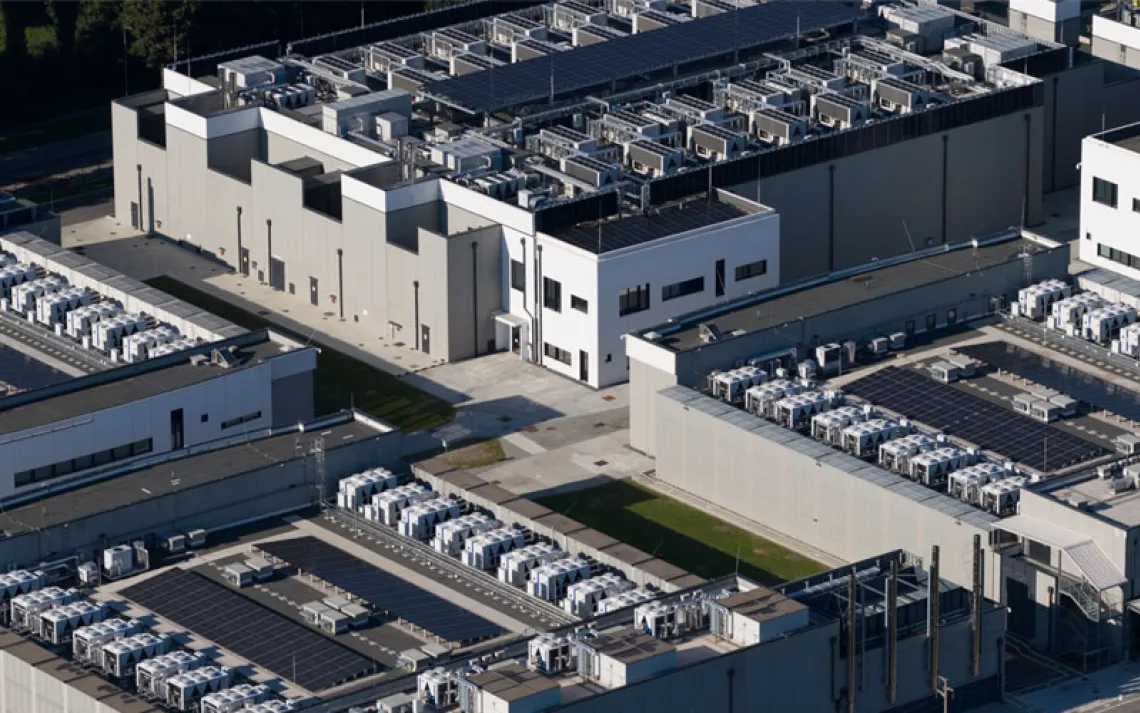
Meanwhile, members of the town of Alabama planning board still need to vote on whether the data center complies with the town’s zoning codes. Under an amendment to the latest site plan application, the developers submitted responses to a range of issues that it hopes the planning board members will approve. These include the heat island effect of the facility, pollution to local waterways, and the buzz of 180 chillers that will sit on the roofs of the buildings.
The GCEDC board executive, Alabama supervisor, and staff from the DEC did not respond to questions for the article.
Logan is particularly concerned about noise and water quality. He said the constant hum from the chillers would scare away animals, which his nation's citizens rely on for sustenance. They also use well water for their daily needs, and whatever gets into the ground is likely to get into the water. Since there are no wastewater treatment facilities at the STAMP site, the developers have said they plan to haul all the sewage from the data center to a plant in the neighboring village of Oakfield. Logan worries that spills could happen on the surrounding land and seep into local drinking water.
With so many reviews and a public process left unresolved, residents and organizers are hoping someone with decision-making power will notice. This past spring, over 3,000 people implored local officials to abandon their plans to build the data center. In person, hundreds have packed town halls to enumerate their grievances, holding signs reading “No Data Centers,” in many cases doing so well past midnight.
At the state level, leaders appear to be paying attention. On June 5, New York lawmakers passed a bill that would put in place a one-year moratorium on the issuance of permits by the DEC, giving the agency time to evaluate the environmental toll of hyperscale data centers. Governor Kathy Hochul has not signed the bill but did acknowledge that she’s reviewing it. In neighboring Erie County, a town supervisor recently put a proposed data center on hold after fierce backlash from residents. In Genesee County, Logan is hoping education and community organizing can do the same for the STAMP project.
“Part of my job is having those discussions about who the Tonawanda Seneca people are, how we operate, what we believe, and basically why this area is so important to us,” Logan said. “I'm very glad that our nation is being proactive in this fight against [STAMP], and all I can say is that for the future, we are going to be here, ready for whatever it is they put next.”