 The Magazine of The Sierra Club
How One Maryland Community Is Fighting Data Centers and Defending Democracy
A citizen-led effort to put data center development on the ballot in November hangs in the balance
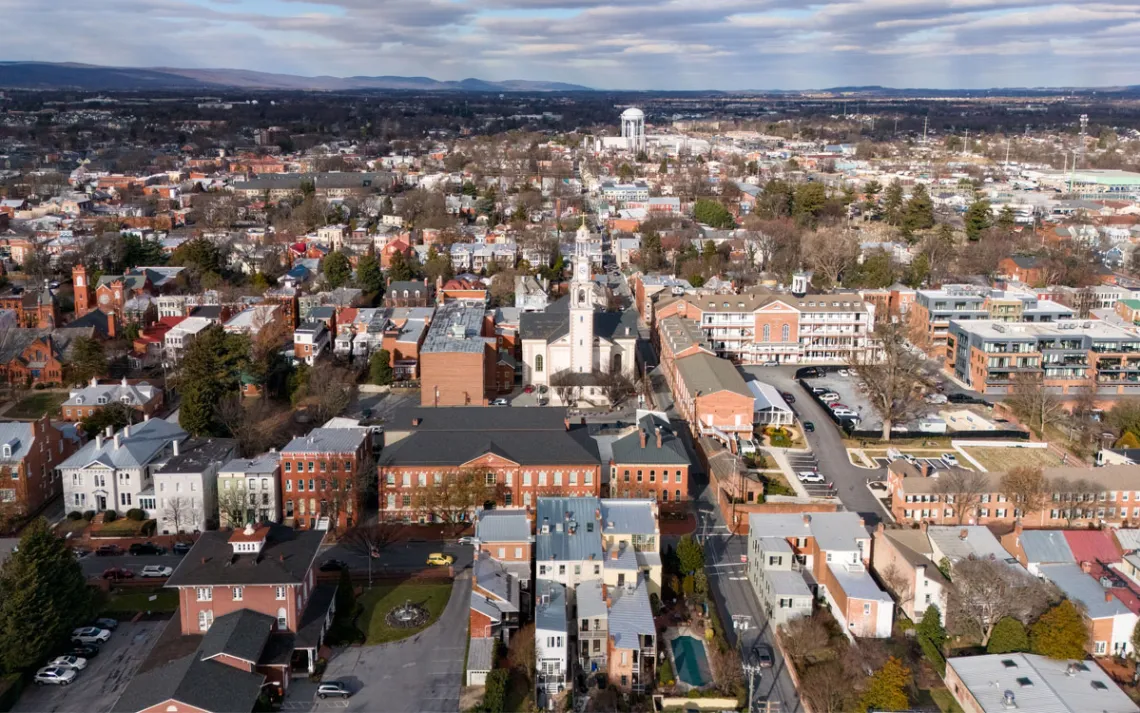
Frederick, Maryland. | Photo by Viyaleta Herasimovich/iStockphoto
For decades, students at Carroll Manor Elementary School in Adamstown, Maryland, have looked out their classroom windows to see the gentle green slopes of the Blue Ridge Mountains rising above pastures dotted with cows. On recess, they played foursquare and basketball as chatty, red-shouldered hawks circled in a clear, cerulean sky.
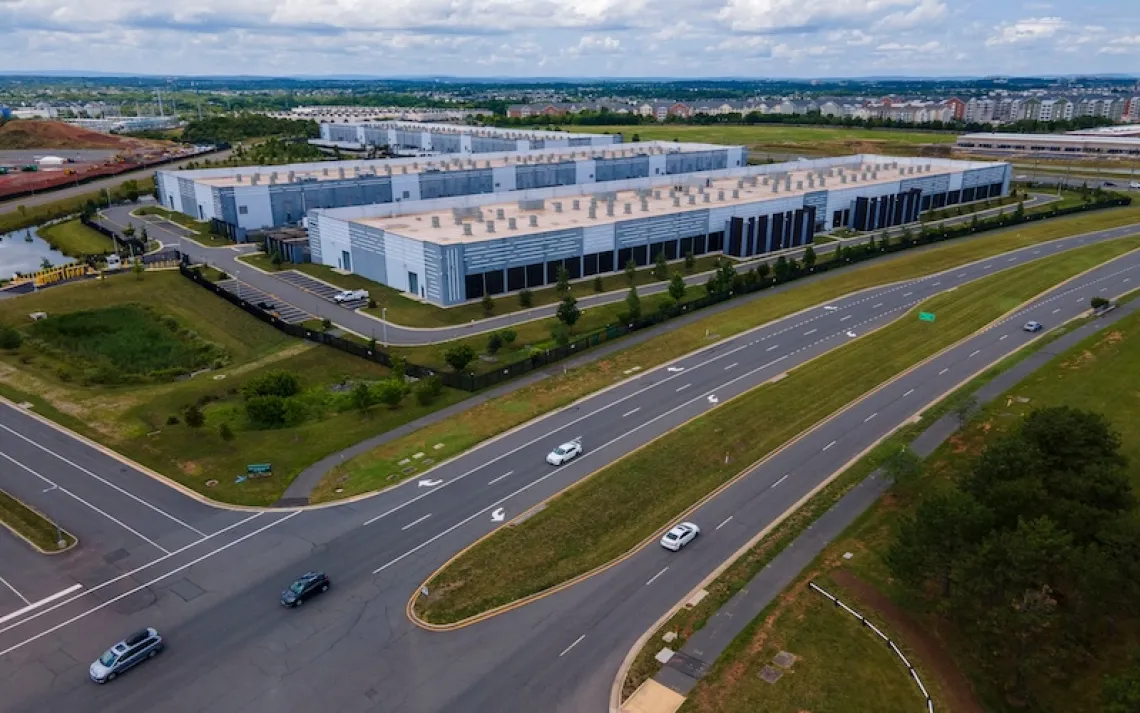
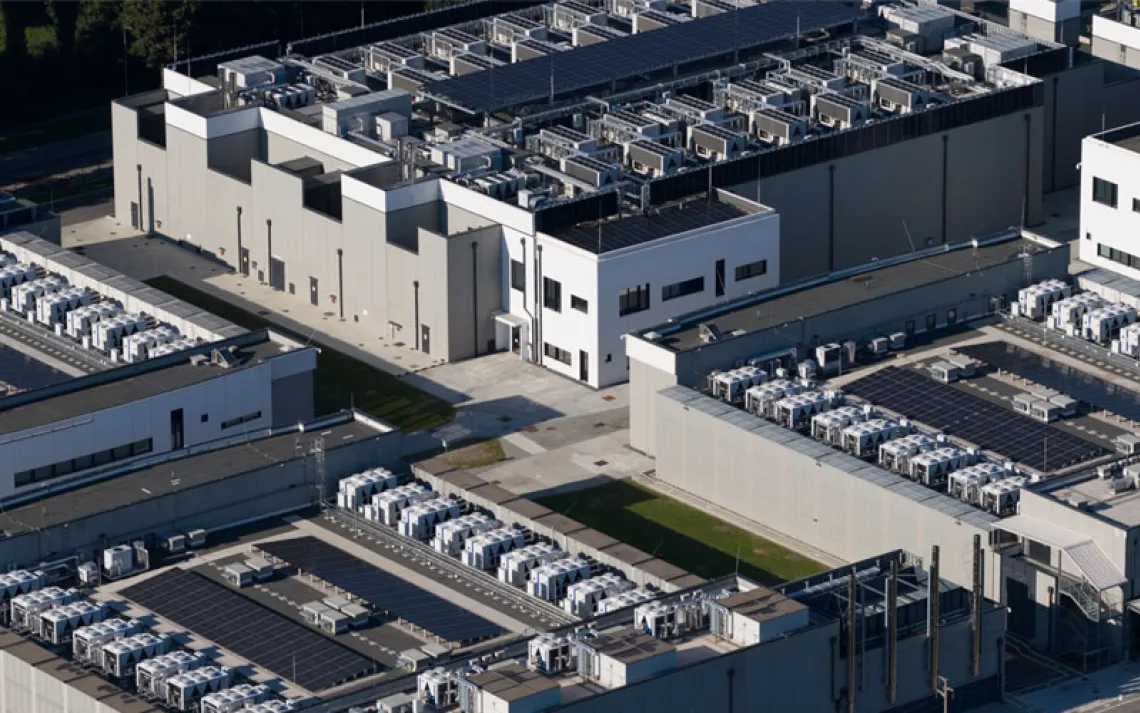
But in the last few years, the sights and sounds outside the school have changed. Towering cranes now puncture the horizon, and construction vehicles rattle down the two-lane country road out front, kicking up dust and dirt. In farm fields less than a mile away, hulking data centers and dozens of diesel generators have replaced tidy rows of corn, in a rash of development that has stirred up tension in Frederick County, a bucolic region about an hour north and west of Washington, DC.
Since 2021, residents have been pushing back against the construction of data centers, which now spill across the state line from Northern Virginia, where 70 percent of the world’s internet traffic flows. They’ve cited concerns about rampant energy and water usage. And they’ve also raised concerns over air and noise pollution caused by the generators that keep the servers cool.
But the conflict came to a head last year when, two days before Christmas, the Frederick County Council passed Ordinance 26-01-001, a map that created a new 2,600-acre development zone for data centers, almost twice as large as the county’s own planning commission had recommended. The new map would allow developers to build within 500 feet of neighborhoods, nursing homes, and schools like Carroll Manor.
“We called it the Christmas massacre,” said Betty Law, a retired electrical power engineer and Frederick County resident. “So, a couple of people said, ‘We’re not going to take this.’”
One of those people was Elizabeth Bauer, a retired human resources director who quickly assembled the Frederick County Data Center Referendum Committee with the goal of putting the ordinance and its new map on the ballot come November. If the country council refuses to act on their behalf, she figured, residents could vote on it themselves. In order to do that, the committee would need to collect more than 15,000 signatures (7 percent of the registered voters in the county) in just two months.
Bauer knew it would take a groundswell of support and was heartened when more than 40 residents showed up to the committee’s first training session in January 2026. And over its six-week duration, over 300 people signed up for the training. “People were angry,” she said. Angry enough to spend the next eight weeks braving one of the coldest, snowiest winters in recent memory to gather signatures.
“They were walking the streets; they were going to libraries; they were going to senior centers; they were standing out in front of grocery stores. They were going door-to-door through neighborhoods,” Bauer said. “Even when it was snowing, they were still out there.”
Volunteers set up tables at a popular coffee shop and local comic bookstore and attended social events with clipboards in hand. They recruited a diverse set of organizations to support the cause, including the Chesapeake Climate Action Network, the Frederick County Maryland Farm Bureau, the Frederick Chapter of the League of Women Voters, and the Sierra Club of Catoctin. During their off hours, they shared successes, challenges, and advice in a private Facebook group. As the signatures accumulated, so did a sense of camaraderie, according to Bauer.
“It just created a great community,” she said. “People reported back to me that they didn't know their neighbors before, and now they had gotten out and gone door-to-door and met their neighbors and had the best experience.”
Still, Bauer said, the fast-paced, high-pressure campaign was not without stress. “Behind the scenes, some days, there was a lot of anguish. We didn’t know: Were we going to make it? Were we not going to make it?”
In the end, the group made it and then some, far exceeding their goal by gathering more than 21,000 signatures, more than enough to put the decision on the data center map in voters’ hands come fall. But now the hard-fought victory—and voters’ power—is in jeopardy.
In late April, several data center developers and large landowners in the proposed development zone filed a legal challenge to the referendum that had already been certified. It amounts to “an attack on democracy,” said Law. “[The developers] want to kill this referendum because they want to be the ones that run the county.”
Judge James Bonifant, who is overseeing the challenge, has scheduled the hearing for June 12. As community groups wait to hear the Frederick County judge’s decision, they’re now hard at work helping other communities around Maryland fight their own data center battles. They’re doing this by sharing the strategies and tactics they used to galvanize support for clean air, wide open spaces, and elementary school students who shouldn’t have to learn in the shadow and hum of a data center.
“We really want the public to see how a community can be empowered and be successful,” said Bauer. “We want to give them hope that if we can succeed in this, others can do it as well.”