A Path for Restoration at Bear River
How the Northwestern Band of the Shoshone Nation is breathing new life into their ancestral Idaho lands
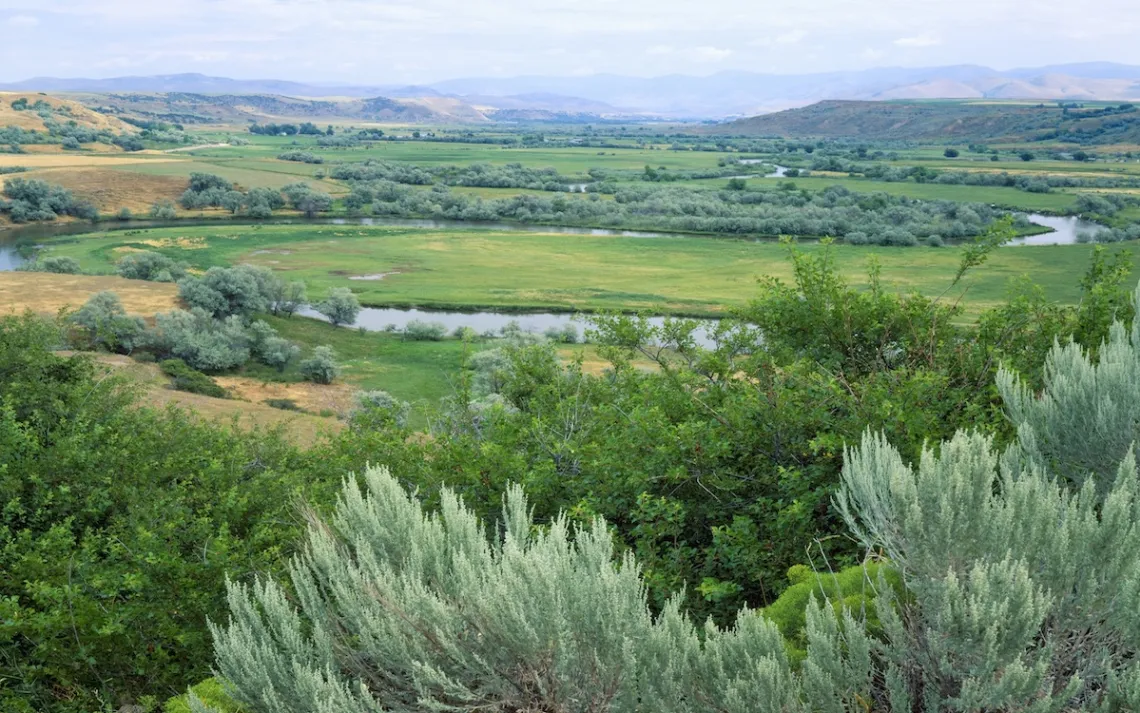
Battle Creek, site of the Bear River Massacre, near Preston, Idaho. Photo by Scott Smith via Getty Images
The Bear River Massacre site is easy to miss—a stone monument in a dirt lot off Highway 91 just north of the Utah border in Preston, Idaho—not unlike the massacre itself, which is often overlooked. That’s why in 2018, the Northwestern Band of the Shoshone Nation bought 500 acres to reclaim possession of their ancestral lands. Their plans for restoring it—which include removing invasive species and replanting native ones—could have far-reaching positive impacts on the local environment.
The Bear River Massacre was the largest Native American massacre by the US Army in the country’s history. On a frigid morning on January 29, 1863, American troops descended on the band of Northwestern Shoshone that had been wintering near the natural hot springs along the river for centuries. The tribe knew an attack was possible but still thought there was a chance for peace talks and to reconcile, especially since most of the group consisted of women and children. Their hopes were devastated. Troops slaughtered as many as 500 individuals. Few of the band survived. Those who did fled and lost all claim to the land they called home.
That’s the way it stayed for centuries. Farmers and ranchers moved in. They cleared fields covered in native grasses for cattle to graze and rerouted the nearby river’s many fingers into one ditch—now called Battle Creek—to better suit irrigation. The invasive species they planted made excellent windbreaks and natural fences but siphoned water inefficiently, filled in wetlands, and changed the water table, all in the name of creating flatter, more grazing-appropriate land.
While all those changes may have temporarily benefited local ranchers, the impacts to the local environment ran deep. Water was wasted from the largest source of natural flow to Utah’s Great Salt Lake to the south, a body of water that acts not only as a source of recreation and business for countless Utahns and visitors, but also affects everything from snowfall to migratory birds to toxic dust in the air that rises from the dry lakebed. This narrow meandering section of waterway is the final stretch along the watershed before it empties into Bear River and flows directly onward to the lake, the levels of which have been receding at an alarming rate for decades.
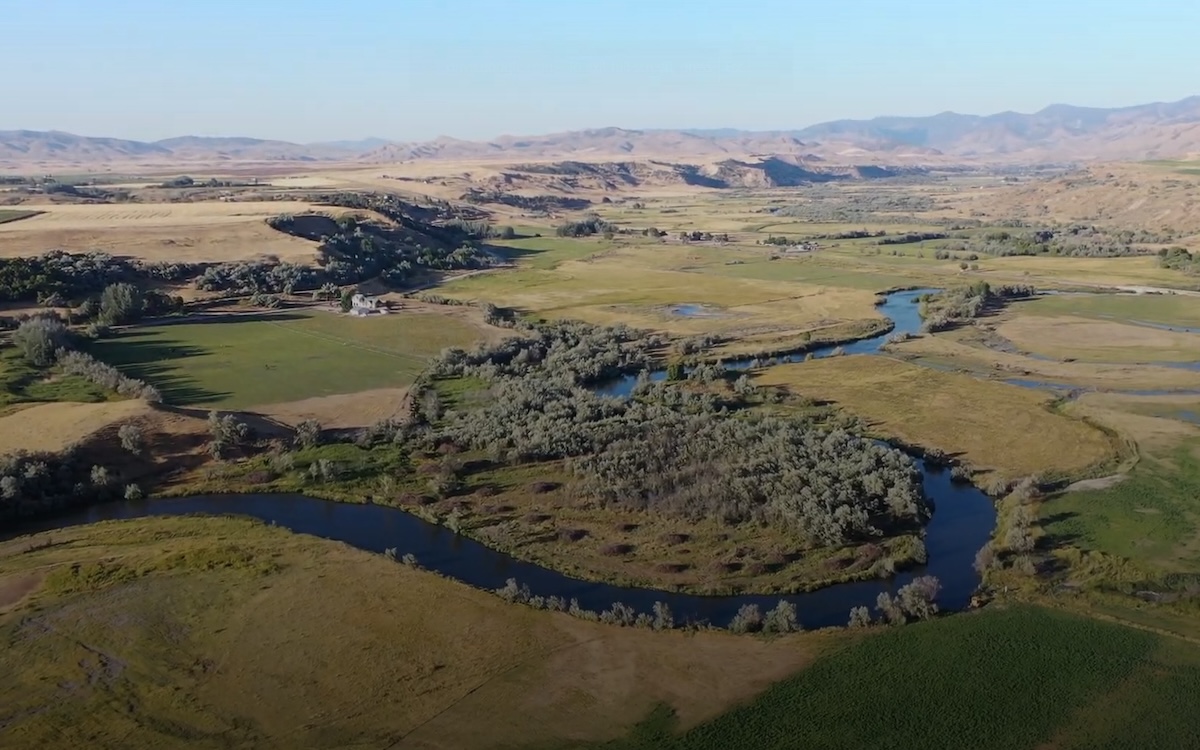
Photo courtesy of the Northwestern Band of the Shoshone Nation
The Northwestern Band of the Shoshone Nation had been waiting for decades to reclaim the land. “We didn’t set out to save the Great Salt Lake. We set out to be the Northwestern Band of Shoshone,” says Bradley Parry, tribal council vice-chairman, natural resources officer, and member of the Shoshone Nation. “It’s our most sacred site.”
The land, he says, is essentially a burial site. “For 160 years, we didn’t feel welcome there,” he says. Now, “we want the place to be a place of reconciliation and joy.”
The tribe bought the land with a rainy-day fund that had been growing since 2008 thanks to tribal business income. When the land became available, they made an offer, even though ownership of land is not something that is traditionally culturally appropriate. It’s not something to be owned but cared for, Parry explains. Even so, he says, “It kinda means everything to us. We finally own the most sacred spot we have.”
Plans for the site include a cultural interpretive center, amphitheater, and walking trails. The intention: to create a space where anyone can come and learn about the history of the land and the Shoshone Nation, the past, and the future, and enjoy the area as it once was.
The tribe also wants to restore the land itself. “We’re trying to go back in time to what was there when our ancestors were there,” Parry explains. “I want my ancestors to recognize it.”
The Northwestern Band of the Shoshone Nation has removed hundreds of invasive species already, including many of the 400,000 or more Russian olive trees that each chug 75 gallons of water a day and deposit water-quality-damaging sulfur into the river. The trees help make this stretch of waterway the highest sediment loader in the whole Bear River watershed. Their removal could result in cleaner water but also 11,000 to 13,000 acre feet of water per year restored to the Great Salt Lake (an average of 770,000 acre feet per year is Utah’s goal).
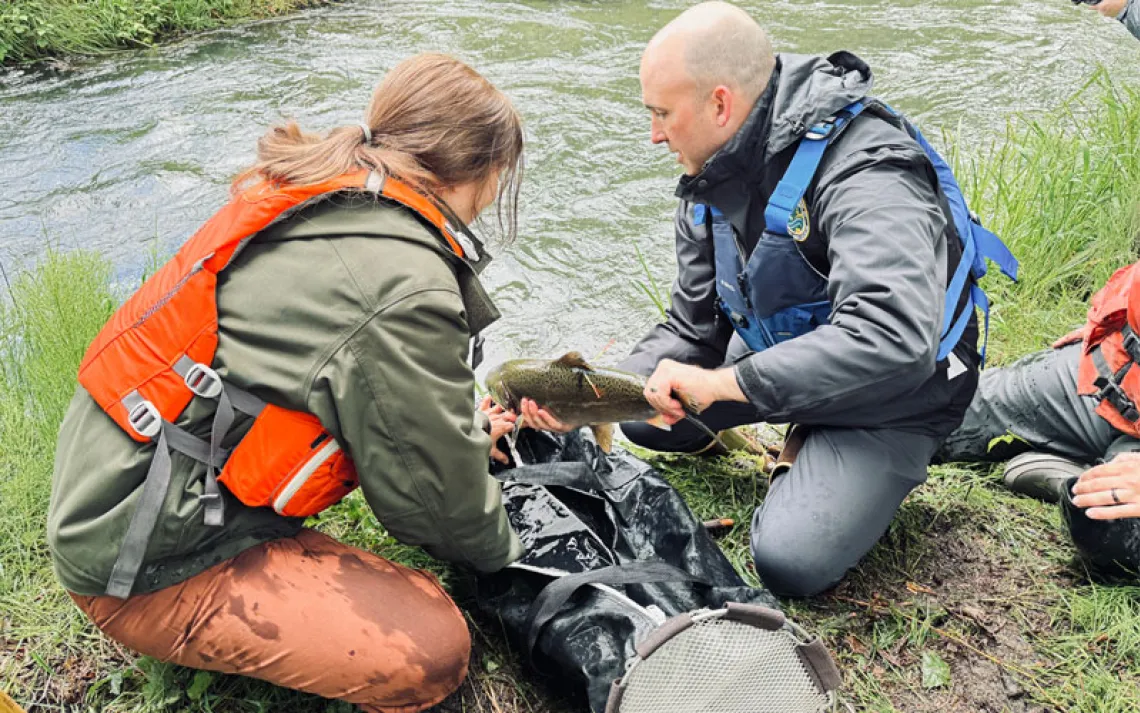
Together, with volunteers who participated in two planting weekends over the last two years, tribal members and organizations like Utah Conservation Corps, Trout Unlimited, state and federal organizations, and Utah universities, they’ve replanted over 50,000 native trees with over 100,000 to go.
The Northwestern Band of Shoshone brought in experts to conduct archaeological studies to reroute the creek based on old photos, plus studies and surveys that used ground-penetrating radar and lidar. Fish studies, water sampling, and vegetative surveys recorded what cultural plants are still present. That information was then combined with the nation’s oral history about medicinal plants and food sovereignty to determine what else to plant. Willows, a sacred plant to the Northwestern Band of Shoshone, top the list, followed by milkweed to promote pollinator species, rabbitbrush, juniper, cedar, Indian tobacco, chokecherries, and native grasses like spearmint and peppermint. The Shoshone Nation is also planning to restore beavers to the region starting with analog dams.
It’s the largest collaborative project that’s brought together individuals and organizations from so many corners of the area and sides of the aisle that Parry is aware of. It’s the epitome of what he calls “walking in a good way,” working with your neighbors and Mother Nature to bring about good for all.
But the sense of belonging and returning to a place of such importance is what drives every change the nation has made or plans to make as they strive to walk in a good way on this sacred land. “We’re still here,” Parry says, smiling. “We’re part of the community again. That’s the most important thing to us.”