The Magazine of The Sierra Club
The Quiet Architect of Federal Environmental Justice
Dr. Clarice Gaylord laid the foundation for environmental-justice policies
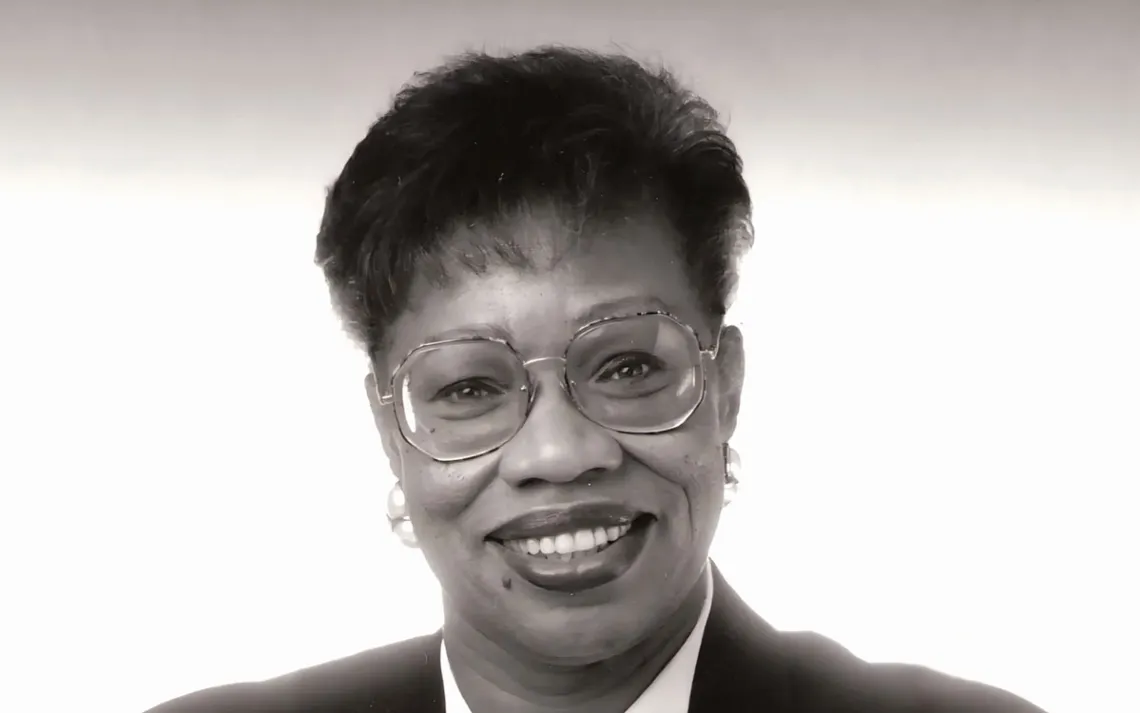
Photo courtesy of Dr. Clarice Gaylord
Dr. Clarice Gaylord was surprised when she received a call from President Barack Obama’s office in 2008. He was attempting to coax her out of retirement to lead the Environmental Protection Agency. “What part of ‘retirement’ don’t you understand?” she recalled asking his team, with a laugh. “I’ve done my work.”
Her refusal was based on one thing: She was ready to rest. By then, Gaylord had spent decades shaping federal environmental policy. Her story is one of bureaucratic persistence and the ability to turn exclusion into strategy, and strategy into national policy.
When Gaylord began her federal career in the 1960s, she was a research scientist studying the causes of breast cancer at the National Cancer Institute. Her work was meticulous and well-regarded, but her upward mobility stopped at the laboratory door.
“One problem I had at the cancer institute was dealing with the superficial prejudice against hiring women and minorities,” she recalled. “They’d hire you for a position, but not a major one.” Determined not to be sidelined, Gaylord applied for a job in personnel. If the system wouldn’t move her, she would move the system.
In 1980, a high school friend had been offered a leadership role at the Environmental Protection Agency but was finishing her PhD and couldn’t accept. She passed Gaylord’s name along to the hiring official, and soon, Gaylord found herself in an interview with Charles Grizzle, the agency’s assistant administrator.
After scanning her resume, Grizzle asked, “Why would a PhD scientist be interested in a job in personnel?” Gaylord recalled telling him that she really wasn’t but wanted to ensure that no other woman or minority was held back from ascending the federal career ladder. Grizzle, stunned but delighted, replied, “This is wonderful. You have a job.”
At the EPA, one of her first acts as personnel director was to analyze where people were, and weren’t, advancing within the agency. The data told a story she already knew: The lowest ranks were filled with women, most of them secretaries, who rarely had the credentials to move into higher-paying technical or administrative positions.
Rather than accept that as immutable, Gaylord established a training partnership between the EPA and a nearby community college, offering courses that would qualify secretaries for higher-grade positions, paid for by the agency. Some managers threatened to fire secretaries who applied. Gaylord, unfazed, marched into their offices to remind them that supporting their staff’s professional growth wasn’t optional.
The program worked. Secretaries became administrators. Some became managers. Gaylord’s own assistant enrolled in the program and later moved up the ranks. Across the agency, women started envisioning careers that stretched decades ahead. And that was just the beginning for Gaylord.
In the early 1990s, EPA administrator William Reilly called Gaylord into his office with an unexpected proposal. He wanted her to create something that didn’t yet exist: A federal program focused on environmental equity and justice.
At the time, from protests in Warren County, North Carolina, to marches in Louisiana’s Cancer Alley, the battle for environmental justice had started to intensify in the streets and in the courthouse. Within the EPA, though, efforts to address environmental injustice were viewed as an intrusion, something that would complicate the current long-standing programs. But Gaylord knew there was a bigger picture.
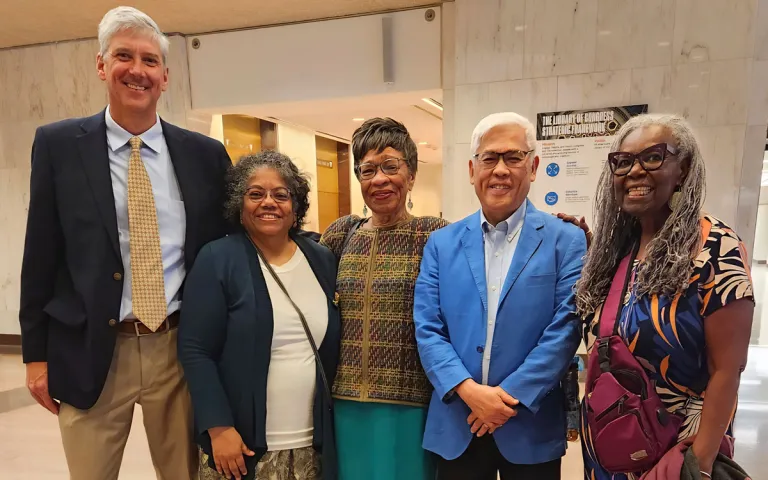
Dr. Clarice Gaylord (center) and Dr. Marva King (far right). | Photo courtesy of Altoria Gaylord
With a skeleton staff and almost no budget (she was given just $400,000 to cover a national initiative), she set about defining what environmental justice would mean inside the federal government. Her first move was structural. She created the National Environmental Justice Advisory Council (NEJAC), modeled on the scientific advisory boards she’d worked with at the cancer institute. The council would bring together experts, community leaders, and academics to ensure that research and funding reached the communities most affected by pollution.
She also established a program linking historically Black colleges and universities (HBCUs) with major research institutions like Harvard and Yale. The idea was simple but revolutionary: Pair universities that had access to federal grants with those that had access to communities. “White researchers told me, ‘They don’t want to talk to us,’” Gaylord recalled. “I told them, ‘That’s why you’ll work with Black colleges.’”
Through her efforts, HBCUs gained new visibility and funding in environmental research. She also launched a paid internship program for Black college students, ensuring that environmental policy would no longer be shaped without them in the room.
Resistance came swiftly. When President Clinton signed Executive Order 12898 in 1994, directing all federal agencies to develop strategies for environmental justice, many at the EPA dismissed it as an “unfunded mandate.” Offices responsible for clean air, clean water, and toxic waste argued that they already had laws to follow. Gaylord’s initiatives, they said, were redundant.
To build consensus around the initiative, she invited staffers to spend six months embedded in her department. They learned the principles of environmental justice, then returned to their divisions as in-house experts. “They didn’t want to do it at first, and they asked, ‘Who’s going to pay for this?’” she recalled. But soon, they saw the advantage.
Dr. Marva King was a contracting officer for the Department of the Navy when she read an environmental policy book and first learned about, and became interested in, environmental justice. “There was a program for women that wanted to break the ceiling, and I thought this could help me,” King said. “Then, I found out that they had just started a program at the Environmental Protection Agency called the Office of Environmental Justice and had hired Clarice Gaylord to be the director.” Soon enough, Gaylord had hired King.
Gaylord and King made the perfect pair, ensuring that communities had a seat at the table and that their voices were heard in the conversation on environmental justice. But navigating the politics of a federal agency as a Black woman wasn’t easy. “People are always doubting what you’re doing or not doing and also not respecting and appreciating you, and the way you are as a person,” King said. “Black women, especially those of us who manage others, get this a lot.”
The work came with an additional emotional toll as well. King said, “I’ve been to communities where I saw men come home and take their work clothes off on the porch and leave them. . . . They were trying to do what they could, but it made no difference because that pollution was still coming over from across the road, into their homes, their backyards, the schools, the churchyards. They were eating food from the contaminated soil, drinking contaminated water.”
By the time Gaylord retired in 1999, environmental justice was written into the EPA’s mission. The office she’d started in a basement, without even a phone line, had become one of the agency’s most influential programs. Under her direction, law schools received funding to train students in civil rights–based environmental law, and community programs documented exposure in low-income neighborhoods. Her commitment inspired a generation of environmental leaders who built on Gaylord’s foundation by tackling air pollution at the community level. Many of the EPA’s current environmental-justice programs still trace their frameworks directly to Gaylord’s initiatives.
Gaylord has received more than 30 awards, including from the State of Connecticut and Howard University’s Distinguished Alumni award. Yet she kept most of them tucked under her bed. “They were heavy,” she joked, “and I was done carrying things.”
When the Library of Congress called in 2024 to acquire her papers, she and her daughter, Altoria Gaylord, packed boxes of photographs, memos, speeches, and correspondence from her decades of public service. “We signed the paperwork donating mom’s work for the betterment of the American people,” Altoria said. The archive now preserves not just the story of one woman’s career but a record of how environmental justice became a federal commitment.
Gaylord’s advice for the next generation of environmental-justice workers? “It’s one thing to identify a problem,” she said. “But you have to be strategic and take action to see progress. It’s important to keep people informed on how to do the work, both now and in the future.”