 The Magazine of The Sierra Club
“A Stake Through the Heart of the Endangered Species Act”
How the Trump administration’s regulatory rollbacks threaten thousands of plants and animals with extinction
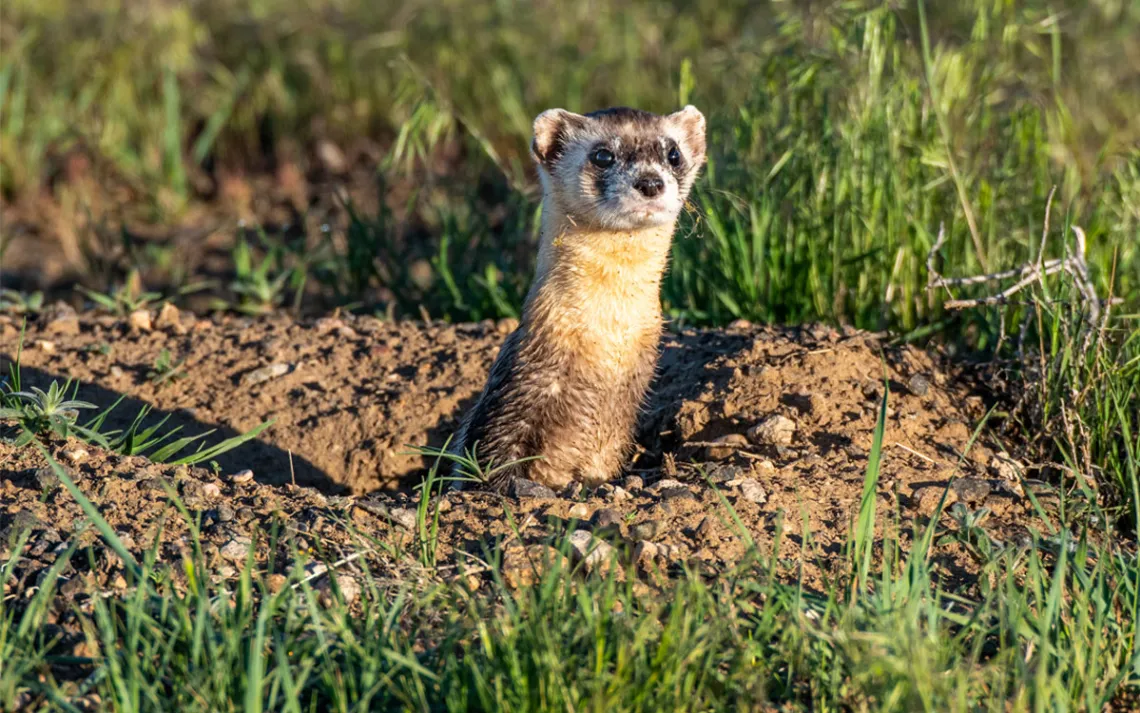
A black-footed ferret. | Photo by Kerry Hargrove/iStockphoto
In a country riven by political discord, there is one piece of legislation that almost everyone, regardless of party affiliation, seems to agree on. The Endangered Species Act has maintained broad levels of support since its passage in 1973, with 86 percent of Americans supporting the law, and a majority expressing that it should be more protective than it currently is. It’s also been effective, saving more than 99 percent of the species listed under its protection, including the bald eagle, the American alligator, and the black-footed ferret.
But recent regulatory rollbacks by the Trump administration undermine the popular legislation and put the more than 1,682 species currently listed as endangered or threatened at risk of extinction.
Among the new rules is a change in how the agencies that enforce the ESA, the US Fish and Wildlife Service and the National Marine Fisheries Service, define the word harm. For more than 50 years, the term has referred to anything that injures or kills a protected species, including “significant habitat modification or degradation.” The new regulation rescinds that definition, with the agencies stating that they will no longer consider destroying or modifying a species’ habitat a form of prohibited harm.
“This is really a stake through the heart of the Endangered Species Act,” says Jane Davenport, a senior attorney at Defenders of Wildlife, a nonprofit conservation organization that is challenging the changes in court. “It will still be illegal to … go out and find a northern spotted owl and shoot it dead. But it’s not going to be considered harm to cut down the old-growth trees without which northern spotted owls cannot reproduce.”
According to a 2019 study of species added to the ESA between 1975 and 2017, 88 percent of them were impacted by habitat loss.
“Habitat destruction is the biggest driver of extinction, and it was squarely in Congress's sights when the Endangered Species Act was passed,” said Ben Levitan, a senior attorney at Earthjustice, who is representing nine conservation groups suing the Trump administration over the change. “Everybody knew, just like everybody still knows, that if you want to save a species, it has to have habitat.”
Earthjustice is also challenging other recent changes to the ESA, including the repeal of the so-called blanket rule that gave threatened species the same protections as endangered ones. A threatened species is one not currently in danger of extinction but is likely to become endangered in the near future. Under the new regulations, threatened species will have no default protection against being harmed, killed, or captured. Any protections would be determined on a species-by-species basis, months or maybe years later.
Another change will give more weight to the economic consequences of designating a critical habitat, areas that are essential for the conservation of a species, such as feeding or breeding grounds, “giving industry a lot of power to interfere with the designation of that habitat,” says Levitan. For example, if a timber company can offer a reason that exclusions from critical habitat would lead to increased timber production, the services can defer to the industry’s desires, he added.
While the administration says these changes will “strengthen American energy independence, improve regulatory predictability, and ensure federal actions align with the best reading of the law,” Davenport argues they’re intended to “give carte blanche, wherever possible, to favored industries: the oil and gas industry, the mining industry, and the logging industry.”
Given the broad bipartisan support the ESA has enjoyed over the past 50 years, Levitan believes that the administration has attempted to make these sweeping changes without drawing too much attention to them.
“It’s notable that the regulations so far have been released on two consecutive Friday afternoons, spreading it out across lots of different regulations, just kind of drip, drip, drip of attacks to make it harder for people to see the full landscape of it,” he said. “It’s indicative of how little they want the public to understand what they're doing.”
Still, all hope is not lost, conservationists caution. At least a dozen environmental groups, along with three tribal nations and a coalition of 17 states, have filed lawsuits to block one or all of the changes.
“The law and the science are on our side in these cases,” said Levitan. “We are prepared to go to court and lay out those arguments and show why the Endangered Species Act demands that the services faithfully implement the obligation to protect these species.”
While endangered and threatened species will surely bear the brunt of these changes, humans will not be spared from their impacts.
“When you protect clean water for the Florida manatee, you're protecting clean water for people. When you protect forests for the northern spotted owl, you're ensuring that they're there for the American public to hike and hunt and fish in,” Davenport said. “We rely on the same exact ecosystems as all of these endangered and threatened species.”