These Indigenous Paddlers Are Advocating for Free-Flowing Rivers
Tribal-led activists stepped up at COP30 and have continued their movement here at home
Photos by Felipe Zanotti, courtesy of Ríos to Rivers
Keeya Wiki, a member of the Yurok and Māori Tribes, grew up near the mouth of the Klamath River in Northern California—the site of a major conservation victory for water protectors in the state. Last year, following decades of tribal-led advocacy, four dams were completely removed from that river’s main stem.
“Hydropower is the fourth-biggest methane emitter in the world globally,” Wiki said. “[These projects] don't only devastate fisheries and river ecosystems; they are literally harming the atmosphere.”
Wiki, Ruby Williams, and Kiahna Allen were part of an Indigenous delegation coordinated by international nonprofit Ríos to Rivers to attend COP30, the UN climate change conference, which took place in Belém, Brazil, in November. They served on discussion panels and connected with Indigenous youths fighting hydropower projects in South America.
“I just felt like COP30 was the perfect opportunity,” said Allen, who is an enrolled member of the Confederate Tribes of Warm Springs and a San Carlos Apache and Klamath Modoc descendant. “It's a global conference with Indigenous people all over the world coming together to uplift each other [around] climate issues.”
The Rivers for Climate Coalition, which Ríos to Rivers is leading, is hammering in the message of hydropower as a false climate solution at COP30 and elsewhere.
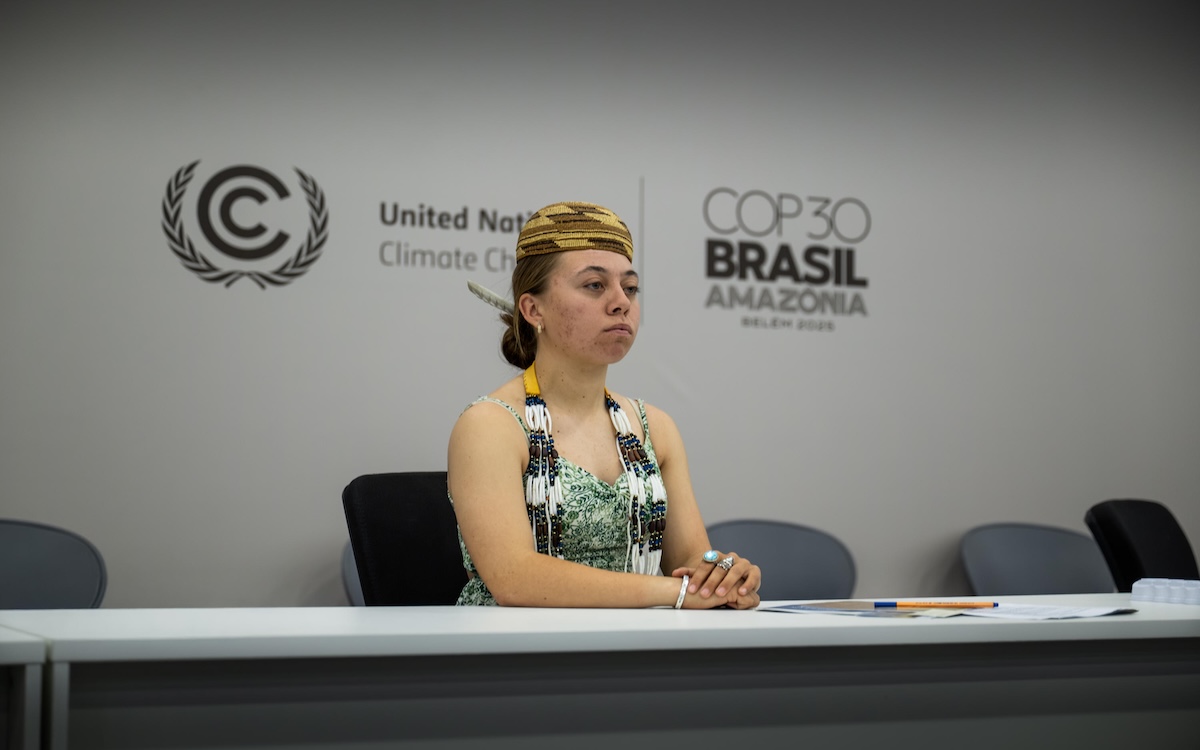
Keeya Wiki. | Photo by Felipe Zanotti, courtesy of Ríos to Rivers.
While they were in place, the Klamath River dams and hydropower facilities produced an estimated 275,000 metric tons of CO2 equivalent per year. Most of this was methane, produced as organic material trapped in the reservoirs slowly decomposed. Now, newly planted forests and grasslands are reclaiming the reservoir footprints.
Tell the Dam Truth, which is part of the coalition, has developed a modeling tool called All-Res to capture the lifecycle emissions associated with hydropower projects, including decommissioning. With the Klamath dam removals, they finally have a real-world example.
“You can actually talk about what the river was like before the lifecycle of a dam, and what it can be like afterwards,” says Gary Wockner, cofounder of Tell the Dam Truth and a long-time advocate for free-flowing rivers. “We basically have an emissions source which will slowly turn into an emissions sink.”
The three young women have roots in different parts of the vast watershed, which stretches from Southern Oregon to Northern California. All three joined a Ríos to Rivers program called Paddle Tribal Waters several years ago after their mothers signed them up. Reluctant or merely curious at first, all three quickly discovered a passion for kayaking, a community of peers and mentors, and a deepened relationship with the Klamath River.
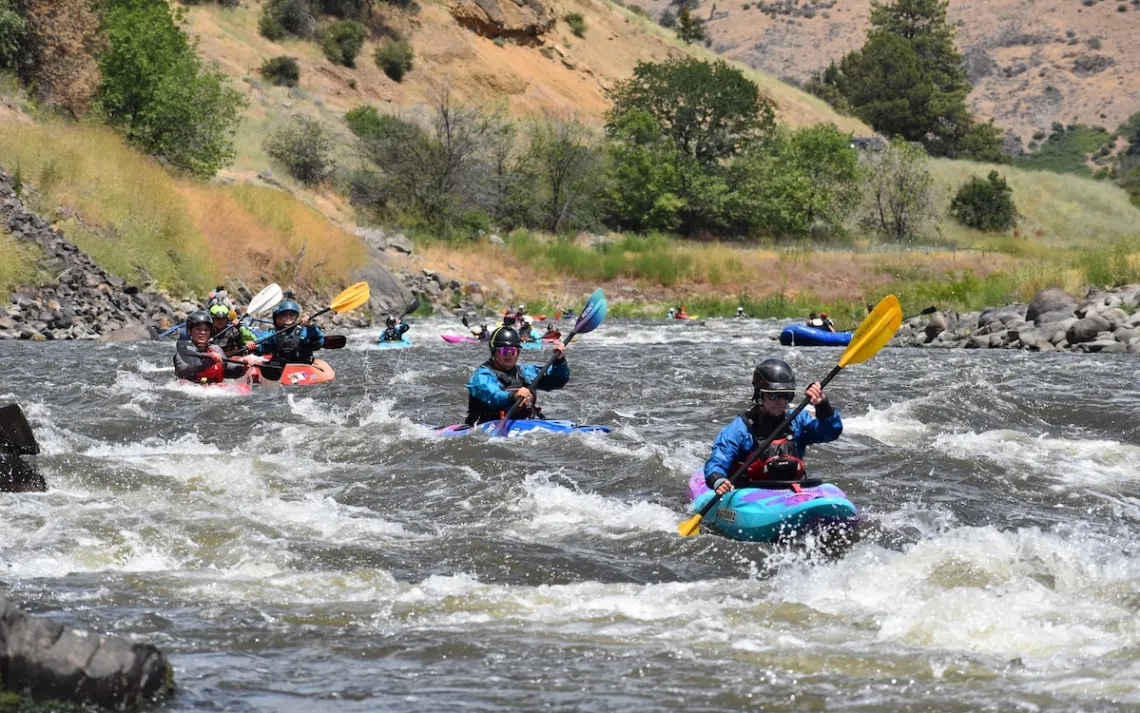
This summer, they took part in the First Descent, where 40 Indigenous youths from across the watershed embarked on a historic journey down the Klamath River, less than one year after the four dams had come out.
The 30-day, 300-mile trip was a grueling physical test: hot days in the exposed river canyon, technical rapids, and newly exposed sections of whitewater. The students honed more than their paddling skills. Every stop drew media attention, and they grew into their roles as confident spokespeople.
This fall, Wiki flew to New York to appear on the Kelly Clarkson Show with her aunt, Yurok attorney and activist Amy Bowers Cordalis, an experience she describes as “surreal.”
“All I did was spend 30 days being a dirt bag kayaker with my best friends, laughing and giggling and having the time of my life,” says Wiki. “And now I'm on daytime television.”
Hayley Stuart, who coordinated the Ríos to Rivers delegation to COP30, says watching these young people transform into confident leaders has been one of the most satisfying parts of her job. “I don't even think they fully realize how much they've grown, how people do listen to what they say, and what they say matters,” she says.
During the first week of the conference, Indigenous activists stormed and blockaded the main entrance, demanding their territories in the Amazon be protected from mining, logging, and other extractive industries. The Klamath River students took part in marches, joining thousands of Indigenous climate activists and their allies in the streets of Belém.
Even though the topic was nearly absent from the official negotiations at COP30, dams are a huge issue in the Amazon region. In Brazil, enormous hydroelectric projects like Belo Monte have compromised ecosystems and Indigenous ways of life. Three dams have been built on Chile’s Biobío River since the 1990s, and a new hydropower project is under construction. In Bolivia, local communities are fighting mega-dam proposals that, if built, would displace thousands of Indigenous people and inundate a national park.
The Ríos to Rivers tribal delegation included students from Chile and Bolivia, where the nonprofit helps coordinate programs similar to Paddle Tribal Waters. The nonprofit organizes exchanges where paddlers from one river basin travel to another to meet other youths, learn about the threats facing their rivers, and share advocacy strategies.
Allen, Wiki, and Williams traveled to Chile’s Alto Beo region on an exchange last year. While paddling around a bend on the Biobío River with a group of Mapuche-Pehuenche kids and community members, they encountered a devastating sight.
“They just had clearcut this whole forest and were in the process of preconstruction,” says Williams. “We called it getting into a time machine, because what we were going through a hundred years ago is what they're going through now.”
Some of those same Mapuche-Pehuenche youths joined the First Descent paddlers on the Klamath River last summer, where they witnessed a river in the early stages of healing after dam removal.
“They went home and they were trying to tell everyone, this is possible; these kids just did this and we could do it too,” says Williams. “No one believed them.”
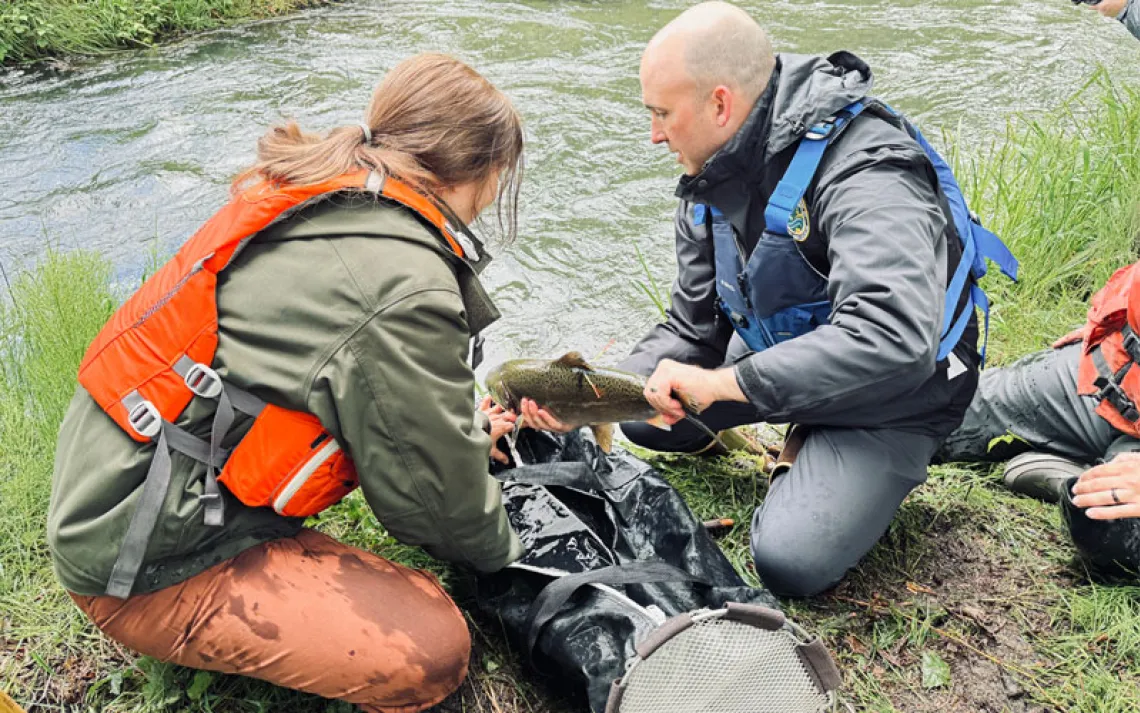
On the Klamath River, salmon are already finding their way back into streams they haven’t inhabited in over 100 years. What’s happening on the Klamath is proof that enormous and devastating infrastructure projects are not permanent—that rivers are resilient, and fish runs and cultural connections can be restored.
Williams wants to return to Chile within the next year so she can share the hopeful story of her home river with the Mapuche-Pehuenche directly. Allen has started a nonprofit focused on river advocacy and environmental justice. Wiki, who is 17, is waiting to hear back from several universities to which she applied. “I really want to protect our land, our waters, my people, and my people's way of life,” Wiki said, “particularly through law and public policy.”