Trump Administration Sets Stage for Attack on National Monuments
Here’s why the recent Department of Justice opinion on national monuments is likely to fail
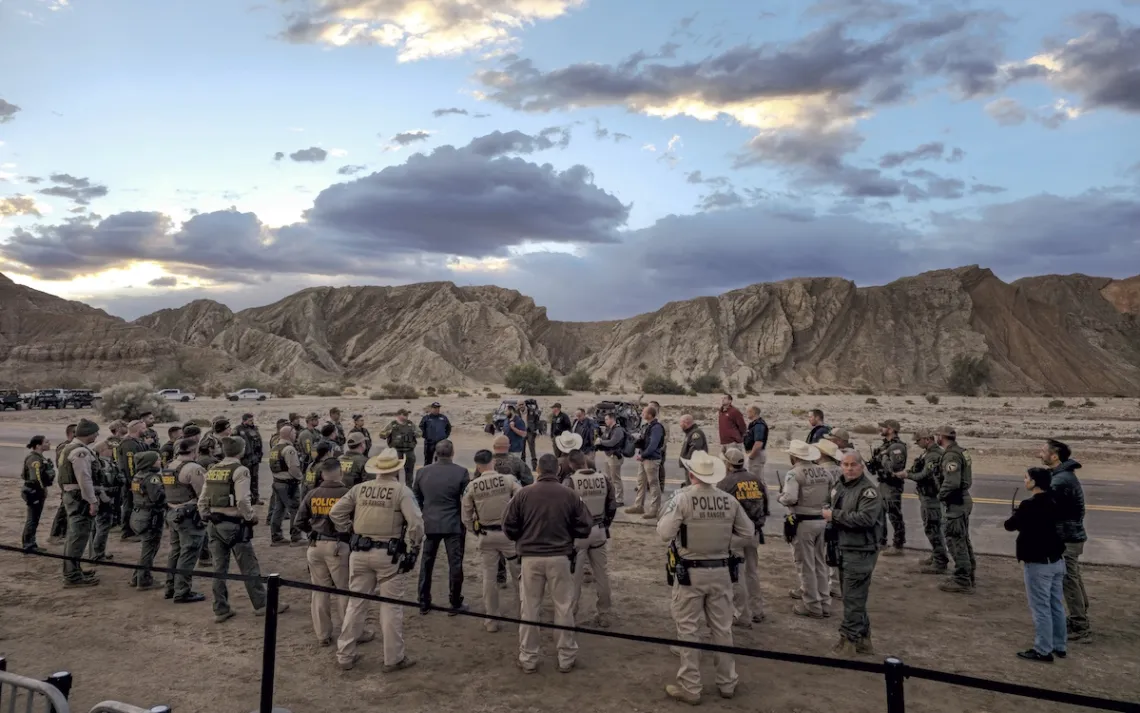
Rangers and law enforcement officers gather before the announcement of the new Chuckwalla National Monument in California. | Photo by AP Photo/Damian Dovarganes
For Donald Medart Jr., a Fort Yuma Quechan Tribal member and outreach specialist, Chuckwalla National Monument is more than a desert. The 740,000-acre monument protects an iconic southeastern California landscape and connects two of America’s iconic desert ecosystems—the Mojave and Sonoran Deserts.
Descending from 4,500 feet above sea level to 50 feet, the landscape is rich with biodiversity and protects a wildlife corridor for the endangered Agassiz’s desert tortoise and the desert pupfish. Some of the monument's native plants, like the Mecca aster, Orocopia sage, and Munz’s cholla, grow nowhere else on Earth.
The national monument honors and protects the home of 13 tribal nations, including the present-day Cahuilla, Chemehuevi, Mohave, Quechan, and Serrano Indian tribes. Medart explained, "[Chuckwalla] is a place where we as a people have thrived since the beginning of time. For us, it's not only a place of history, but a place for our future generations to learn more about what it truly means to be Quechan."
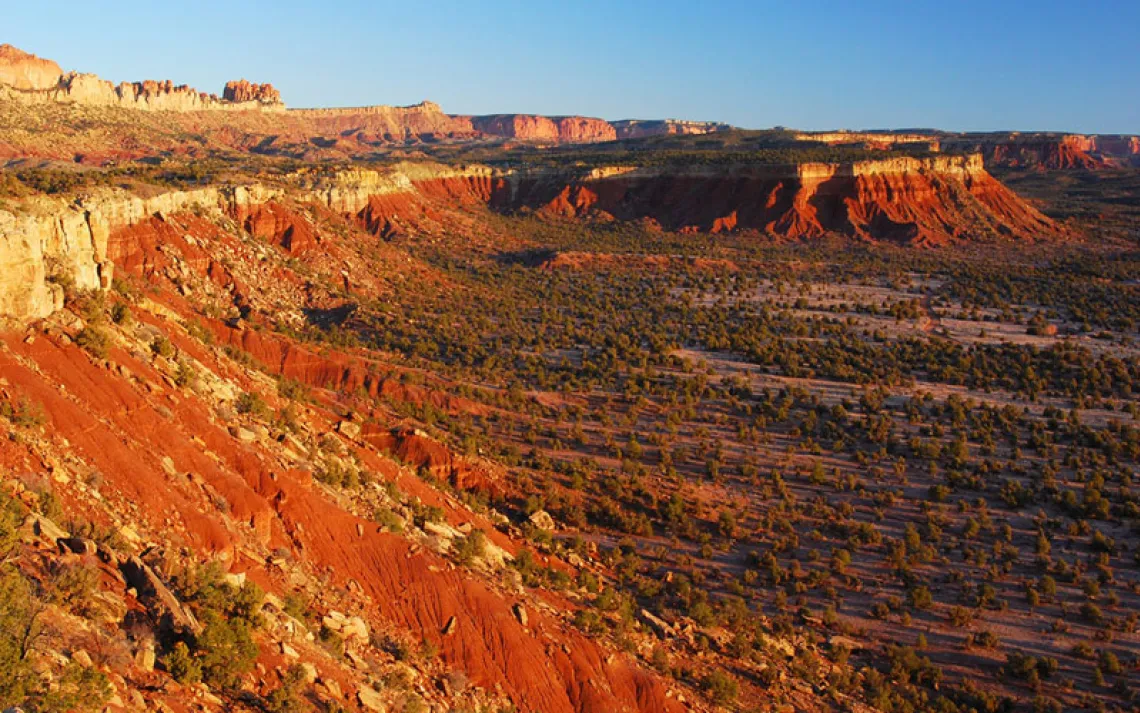
Designated on January 14, 2025, by President Biden, Chuckwalla is among six national monuments the Trump administration is threatening to eliminate. Just weeks after Chuckwalla was created, President Trump declared an "energy emergency" and ordered the Interior Department to review recently created monuments. The review includes Sáttítla Highlands (California), Organ Mountains-Desert Peak (New Mexico), Bears Ears (Utah), Grand Staircase-Escalante (Utah), Baaj Nwaavjo I'tah Kukveni-Ancestral Footprints of the Grand Canyon (Arizona), and Ironwood Forest (Arizona). Legal experts and monument proponents have been wary of such a move, as the Antiquities Act, which allows presidents to create national monuments, doesn’t give them the authority to revoke national monument designations.
However, back in May, the Department of Justice released an opinion that could set the stage for President Trump to do just that. The memo, issued by the Deputy Assistant Attorney General Lanora Pettit, stated that a president can reduce or revoke national monuments. The 50-page document counters almost a century of legal interpretation of the Antiquities Act. Since President Theodore Roosevelt signed the Antiquities Act into law in 1906, it has been used by 18 presidents from both parties to designate 168 monuments.
Because the Antiquities Act does not include language about presidents revoking monuments, the DOJ memo concludes, “We think that the president can, and we should." This contradicts a 1938 analysis by Franklin D. Roosevelt's administration, in which Attorney General Homer Cummings made clear that it is unlawful for a president to use the Antiquities Act to dismantle national monuments.
Axie Navas, the Wilderness Society designation campaigns director, said, "This does not make changes to the Antiquities Act. It doesn't make changes to specific monuments. It's more writing on the wall that these places are in the Trump administration's crosshairs. It's just more evidence that the Trump administration is coming after these places in a very politicized way."
Courts disagree with Trump
Trump's legal counsel also asserts that the president can reduce monuments because the Antiquities Act states that monument designations “shall be confined to the smallest area compatible with the proper care and management of the objects to be protected.” Yet for over a century, the courts have continually defended the president's ability to create or enlarge, but not dismantle, national monuments.
In 1908, the Grand Canyon was the first monument designated to protect an area of 100,000 acres or larger. A prospector took the Taft administration to court, citing that a president lacked the authority to designate such a large monument using the Antiquities Act. In 1920, the Supreme Court unanimously disagreed, affirming the Grand Canyon's scientific value. Since that case, presidents have designated 38 still-standing landscape-scale national monuments.
In 2017, Trump reduced Bears Ears (originally 1.35 million acres) and Grand Staircase-Escalante National Monuments (originally 1.89 million acres) in southern Utah by 85 percent and 50 percent, respectively. Indigenous and environmental groups immediately sued the Trump administration. These cases were paused after Biden restored both monuments in 2021.
In 2022, Utah's attorney general used taxpayer dollars to file a lawsuit, alleging that Biden exceeded his authority in the use of the Antiquities Act. A US district judge dismissed the case in 2023 and upheld the president's ability to use the Antiquities Act to designate monuments, asserting that the courts cannot second-guess that authority. Last year, the Supreme Court refused a pair of cases seeking to weaken a president's ability to designate monuments using the Antiquities Act.
The new DOJ opinion tugs on this worn thread, using Chuckwalla National Monument as a case study. It argues that the monument proclamation, "makes little effort to describe how its massive expanse is nonetheless the “smallest” area necessary for their protection."
Medart said small parcels would be unable to protect a cultural landscape like Chuckwalla, where "cultural sites prove evidence of our oral histories that have been told since time immemorial." He explained, "Chuckwalla is part of a greater landscape that is all interconnected in a spiritual and religious way to the other landscapes that surround it ... for us it's one landscape and there's no dividing it."
Assault on public lands
The DOJ opinion comes as part of a larger, multipronged assault on public lands. Thousands of Interior Department employees have been laid off by the Department of Government Efficiency. Deeper cuts are planned along with staggering budget reductions to land management agencies.
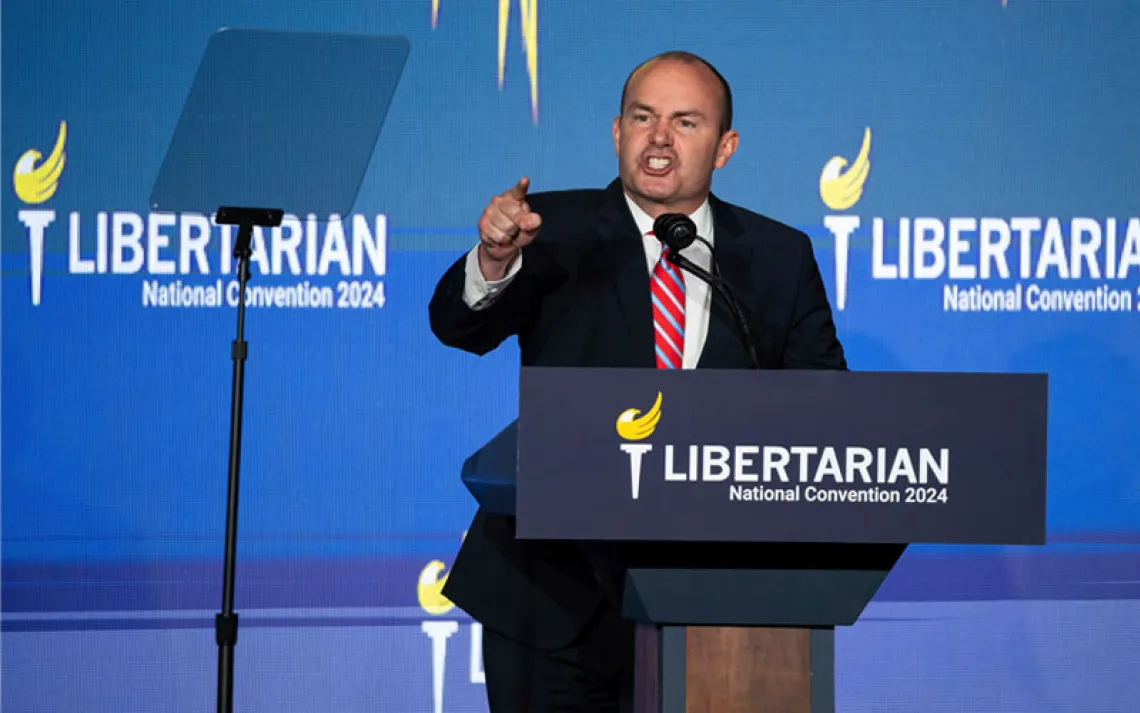
In January, Representative Celeste Maloy (R-Utah) introduced the Ending Presidential Overreach on Public Lands Act, aiming to repeal the Antiquities Act. Just last month, Senator Mike Lee (R-Utah) proposed a provision in the FY26 Budget Reconciliation Bill that would have mandated the sale of millions of acres of public lands.
Steve Bloch, an attorney for Southern Utah Wilderness Alliance, said, "[N]obody should be surprised that the Trump administration's Justice Department came up with the opinion that the president wanted and asked for." Should the president proceed with reducing or revoking monuments, Bloch said, "The Utah Wilderness Alliance, Sierra Club, and others will challenge that decision in federal court. Local partners and national conservation groups and Native American tribes and state governments, in some instances, will challenge these unlawful decisions and will hopefully prevail in court."
Public support
Yet, when it comes to monuments, no decisive actions have been taken. John Leshy, who served as an Interior official in both the Carter and Clinton administrations, thinks this is because of public support for monuments. "I think they're hesitating, frankly, because all the opinion polls show that monuments and protecting public lands are incredibly popular practically everywhere across the board,” Leshy said. “So, I think that makes them a bit nervous."
The bipartisan support for national monuments is incredibly strong: 89 percent of Western voters support maintaining existing monument designations. In Utah, over 70 percent of voters support continuing to protect Bears Ears and Grand Staircase-Escalante National Monument. "Americans more broadly care so deeply about the fate of their federal lands and have a deep and abiding love and appreciation for national monuments,” Bloch, who is also the legal director for SUWA, said. “No surprise that in Utah, four of our five national parks were born from national monuments. As national monuments, nobody looks back on those designations as a bad idea."
While the DOJ memo claims that new monuments were not created with public participation, the monument designation process requires local input. For Chuckwalla National Monument's formation, Medart said, "This area received an overwhelming amount of support, not only from the 13 affiliated tribes, but [from] the general public of the Coachella and Imperial Valleys that all stood and banded together to support the Chuckwalla National Monument."
Bears Ears National Monument was designated in 2016 with community support for a proposal led by five tribes: Hopi, Navajo (Diné), Ute Indian Tribe, Ute Mountain Ute, and Pueblo of Zuni. In 2022, the Bears Ears Inter-Tribal Coalition (BEITC) signed a historic agreement to jointly manage the monument with the Bureau of Land Management and the Forest Service. This legally binding agreement remains in effect regardless of the monument's status.
Curtis Yanito, Navajo Nation council delegate and co-chair of the Bears Ears Commission, said, "I take this new DOJ opinion with complete concern. Presidents change, but the Antiquities Act has long been used to protect sacred places. . . . We remain committed to ensuring the land is cared for through a respectful, collaborative approach that honors Tribal sovereignty and the generations who have defended this landscape. It is for the generations of tomorrow."
Tribes affiliated with Chuckwalla National Monument are in the process of forming an official tribal coalition. Medart said the Trump administration's actions may "slow the process and may discourage conversation between the tribes and BLM to develop stewardship documents," but it does not impede their efforts to move forward.
The future of national monuments will continue to benefit from the same public support that spurs their designation. Bloch asserted that sustained public engagement is critical. "People do need to stand up and be counted," he said. That can be, "attending rallies that are in support of federal lands, writing to their senators, their members of Congress, opposing the selloff of federal lands, supporting national monuments. It really takes that extra effort, but we know these lands are worth it."