 The Magazine of The Sierra Club
Trump, Zeldin Try to “Unleash” Dirty Energy With Repeal of Pollution Standards
The EPA’s rollback of power plant emission standards puts public health, climate at risk
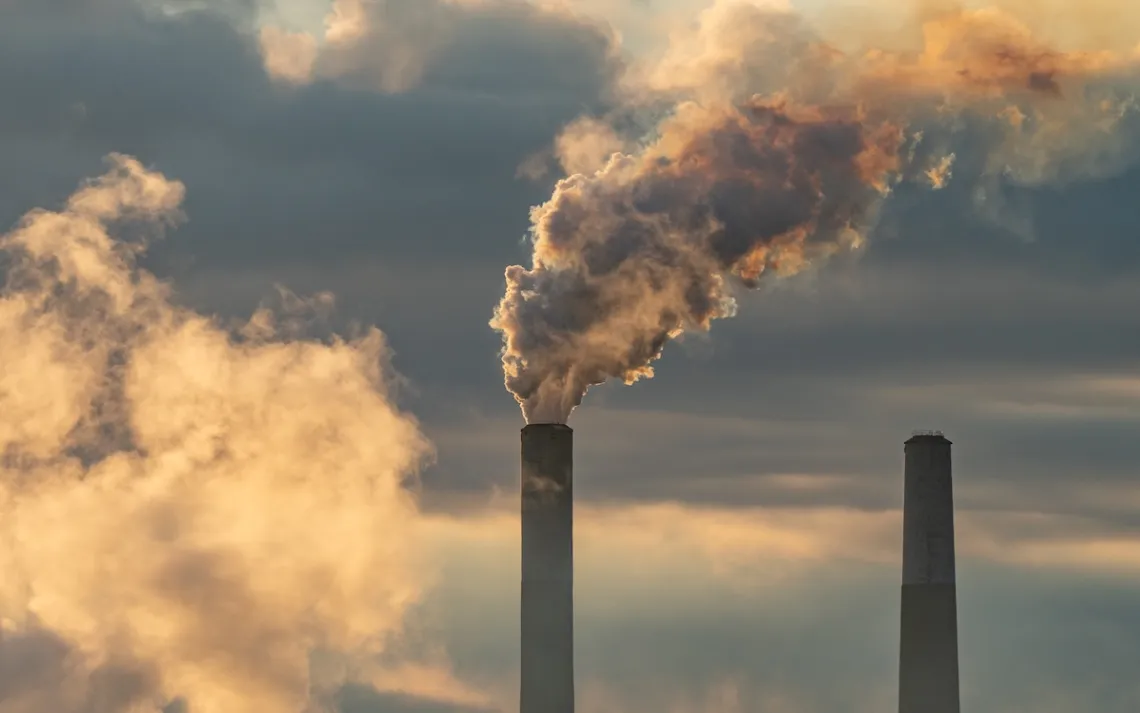
Pollution and steam rise from the stacks of the Miami Fort Power Station in North Bend, Ohio. | Photo by Jason Whitman/NurPhoto via AP
The Trump administration has rolled back Biden-era carbon pollution standards and unveiled its plan to eliminate all controls on greenhouse gas emissions from power plants. The announcement comes as the climate crisis—driven by these same emissions—continues to accelerate.
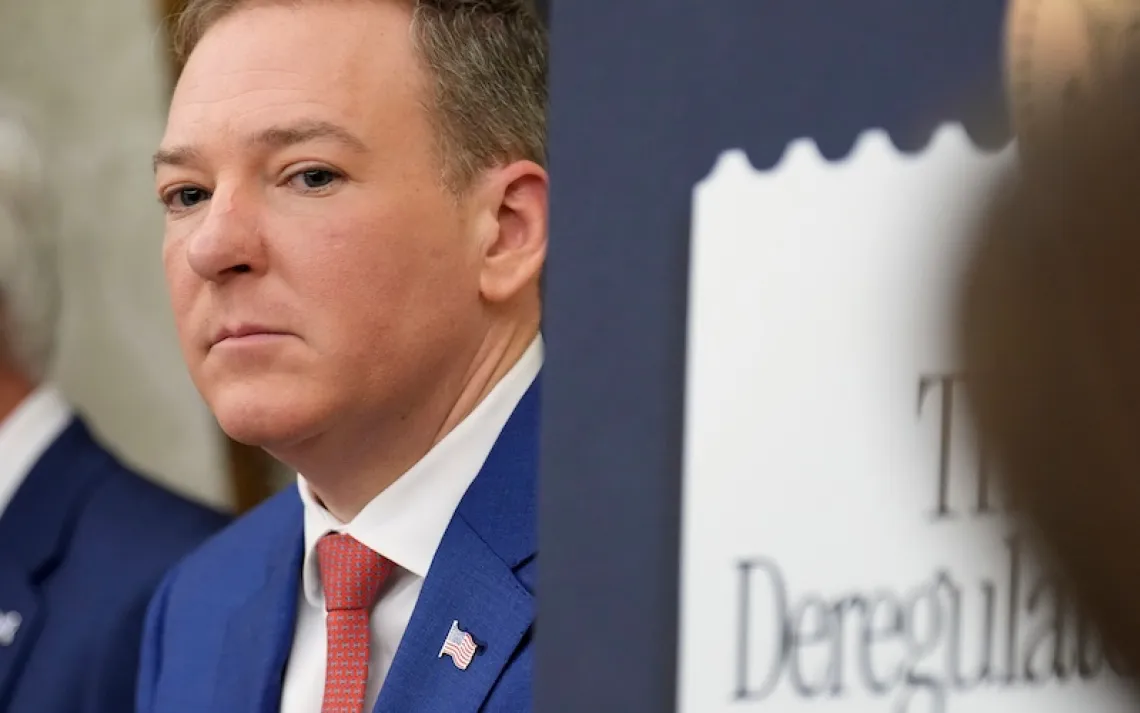
The Environmental Protection Agency issued a final rule on Monday repealing the 2024 greenhouse gas standards for power plants and also announced a proposal to rescind the endangerment finding for the power sector, which would wipe out all climate regulations for fossil-fueled electricity generation. The head of the EPA, Lee Zeldin, made the announcement during the G20 Energy Abundance Ministerial in Houston, Texas—a state that has more GHG emissions from coal and gas plants than any other in the country.
The Trump administration has rejected long-established science around the threat carbon pollution poses to public health and welfare. In February, when the agency scrapped the endangerment finding and tailpipe emissions standards for motor vehicles, it argued that the EPA lacks the authority under the Clean Air Act to regulate power plant emissions based on “global climate change concerns.” “Any potential public health harms are too uncertain, conjectural, remote, and convoluted to tie specifically to the US power sector,” the EPA said.
Established science, and the EPA’s own data, shows that claim to be false. Power plants are one of the largest sources of climate pollution in the United States—second only to the transportation sector—and are contributing to dangerous climate change that, in the EPA’s own words, is “threatening public health and affecting ecosystems at multiple levels.” Fossil fuels account for nearly 60 percent of electricity generation, and the electric sector is responsible for about a quarter of all US greenhouse gas emissions. The US is currently the world’s second-largest emitter and the biggest historical generator of climate pollution.
The Supreme Court has recognized and upheld the EPA’s authority to regulate greenhouse gases for nearly two decades. In its landmark 2007 decision in Massachusetts v. EPA, the court held that greenhouse gases are pollutants under the Clean Air Act. That decision led the EPA to issue its endangerment finding in 2009. The finding has withstood subsequent legal challenges. In 2011, the Supreme Court affirmed in American Electric Power v. Connecticut the EPA’s greenhouse gas regulatory authority (and held that this authority displaced federal common law pertaining to greenhouse gas emissions). Later, in its 2022 ruling in West Virginia v. EPA, the high court rejected one particularly controversial approach to regulating power plant carbon emissions but did not undermine the agency’s underlying authority to control those pollutants, provided that the EPA relies on emission reduction measures that can be applied at plants themselves.
Under the Biden administration, the EPA did just that, issuing carbon pollution limits in 2024 for existing coal and new gas plants based on available pollution-control technologies. According to the Biden administration, the rule was projected to eliminate 1.38 billion metric tons of carbon pollution and provide $370 billion in climate and public health benefits through 2047—including preventing 1,200 premature deaths by 2035 alone.
EPA’s action “will harm the health of families across the US”
The EPA says that its move to eliminate climate pollution controls for the electric sector will “unleash the full potential” of coal and gas resources, including boosting coal production for power sector use by more than 10 times.
This would be disastrous for the climate and public health, environmentalists say. They note that the agency has abandoned any consideration of health benefits in regulatory assessments and instead only calculates industry compliance costs.
“There are real, quantifiable health impacts associated with allowing these coal and gas facilities to pollute, and this administration is just completely ignoring them,” said Patrick Drupp, the director of federal climate policy for the Sierra Club.
Health and climate damages from the rollback are projected to be four to eight times greater than they otherwise would be, according to an analysis by Resources for the Future. In addition to more carbon pollution, the rollback is expected to result in increased emissions of pollutants like sulfur dioxide and nitrogen oxides, as well as higher electricity costs.
“It’s going to lead to more extreme weather, higher electricity bills, higher insurance rates, and more disaster costs all passed onto families,” Drupp said.
Climate attribution science is increasingly capable of tracing climate change impacts and extreme weather events like heat waves not only to climate change writ large.
“Eliminating the rule to clean up carbon pollution from coal- and gas-burning power plants will harm the health of families across the US,” American Lung Association president and CEO Harold Wimmer said in a statement. “EPA not only has the statutory authority to regulate emissions from power plants, it has the legal responsibility to address climate change. EPA’s concurrent proposal attempting to absolve the agency from that responsibility will leave lung health at greater risk.”
Zeldin makes no mention of health impacts in the announcement of the repeal. Instead, he claims that Americans “will see a decrease in electricity prices.”
For years, the energy sector was already moving away from coal as an energy source, with the economics no longer workable, in part because of increasingly cheap renewable energy. Since 2021, the cost to generate coal power has increased faster than inflation.
Yet the Trump administration has gone out of its way to prop up the declining coal sector, shoveling over a billion dollars in taxpayer-funded subsidies to the industry and repeatedly issuing emergency orders forcing dirty and costly coal plants to continue operating past their scheduled retirement dates. Those efforts often fail legal scrutiny. Last week, the DC Circuit Court ruled that the Department of Energy’s emergency order propping up the J.H. Campbell coal-fired power plant in Michigan was illegal. The Sierra Club and Earthjustice, along with the State of Michigan, prevailed after litigating in response.
The move to repeal power plant pollution standards comes amid a slew of other deregulatory actions the Trump administration has pursued. In addition to the power plant rollback, the administration has eliminated all greenhouse gas emissions standards for motor vehicles; withdrawn Biden-era mercury and air toxics standards; delayed implementation of methane controls for oil and gas sources; and repealed restrictions on super-polluting hydrofluorocarbons used in refrigerants.
At a National Coal Council meeting in July, Zeldin boasted about delivering on many of the items on the coal industry’s wish list, and promised that he would work to see the list completed. “We’ll have a lot to celebrate the next time you all get together again in January,” Zeldin told the gathering of industry executives and administration officials.
“We will see them in court”
Environmental groups and Democratic lawmakers sharply condemned the Trump EPA’s latest move, calling it “utterly reckless” and a “shocking betrayal of the American people” at a time when the damaging impacts of the fossil-fueled climate crisis are intensifying.
“This is coming after a summer when we shattered heat records,” Drupp told Sierra. “We’ve got a supercharged El Niño going on, wildfires are raging, and people everywhere are feeling the effects of extreme weather and climate change.”
“Just this summer, we’ve already seen many devastating extreme weather events linked to climate change: the sweltering July 4 heat dome, Gulf Coast flooding caused by Tropical Storm Arthur, the early summer wildfires blazing across the Midwest, and the rapidly growing ‘Super’ El Niño in the Pacific,” noted a statement from leaders of the House Sustainable Energy and Environment Coalition. “EPA has both the authority and obligation under Section 111 of the Clean Air Act to protect Americans from sources of dangerous air pollution, including power plants. Instead, thanks to Trump’s Polluters First Agenda, not only are our nation’s leaders choosing to rewind the clock and roll back power plant pollution standards, they are going even further to block future administrations from acting to stop planet-warming pollution from power plants.”
Environmental advocates are planning to mount legal challenges to the repeal of the Biden-era standards, and to push back hard against the proposed repeal of the power plant endangerment finding.
“This cannot stand,” said Manish Bapna, president of the Natural Resources Defense Council. “Ignoring the immense harm to the public from this pollution is a clear violation of the Clean Air Act and of Supreme Court precedent. We will see them in court.”
The public can weigh in on the proposed repeal of the power plant endangerment finding through a comment period and public hearing. The EPA, though, appears to be moving swiftly to advance its proposal. The agency says it will hold a public hearing 15 days following publication in the Federal Register, and a public comment period will be open for 45 days.
“We’re exploring all of our legal options as well,” Drupp said. “We’re going to do everything in our power to fight it.”