 The Magazine of The Sierra Club
When a Country Music Star Joins the Fight Against Coal
A proposed coal mine threatened the wild places Corb Lund grew up in. He decided to do something about it.

Photo courtesy of Corb Lund
It’s not every day that a country music star drops touring and writing songs to join the fight against fossil fuels—in particular, coal. But five years ago, that’s exactly what Corb Lund did.
“People have accused me of doing this to further my career,” Lund says, a narrative he denies. Politics, he says, also has nothing to do with it. “I don't have a political side. I don't have leanings. My belief system is kind of à la carte. I don't align with Left or Right. I don't care about political parties. It's nothing to do with that for me.”
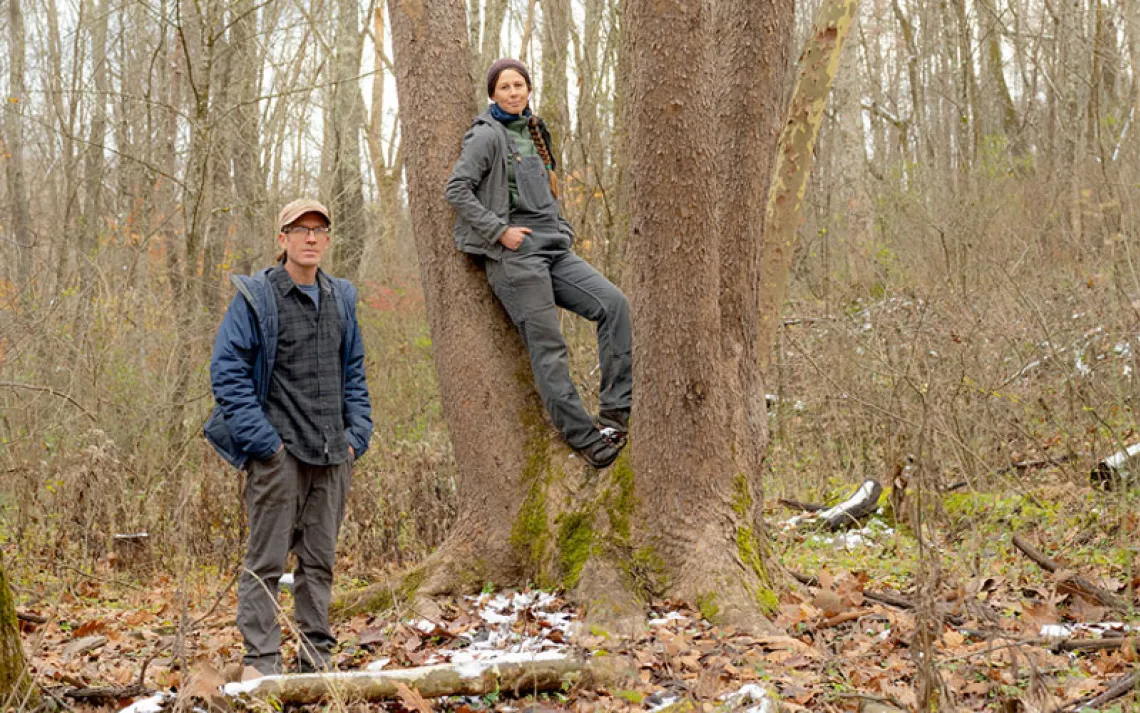
Lund, a Canadian musician, grew up on a ranch near Waterton Park in southwestern Alberta. The home has been in his family for 120 years, dating back to when his great-grandfather homesteaded it in 1902.
“I spent a lot of time in my youth there on horseback with my grandfather,” Lund recalls. “We’d ride every inch of that place, and there’s a creek, Lee Creek. Every day the topic of conversation would be the water—how high it is, how low, how clear, how muddy. The soil health and the grass health were also constantly discussed.”
The territory is his backyard—the foothills of his youth. And he wants to see it passed down to future generations. “When you’re passing it on to another generation, you view yourself as a custodian,” Lund explains. “All our decisions about land and water are based on long-term health.”
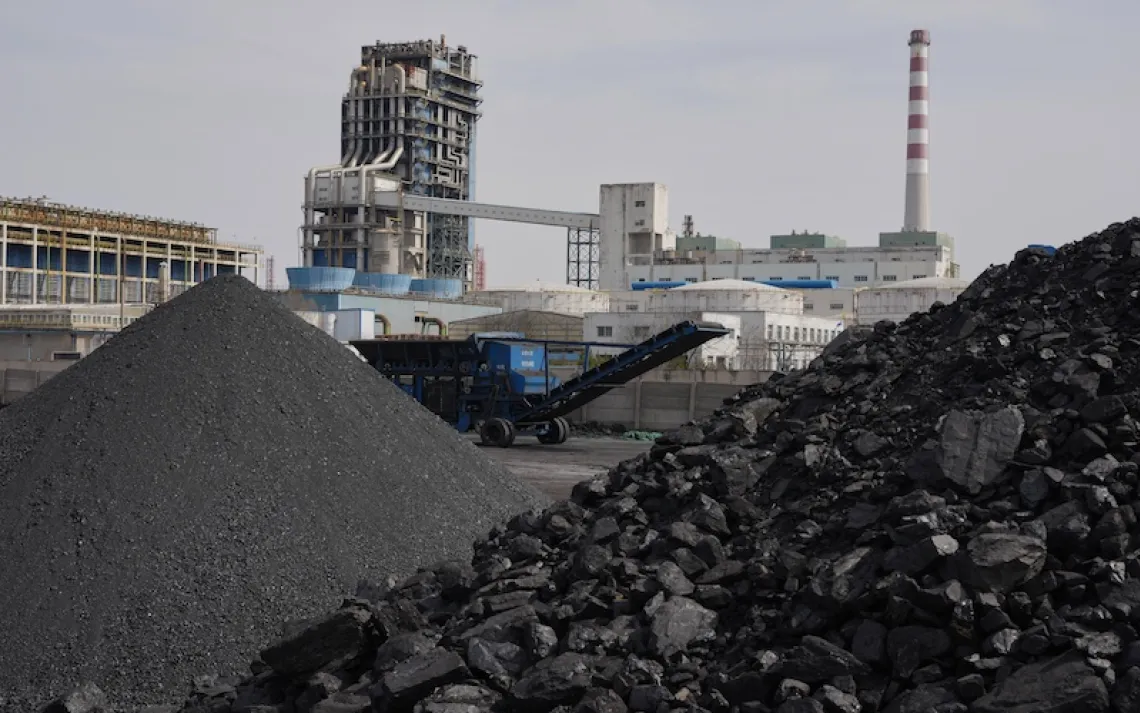
When a proposed coal mine had the potential to devastate the pristine lands and waters of that backyard, Lund was motivated to act. The Grassy Mountain Project, proposed by Northback Holdings, a corporation owned by Australian billionaire Gina Rinehart, would have excavated up to 2.5 million metric tons of coal per year. The company promoted it as good for the community, saying it would create jobs.
Environmental advocates noted that it also had the potential to devastate nearby watercourses. “The [proposed] project is right at the headwaters of the Old Man River, which is where 200,000 people get their drinking water,” Lund says. “Downstream is a multibillion-dollar food processing agriculture business in Lethbridge that will be threatened by selenium contamination.”
Coal consistently ranks as the dirtiest fuel on the planet. Burning coal for energy produces the highest amount of carbon dioxide emissions per unit of energy. It is also responsible for severe air pollution impacts on surrounding communities where that coal is being extracted.
In 2020, the Alberta government quietly pulled the plug on a moratorium on new coal mines that had been in place since the 1970s without public consultation—a policy that protected the Rocky Mountain foothills from mining. That opened the door for Northback to propose Grassy Mountain.
A generational rancher directly in the path of the proposed mine, Laura Laing of Plateau Cattle Company, found out about the Grassy Mountain Project and worked quickly to mount an opposition. She thought of Lund—the Rocky Mountains' highest-profile musician. Laing didn’t know him personally, but she knew that he had grown up in the area and was a rancher’s son. So she cold-called him.
“I asked for his help in raising awareness, and thankfully he agreed,” Laing says. “If it weren’t for his voice and platform, I truly believe we would already have open-pit coal mining across the eastern slopes.”
She says that the day after Lund spoke publicly on the issue, there were six major media outlets at Laing’s ranch. “Albertans started paying attention, and many were outraged,” she adds. “His involvement helped turn a local issue into a provincial conversation, and we’re incredibly grateful for that.”
Lund joined a movement of local citizens, environmental advocates, and tribal leaders to oppose the mine. Thanks in part to their efforts, in 2021 a joint federal-provincial review panel rejected the mine, citing significant and unavoidable environmental damage, including risks to water quality, wildlife habitat, and the broader ecological integrity of the region. But the fight wasn't over.
Despite a 2024 announcement banning new open-pit coal mines in the region, the rules conspicuously excluded Grassy Mountain, leaving the door open for a project that had already been deemed too harmful to proceed.
Over the last five years, Lund, Laing, and their allies have deployed a mix of rallies, media campaigns, meetings with government officials, and other forms of protest to shut down Grassy Mountain.
Then, at a public meeting, Alberta Premier Danielle Smith last June proposed a citizen’s petition. “She was very hostile towards coal mining. The crowd was very hostile,” Lund explains. “We are attempting to get the 178,000 required signatures by June 10, 2026, which we are quite confident we'll surpass."
Lund jumped on the idea and launched the Water Not Coal campaign, a citizen-led initiative, calling for a complete ban on new coal mining and exploration in Alberta’s Rocky Mountain Eastern Slopes. The petition urges the provincial government to legislate a prohibition on all new projects—while allowing only mines already in production as of January 1, 2026, to continue operating. The proposed ban explicitly includes controversial developments such as Grassy Mountain as well as any expansions of existing mines.
According to Lund, a successful campaign will mean that the government will either introduce legislation that satisfies the petition, or it is put on a referendum ballot.
Northback Holdings has filed a $2 billion claim against the Canadian government under the Comprehensive and Progressive Agreement for Trans-Pacific Partnership, or CPTPP, for blocking the Grassy Mountain coal mine from proceeding. The pact has a provision that allows companies to sue governments for mistreatment.
Laing, who wears a number of hats in addition to running a family ranch with 475 head of cattle, has been running on reserve for a long time. But she’s not giving up the fight.
“It’s exhausting and, at times, scary. You’re speaking out against large industries and government decisions, which can feel like a David and Goliath situation,” she says. “It weighs on you constantly—there’s always something happening, always another call or issue to deal with. Mental health is definitely a factor. But at the same time, we’ve connected with so many strong, like-minded people who are standing up for the right reasons. That support has made a huge difference.”
Lund is also planning to keep his music career on the backburner. He has lost fans and gained others. Regardless, he’s in the fight for good. And that means legislation that ends new coal mining in the Rocky Mountains. Forever.
“We hope this petition and referendum will be another tool to make it really difficult for the government, especially since this issue crosses political lines. Everybody can connect with the water issue,” Lund says. “The legal mechanisms haven't worked; only absolute, white-hot fury from people on the street works.”