One Year Later: Eaton Fire Survivors Look to the Future
The final installment in the story of three households Sierra has followed since the January 2025 wildfire
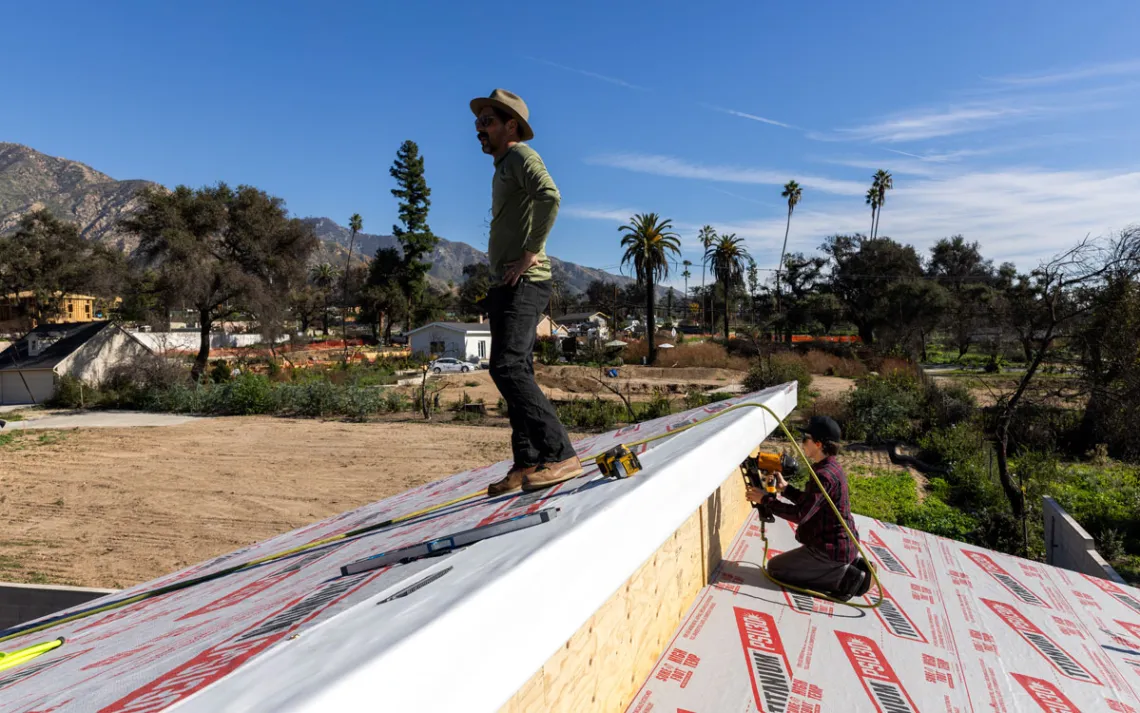
Robert Lund and his son, Llewellyn
This is part three and the final installment of a year-long project following three households impacted by the January 2025 Eaton Fire in Los Angeles. The diverse stories of these neighbors—who lived only blocks away from one another—offer an intimate glimpse into the complexities of disaster recovery and the decisions that must be made long after the breaking news. You can read the first and second articles here.
On January 7, 2025, two of the deadliest, most destructive wildfires in Los Angeles history sparked on the same day. The Palisades Fire ignited first, cutting through the neighborhood of Pacific Palisades before coming down the coast. Later that evening, the Eaton Fire burned through the unincorporated community of Altadena, nestled at the base of the San Gabriel Mountains. Fighting both fires took weeks, during which tens of thousands of people were evacuated. Thirty-one people lost their lives.
By the time the smoke cleared, the fires had destroyed more than 16,000 buildings, damaging and contaminating many more with toxic debris. For many, the personal and financial losses have only continued to mount in the months since the fires, and recovery remains a distant hope. But there are also signs of progress.
Across Altadena, the beginnings of new buildings dot damaged streets. Restaurants and businesses are reopening to greet new and familiar faces. And scattered across the still-empty lots, wildflowers known as “fire followers,” which thrive in the ashy aftermath of flames, poke up from the ground, holding the space for now.
Returning to Altadena
On a bright December morning, Robert Lund and his son, Llewellyn, 13, stood on the roof of a wood-framed building, surveying the job ahead of them. Under a wide-brimmed hat, Robert directed Llewellyn as they prepared to nail in paneling. Their power tools joined the loud, increasingly active chorus of construction in the area—to the right of them, the buzz of a drill; to the left, a drumbeat of hammering.
After receiving approval in May to start building this one-room accessory dwelling unit in what used to be their backyard, the Lundy family planned on making it their temporary home. But progress on the ADU has been slow. After a brief bureaucratic reprieve from filing paperwork with the city and federal governments, Lara found herself once again appealing to faceless voices for her family’s future—this time it was her insurance company. Every time she called, she’d receive new guidance about paperwork to file or receipts to show in order to get the money to move forward. Like nearly half of Los Angeles fire survivors, they’ve had to dip significantly into their savings.
It’s not just money that’s been tight but also their time. As more residents receive building permits and insurance checks, Robert’s contracting work has been in high demand, leaving him with less time to work on his own property. Taking a break from the roof, he ticked his slate of projects off on his fingers, listing them by their street names across Altadena.
“This is enough to make my head explode,” he admitted. Many are properties he’d worked on before they were destroyed in the fires, though, and he found it hard to say no to helping out those former clients and neighbors.
Ultimately, Lara and Robert decided to change the plan and move their family into another rental instead, their second move in less than a year. Over the holidays, the family of four returned to Altadena, settling into one of the houses in the area that did not burn down. It’s big enough that they’re looking for an upright piano that Freyja, 10, can use to start taking lessons and close enough to downtown that Llewellyn can ride his bike to his after-school activities. It’ll also save Robert nearly an hour of roundtrip commuting to his construction sites across the area—which soon, he hopes, will include not just their ADU, but a new house, if all of their efforts for permits and payouts pay off.
Until then, there’s always more to do. From the scraped dirt ground of their lot, Robert called up to Llewellyn to see what screwdriver he had on the roof. He checked for something in his truck, digging around above the “I Left My Heart in Altadena” bumper sticker. He chatted with another contractor in the area, pointing out which neighbors are selling and which are staying—about half and half. Then he scaled the metal ladder to join his son, where the work continued.
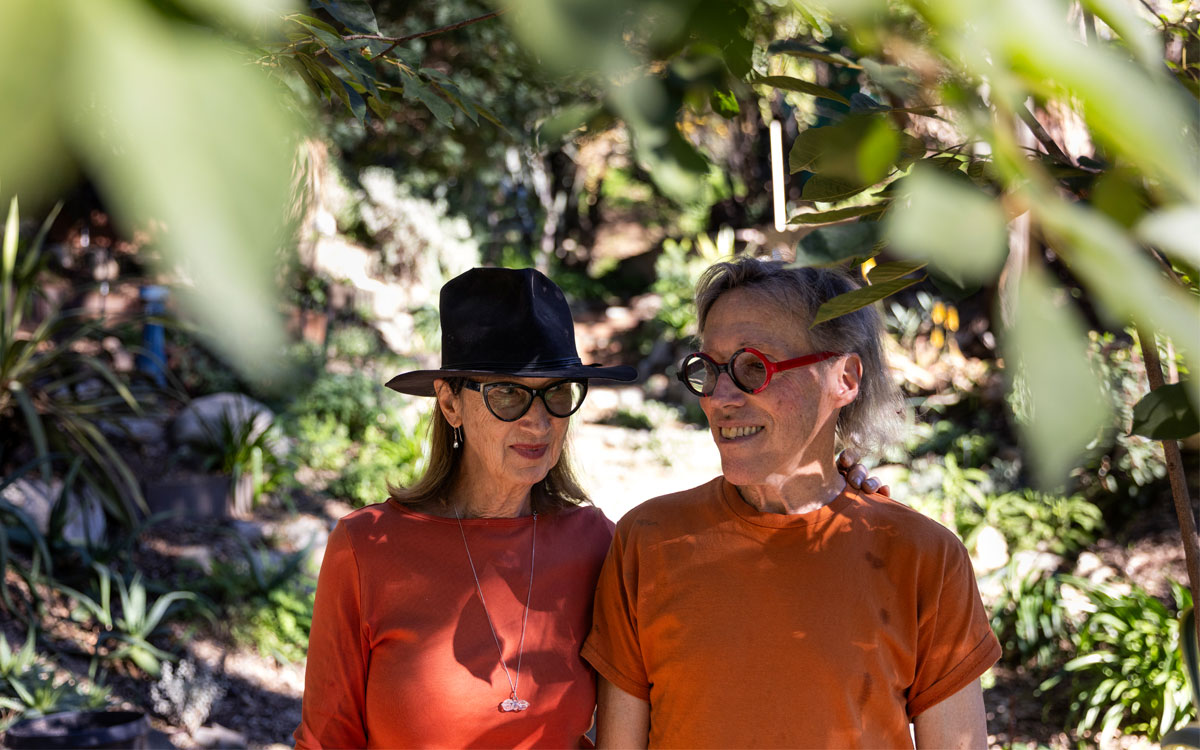
Susanna Dadd and James Griffith
“This might take a while”
When an emergency plumbing issue wreaked havoc in his art studio in December, James Griffith reminded himself: “You're lucky to have this problem.”
It’s a sentiment that defined 2025 for Griffith and Susanna Dadd after both their house and studio space in Altadena improbably survived the Eaton Fire. The couple was lucky to be back home within weeks, lucky to have the physical health and funds to be able to dedicate themselves to the cleanup and landscaping work that kept them busy for months. They didn’t just recognize their good fortune but tried to share it, hosting dinners for those whose houses survived and for those who lost their properties, and throwing a series of benefit concerts in their front yard.
But the “wicked year,” as Dadd thinks of it, was not done with them. In the summer, she lost her mother. She got Covid and then bronchitis, which lingered for weeks. And it was in those moments, when the busyness faded into the background, that they began to contend with the loss alongside their luck.
Even with the now-frequent construction crews in the area, Altadena is still too quiet for the couple, who used to love going for evening walks to bump into neighbors. Now, many of the properties surrounding them are vacant, and they’ve struggled to deal with mosquitoes and debris flows from nearby lots that have been largely abandoned in recent months. Rain leaves the streets around them snaked in mud, and the changed landscape now funnels water through the pathway on their property. They alerted officials but are waiting to see if any fixes will be made—with so many neighbors still missing, there’s a lot of uncertainty about how the areas surrounding them will be maintained.
Where they can, they’re trying to pitch in. Dadd agreed to come out of retirement to design gardens for some of her former clients whose properties were impacted by the fire. And she’s even done a bit of pro bono work, scattering seeds for fire followers before it rained in hopes of starting the new year with some more blooms across the area.
Griffith is also trying to do his part to help replace what was lost. In the weeks following the fires, he learned that 30 of his paintings were destroyed, many from the walls and mantles of friends who had fled only with their essentials. Plumbing problem fixed, he’s now spending time in the studio on a series of new paintings that he plans to give back to those survivors for free.
The space used to be part of a strip of buildings, but the businesses next to it all burned down, leaving one of the studio’s walls newly exposed.
Once the debris was cleared, Griffith and Dadd decided to paint it white. In the center of the wall, they wrote a message: “This might take a while.”
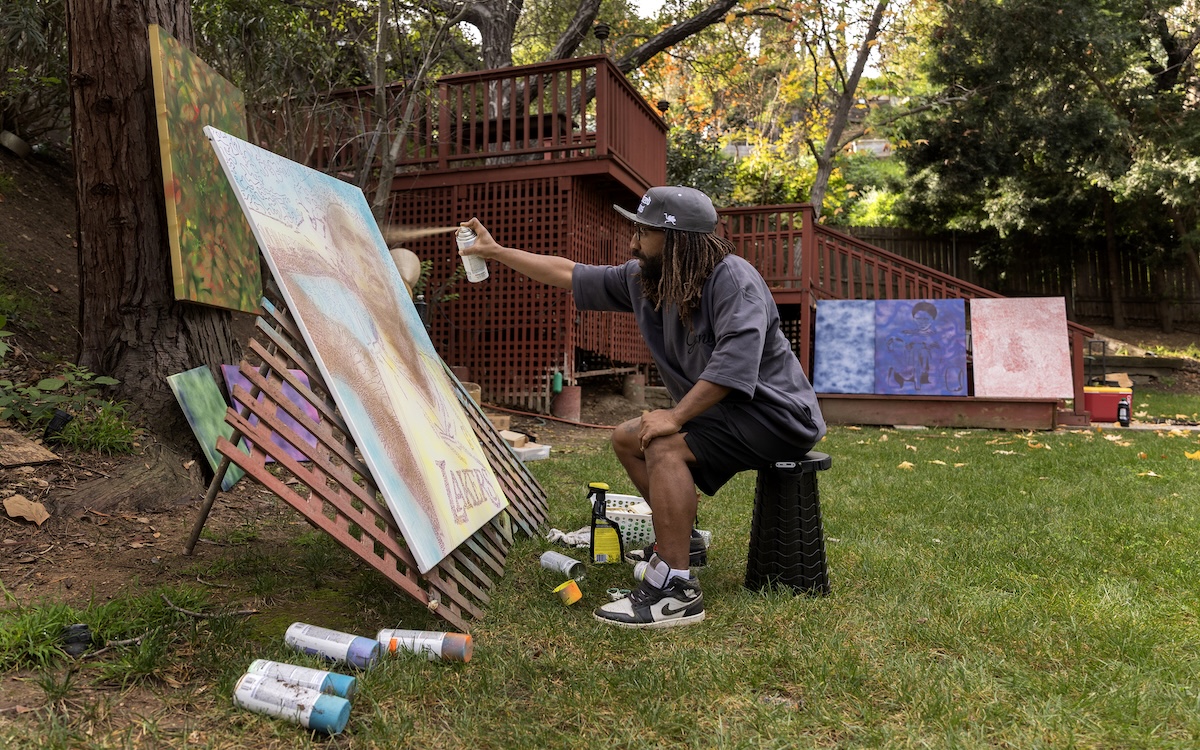
Donny Kincey
After “Altadena is not for sale”
From about 6 a.m. to 7 p.m. each day, Donny Kincey feels like things are good. His work as a teacher keeps him busy, and he doesn’t have to think about the fire that took both his childhood house and the family rental he’d called home.
It’s the evenings that are tough. After being displaced by the fire, he’d been offered a free space that he lived in through the summer. But since leaving it in August, he hasn’t had a steady place to stay, and he’s been spending most nights in his truck.
“It's hard being a teacher, you know, especially in a market like this,” Kincey said. “I can't afford to live in this city.”
Both properties in Altadena are still vacant as his family figures out their next steps; he tries not to go back to the area often. Living out of a vehicle has taken a toll on his physical and mental health, but he sees it as a means to an end—by saving up, he hopes to one day be able to afford commercial space for his art or maybe a house of his own. And while he’s always seen himself in Altadena, he’s also started considering what it might be like to live somewhere else.
In the early weeks after the fire, Kincey was vocal about his fears for the future of his neighborhood. He spoke at press conferences alongside politicians and officials, sharing his story over and over in hopes that it would help draw attention to the cause.
“I was begging, basically, for this not to happen—for people to not get pushed out or priced out. To say that we’re not for sale,” he recalled. “Immediately, it happened, and it’ll never look the same. The people will never be the same.”
A Redfin report published at the end of 2025 found that investors have purchased nearly half of the lots sold in Altadena since the Eaton Fire. The neighborhood Kincey once knew only exists in memories, he believes, or maybe in pictures for those who didn’t lose theirs in the flames. He now prefers not to talk about it anymore; he’s tired of being treated like a “fire victim,” of the sad faces and pats on the back.
Still, as the anniversary approached, Kincey found himself confronted by memories. Since the fire ignited early in the new year, many people still had decorations up, so holiday lights and trees serve as reminders of that night. He decided to channel it into his art, prepping canvases to work on over the winter break away from school. He drenched them in Christmas reds and greens and golds, trying to create something “ugly” enough that it would no longer be intimidating.
“If I look at a blank canvas, I'll try to be perfect,” Kincey explained. “So I like to just mess the canvas up and then work from there.”