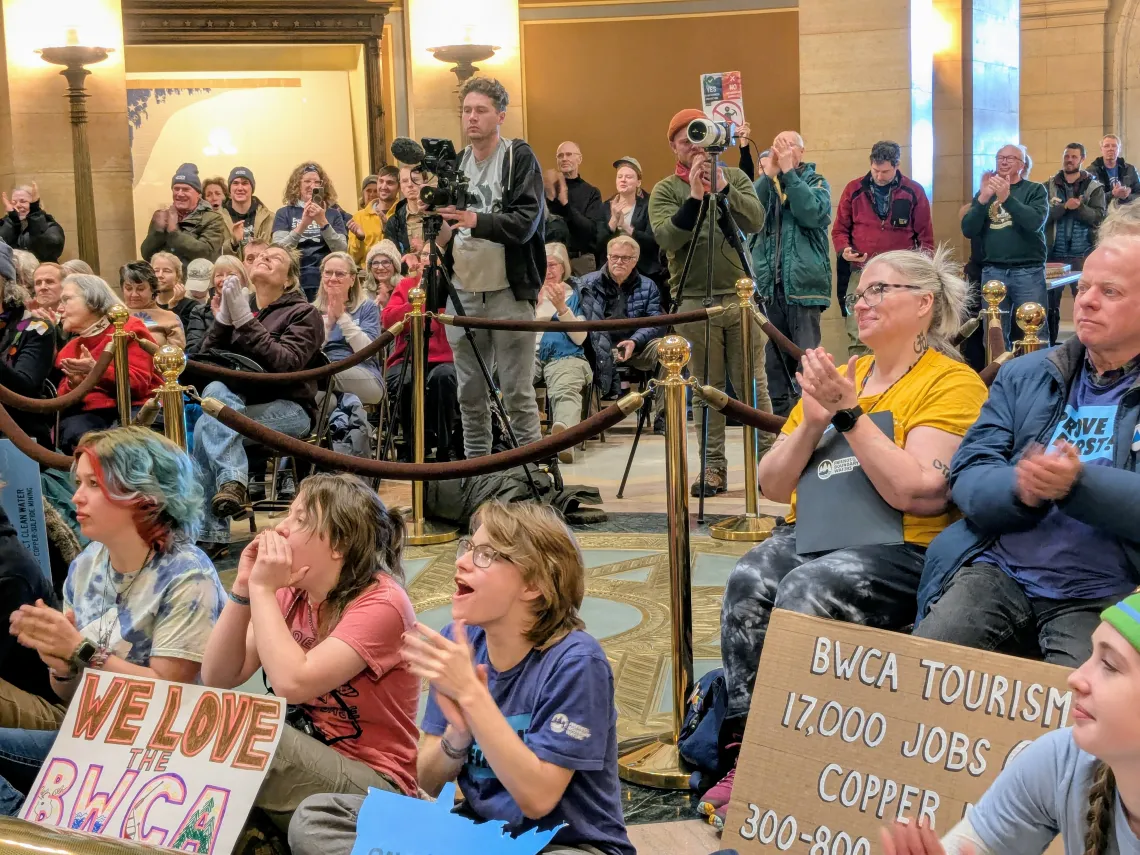
This National Public Lands Day, get inspired by the people across the country who are taking action for the places we all love
On September 26, we celebrate the annual National Public Lands Day. It is a day not only to spotlight the national parks, monuments, forests, wildlife refuges, and other public lands we love, but also to acknowledge the many people and communities throughout the country who help ensure these places are accessible and protected for future generations.
Our public lands are facing the most severe threats at any point in the history of the Sierra Club. Corporate polluters and profiteers are collaborating with the Trump Administration to strip protections, advance privatization, and fast track mining, drilling, logging, and other development across our shared landscapes. But when we raise our voices, the people are more powerful than the monied interests the Administration is beholden to. Get inspired to take action through the efforts of some of the many public land defenders across America.
Utah Chapter: Defending Bears Ears and Grand Staircase-Escalante National Monuments
(Photo Credit: AP)
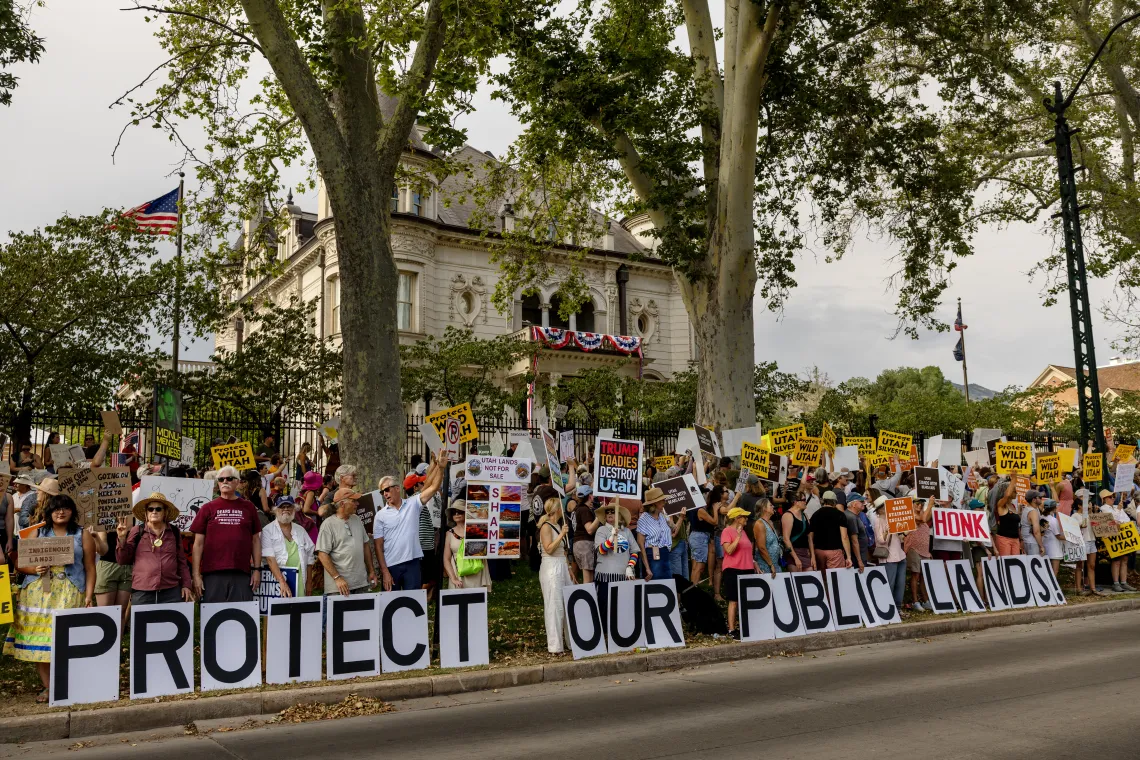
On Monday, July 13th, President Trump signed two illegal proclamations to eviscerate the boundaries of Bears Ears and Grand Staircase-Escalante national monuments by an almost combined 3 million acres, leaving just over 300,000 acres protected under monument designations. The following Monday July 20th, nearly a thousand Utahns across the state gathered in protest to the loss of monument protections and to stand with the Tribal Nations who steward these landscapes. This outpouring of support shows how truly unifying public lands are. The Utah Chapter participated in this rally and Utah Chapter Lands Team Member Jessica Wiarda got great quotes in this Salt Lake City Trib piece. To take more action on this issue send a message to your member of Congress at sc.org/DefendMonuments.
North Star Chapter: Defending the watershed of the Boundary Waters Canoe Area Wilderness
(Photo Credit: North Star Chapter of Sierra Club)
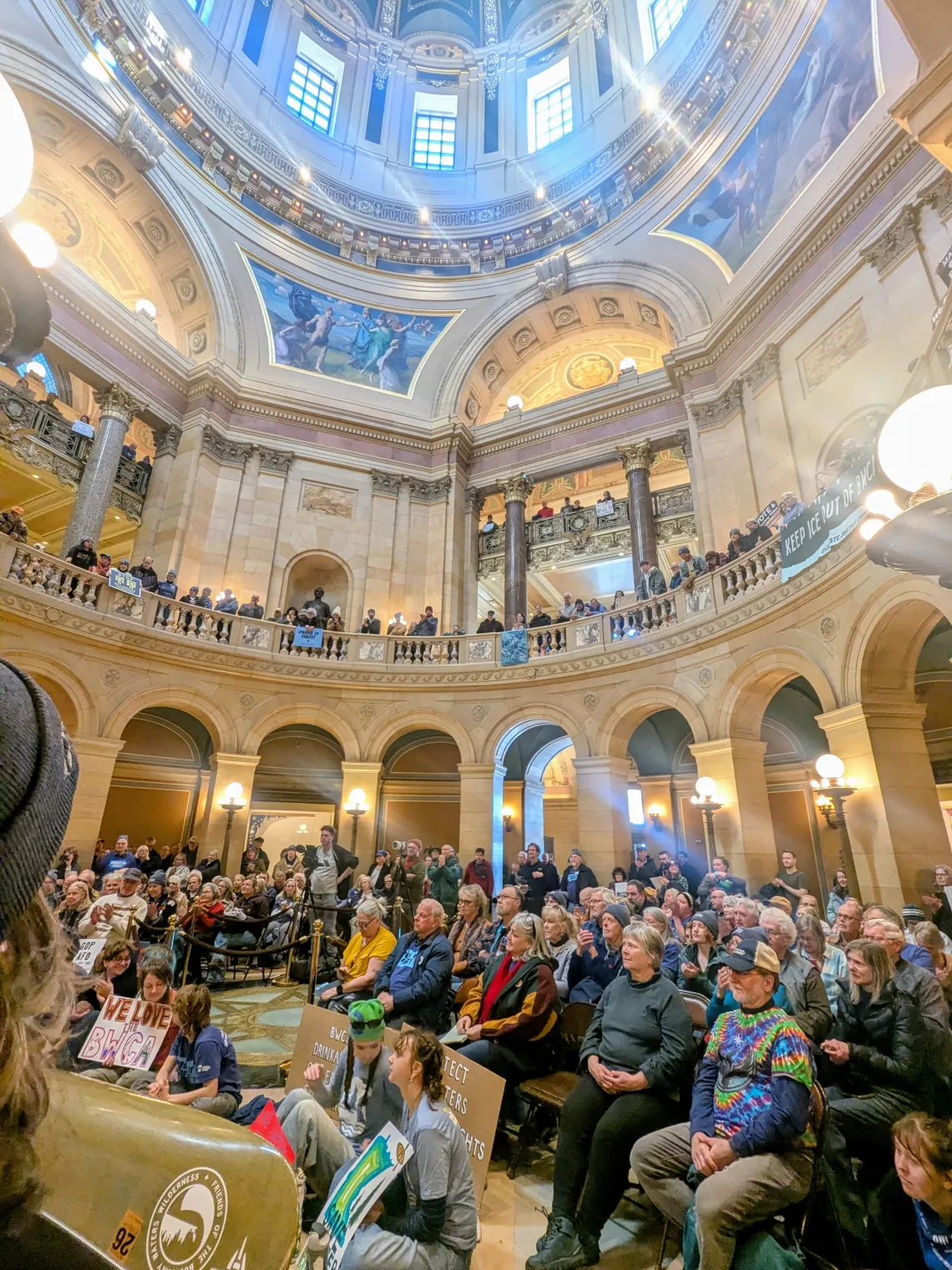
Despite widespread opposition from across the country, earlier this year Congress passed a resolution overturning a mining ban in the watershed of the Boundary Waters Canoe Area Wilderness in northern Minnesota. That ban was put in place to safeguard clean water, wildlife habitat, irreplaceable cultural and Tribal resources, recreation opportunities, and jobs from toxic sulfide-ore mining. But the North Star Chapter and their partners in Minnesota did not give up. They rallied and lobbied at the state capitol and continued to pressure state leadership to take action. Then Governor Walz took executive action to protect the Boundary Waters watershed from sulfide ore mining, setting a major precedent for state legislation and action from the next Governor. While the work here is not done, it is a clear example of how people power can fight back and achieve protections for lands and waters we all cherish.
Lone Star Chapter - Defending the Big Bend region

(Photo Credit: Lone Star Chapter of Sierra Club)
Earlier this year, the Trump Administration began advancing plans to build a wall and other border infrastructure through the Big Bend region of West Texas, including through Big Bend National Park and Big Bend Ranch State Park. While local and statewide bipartisan opposition pressured the Administration to pull back plans for a steel wall inside the national park, bulldozers tore through critical wildlife habitat, wilderness-quality lands, and cultural and historic areas this summer. The Lone Star Chapter has joined allies across to defend Big Bend - from protests at the state capitol to weekly rallies in major cities. They’ve collected thousands of signatures to Governor Abbott and other states leaders imploring them to oppose these border plans. As a result, Customs and Border Patrol put a pause on construction in the national park until September 30. And we won’t stop fighting until that pause is permanent, and beyond the national park. Take action at sc.org/ProtectBigBend.
Rio Grande: Defending the Greater Chaco region
(Photo credit: Bill Rodgers)
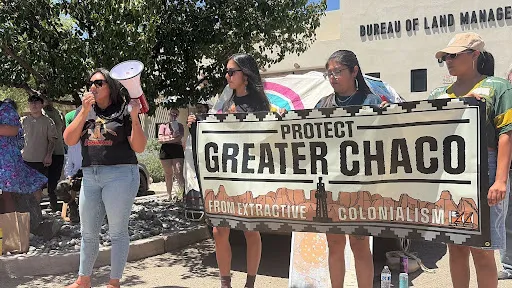
This year, the Trump administration has advanced an effort to expose Greater Chaco to new oil and gas drilling, complete with two truncated comment periods lasting 7 and 14 days. Chaco Canyon is among the world's most treasured and sacred sites, with the greatest concentration of ancient pueblos in the American Southwest and a long cultural history that continues to be celebrated by Indigenous Peoples. In March, more than 100,000 people wrote to oppose the BLM's initial proposal to remove those protections, despite having only seven days to comment. In July, indigenous leaders and activists and conservation groups gathered in protest against the move to open up Greater Chaco to drilling during the limited 14 day comment period on the Environmental Assessment. During this comment period the BLM received over 200,000 comments on the proposal. Thanks to the hard work of the Rio Grande Chapter, we will continue to do everything we can to protect Greater Chaco.
North Carolina Chapter: Defending Roadless Areas in the Nantahala-Pisgah National Forest
The Pisgah and Nantahala forests in the Appalachian region of North Carolina span 1.1 million acres and are home to more than 350 species of conservation concern, including Eastern hellbenders, Carolina northern flying squirrels, and four species of endangered bats. Nearly fifteen percent of the Pisgah-Nantahala is currently protected under the ‘Roadless Rule’, a federal rule that prevents the construction of roads into our most remote and wild places, including some of the most beautiful and beloved hiking trails in the state. The Trump administration has proposed eliminating the rule, leaving these rare and undeveloped areas vulnerable to logging, mining, and other extractive industries. Simply put, the rule prevents road building - which is one of the most damaging things for an ecosystem - along with whatever comes at the end of a road be it logging, mining, or drilling. The eastern US has far fewer federal lands compared to the west, so protecting the relatively sparse wild public places that remain is arguably even more significant. Now, many of those places are about to be back under threat as the administration seeks to rescind the Roadless Rule. But you can help stop this backwards idea by commenting before Oct 6: sc.org/roadlessrule
Washington Chapter: Defending Roadless Areas across the state
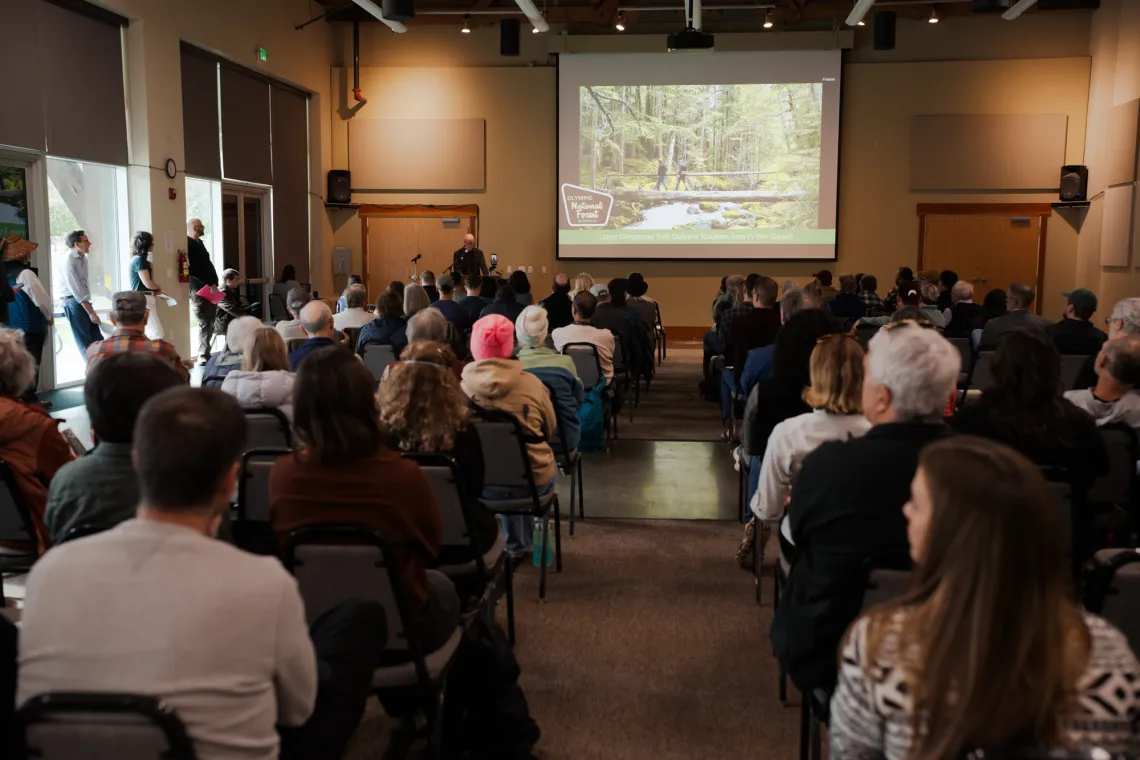
In Washington state, 2 million acres of some of the wildest, unlogged forest are protected from extractive logging and mining by the national Roadless Rule, which the administration is currently trying to repeal. Roadless Areas provide habitat for endangered species, provide clean drinking water, are more resilient to wildfires, and provide a huge variety of recreation opportunities. The Washington chapter is pushing back by hosting a townhall, local events, and engaging groups in comment writing drives. The chapter would love to have your support in defending our Roadless Areas (which may exist and be under threat near you too!). Please submit your own comment at sc.org/roadlessrule
Grand Canyon Chapter: Defending Baaj Nwaavjo I’tah Kukveni – Ancestral Footprints of the Grand Canyon National Monument
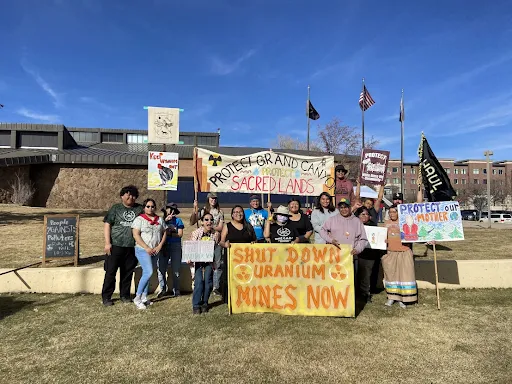
(Photo Credit: Sandy Bahr)
The most recently designated national monument in Arizona is the Baaj Nwaavjo I’tah Kukveni – Ancestral Footprints of the Grand Canyon National Monument. The monument safeguards nearly one million acres surrounding the iconic Grand Canyon National Park from new uranium mining claims. The monument enjoys widespread bipartisan public support in Arizona and backing from Tribes, businesses, governments, elected officials and conservation groups. It harbors sacred sites, like Red Butte, and its diverse ecology includes federally protected species like California condors and species of plants and animals found nowhere else on Earth. This monument, like many others, is at risk under the Trump administration and could put the area at further risk to uranium mining. Sierra Club Grand Canyon Chapter has long advocated for protection of this region, supporting the leadership of the Havasupai and other Tribes in the region and leading rallies, educational seminars, outings, meetings with officials, grassroots actions, and more. Our work has included advocacy for a mineral withdrawal, the monument, and against the Pinyon Plain Mine. Please sign this petition to encourage Secretary of Interior Doug Burgum to keep these monuments protected, and help shut down Pinyon Plain Mine to protect Grand Canyon's waters.
District of Columbia Chapter: Defending East Potomac Park: Hains Point
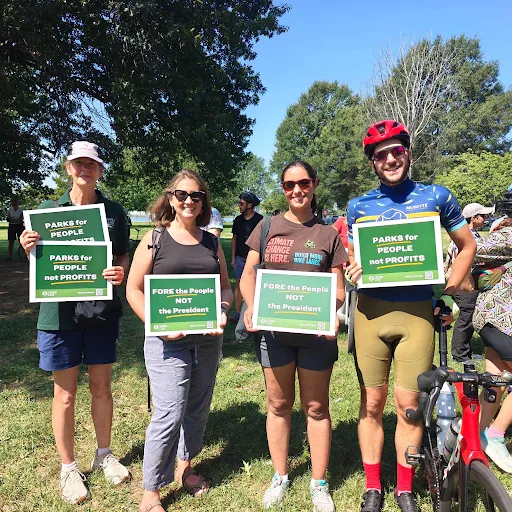
The Trump administration has built a money pipeline inside the National Park Service to fund his personal vanity projects in D.C. ahead of the needs of national parks across the country. While our parks face more than $24 billion in deferred maintenance, Trump has ordered millions of dollars of national park entrance fees redirected toward projects in Washington, D.C. Hains Point is the latest example. Trump is trying to turn the historic East Potomac Park into a championship golf course, which could limit park access for golfers, cyclists, runners, and birders who treasure this public space. Beautiful cherry trees are already being cut down in preparation for this new vanity project and cash grab. Outdoors for All, Clean Transportation for All and the DC Chapter joined partners like the Washington Area Bicyclists Association, DC Preservation League, the National Conservation and Parks Association and hundreds of concerned Washingtonians for a rally at Hains Point over the weekend. We carried rally signs reminding folx that America’s National Parks are not for sale; they are “FORE the People, not the President.” Catch a glimpse of our signs in this coverage from CNN. Send your member of Congress this message: sc.org/NoVanityProjects
Toiyabe and Tehipite Chapters: Defending Yosemite National Park
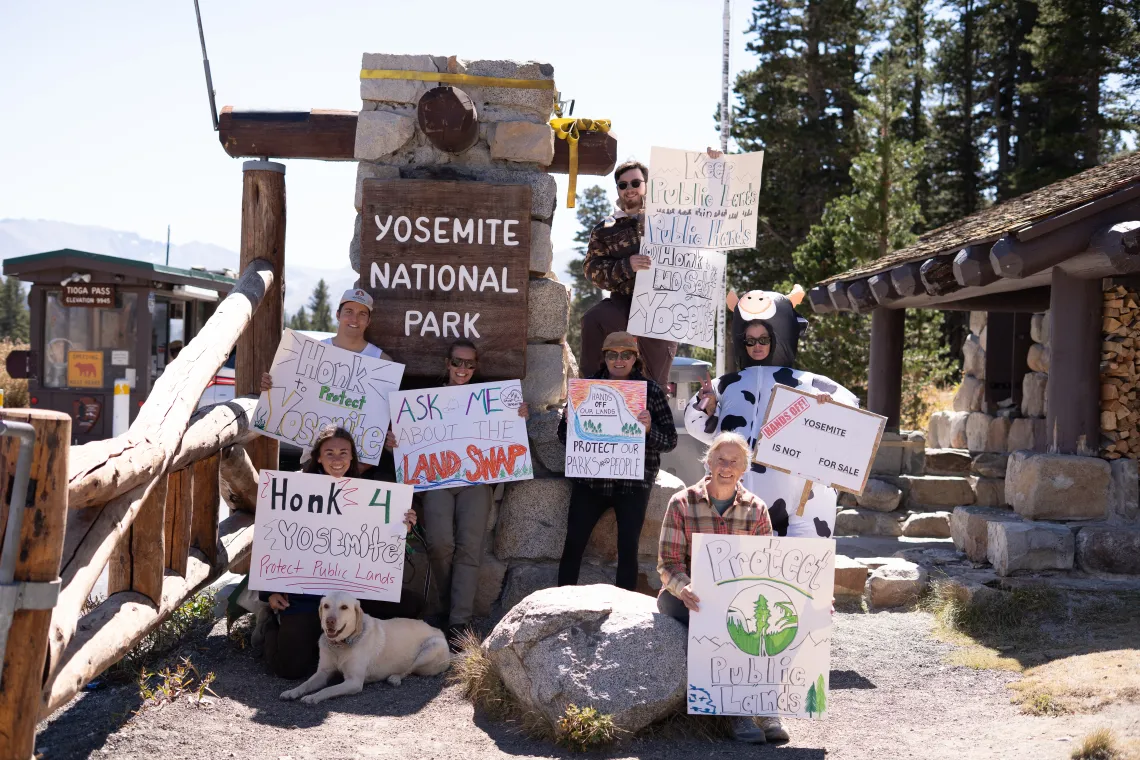
(Photo Credit: Cullen McGinnis)
Yosemite National Park is deeply intertwined with the Sierra Club’s history and identity–so when the park came under threat from a proposed land exchange that could facilitate private development just outside its boundary, Sierra Club activists mobilized. In September, volunteers held two actions at Yosemite, reaching visitors at park entrances and in the designated First Amendment area in Yosemite Valley. Activists distributed hundreds of signs that visitors displayed in their cars to show opposition to the proposed land exchange, while encouraging people to call and email their members of Congress to speak out against transferring national park land to facilitate private development. Even as the Dome fire affected portions of the park, Yosemite remained open and public lands defenders continued showing up for a place generations of Sierra Club members have fought to protect.
California Chapters: Defending Our Wild Roadless Forests
In Idyllwild, a mountain community surrounded by the San Bernardino National Forest, nearly 70 community members gathered for a town hall to defend America's wild roadless forests. Local business leaders, a former U.S. Forest Service wildland firefighter, a mountain biking representative, conservation leaders, and outdoor and ecology educators came together to talk about what roadless forests mean for clean water, wildlife, recreation, wildfire resilience, local economies, and the places future generations will inherit. Attendees then turned that conservation into action, submitting public comments on the Trump administration’s proposal to rescind the Roadless Rule. The gathering showed what defending public lands looks like at the community level: people with different relationships to the forest coming together around the landscapes they share. Take action and submit a comment at sc.org/roadlessrule
California Chapters: Defending Our Coast from Offshore Drilling
And on National Public Lands Day itself, Californians are taking the fight to the coast. On September 26, communities will gather for Hands Across the Sand events up and down California–from Mendocino and San Francisco to Santa Barbara and San Diego–to oppose expanded offshore oil drilling. Californian’s will join hands along the shoreline to call attention to the ocean, beaches, wildlife, public health, recreation, and coastal livelihoods at stake in decisions about new offshore oil development. The message is simple; our coast belongs to the people, not the oil industry. See the full list of Hands Across the Sand events here.