Sacramento is Working at Full Speed Ahead – and the Fight Over CEQA Is Far From Over
Outdoors for All Must Mean Access for All
A New Salton Sea Conservancy Signals a Long-Overdue Shift
Listen and Follow, Sierra Club California’s official podcast: The Climate Dispatch
Sacramento is Working at Full Speed Ahead – and the Fight Over CEQA Is Far From Over

The California legislative session is now fully underway, and Sierra Club California is ready to take on some of the biggest environmental fights this year that are centered on the fallout from last year’s disastrous CEQA deregulation package.
In 2025, lawmakers approved sweeping exemptions from environmental review for a range of projects, weakening one of California’s most important public accountability tools in the name of speed and streamlining. Supporters claimed those changes were necessary to move projects faster, but the result was a package so broad that it raised serious concerns about reduced oversight, fewer opportunities for public input, and new loopholes for industries seeking to avoid meaningful review.
That matters because CEQA has never just been about paperwork. It is one of the few tools communities have to understand the impacts of major development before decisions are locked in. It creates opportunities to raise concerns, demand mitigation, protect sensitive habitat, identify risks to air and water quality, and ensure that tribal, worker, and community voices are not pushed aside as developers rush to bring their projects online. When lawmakers pass broad CEQA exemptions, power is taken from frontline communities and given to developers and industries that would rather move quickly than address hard questions about environmental and public health impacts their projects may create.
Now, the legislature’s CEQA cleanup bill is an attempt to address the damage done and to restore guardrails before those exemptions lead to real world impacts on communities and endangered species. That is why Sierra Club California supports the framework presented in SB 954 (Blakespear). SB 954 represents a test of whether California lawmakers are willing to deliver on promises leadership made to fixing overbroad exemptions that threaten communities, natural lands, and environmental protections.
For Sierra Club California, this debate is about far more than one bill or one legislative fix. It is about the larger direction of environmental policy in this state.
Will California continue chipping away at public safeguards whenever politically favored interests demand faster approvals?
Will lawmakers keep treating environmental review as an obstacle to be weakened rather than a public process to be respected?
Or will the state recommit to the principle that environmental review, public accountability, community protection, and democratic participation still matter?
The answer to those questions will shape not only this legislative session, but the future of how California balances development, climate action, conservation, and justice.
This year’s fight over CEQA cleanup is therefore about more than repairing flawed bill language. It is about drawing a line. It is about insisting that California cannot claim to lead on climate and environmental justice while simultaneously hollowing out the very laws that allow communities to protect themselves. Sierra Club California will be working throughout the session to push back against further erosion of public safeguards and to advocate for a path forward that protects both the environment and the public’s right to be heard.
Outdoors for All Must Mean Access for All

California’s Outdoors for All vision starts from a simple truth that time outside matters. Access to parks, beaches, trails, and green space can support physical health, mental well-being, learning, and a sense of connection to the places we call home. For children and families especially, time in nature is not a luxury. It is part of what helps communities thrive. But across California, that access is still deeply unequal. Too many families, especially in disadvantaged and low-income communities, face real barriers to enjoying the outdoors, from lack of nearby parks and safe transportation options to cost, underinvestment, and limited access to welcoming public spaces. California’s Outdoors for All initiative is designed to confront that inequity directly by expanding access to parks and open space regardless of zip code or income.
That is why this work matters so much to Sierra Club California. Conservation cannot just be about drawing lines on a map or protecting acreage in the abstract. If California is serious about environmental justice, public health, and the long-term success of its conservation goals, then those investments must also expand who gets to benefit from them. Protecting land and water is essential, but so is making sure children can visit a state park, families can enjoy a nearby beach, students can learn outdoors, and communities that have historically been excluded from environmental investment can build lasting connections to nature. In that sense, Outdoors for All is not separate from California’s broader conservation agenda, but rather it is a critical part of making that agenda fairer, stronger, and more durable.
California has already begun putting some of that vision into practice through access programs connected to the initiative. The California State Park Adventure Pass gives fourth graders in California public schools and their families free entry to 54 participating state parks for the school year and the following summer, while other state access programs allow library card holders to check out free park passes and make it easier for families receiving CalWORKs and other eligible Californians to get free day-use access to more than 200 state parks. These programs matter because they move the conversation beyond symbolism. They recognize that for many families, the question is not whether the outdoors are valuable, but whether the outdoors are actually reachable and truly open to them.
This year, Sierra Club California is also supporting legislation that helps connect this access work to the state’s broader conservation priorities. Measures such as AB 946 (Bryan) are important because they push California to better align its 30x30 commitments with Outdoors for All goals, helping ensure that conservation investments do not only protect land, but also expand access and community benefit. California should not pursue conservation in a way that leaves the same communities behind. A successful 30x30 strategy must protect biodiversity, strengthen climate resilience, and also help create a state where more people can experience the health, joy, belonging, and stewardship that come from meaningful access to nature.
For Sierra Club California, that is the larger promise of Outdoors for All. It is about more than park visitation numbers or a single grant program. It is about building a California where environmental protection and environmental access go hand in hand. It is about recognizing that the outdoors should belong to everyone, and that public investment should reflect that principle. And it is about making sure the next generation grows up not shut out from nature, but connected to it and ready to fight for it.
A New Salton Sea Conservancy Signals a Long-Overdue Shift
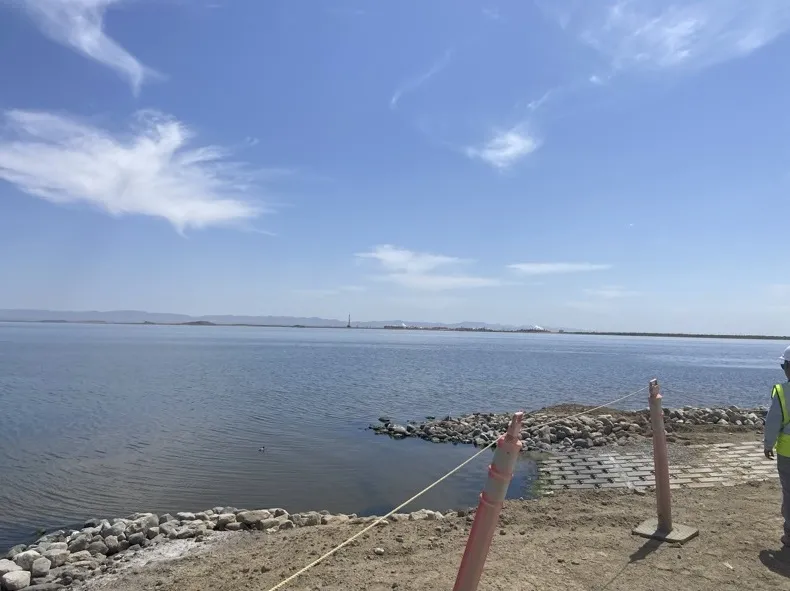
California has officially launched the Salton Sea Conservancy, marking the creation of the state’s first new conservancy in more than 15 years and signaling a potentially important shift in how the state responds to one of its most urgent environmental justice crises.
For years, the Salton Sea has stood as a symbol of delay, fragmentation, and broken promises. As the Sea has receded, exposed lakebed has worsened dust pollution and air quality for nearby communities, while shrinking habitat has harmed wildlife and undermined a critical ecosystem along the Pacific Flyway. The crisis has never been a mystery, but what has been missing is sustained political will and a durable structure to carry restoration work forward.
The launch of the new conservancy matters because it suggests the state is finally moving toward long-term stewardship. Created through SB 583 (Padilla, 2024), the conservancy is intended to help accelerate restoration, support habitat and public access projects, and provide stronger continuity for work that communities around the Sea have waited far too long to see.
This does not solve the Salton Sea crisis overnight, but it does represent a meaningful acknowledgment that the scale of the problem requires more than scattered projects and intermittent attention. It requires an institution with responsibility for the long haul.
In partnerships with local organizations, Sierra Club California is dedicated in assuring this new conservancy helps turn years of promises into lasting action meaning cleaner air, healthier habitat, stronger community protection, and restoration that meets the scale of the need. The launch is significant and what comes next will matter even more.
Listen and Follow, Sierra Club California’s official podcast: The Climate Dispatch

California sits on the frontlines of the climate crisis. From devastating wildfires and prolonged drought to rising housing pressures and climate-driven migration, communities across the state are experiencing profound environmental and social change.
To explore these challenges and the people working to address them, the Sierra Club California community has launched a new podcast: The Climate Dispatch.
Produced by the Sierra Club Angeles Chapter in partnership with Stranded Astronaut Productions, The Climate Dispatch dives into the climate issues shaping California today. Each episode examines a different topic affecting the state through conversations with experts, organizers, and community leaders working on the ground.
Rather than focusing solely on policy or headlines, the podcast highlights lived experiences and local perspectives. Listeners will hear stories of resilience, struggle, and innovation from the people most affected by climate change and those working toward solutions.
To learn more or listen to the latest episodes, visit: sc.org/climatedispatch.
Follow Us:
  |
Thank you for being a part of our work! Consider making a monthly donation. You may securely donate online or by sending a check to Sierra Club California at 909 12th Street, Suite 202, Sacramento, CA 95814.
