
The California Coasts Are Under Attack
Groundwater Recharge Shouldn’t Come at the Expense of Our Rivers
California Forever? Not Like This
The California Coasts Are Under Attack

California’s coast is facing a consequential federal review that could affect how the state protects beaches, wetlands, marine habitats, public access and coastal communities. The National Oceanic and Atmospheric Administration (NOAA) is conducting a formal performance evaluation of the California Coastal Management Program (CMP). The review covers the California Coastal Commission, California Coastal Conservancy and San Francisco Bay Conservation and Development Commission, the three agencies responsible for administering the federally approved program.
Approved by NOAA in 1972, the program combines state and local planning, permitting, land acquisition, habitat restoration and regulatory authority. Among its most important components is federal consistency review, which allows California to evaluate federal projects and federally permitted or funded activities that may affect the coast—even when the activity occurs outside the state’s defined coastal zone.
That authority gives California a meaningful voice in decisions involving offshore energy development, military and commercial launch operations, pipelines, transportation infrastructure, and other projects that could affect coastal resources.
Californians can participate
NOAA is accepting public testimony on August 10-12 and written comments through August 22. Community members can describe how they use and depend on the coast, share examples of how the program has protected their communities, and urge NOAA to recognize California’s program as an effective model for balancing responsible development with environmental protection.
Click Here to send your comment TODAY
Why is the federal government reviewing the program?
Federal law requires NOAA to periodically evaluate approved state coastal management programs. NOAA considers whether a state is implementing and enforcing its approved program, addressing the coastal management needs identified in federal law, and complying with the requirements associated with federal grants and agreements.
However, the Department of Commerce’s announcement of the new review has generated significant concern among environmental organizations and coastal communities.
Federal officials have said the review will pay particular attention to spaceport infrastructure, offshore oil production, pipeline maintenance, desalination projects and undersea cables. Commerce Secretary Howard Lutnick has also framed the review around giving greater priority to national defense, energy, port and transportation facilities while criticizing what the administration considers unnecessarily restrictive environmental policies.
California coastal advocates worry that the process could be used to portray the state’s environmental protections as barriers to industrial development. The formal review does not itself eliminate California’s authority or cut its funding, but its findings will help determine NOAA’s next steps regarding the program’s continued federal certification.
California’s record shows that coastal review and responsible development can coexist
Supporters of the program, including Sierra Club California, emphasize that federal consistency review does not amount to an automatic prohibition on development.
Since 1980, California has reportedly reviewed more than 135 aerospace and space-launch projects and objected to only two. The state has also concurred with all 18 undersea cable projects reviewed during the past three decades. The CMP has successfully protected coastal resources while allowing the overwhelming majority of reviewed projects to proceed.
The Coastal Management Program also addresses far more than large industrial projects. Its responsibilities include protecting public access, wildlife habitat, wetlands, agricultural lands, and scenic resources; reviewing Local Coastal Programs; issuing and reviewing coastal development permits; and restoring and acquiring sensitive coastal land. The Coastal Act directs conflicts to be resolved in the manner that is most protective of significant coastal resources.
At a time when California is confronting sea-level rise, climate change, habitat loss, and growing development pressures, the review could influence whether federal officials continue to regard the state’s program as effective, balanced and worthy of federal support.
Groundwater Recharge Shouldn’t Come at the Expense of Our Rivers
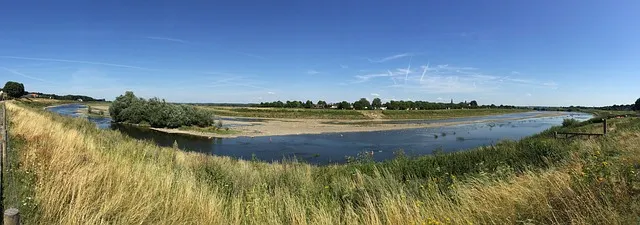
California must prepare for increasingly severe droughts while finding better ways to store water during wet periods. Recharging underground aquifers can be an important part of that strategy. But how, when, and where water is taken from rivers matters.
Assembly Bill 2026, authored by Assemblymember Cecilia Aguiar-Curry, would substantially rewrite California’s rules for diverting surface water into groundwater storage. As of August 3, the bill had been placed on the Senate Appropriations Committee’s suspense file, meaning lawmakers are considering its potential fiscal impacts before deciding whether it should advance.
Sierra Club California supports responsible groundwater recharge. We do not support AB 2026 in its current form because it would accelerate and expand diversions from California’s rivers without establishing adequate environmental safeguards, scientific review, and public accountability.
What would AB 2026 do?
AB 2026 is often presented as a bill to capture water that would otherwise be “wasted” during floods. The actual proposal is much broader.
The bill would extend and expand circumstances in which water may be diverted for groundwater recharge without obtaining an appropriative water right. It would broaden the definition of eligible “floodflows” to include certain releases from dams operated for flood control and establish new formulas for determining when water is available for diversion.
It would also create new pathways for temporary and longer-term recharge permits, including applications involving private entities working through agreements with groundwater sustainability agencies. Some permits could authorize diversions for as long as five years.
Take Action Today
AB 2026 is now in the Senate Appropriations Committee. Call Senate President pro Tempore Monique Limón and Appropriations Chair Sabrina Cervantes and urge them to stop AB 2026 from advancing.
Senate President pro Tempore Monique Limón
📞 (916) 651-4021
Senate Appropriations Chair Sabrina Cervantes
📞 (916) 651-4031
What to say:
“Hi, my name is [NAME], and I’m calling to urge Senator [Limón/Cervantes] to oppose AB 2026. California should expand groundwater recharge, but not by weakening protections for our rivers, fish, wildlife, and communities. Please vote NO on AB 2026. Thank you.”
High river flows are not automatically “excess” water
The central problem with AB 2026 is the assumption that water moving through a river during a wet period is necessarily available for diversion.
Rivers need high seasonal flows. Those flows support fish migration, inundate floodplains, transport sediment, improve water quality, sustain wetlands, and move freshwater through the Sacramento-San Joaquin Delta. A flow can exceed the immediate demands of existing water-right holders while still providing essential environmental benefits.
AB 2026 would place new diversion formulas into state law before California has adequately demonstrated that those standards will protect individual rivers, watersheds, and downstream ecosystems. The bill directs the State Water Resources Control Board to use statewide or regional formulas to determine when water is available.
A broad coalition of environmental, fishing, community, conservation, and Tribal organizations has warned that the bill would codify untested standards, create new processes and groundwater credits, and pose significant risks to salmonids, other fish, and communities. Read their letter here.
Groundwater overdraft cannot be solved by further stressing rivers
California faces serious groundwater challenges, but replenishing an overdrafted aquifer by taking additional water from an overallocated river system can simply transfer the environmental burden from one place to another.
This is particularly concerning in the Bay-Delta watershed, where rivers and fish populations are already struggling and where the state has not yet completed long-overdue updates to water-quality and flow protections.
For Sierra Club California, the fundamental concern is groundwater recharge should be governed by clear, science-based standards led by the State Water Board—not statutory shortcuts that bypass water-right protections, fish and wildlife safeguards, and public oversight.
What's next?
Opposing AB 2026 does not mean opposing groundwater recharge. California should invest in recharge projects that reduce flood risks, replenish drinking-water supplies, address land subsidence, and support long-term groundwater sustainability. Those projects must use water that is genuinely available after the needs of rivers, fish, wildlife, water quality, downstream communities, and existing legal users have been met.
Let your voice be heard and tell legislators that California needs a responsible, science-based framework for groundwater recharge. Groundwater recharge can help California build a more resilient water future, but healthy aquifers should not come at the cost of collapsing rivers.
California Forever? Not Like This

California Forever is an ambitious, billionaire-backed development proposal that would bring major changes to eastern Solano County. Its plans envision transforming tens of thousands of acres of farmland and sensitive habitat into a new city and major industrial development, including a new city that could eventually house roughly 400,000 people on approximately 22,000 acres, “advanced” manufacturing or data center development, and a proposed shipbuilding facility along the Sacramento River in the Delta National Heritage Area.
Sierra Club California and the Sierra Club Solano Group are standing with residents, farmers, conservationists, and community organizations in opposing California Forever’s plans. At Sierra Club California’s May 2026 Conservation Committee Plenary meeting, leaders unanimously adopted a resolution opposing the development proposals and calling for the protection of Solano County’s working agricultural lands, sensitive habitat, and communities from this massive expansion of urban and industrial development.
Our opposition is not about rejecting housing, jobs, or economic development. California urgently needs all three. The question is where and how we build. Sierra Club has long supported solutions that add housing within existing communities, increase density where appropriate, reduce pollution, advance social justice, and protect agricultural lands and natural areas. California Forever takes a fundamentally different approach by creating an entirely new urban center on currently undeveloped farmland and habitat rather than directing growth and investment toward the communities and infrastructure Solano County already has.
What’s at stake in Solano County
The Montezuma Hills and Jepson Prairie area is not empty land waiting to be developed. It is a working agricultural landscape and home to some of California’s rarest habitat. It is this intrinsic value that has raised the awareness of all who live in Solano.
Agriculture in this part of Solano County is unusual because farmers do not depend on irrigation. Instead, generations of farmers have relied on seasonal rainfall and traditional crop rotations. Grains such as barley and oats are grown during one year, the remaining stubble is grazed by sheep and cattle the next, and fields are then allowed to rest. This system has sustained productive agricultural lands while also providing habitat for wildlife.
The area also includes and surrounds sensitive vernal pool habitat that supports numerous protected species, including the burrowing owl, California tiger salamander, and vernal pool tadpole shrimp.
Replacing thousands of acres of this landscape with urban and industrial development would permanently change both the ecology and agricultural character of eastern Solano County.
California needs housing, but location matters
The Sierra Club recognizes California’s urgent need for more housing. But solving the housing crisis does not require building an entirely new city on farmland and wildlife habitat. Sierra Club California has long supported a different approach, one centered on infill development, higher housing densities, social justice, reducing pollution, and protecting the natural environment. Read more about our report here.
Since 1984, Solano voters have supported orderly-growth policies intended to focus urban development within existing cities while protecting agricultural lands outside them.
California Forever proposes a fundamentally different approach: constructing a new urban center from the ground up, requiring miles of new roads, water and wastewater infrastructure, drainage systems, utilities, and public services. Rather than following an infill-focused model that directs growth toward existing communities and infrastructure, the proposal more closely resembles large-scale urban sprawl, expanding development outward onto farmland and wildlife habitat instead of investing within the cities and neighborhoods Solano County already has.
Those investments come with costs. Public and private resources that could help build housing, infrastructure, and economic opportunities within existing Solano County communities could instead be directed toward building an entirely new city.
Sierra Club believes California should prioritize infill development, housing near existing infrastructure and services, and the revitalization of already developed areas before sacrificing productive farmland and sensitive habitat.
What about Travis Air Force Base?
California Forever’s plans also raise important questions about compatibility with Travis Air Force Base, one of Solano County’s most significant institutions and its largest employer. More than 25,000 active-duty, reserve, and civilian personnel are connected to the base, and Travis conducts training flights over portions of the land acquired by California Forever. The Travis Air Force Base Airport Land Use Plan establishes policies intended to protect military operations by limiting certain types and intensities of development beneath flight paths and in surrounding areas. A new city of this scale cannot be considered in isolation from the continued operation of Travis. Any major expansion of residential or industrial development must account for existing land-use protections, flight operations, and the long-term importance of the base to both Solano County and the region.
Local communities deserve a say
The most concerning is how California Forever is attempting to move the project forward. The company originally qualified a countywide initiative that would have allowed Solano County voters to decide the project’s future, but withdrew that measure from the November 2024 ballot. It later submitted a new proposal to expand Suisun City by more than 22,000 acres, creating another path for development to proceed without another countywide vote.
For Sierra Club California, the issue is not simply what gets built, but who gets to decide matters. Solano County residents have spent decades establishing voter-approved orderly-growth protections, and those voters should not lose their voice simply because a well-financed developer has the political resources to pursue a different route.
California Forever’s approach also exposes a growing tension in California’s housing debate. For years, organizations such as California YIMBY have made infill housing a centerpiece of their agenda. They argued that California should build more homes within existing communities, near jobs, transit, and public services, rather than continuing outward sprawl.
California YIMBY itself has argued that infill reduces pollution, habitat fragmentation, and pressure to develop open space and agricultural lands. Yet the organization endorsed California Forever’s East Solano Plan in 2024, even while acknowledging that its primary focus remained building housing in existing cities and that greenfield development has historically produced poor outcomes. Supporting a new city on thousands of acres of working lands represents a significant departure from the infill-first approach California should be pursuing to address both the housing and climate crises.
That concern has only grown as California Forever has turned to Sacramento. The company has hired prominent former legislative leaders and pushed the Newsom administration and Legislature for special legislation that could accelerate approvals, shorten timelines for CEQA litigation, facilitate annexation, and allow portions of its industrial plans to rely on an older environmental review. Governor Newsom has not endorsed the larger California Forever city proposal, and that distinction matters. But his administration’s economic-development office recently described California Forever’s proposed shipyard and manufacturing projects as projects of “statewide significance,” signaling growing state-level interest in at least portions of the development.
That is precisely why Sierra Club California is concerned about turning what has historically been a local land-use decision into a state political matter. Powerful investors should not be able to go to Sacramento for special treatment when local environmental protections, voter-approved growth policies, or public opposition stand in their way.
Sierra Club stands with Solano County
Sierra Club California stands with the Sierra Club Solano Group and the many residents and organizations working to protect Solano County’s future.
But our organization is not alone in this opposition. This fight is central to the coalition, Solano Together, that includes organizations such as Greenbelt Alliance, Restore the Delta, the California Native Plant Society, California Alliance with Family Farmers, and many other local and statewide partners.
Sierra Club California’s resolution calls for vigorous opposition to two major elements of California Forever’s plans:
A new city on approximately 22,000 acres of productive farmland, potentially growing to roughly 400,000 residents and threatening sensitive wildlife and habitat, including the Jepson Prairie Vernal Pools.
A proposed shipbuilding facility on approximately 7,500 acres along the Sacramento River, within the Delta Protection Zone and Delta National Heritage Area.
California can build housing, create jobs, and grow its economy without sacrificing some of Solano County’s most important agricultural lands and natural resources. We should invest in the communities and infrastructure we already have while protecting the landscapes that cannot be replaced once they are gone.
Want to learn more about CA Forever?
Listen to The Climate Dispatch
S2 Ep8: Little Metropolis On The Prairie
A group of Silicon Valley billionaires says it has a bold vision for the future of California: a brand-new city built from the ground up on the Solano County prairie. But behind the glossy renderings and promises of sustainability lies a story of secretive land deals, political maneuvering, and growing concerns over public accountability.
In this episode, we investigate the California Forever project, examining the opaque tactics used to quietly acquire more than 50,000 acres of farmland, the allegations surrounding Flannery Associates' efforts to sidestep meaningful public input, and the questions local residents and conservationists are asking about who gets to shape the future of the region.
We also explore what's at stake for one of California's rarest ecosystems. The proposed development sits alongside fragile vernal pool habitat that supports endangered and threatened species, including the California tiger salamander and vernal pool tadpole shrimp. As pressure to build accelerates, we ask whether these unique landscapes, and the wildlife that depends on them, can survive another wave of development.
Who gets to build the future? And who pays the price when it's built in the dark?
Guests:
Miguel Miguel, Director of Sierra Club California
Elizabeth Patterson, Former Mayor of Benicia, CA
Featuring music from Clown Sounds
Follow Us:
  |
Thank you for being a part of our work! Consider making a monthly donation. You may securely donate online or by sending a check to Sierra Club California at 909 12th Street, Suite 202, Sacramento, CA 95814.
