
California Takes Steps Towards a Sustainable Water Future
BLM and Endangerment Findings Rollbacks
State Parks Ignores Species Protection in Latest Proposals for East Alameda County Park Land
California Takes Steps Towards a Sustainable Water Future
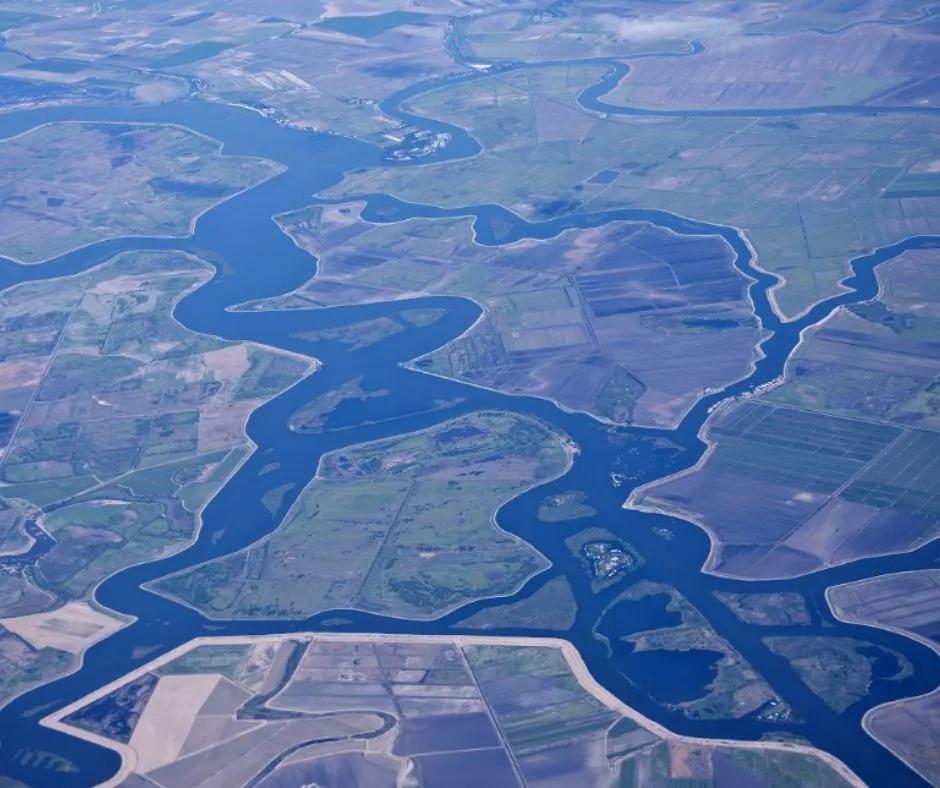
California just took two important steps toward a water future that is more climate resilient, more locally controlled, and more protective of the rivers and communities that make this state run. Sierra Club California was deeply involved in both efforts, showing up where decisions are made by organizing public voices and pushing for solutions that do not sacrifice ecosystems or frontline communities.
Real momentum is building around the Sacramento and San Joaquin Delta and the Bay Delta Plan, the state’s roadmap for how much water must remain in the Sacramento River and its tributaries to protect water quality, fish, and Delta communities. After nearly two decades of delay, the State Water Resources Control Board is weighing whether to adopt enforceable flow protections or rely on Voluntary Agreements (VA’s) that would replace binding standards with discretionary promises. At recent hearings, Sierra Club California joined environmental justice advocates and Tribal leaders, galvanizing more than 150 Californians, to urge the Board to reject the Voluntary Agreements approach and adopt a science based regulatory pathway that guarantees at least 55 percent unimpaired flows as a minimum standard.
This is not an abstract policy debate. California is entering its third consecutive year of salmon fishing closures. Communities are paying the price of chronic over diversion through collapsing fisheries, degraded rivers, and increasingly severe harmful algal blooms that threaten public health. Sierra Club California submitted formal comments emphasizing that the Board has a legal duty to protect beneficial uses and public trust resources and that enforceable flow standards are the only credible path to stabilizing the Delta and its tributaries. The decisions ahead are still pivotal, but something has shifted. This fight is happening in public, with science and community voices shaping the outcome.
Just a week later, Southern California reached a major milestone for local water reliability. The Metropolitan Water District Board (MWD) approved the environmental review for Pure Water Southern California, one of the largest wastewater recycling projects in the country. This is a significant step toward expanding recycled water and strengthening regional resilience, exactly the kind of climate smart investment California needs as drought and extreme weather place pressure on imported supply systems.
These two developments are connected. California can invest in local, climate resilient supplies like water recycling while also protecting the Delta with enforceable standards. Recycling can be used in conjunction with river protections to support fish populations and improve water reliability. Done right, it reduces reliance on Delta exports and makes it easier to leave more water in rivers where it belongs.
Together, these wins reflect what is possible when people show up, speak clearly, and refuse the false choice between water supply and environmental protection. Sierra Club California will continue pushing to ensure these decisions deliver real benefits: healthier rivers, stronger public health protections, thriving fisheries, and a water system that works for everyone, not just the most powerful water agencies.
BLM and Endangerment Findings Rollbacks

New threats are emerging that could push California backward on climate and public health at exactly the moment we need faster progress. Two developments are especially alarming right now. Within the first two months of 2026, a renewed push to expand oil and gas leasing on public lands through the Bureau of Land Management accelerates and a rollback of the federal climate endangerment finding, one of the core legal foundations for regulating greenhouse gas pollution. Together, these moves would lock in more fossil fuel extraction while weakening the rules meant to limit the pollution that is driving extreme heat, drought, wildfire smoke, and unsafe air.
First, there is growing pressure to expand oil and gas leasing on public lands managed by the Bureau of Land Management. When public lands are opened for new drilling, the impacts ripple far beyond the lease boundary. Oil and gas development brings more industrial activity, more truck traffic, more methane and other climate pollution, and greater risks to sensitive habitat and watersheds. It also increases local air pollution that worsens asthma and heart and lung disease, especially for communities that already face higher pollution burdens. Public lands should be managed for long term public benefit, including clean water, intact ecosystems, recreation, and cultural resources, not treated as a shortcut for expanding fossil fuel production.
At the same time, we are seeing an attack on one of the most important pillars of federal climate action, the endangerment finding. This finding is the scientific and legal determination that greenhouse gas pollution threatens public health and welfare. It has been central to federal authority to set limits on pollution from major sources like vehicles and power plants. Rolling it back does not change the reality of climate science or the lived experience of communities facing worsening heat, wildfire smoke, and extreme weather. What it does is weaken the ability of federal agencies to regulate the pollution that is driving those harms, creating new uncertainty and opening the door to challenges against existing protections.
These two actions reinforce each other. Expanding fossil fuel leasing increases the supply of oil and gas and the pollution that comes with extraction and combustion. Weakening the endangerment finding makes it harder to hold polluters accountable and set enforceable limits on emissions. The result is a dangerous feedback loop that puts fossil fuel interests ahead of community health, clean air, and a stable climate. Californians know what this looks like in real life with more smog days, more wildfire smoke, higher energy and health costs, more pressure on water supplies, and greater harm to frontline communities.
Sierra Club California is sounding the alarm because these decisions are not inevitable. They can be challenged, delayed, and stopped through public pressure, strong state level protections, and legal accountability. We will be tracking opportunities for public comment, mobilizing opposition to expanded leasing, and pushing back against attempts to undermine the science and the legal tools needed to cut climate pollution. If federal safeguards are being weakened, it becomes even more important for California to hold the line and lead with policies that protect people and the planet.
State Parks Ignores Species Protection in Latest Proposals for East Alameda County Park Land
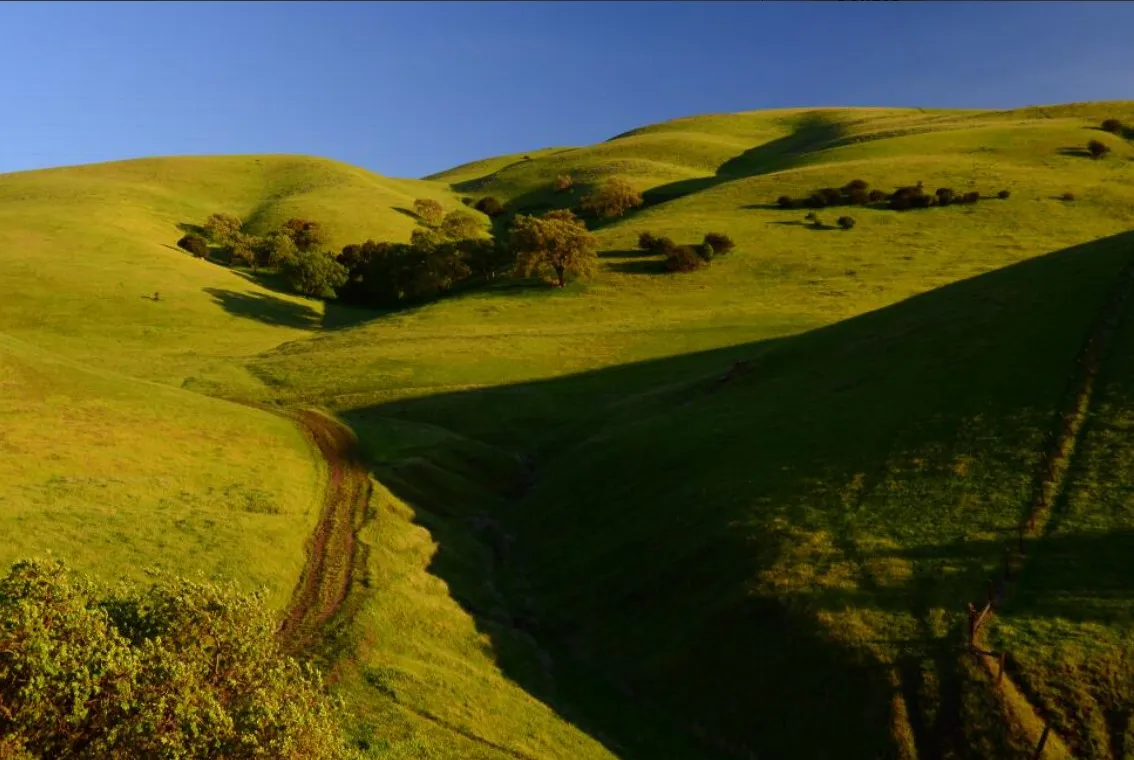
For more than 60 years, I have lived near a biological hot spot in rural East Alameda County that the California Department of Parks and Recreation seems determined to destroy.
The 3,100-acre expanse of oak woodland, grasslands, chaparral and riparian areas, commonly referred to as Tesla (after the famous scientist, not the car mogul), has become a poster child for how State Parks too often mismanages its holdings. Too often, it discounts its charge to protect the state’s wild landscapes and wildlife for future generations.
State Parks acquired the land in the Corral Hollow area in the late 1990s. It is composed mostly of areas that were part of old ranchlands, which means some of it had been historically grazed. Much of it, though, has been left untouched, providing a refuge for threatened and endangered animals and plants only a short distance from growing towns and cities.
The land has been designated as a biodiversity hotspot and conservation priority on a number of lists and well-documented reports. Golden Eagles nest and forage there, Tule elk range, and mountain lions and bobcats travel through. The landscape provides a critical migratory corridor or linkage along the Diablo Range from Mt. Diablo, south.
Nationally and internationally prominent scientists from colleges and universities throughout Northern California have used the site as an outdoor classroom. One of those was my Berkeley professor, the late Dr. Robert Stebbins, a giant in California natural history research. Five different biologically rich ecosystems, or biomes, come together on these 3,100 acres, contributing to Tesla Park’s unusually rich array of natural elements.
The land is also packed with cultural resources from its early indigenous human inhabitants. The remnants of a historic mining town from the late 1800s sits on a small part of the land.
Despite this landscape’s specialness, State Parks has been focused since acquisition on developing Tesla Park in ways that are totally incompatible with protecting the plants, wildlife and cultural sites there.
For instance, as soon as the land was acquired in the 1990s, the system began planning to expand a neighboring off-highway vehicle (OHV) park into Tesla. That neighboring Carnegie State Vehicular Recreation Area’s (SVRA) OHV-damaged hillsides are on prominent view to anyone who drives along the Corral Hollow Road that connects it to the Tesla landscape.
Fortunately, former State Senator Steven Glazer and Assemblymember Rebecca Bauer-Kahan and the legislature supported the local community’s nearly 20-year effort to stop the vehicular trashing of Tesla Park. They used the budget process in 2021 to make sure OHVs could never be used on Tesla, and directed State Parks to come up with a new plan for Tesla.
Now, a full four years later, State Parks has suggested two plans for the land and recently presented them at public workshops. Both are effectively recycled versions of the plans State Parks had for Tesla as a motorized park. Both versions plant high-impact vehicular use, parking and camping in the heart of places designated as critical habitat and which scientists have identified as breeding habitat for various endangered species, including California red-legged frogs and tiger salamanders.
Before I retired, I was a wildlife biology teacher who used the Tesla area as a classroom. I and many of my neighbors who know the area well, along with various respected scientists and environmental groups, have urged that Tesla be designated as a Reserve.
A Reserve designation would require State Parks to place camping, visitor facilities, and other high-impact uses on the hundreds of acres of adjacent State Park land that already has development, instead of forcing it into Tesla’s sensitive ecosystem. Neighboring Carnegie SVRA, with an existing campground and bike/e-bikes, could also be used.
In a Reserve, people, including those future generations who most deserve a world with rich biodiversity, would still be able to hike and study nature and history on the land. Indigenous communities would still be able to use cultural sites and the tribal landscape for traditional practices.
State Parks showed a shocking disregard for actually protecting Tesla's irreplaceable natural and cultural resources in the concept plans they presented at the recent workshops. They downplayed biological and cultural resources and talked mostly about high-impact recreation development.
That’s a disappointment. But most of all, it’s evidence of how much future generations will lose unless the current bureaucracy wakes up and recognizes that this place deserves better, and should be protected as a State Natural Reserve.
How can You help Save Tesla?
You can email State Parks calling for the department to establish Tesla as a Natural Reserve at https://teslapark.org/help-establish-tesla-as-a-natural-reserve-email-state-parks-now/. You can also email Senator Jerry McNerney and Assemblymember Rebecca Bauer-Kahan asking them to support establishing the Tesla Natural Reserve at https://teslapark.org/how-can-you-help-save-tesla/.
Also see the Tesla Bioassessment at https://teslapark.org/updated-bioassessment-reconfirms-teslas-irreplaceable-natural-resources-requiring-protection-as-a-state-reserve/ for an extensively sourced comprehensive report on Tesla’s extraordinary natural resources of statewide significance. Scientists are invited to join the Tesla Scientist Consensus Statement affirming the Tesla Bioassessment at https://teslapark.org/scientists-affirm-teslas-statewide-biological-significance/.
For more information go to www.teslapark.org or contact friendsofteslapark@gmail.com.
Marilyn Russell is a retired field biology teacher, rancher, longtime conservation activist and resident of Tesla Road area.
Follow Us:
  |
Thank you for being a part of our work! Consider making a monthly donation. You may securely donate online or by sending a check to Sierra Club California at 909 12th Street, Suite 202, Sacramento, CA 95814.
