
Sierra Club California Releases 2025 Legislative Scorecard
Court blocks Delta tunnel bond scheme
Newsom’s final budget
Sierra Club California Releases 2025 Legislative Scorecard

Sierra Club California today released its 2025 Legislative Scorecard, a snapshot of how state lawmakers performed during a year defined by continuous climate disruption and high-stakes fights over California’s environmental future. The scorecard tracks pivotal votes and leadership moments highlighting where lawmakers strengthened public health and climate action, and where corporate pressure outweighed accountability. The 2025 record shows that progress isn’t just about what passes, but it’s also about who gets heard, and whether frontline communities have real power in the process.
The scorecard also underscores the Governor’s mixed record on the bills that reached his desk. In 2025, the Governor aligned with Sierra Club California on 6 out 9 key priority decisions, but broke with SCC on every “Critical Harm” bill. Most notably by signing major CEQA rollbacks that weakened transparency and limited public participation. In contrast, the scorecard highlights true champions in the Legislature which include Assemblymembers Dawn Addis, Tasha Boerner, and Damon Connolly who consistently backed proactive climate and public-health solutions and opposed harmful proposals.
This scorecard does not shy away from difficult moments, including actions taken by high-profile lawmakers like Sen. Scott Wiener and Sen. Mike McGuire, whose voting records show strong climate credentials, yet missed the mark on bills that mattered most for environmental accountability and public participation like SB 131.
Sierra Club California urges residents, community leaders, and advocates to use the scorecard as a tool for accountability and as motivation for what comes next. The 2025 session made clear that California’s climate commitments are not self-executing and require elected leaders willing to resist backroom deals, reject false solutions, and prioritize health and justice. As we begin 2026, Sierra Club California will push for stronger environmental democracy and climate integrity, and invites supporters across the state to get involved, track their legislator’s record, and join the fight to protect California’s communities and future.
READ THE FULL REPORT HERE
Court blocks Delta tunnel bond scheme
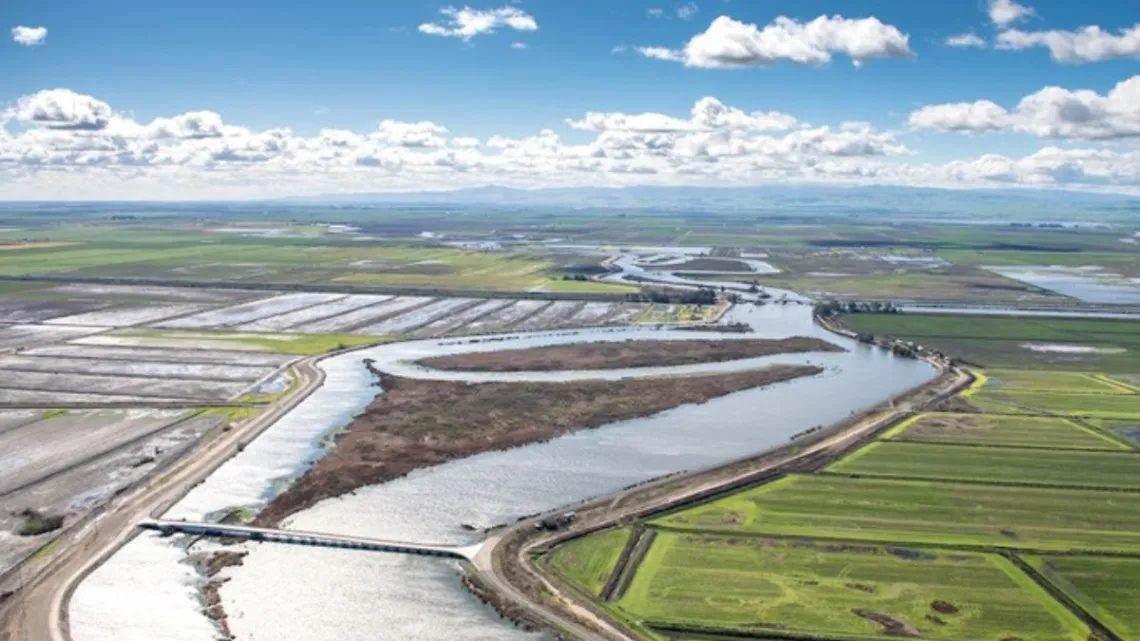
To start 2026, a major court ruling delivered a setback to the Newsom administration’s push to fast-track the Delta Conveyance Project. The 3rd District Court of Appeal upheld a lower-court decision rejecting the Department of Water Resources’ attempt to finance the project by issuing revenue bonds under existing State Water Project authority.
Simply, the court said DWR can’t treat this massive new Delta conveyance facility as a routine “modification” of old infrastructure in order to sidestep the transparency and accountability Californians deserve, especially when billions in debt and rising water bills are on the line. Opponents, like Sierra Club California, have long warned the project could come with ballooning costs, of which the state estimated roughly $20 billion in 2024, while EcoNorthwest projected last year that the true cost is likely $60-100 billion, and deepening ecological harm in an already-stressed Delta.
Sierra Club California welcomed the decision as an important affirmation that DWR cannot bypass legal and fiscal safeguards to finance the Delta Conveyance Project through water bonds, and that Delta communities and Tribes who have raised concerns about impacts to ecosystems, cultural resources, and local economies must be heard.
We should not be forced to shoulder billions in debt for a risky megaproject that threatens the Delta, while driving up water bills for working families. Instead, California must invest in solutions that respect Tribal sovereignty, protect frontline communities, and build real climate resilience through conservation and regional water reliability. This appeal comes one year out from the vote on the construction of the Delta tunnel by State Water Contractors, although it would be wise for them to delay the vote until the outcome of the third attempt to appeal the decision before wasting any more resources on the vote.
But one court ruling won’t protect the Delta on its own. Right now, the State Water Resources Control Board is weighing choices that will shape the Bay-Delta ecosystem for years—including whether to replace enforceable protections with “voluntary agreements” that let major water users opt in (or out) at their discretion.
This is a pivotal moment to demand a science-backed Bay-Delta Plan that actually delivers enough freshwater flows to sustain salmon, Delta communities, and public health. Find details below for an upcoming action you can take to defend the Delta.
Take action: Make your voice count for the Bay-Delta
1) Speak out at the hearing
Join the State Water Board hearing Jan 28–30 (starting at 9:00am) and give public comment. Sign up with us and staff will inform you when you are in the queue so you don’t need to participate all day. Tell the Board to adopt a science-backed, enforceable Bay-Delta Plan that protects communities, fish, and water quality.
2) Get ready with us
Come to our Online Speaker Training, Wed, Jan 21 (6:00–7:30pm). Join for instructions on participating, talking points, more background on the Bay Delta Plan, and support so you feel confident delivering comments at the hearing.
Newsom’s final budget
Governor Newsom released his proposed 2026–2027 state budget, the last of his administration. While the proposal comes with an improved $43 billion revenue outlook, it still relies heavily on special funds, one-time allocations, and fund shifts to carry core climate and environmental programs leaving Californians with patchwork strategies and leaving frontline communities in suspense.
That instability matters because climate impacts aren’t temporary. Even as overall General Fund revenues grow, the budget signals a shrinking commitment to the baseline funding we need to meet the scale of climate disruption already hitting communities across California. The administration’s approach continues to treat the climate emergency like a single expense rather than a permanent responsibility.
There are also important investments that must be protected and strengthened especially if implemented equitably and sustained. The proposal includes $2.6 million ongoing (special funds) for water quality permitting in response to the Supreme Court’s Sackett decision. This includes $199 million for climate and biodiversity priorities that support 30x30 goals, and also focused on ecosystem conservation and Salton Sea habitat restoration; and a proposed $200 million commitment for a new light-duty ZEV incentive program to keep California’s clean vehicle leadership moving forward.
But the budget’s core problem remains as General Fund commitments shrink, California becomes more dependent on fluctuating sources like cap-and-invest dollars and Proposition 4 to fund essential programs meaning communities are forced to “hold their breath” heading into the May Revision to see what survives.
Explore the Summary of the proposed Budget Here
Follow Us:
  |
Thank you for being a part of our work! Consider making a monthly donation. You may securely donate online or by sending a check to Sierra Club California at 909 12th Street, Suite 202, Sacramento, CA 95814.
