
The State of the Capitol: Sierra Club California’s Mid-Year Legislative Update
Climate Dispatch: The Delta, the Tunnel, and California’s Water Future
Join Us: Tijuana River Pollution, Air Quality, and the Fight for Environmental Justice
The State of the Capitol: Sierra Club California’s Mid-Year Legislative Update
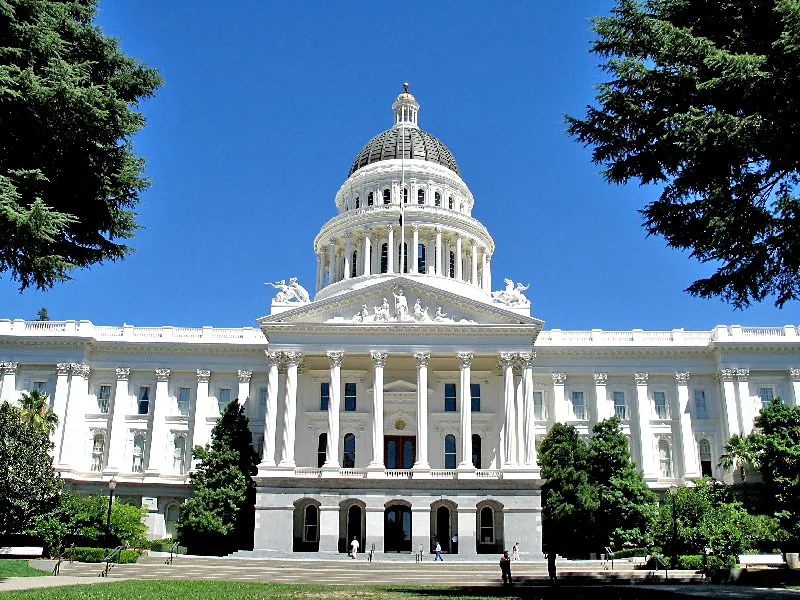
As the Legislature heads into summer recess, Sierra Club California is entering one of the most important stretches of the legislative year. Our priority bills have now moved through their second-house policy committees and are mostly headed to the Senate and Assembly Appropriations Committees, where they will be heard in early August when legislators return. In practical terms, this means Senate bills are now being considered in the Assembly, Assembly bills are being considered in the Senate, and many of the biggest decisions about which bills move forward will happen over the next month.
Appropriations is often one of the least transparent parts of the Capitol process. While the committees are officially tasked with determining whether the state has the funding to implement a bill, Appropriations is also where bills can be quietly weakened, held, or killed. That can be frustrating when strong environmental bills are at risk, but it also creates an opportunity to stop harmful proposals before they reach the floor. For Sierra Club California, this next phase will require both offense and defense: advocating on priority support bills, while continuing to oppose bills that would roll back climate, clean air, water, coastal, and environmental review protections.
These efforts are already showing results. All of Sierra Club California’s priority support bills made it out of their second-house policy committees. We also successfully helped stop or neutralize several harmful bills, including AB 1436, which would have gutted CARB’s Advanced Clean Fleets regulation; AB 1740, which would have exempted projects from the Coastal Act; and AB 2215, which would have bypassed existing State Water Board processes and streamlined approval for the Delta Tunnel project.
At the same time, new fights have emerged. Several bills were gut-and-amended before second-house policy committees, requiring Sierra Club California to quickly assess their impacts and respond. We are supporting AB 40, the Community First Coal Review Act, which would require full environmental review of the proposed coal export project in Oakland. We are opposing SB 1370, which would exempt large wildfire mitigation projects, including herbicide applications and vegetation removal from a broad range of environmental laws and regulations.
Our active priorities span nearly every major environmental issue facing California. Over the next month, Sierra Club California will focus on a range of strategies that bring together staff, chapters, volunteers, and members from Appropriations advocacy and in-district outreach to action alerts, op-eds, and social media toolkits. The summer recess may look quiet from the outside, but this is when much of the behind-the-scenes work happens to shape which bills make it to the Governor’s desk.
Climate Dispatch: The Delta, the Tunnel, and California’s Water Future
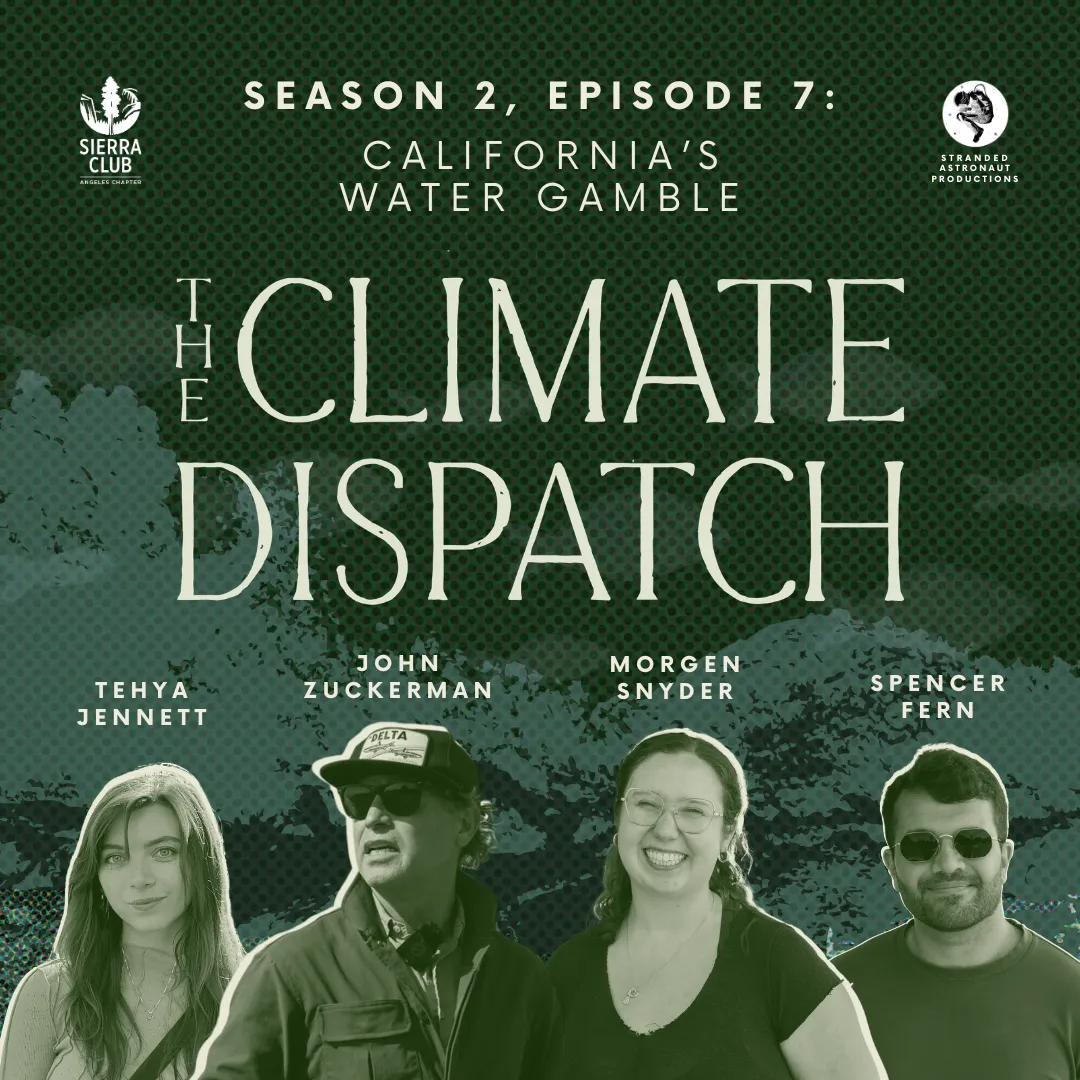
In the latest episodes of The Climate Dispatch, Sierra Club California takes listeners into the Sacramento–San Joaquin River Delta, one of California’s most important and most overlooked ecosystems.
In Season 2, Episode 6 and 7, we explored the Delta as a living estuary, a farming region, a home for communities, and a critical part of California’s water system. The Delta provides drinking water for 27 million people, supports millions of acres of farmland, and offers essential habitat for hundreds of species. Despite its importance, many Californians know very little about the Delta or the growing challenges it faces.
With staff from Restore the Delta guiding the episode, we traveled through Stockton and the surrounding waterways to better understand the beauty, complexity, and fragility of this remarkable place. Along the way, we heard from scientists, advocates, and local anglers who are seeing the impacts of declining water quality, harmful algal blooms, disappearing fish populations, and decades of water diversion.
Our newest episode continues that story by taking a closer look at the Delta Conveyance Project, also known as the Delta Tunnel. If the Delta’s waters are already overtaxed, why is the state considering a massive project that would divert even more water? Would the Tunnel actually strengthen California’s water security, or would it put Delta communities, farms, fish, and ecosystems at even greater risk?
In these episodes, we examine the history of the Delta Tunnel, where the project stands today, and what could be lost if it moves forward. We also highlight ongoing restoration efforts and explore why California must invest in local water solutions instead of relying on costly, outdated infrastructure that deepens pressure on the Delta.
The Delta Tunnel debate is ultimately about what kind of water future California wants to build. Sierra Club California believes that real resilience comes from conservation, water recycling, stormwater capture, groundwater cleanup, stronger regional planning, and investments that reduce dependence on imported water. These solutions can help protect the Delta while making communities across California more prepared for drought, climate change, and long-term water uncertainty.
Together, these two episodes tell a broader story about stewardship, justice, and responsibility. The Delta is not simply a place where water moves through pipes and canals. It is a living ecosystem and a home to communities that have carried the consequences of California’s broken water policies for generations. Protecting the Delta means protecting public health, sustainable agriculture, fish and wildlife, Tribal and community priorities, and California’s ability to adapt to a changing climate.
Guests featured across the Delta episodes include Morgen Snyder, Director of Policy and Programs at Restore the Delta; Spencer Fern, Delta Science Program Manager at Restore the Delta; John Zuckerman, Delta farmer; and Bud Chaddock, local angler and activist.
Listen to The Climate Dispatch and share these episodes with someone who cares about California water, climate resilience, and environmental justice.
Join Us: Tijuana River Pollution, Air Quality, and the Fight for Environmental Justice
By Sierra Club San Diego Chapter

What happens when a river pollution crisis becomes impossible to ignore?
For communities near the Tijuana River, this is not a theoretical question. The ongoing pollution crisis has affected beaches, neighborhoods, families, workers, and frontline communities across the South Bay and border region. For decades, residents have faced sewage flows, contaminated water, beach closures, foul odors, and growing concerns about the impacts of pollution on public health. Increasingly, researchers and residents are also raising urgent concerns about how polluted water may be affecting the air people breathe.
That is why the Sierra Club San Diego Chapter is hosting a special virtual Sierra Talk: Impact of the Polluted Tijuana River on Air Quality and Health, featuring Dr. Kimberly Prather, Distinguished Professor and Distinguished Chair in Atmospheric Chemistry at UC San Diego, with appointments at Scripps Institution of Oceanography and the Department of Chemistry and Biochemistry.
Dr. Prather is one of the leading experts studying aerosols, gases, and airborne particles. Her groundbreaking work has helped scientists better understand how particles move through the air, where they come from, and how they can affect human health. At this Sierra Talk, Dr. Prather will help explain what we know about the connection between the polluted Tijuana River, air quality, and public health — and why this crisis demands continued attention and action.
The Tijuana River pollution crisis is one of California’s most urgent environmental justice and public health issues. It is also a reminder that pollution does not stop at political borders. The Tijuana River watershed connects communities across the United States and Mexico, and solving this crisis will require sustained federal, state, local, and binational action. Temporary fixes are not enough. Communities deserve long-term investments in wastewater infrastructure, stronger monitoring, faster public notification, habitat restoration, and accountability from the agencies responsible for protecting public health and the environment.
Sierra Club California recently supported SJR 13, authored by Senator Steve Padilla, which focuses on transboundary water pollution and the United States-Mexico-Canada Agreement. The resolution was adopted by the Legislature and chaptered by the Secretary of State on July 2, 2026. SJR 13 helps connect the Tijuana River crisis to the broader systems that have allowed border communities to bear the burden of inadequate wastewater and environmental infrastructure for far too long.
The message from South Bay communities, scientists, advocates, and local leaders is clear: no community should have to fight year after year for clean water, safe beaches, and breathable air. The Tijuana River crisis demands urgency, transparency, and a permanent solution that protects both communities and the coast.
Sierra Talk: Impact of the Polluted Tijuana River on Air Quality and Health
Date: Thursday, July 16, 2026
Time: 6:00 PM – 8:00 PM PT
Location: Virtual
Host: Sierra Club San Diego Chapter
Register here: REGISTRATION
For questions, please contact Charles Rilli at charles.rilli@sierraclub.org.
This is an important opportunity to hear directly from a leading scientist about one of the most urgent environmental justice and public health crises facing our region. We hope you will join us.
Follow Us:
  |
Thank you for being a part of our work! Consider making a monthly donation. You may securely donate online or by sending a check to Sierra Club California at 909 12th Street, Suite 202, Sacramento, CA 95814.
