
Newsom's Water Policy is Swimming Up the Wrong Creek
It’s a busy time at CalPERS - Surprises, Rallies, and Calls for Accountability
Join Sierra Club California at the California Climate Policy Summit
Newsom's Water Policy is Swimming Up the Wrong Creek

Throughout his tenure, Governor Newsom’s water policy has focused on splashy, headline-grabbing moves that fail to address California’s deep-seated water issues. Since President Trump’s inauguration, Newsom has ramped up his efforts to push environmentally destructive water projects through a series of executive orders (EOs), and supported Trump’s efforts to roll back water regulations across the state.
In his first week in office, Trump took aim at California with EOs demanding the release of “enormous amounts of water” from the Bay Delta and unexpectedly opened two California dams, which he falsely claimed would help parts of L.A. damaged by the wildfires. None of the water reached L.A., and Trump’s political stunt lowered Central Valley reservoirs by billions of gallons.
Newsom issued his own EO to “maximize the capture and storage of additional water,” which parrots Trump’s dangerously inaccurate talking points. In order to speed up rebuilding for wildfire victims, Newsom issued another EO which will suspend CEQA and California’s Coastal Act protections. Aiding communities harmed by the wildfires is crucial, however ignoring environmental regulations could lead to pollution in local communities, coastal erosion, and the destruction of vital ecosystems.
Newsom has failed to take a stand against Trump’s harmful water actions, instead saying he wants to “work together in a crisis.” It’s striking that Newsom and Trump have virtually identical opinions on how California should manage its water supply.
Both Newsom and Trump’s water policies focus specifically on big infrastructure projects and statewide water storage specifically. These policies miss the mark on why California has historically struggled to maintain adequate water supplies. Newsom has ignored the concerns of environmentalists, local communities, and Tribal groups and continued to fast-track harmful water projects like the Delta Tunnel and Sites Reservoir.
Sites Reservoir is proposed to be built on the Great Valley Fault System - nearly 450 miles from L.A. - which would leave the supply extremely vulnerable to natural disasters. Above ground and open air, hot summers will cause both evaporation and algae, leading to increased greenhouse gases. Storing water underground, ideally through spreading grounds, and closer to home is better for evaporation, energy usage, access in emergencies, and keeping jobs local.
The Bay Delta estuary that lies between the San Francisco Bay and Stockton was once host to an array of species, from salmon to grey wolves to the now-extinct California grizzly bears. The San Joaquin Valley ecosystem has been devastated by decades of the state diverting freshwater flows for agriculture. Many species in the region have gone totally extinct. The local communities and tribes who rely on the estuary have been severely impacted, and have raised some of the strongest opposition to Newsom’s water policies.
Instead of flashy executive orders and huge water projects, Newsom needs to prioritize local and sustainable solutions. Policies like stormwater capture, local storage, and water recycling will go a long way towards reducing the state’s reliance on imported water. Newsom’s preferred policies will not create new sources of water, but rather spend billions in taxpayer money to import water, an unreliable source in an era of climate disaster. Capturing and storing stormwater locally makes local districts less reliant on energy-intensive imported water. Recycling creates a new source of water that we can store for a not-so-rainy day.
As climate change continues to exacerbate California's drought issues and increase the frequency of severe weather events like January’s wildfires, Newsom must take a more thoughtful approach to managing the state’s water supply. Let’s hope he changes streams before it’s too late.
It’s a busy time at CalPERS - Surprises, Rallies, and Calls for Accountability
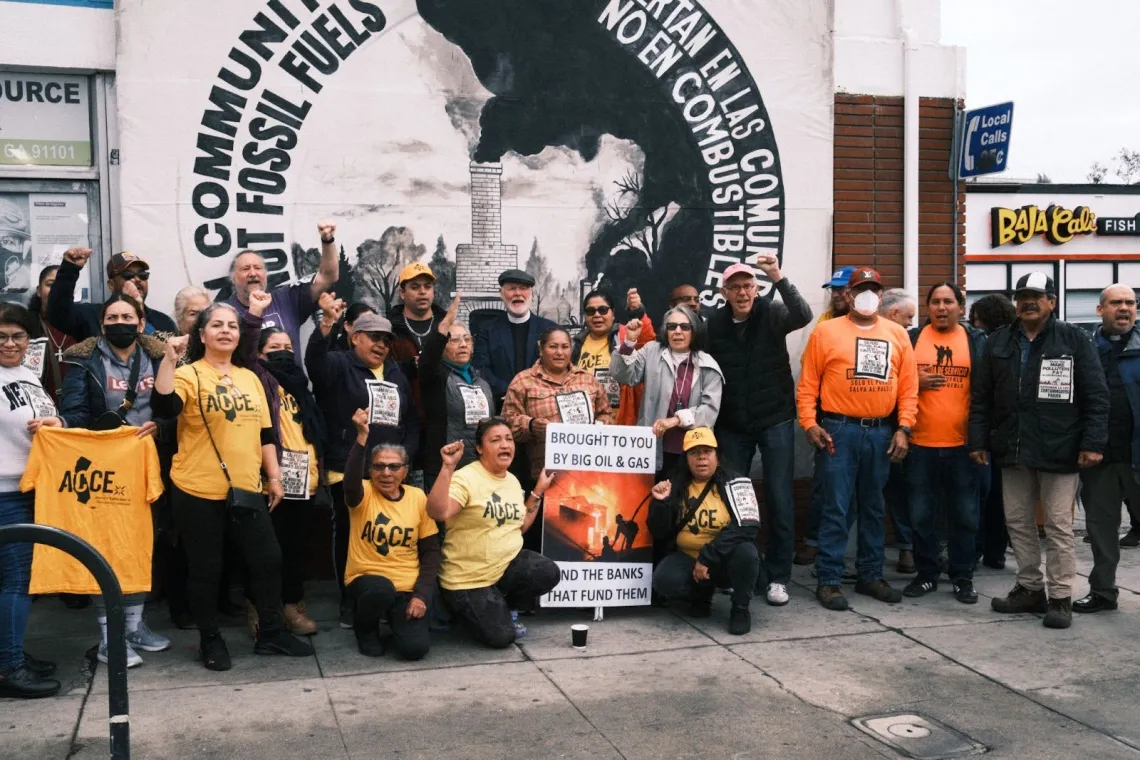
Whew! It’s a packed week for Sierra Club California’s advocacy at the California Public Employee’s Retirement System (CalPERS). As we see chaos trickle down from the Federal government, it’s more important than ever that CalPERS, the nation’s largest pension fund, maintain its commitment to strong leadership in climate finance.
In 2024, the pension fund committed to investing $100 billion dollars in climate solutions. While this goal is commendable, CalPERS is falling short. This week, our coalition of allies, California Common Good, released a report that highlights investments in fossil fuel corporations, including ExxonMobil, Chevron, Saudi Aramco, and Shell, included in CalPERS’ climate solutions investment portfolio. Not only is the inclusion of fossil fuel companies–which have no place in a list of climate solutions–concerning, it raises further questions about CalPERS’ overall strategy.
Sierra Club California is working with labor and community-based allies to demand that CalPERS be transparent and accountable for implementing a portfolio of investments that will have positive impacts on our climate and environmental justice communities.
Our allies at Fossil Free California and Alliance of Californians for Community Empowerment (ACCE) also held two rallies in Richmond and Torrance this week, demanding that CalPERS invest in communities, not fossil fuels. CalPERS has the opportunity to maximize the value of this $100 billion dollar commitment by prioritizing investments that will benefit California’s frontline communities and environment. When Californians thrive, so does CalPERS’ return on investment.
How is CalPERS defining its “climate solutions” investments, and why is CalPERS not making the data of the assets included in this portfolio publicly available? Join us in demanding accountability and transparency by sending a comment to the CalPERS Board today.
Join Sierra Club California at the California Climate Policy Summit

Join us at the fourth annual California Climate Policy Summit. Collaborate with state decision-makers, elected officials, climate activists, environmental justice advocates, business leaders, scientists, and policy experts to build power across California in support of science-based climate policies. Learn what visionary climate leaders are doing to accelerate the equitable phase-out of fossil fuels, scale up carbon drawdown, and build a resilient and clean energy system. Engage in discussions about legislation and regulatory issues under debate in Sacramento. Connect with professionals pioneering critical climate strategies in the public, private, and nonprofit sectors.
More information: https://theclimatecenter.org/summit2025
Our Policy Strategist Jakob Evans and Senior Policy Strategist Gabriela Facio will be in attendance! If you’d like to attend, you can use the discount code Sierra25. This code is good for 25% off of a Regular Price ticket and brings the cost to $195. Here are detailed instructions for using the discount:
- Go to Eventleaf registration page
- Select the Standard ticket and 1 for the QUANTITY, then click the green NEXT button
- Provide your contact information, lunch selection (please select vegan/vegetarian if you do not plan to join us for lunch) and reception RSVP, then click the green NEXT button
- Type in Sierra25 in the ENTER DISCOUNT CODE box, then click the APPLY DISCOUNT button.
Click the green SUBMIT button
Follow Us:
  |
Thank you for being a part of our work! Consider making a monthly donation. You may securely donate online or by sending a check to Sierra Club California at 909 12th Street, Suite 202, Sacramento, CA 95814.
