
Meet the Staff of Sierra Club California - Part 1
CEQA: California’s Historic Environmental Law
Take Action as the Legislature Weighs a CEQA Rollback Bill Like No Other
Meet the Staff of Sierra Club California - Part 1
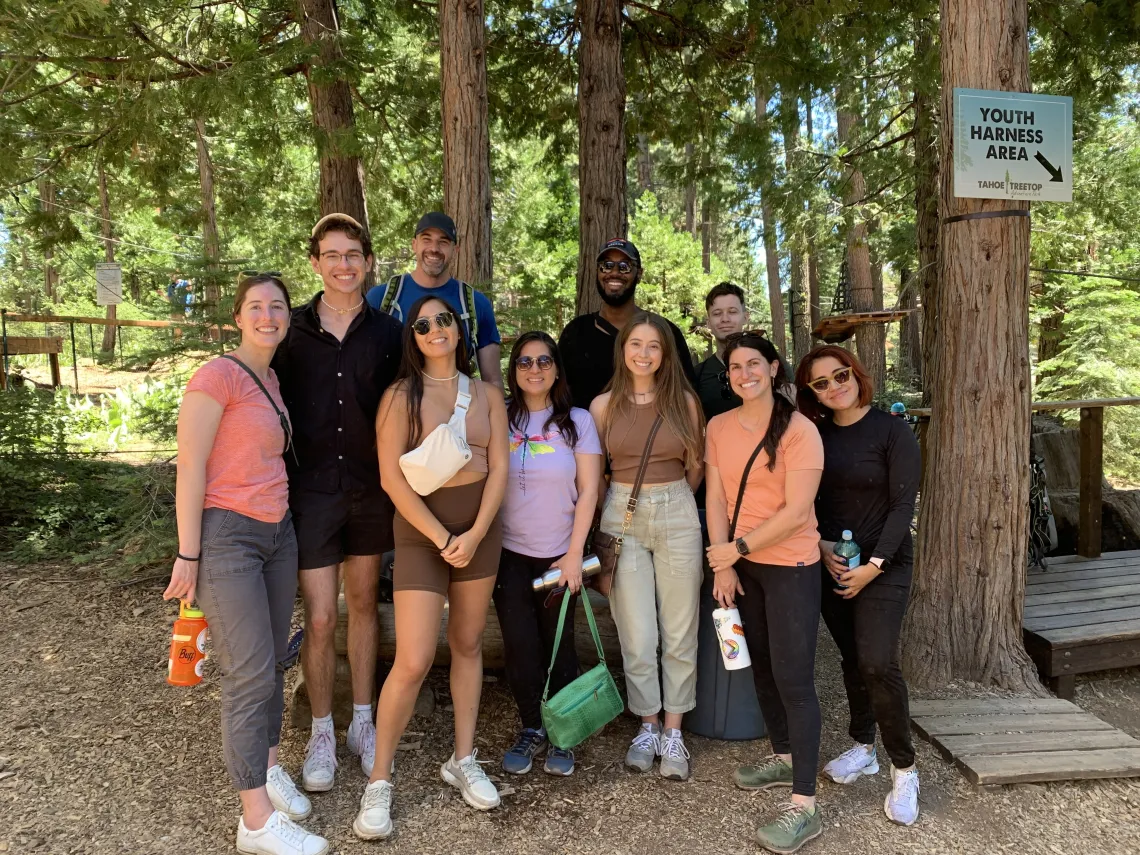
In our day-to-day work, Sierra Club California’s staff interact with dozens of passionate volunteers and environmental advocates. However, we don’t get an opportunity to connect with the majority of our 500,000+ members and supporters. We wanted to offer you the chance to meet our incredible team who represent the voice of Sierra Club at the state’s capitol. The Q&A below will give you a bit more detail on the work our staff does and their connection with the environment.
This is just the first group of our staff. Stay tuned for next month, when you’ll see the second part of our interview series with staff members. We hope this look behind the curtain helps show the personal side of the tireless Sierra Club California advocates who fight for the environment every day.
Why did you decide to join Sierra Club California?
- Michael: I wanted to make a difference in a field that I truly cared about. I had worked for various nonprofits in the past, and I couldn’t pass up the opportunity to do work I love for an organization I had a deep respect for.
- Gaby: I was excited for the opportunity to bring frontline and community-based values into higher level policy spaces that are often disconnected from on the ground realities, but especially excited to work alongside some incredible advocates in Sacramento.
- Jakob: Sierra Club California is uniquely rooted in the passion and power of hundreds of thousands of members across the state who each have unique ties to environmentalism and insights on what our state should prioritize as it tackles the climate crisis. I chose to work here because no other organization harnesses this diversity of thought and experience in the same way.
- Mahtisa: We aren’t afraid to be the only voice in Sacramento sticking up for controversial or important issues that other groups shy away from. Now more than ever, it is critical to be bold advocates for climate justice.
- Layne: Growing up in the Delta, I saw firsthand the power of Sierra Club’s organizing infrastructure to make positive changes in our world! Beginning my career on the SCC team means being a small part of this positive change.
What’s your favorite project you’ve worked on here?
- Michael: All of the oil and gas pollution bills we’ve worked on have been super interesting to me. From SB 1137 in 2021 to AB 1280 this year, it’s always fulfilling to be a small part of passing laws that reduce pollution and protect Californian communities.
- Gaby: For the second year, we have prioritized “polluters pay” legislation, and it has been the most rewarding to see the immense support behind important legislation that holds the biggest polluters accountable. These campaigns have brought so many intersectional issues, advocates and communities together and it’s been motivating to be a part of.
- Jakob: Getting to work alongside so many strong labor leaders to advocate for less risky and more sustainable investments at CalPERS, California’s pension fund that provides a secure retirement for more than 2 million Californians, has been rewarding. And I’ve learned more about the finance world than I ever thought I’d need to!
- Mahtisa: The ongoing 30x30 campaign in California is a joy to work on, with my two volunteer co-leads. It is super rewarding to craft strategy and execute a vision that is volunteer led, from our Task Force leaders across the state.
- Layne: I’ve immensely enjoyed working with some of our longtime volunteers to craft a renewed In-District Lobbying program. Collaborating with local chapters to connect their membership with their representatives has been immensely rewarding and I can’t wait to see how the program grows (be on the lookout for more info if you’re interested)!
Where’s a natural space in California that’s especially important to you?
- Michael: I visited Yosemite last year and it left a lasting impact on me. The beautiful wildlife and nature reaffirmed how important it is to protect our natural lands and spaces.
- Gaby: I have never witnessed anything as beautiful as the redwood state parks in northern California, but there are various areas in Monterey County that I’ve always enjoyed visiting since I was young.
- Jakob: I’ve really enjoyed running along the American River here in Sacramento. Just a 5 minute drive away from Midtown is a trail with trees, wildflowers, and beavers galore, and it’s a lovely reminder that nature isn’t too far away from the city.
- Mahtisa: The coast and its inhabitants are so incredibly special. Whether it’s scrambling down to remote beaches in Point Reyes, or watching seals play at Baker Beach in SF, or getting lost looking in tidepools for hours. I just love the experience of the ocean and how it is ephemeral and always shifting.
- Layne: The Delta estuary is a vitally important space for me - it’s both my hometown and representative of a crucial waterway that the entire state depends on. Fighting for it is the most gratifying part of my job.
What’s the last album/TV show/movie you really enjoyed?
- Michael: I saw Sinners in IMAX and it was amazing! I’m usually not a horror movie fan but it blew me away. It was a great theatrical experience and I’d recommend it to everyone.
- Gaby: Right now, I am excited to finish the second season of The Last of Us. I was a fan of the video game when I was younger and I am a fan of the series now but especially a fan of Pedro Pascal!
- Jakob: Have y’all seen ‘Hacks’ on HBO Max? I recently binged it and enjoyed it a lot. So funny and endearing!
- Mahtisa: Severance is important. So much to discuss! I mostly love how strange it all is, the anti-capitialist commentary, and the cinematography.
- Layne: I recently finished watching VEEP for the first time. Forever grateful that Miguel is NOTHING like Selena Meyer.
CEQA: California’s Historic Environmental Law

It has been approximately 55 years since the first Earth Day events occurred across the United States. These events became a pivotal moment when Americans unified in concerns over the rapid decline of our environment. In California, it was essential to codify this sentiment into what would become the pillar of environment protection. The California Environmental Quality Act (CEQA) was signed into law marking the first step our state would take towards decades of environmental protection.
At first, this law established a public input process and a technical environmental review of development projects undertaken by state government agencies. However, there remained an uncertainty about private development and how this law applied. The Office of Planning and Research under Governor Reagan planned to apply guidelines that would make CEQA apply only to projects from California government agencies. The Attorney General, Evelle Younger, believed that the broadness of CEQA needed to apply to any project in which state significant government action is taken and therefore extending to private developments as well.
Californians quickly realized that in order to truly protect our environment, the premise proposed by Younger, was one that aimed to do just that. Two years after its initial establishment, California saw one of the most pivotal legal challenges that would set the stage for years of strong protections. Mono County, one of the most pristine examples of California beauty and awe inspiring nature was the grounds that would spark the cascade of protections.
When the Mono County Board of Supervisors approved a condominium project without any CEQA process, environmental leaders from the Friends of Mammoth organization challenged this decision. They argued that even though this was a private development project, the Board needed to comply with CEQA and apply it to this project. Friends of Mammoth quickly rallied support and sued the County for their actions such that this legal challenge of law applicability reached the Supreme Court for review. The Court used the National Environmental Protection Act (NEPA), which California modeled its law under, as the basis of its review. After countless community efforts and strong legal challenges, the Court ruled in favor of the Friends of Mammoth.
It was decided that the California legislature intended to provide the fullest environmental protection and therefore CEQA needed to extend to all private development in which government action was required - such as the issuance of a permit or other entitlements. From this decision, our environment has benefited by having some of the strongest environmental protections across the nation and assuring future generations a clean and prosperous climate.
Take Action as the Legislature Weighs a CEQA Rollback Bill Like No Other
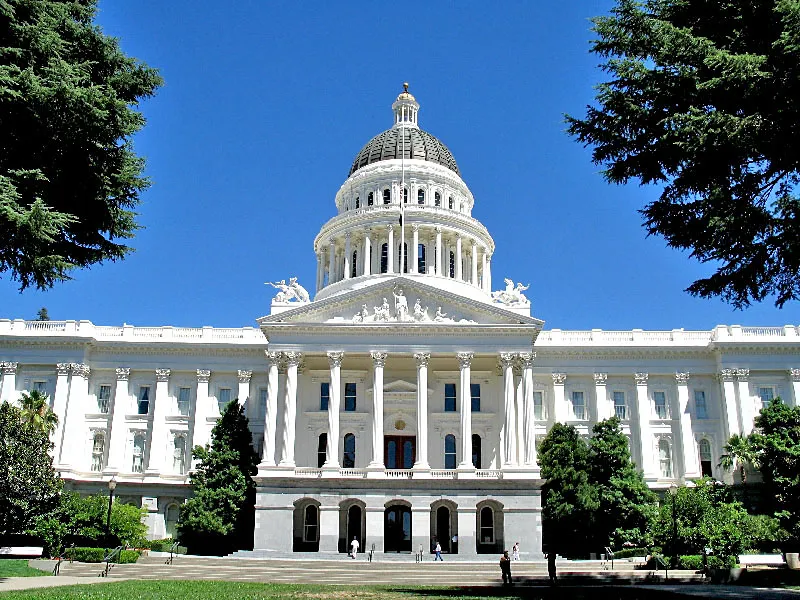
The spring season has brought higher temperatures to Sacramento, both literally and figuratively. Among the thousands of bills moving through the legislature, the Senate Appropriations Committee is considering SB 607 by Senator Scott Wiener, a bill that would weaken the California Environmental Quality Act (CEQA) across the board and reduce communities’ ability to protect themselves from harmful development. As California faces unprecedented interference from the Trump Administration, the legislature must not claw back the regulations that protect communities by ensuring transparent and responsible development. Senate Pro-Tem Mike McGuire holds immense sway over what bills make it out of the Senate Appropriations Committee. Call your state Senator today and ask them to urge Pro-Tem McGuire to hold SB 607.
SB 607 aims to dismantle over 50 years of community-led progress by changing the language of CEQA that requires agencies to prepare environmental impact reports (EIR) when there is a reasonable argument that a project would have harmful impacts. EIRs are critical for collecting public input to ensure projects address environmental and public health needs. SB 607 would allow agencies to decline to prepare an EIR if it is “more likely than not” that a project will not have harmful impacts. This legally ambiguous language would allow developers to pad the record with their own arguments and enable permitting processes with minimal public participation. Sierra Club California is ready to remind our state legislators about the danger of weakening a law that has served to safeguard our environment and public health for half a century.
Disappointingly, Governor Newsom took time during the reveal of his May budget revision to share support for SB 607. As the 2026 Governor’s race gets into swing, it’s imperative that California’s future Governor stand firm in the face of the Trump Administration’s wholesale wrecking of regulations and defend the environmental laws that protect Californians and our environment.
Follow Us:
  |
Thank you for being a part of our work! Consider making a monthly donation. You may securely donate online or by sending a check to Sierra Club California at 909 12th Street, Suite 202, Sacramento, CA 95814.
