Hands Across the Sand: Californians Unite Against Offshore Drilling
California’s Water Future Is at a Crossroads and the Public Deserves Answers
The Close of the Session: Environmental Victories, Setbacks, and What's Next
Hands Across the Sand: Californians Unite Against Offshore Drilling
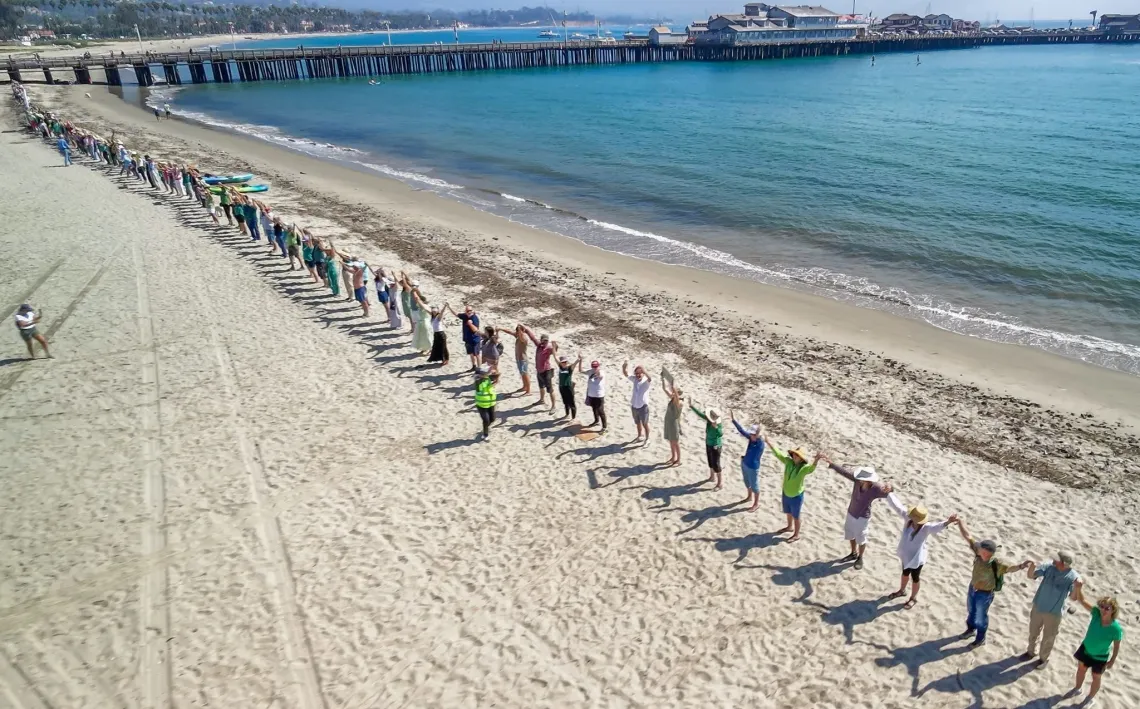
Between 1,000 and 1,500 Californians gathered at beaches across the state for Hands Across the Sand, joining hands to send a clear message: No new offshore drilling off our coasts!
Last year, the Trump administration released a sweeping proposal to expand offshore oil and gas drilling across the country. The draft federal leasing program identifies up to 34 potential offshore lease sales covering approximately 1.27 billion acres, including six proposed sales off California's coast.
Nearly 300,000 people submitted public comments on the proposal, demonstrating widespread interest in the future of our coastlines. Yet the threat of expanded offshore drilling remains, alongside ongoing concerns about companies like Sable Offshore Corp. and the risks associated with restarting existing offshore oil infrastructure.
That's why, on September 26, Sierra Club members and allies came together for Hands Across the Sand (HATS), a statewide day of action to demonstrate their commitment to protecting California's coast.
From Mendocino to San Diego, Sierra Club chapters organized events at 11 locations, bringing together an estimated 1,000 to 1,500 participants.
Events took place in Mendocino, Bodega Bay, San Francisco, Santa Cruz, Monterey, Grover Beach, Santa Barbara, Ventura, Oceanside, and two locations in San Diego. They were organized by the Redwood, San Francisco Bay, Ventana, Santa Lucia, Santa Barbara-Ventura, and San Diego chapters.
Each gathering reflected the character of its local community. Some featured poster-making parties, rallies, music, petitions, and speakers, while others brought together families, community organizations, and elected officials for a day of coastal advocacy.
But every event shared one defining moment: participants joining hands along the shoreline to demonstrate the power of collective action.
The events brought together dozens of community leaders, local residents, elected officials, and environmental organizations, including Surfrider Foundation chapters, Coastkeeper groups, Oceana, the Center for Biological Diversity, Last Chance Alliance, 350.org, and many others.
For many coastal communities, the risks of offshore drilling are not hypothetical. In Santa Barbara, where more than 400 people participated, residents know firsthand the lasting consequences of an oil spill. The devastating 1969 Santa Barbara spill released more than three million gallons of crude oil, damaging marine ecosystems and the local tourism economy.
Decades later, the 2015 Refugio oil spill released more than 120,000 gallons of crude near Santa Barbara, contaminating beaches and disrupting tourism, recreation, and coastal businesses.
These disasters are reminders of what is at stake. Oil spills can threaten marine wildlife, fisheries, public health, and the coastal economies that millions of Californians depend on. The Department of the Interior's modeling also highlights the risks associated with expanded drilling, including the potential for major spills in Pacific waters.
Hands Across the Sand wasn't just about the number of people who showed up. It was about building a stronger, more connected movement to protect California's coast. The events generated some of our highest social media engagement and earned media coverage from at least six news outlets, including a national outlet based in New York.
Our advocacy also coincided with an important legislative victory. Many participating organizations called on Governor Newsom to sign AB 1448, legislation strengthening California's safeguards against expanded offshore oil and gas development. Just three days after Hands Across the Sand, the Governor signed the bill into law.
The movement also extended beyond California, with advocates in Alabama participating and Massachusetts organizers planning their own event for October 18.
None of this would have been possible without the dedication of Sierra Club chapter leaders, volunteers, staff, partner organizations, and the hundreds of community members who helped organize and participate. From coordinating events and engaging local officials to creating signs, capturing photographs, and amplifying our message, this was a tremendous collective effort.
And we're just getting started.
Next year, we hope to expand Hands Across the Sand beyond our coastal chapters, engaging more of Sierra Club's California chapters and building connections with advocates across the country.
California’s Water Future Is at a Crossroads and the Public Deserves Answers
One of the most consequential environmental decisions facing California this year is approaching, and it could determine the future of our rivers, fisheries, and water resources for generations.
On October 28–29, the State Water Resources Control Board is scheduled to consider adopting an updated Bay-Delta Water Quality Control Plan, the framework that determines how much water must remain in California's rivers and the Sacramento-San Joaquin Delta to protect fish, wildlife, and the communities that depend on them.
The Bay-Delta is the heart of California's water system. Its rivers sustain endangered salmon, support Tribal traditions, provide habitat for wildlife, and supply water to millions of Californians. Yet decades of excessive water diversions, habitat destruction, and inadequate environmental protections have pushed this ecosystem toward collapse.
The state has an opportunity to change course. Unfortunately, the proposed plan raises serious questions about whether California is prepared to put the health of its rivers and communities ahead of the interests of powerful water users.
At the center of the controversy are the so-called Voluntary Agreements, now branded as the Healthy Rivers and Landscapes program. These agreements would allow participating water agencies to meet environmental requirements through negotiated commitments involving river flows, habitat restoration, and funding.
But recent investigative reporting by KCRA revealed that California state agencies have used confidentiality agreements to restrict access to certain scientific information and discussions surrounding the development of the Bay-Delta proposal.
State officials maintain that the process has been transparent. However, these revelations raise fundamental questions: Why should scientific discussions informing decisions about California's public waterways be subject to secrecy? And how can Californians meaningfully evaluate a proposal if relevant information is kept out of public view?
The public deserves transparency, independent science, and a meaningful voice in decisions about our water.
If adopted, the plan would establish a new framework for environmental protections across the Sacramento River and Delta watershed, including an alternative compliance pathway based on the Voluntary Agreements.
While proponents argue that negotiated commitments and habitat restoration will improve ecosystem conditions, Sierra Club California is concerned that the proposal does not establish sufficiently strong and reliable protections for the river flows that native fish and wildlife need to survive.
Habitat restoration matters. But restoring habitat without ensuring adequate water flows cannot substitute for a healthy, functioning river system.
The consequences reach far beyond the Delta. Weak protections could prolong the decline of native salmon populations, threaten fishing communities, undermine Tribal cultural and ecological resources, and increase pressure on an ecosystem already strained by climate change.
For Southern California, this decision also raises broader questions about our state's water future. Instead of continued dependence on increasingly stressed rivers and costly imported-water infrastructure, California must accelerate investments in local water recycling, stormwater capture, conservation, and groundwater cleanup.
Sierra Club California and our allies have spent years urging the state to adopt science-based protections that restore our rivers while meeting the long-term water needs of communities across California. We will continue demanding meaningful environmental standards, transparent decision-making, enforceable river-flow protections, and accountability for the water agencies entrusted with managing this vital public resource. California cannot claim environmental leadership while allowing its largest estuary to continue declining.
Our rivers, wildlife, Tribal communities, and future generations deserve more than promises. They deserve a Bay-Delta Plan that delivers real protections.
What's Next? Make Your Voice Heard
The State Water Resources Control Board is expected to consider adopting the updated Bay-Delta Plan on October 28–29. As this consequential decision approaches, Californians have another opportunity to make their voices heard.
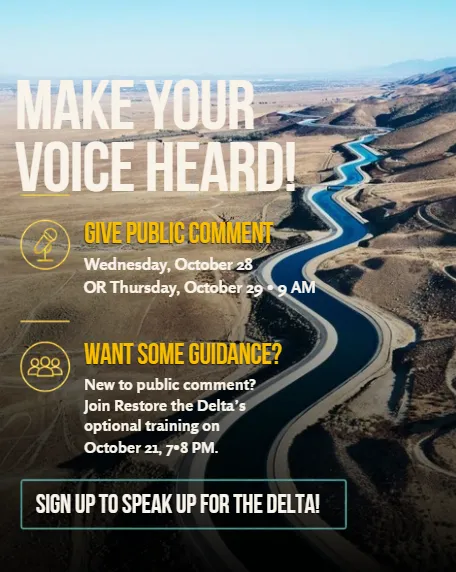
Restore the Delta, Yosemite River Alliance, and Save California Salmon are helping community members prepare to participate through public-comment trainings, including a virtual training on Wednesday, October 21, from 7–8 p.m.
Participants can learn how to prepare testimony, navigate the public hearing process, and communicate their concerns to the Water Board.
Register for a public-comment training
The decision is approaching, and public participation remains an essential part of the process.
The Close of the Session: Environmental Victories, Setbacks, and What's Next
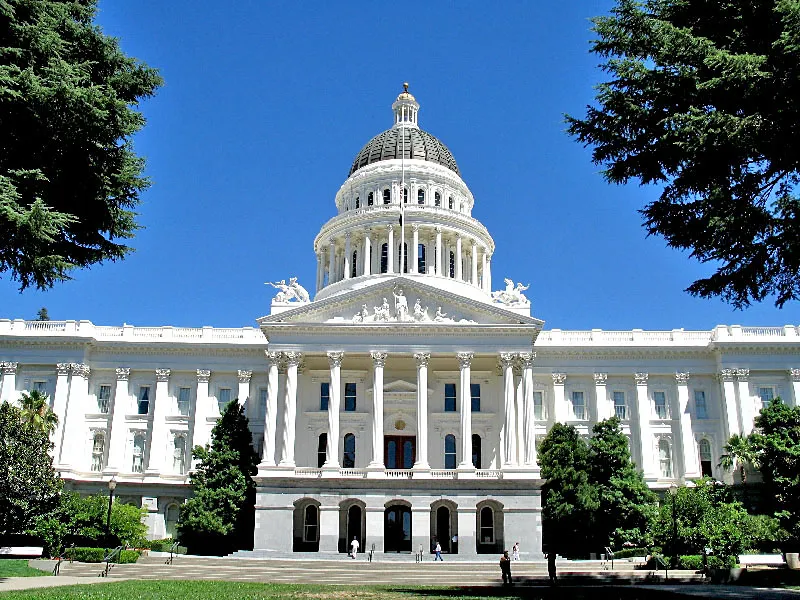
California's 2026 legislative session has officially ended, bringing important victories for clean energy, coastal protection, environmental justice, and public health, alongside significant setbacks for environmental safeguards and water protections. Sierra Club California's upcoming Legislative Scorecard will examine how lawmakers voted on consequential environmental bills and what those decisions mean for our state's future.
The 2026 legislative session has come to a close, and with Governor Newsom's final decisions made, we are taking stock of what California accomplished, where progress stalled, and which challenges remain.
Throughout the year, Sierra Club California tracked and advocated on hundreds of bills, working alongside our chapters, volunteers, and coalition partners to advance environmental protections and push back against proposals that threatened California's climate and conservation goals.
There is progress worth recognizing. This year, California signed important legislation expanding access to clean energy, including AB 2313 and SB 222 to accelerate building electrification, SB 868 to expand access to plug-in solar, and AB 2493 to address delays connecting clean energy projects to the electrical grid.
Additional victories included AB 1448, strengthening protections against expanded offshore oil and gas development; AB 40, requiring environmental review for proposed coal facilities; SB 883, improving oversight of dangerous chemical storage facilities; and SB 1268, advancing equitable access to outdoor recreation. New laws also address utility political spending, public participation in regulatory proceedings, and financial assistance for wildfire resilience.
But the session also brought consequential setbacks. Governor Newsom vetoed SB 954, which would have restored environmental review safeguards for certain industrial developments, as well as AB 2218, addressing historical injustices involving Tribal water rights, and SB 1125, creating a statewide water rate assistance program for low-income households. AB 2494, which sought to strengthen biodiversity and climate protections in state demonstration forests, was also vetoed.
Meanwhile, several proposals Sierra Club California opposed became law, including SB 1370, creating broad environmental exemptions for wildfire mitigation projects; SB 811, establishing special permitting provisions for metal shredding facilities; AB 706, supporting forest biomass utilization; and SB 1392, expanding exemptions from vehicle smog checks.
Other outcomes reflected the importance of stopping legislation before it reaches the Governor's desk. Proposals to accelerate oil drilling permits, weaken oil well cleanup accountability, and extend State Water Project water rights in ways that could facilitate the Delta Tunnel failed to advance. At the same time, several bills we supported, including proposals to strengthen community air protections, address climate-related insurance costs, and expand access to environmental review documents, did not make it across the finish line.
So what does this session tell us about California's environmental leadership?
The answer requires looking beyond which bills were signed or vetoed. It means examining the decisions legislators made along the way, the protections they supported or weakened, and the consequences those decisions carry for California's communities and environment.
In the coming weeks, Sierra Club California will release our annual Legislative Scorecard, providing a more comprehensive analysis of key environmental votes taken by members of the State Assembly and Senate.
The Scorecard will examine how legislators voted on consequential legislation affecting climate action, clean energy, water, public health, environmental justice, and California's natural resources. Our goal is to help Californians better understand the legislative decisions shaping our environmental future and provide greater transparency into the actions of their elected representatives.
To our members, volunteers, and partners who helped advance this work throughout the year, thank you. Your calls, testimony, organizing, and continued advocacy remain essential to California's environmental future. The legislative session may be over, but the work of advancing environmental protections and holding our elected leaders accountable continues.
Stay tuned for the release of Sierra Club California's 2026 Legislative Scorecard.
Follow Us:
  |
Thank you for being a part of our work! Consider making a monthly donation. You may securely donate online or by sending a check to Sierra Club California at 909 12th Street, Suite 202, Sacramento, CA 95814.
