The last part of the summer insect blog series spotlights butterflies and moths, jointly called lepidoptera. Indiana is in fact an insect haven, and is home to approximately 150 butterfly and nearly 500 moth species which means 650 species of caterpillars! To summarize species numbers for all four blog spotlight insects, in Indiana there are approx. 44 firefly, 100 odonata (dragonfly and damselfly), 150 butterfly, and 430 native bee, and 486 moth species. That’s a lot!
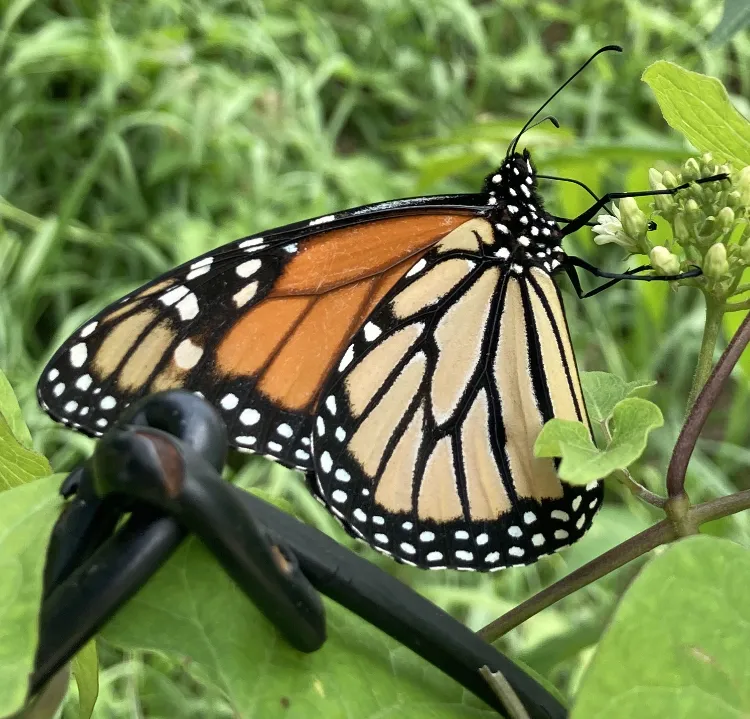
I would guess that unlike firefly, dragonfly, and native bee species, most readers can identify more than one lepidoptera species, and perhaps the first on your list would be the monarch butterfly. I can in reality only name a few more than that: the swallowtail family, which I know comes in a variety of yellow, black, and blue, but none of which I can accurately identify, the luna moth, the lovely pantry moth that I dread finding in my cupboard, and my list ends there. Being able to correctly identify 3 species off the top of my head is not very impressive.
We all know that monarchs require milkweed to reproduce, and without the milkweed plant the species cannot survive. To save the monarch we must save the milkweed. And we know that the eastern monarch migrates up to 3,000 miles to overwinter in Mexico, and those that survive the winter FLY BACK to where they were born to mate and lay eggs, after which they die. But did you know that over the summer, there are many generations of monarchs? The earlier generations lay eggs and die not long after, with nearly the same lifespan of other species of lepidoptera. Only the last generation of the summer migrates to Mexico.
The monarch is the only butterfly that migrates, but it’s not the only lepidoptera that has an exclusive relationship with a particular plant on which to lay its eggs. In fact, nearly all species of lepidoptera require particular plants for egg-laying. The summer azure butterfly, one of the smallest in North America, relies on the dogwood and viburnum plants to host its eggs. The black and yellow lichen moth requires lichen. The blackberry looper moth requires blackberries, raspberries, and asters. Hawk moths in Indiana likely require bedstraw to lay their eggs. If you’ve never seen a hawk moth, please look it up! They are amazing creatures that resemble hummingbirds. The luna moth is more flexible than others. It lays its eggs on the leaves of fruiting trees such as walnut and persimmon. A pantry moth is an extreme lepidoptera. Not only does it rarely leave its neighborhood, it prefers to live indoors, and can lay its eggs on nearly anything in your pantry, including plastic and wood. Its larvae can also eat almost anything in your pantry, such as pasta, dog treats, chili peppers, and rice. Now that is a flexible creature! All of these species are an important part of the Indiana ecosystem, and all deserve as much love as the monarch butterfly receives, except for the pantry moth, maybe. Ugh.

Lepidoptera numbers in decline
As in the first three parts of this blog, I discussed the concerning issue of decreasing insect populations. And as with fireflies, dragonflies, and native bees, butterfly and moth populations are decreasing due to habitat loss, pesticide use, and light pollution. Sounds like a broken record.
What can you do?
There is a lot that an individual can do to improve your environment for lepidoptera, however!
Habitat loss Follow the simple principle of preserve, create, and restore to improve butterfly habitat. Most of these suggestions are the same as for fireflies, dragonflies, and native bees. Preserve existing habitat: Have you heard the mantra “leave the leaves?” Fallen leaves in your yard are a preferred overwintering site for insects, including lepidoptera. Collecting leaves in the fall removes this natural habitat, and you probably don’t know that while collecting leaves, you are also collecting and destroying potentially hundreds of insects and eggs! Also consider leaving dead landscaping plants as they lay throughout the winter. Dead plants create overwintering habitat for not only insects, but hibernating mammals and reptiles too. Create habitat by planting native flowers any way you can, whether in a pot on your balcony or by turning part of your garden or lawn into a wildflower garden. Consider planting native flowering trees and bushes such as redbud, dogwood, and oakleaf hydrangea. Restore by joining the Winding Waters Group in a weed wrangle! Volunteers find that after removing invasive species from the environment, native plants and wildflowers quickly move into the newly freed space, restoring a natural space to wildlife that was formerly choked by invasives.
Pesticides Chemicals kill. Rachel Carson raised the alarm concerning rampant pesticide use in the US in her 1962 seminal book Silent Spring. In the 1950s and ‘60s, our country was blanketed in massive amounts of pesticides. Subsequent regulations ending or restricting most of those pesticides has allowed the environment to recover, even in the communities directly affected by massive chemical treatments. This means all is not lost. With concerted effort, the environment can recover, and the gentle reader can choose to not use chemicals in your home and yard. For example, consider herbal candles instead of a mosquito fog when sitting outside, reconsider using lawn treatments, or use targeted ant bait in your kitchen instead of hiring an exterminator.
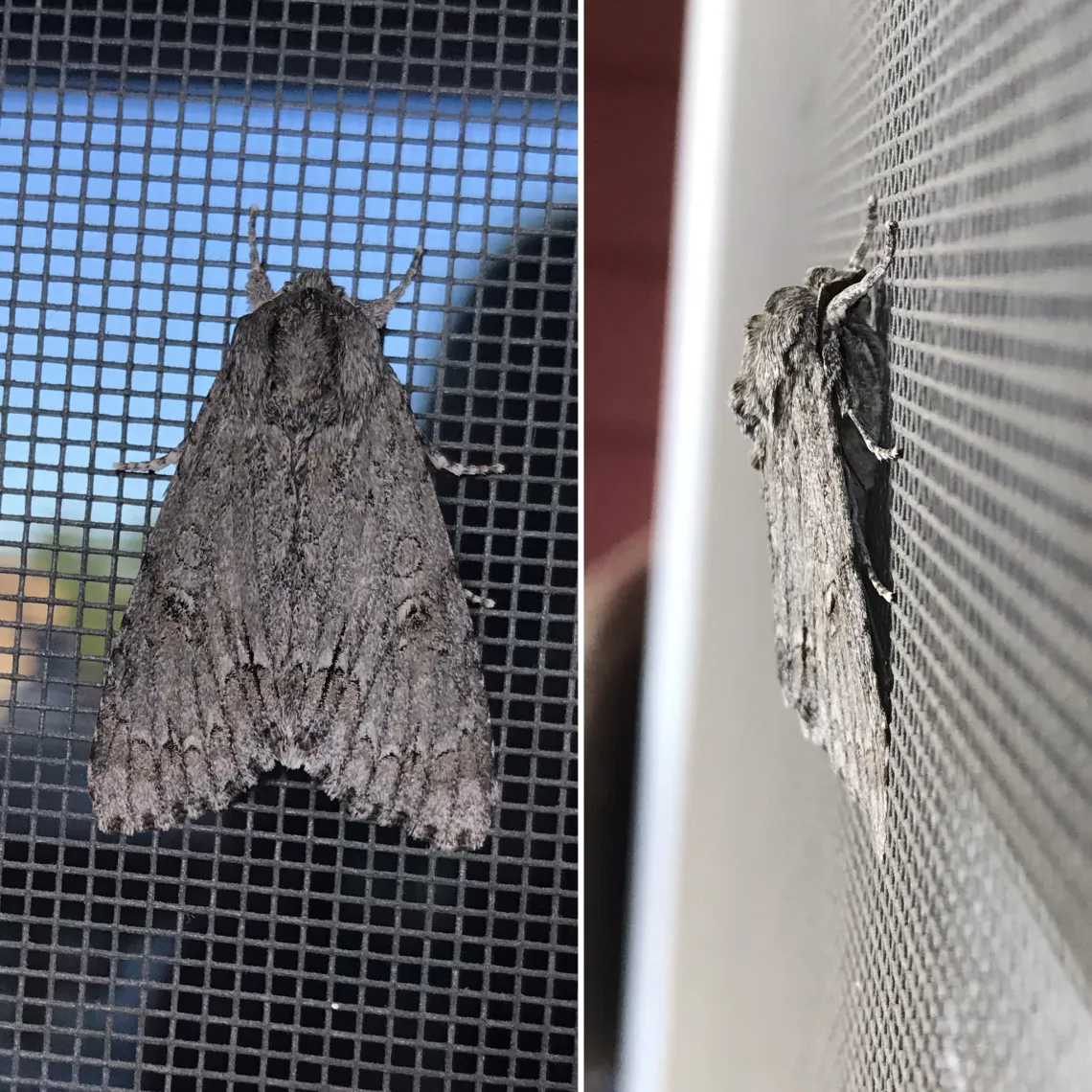
Light pollution Outdoor lights turned on at night attract moths, interfering with their feeding and mating patterns. The simple solution to reducing light pollution is to turn your outdoor lights off when not in use. For security, consider motion sensor lights or bulbs instead of lights that stay on all night.
In conclusion: Conservation is worth it!
It has been encouraging for me to research and write this blog series! I learned a lot about these four insect families – fireflies, dragonflies and damselflies, native bees, and butterflies and moths – and am now motivated to keep researching. My first task is to learn the names of more insect species, of which I know shockingly few! I have also been encouraged to learn that insect populations can recover with our effort, and that one person can make a difference. You can teach yourself more about our ecosystem, insects, habitat creation, and the insecticide industry. There are hundreds of books and movies out there to pique your interest, but here are a couple of my favorites:
Silent Spring by Rachel Carson
Our Native Bees by Paige Embry
Braiding Sweetgrass by Robin Wall Kimmerer
The Little Things that Run the World a movie by Bullfrog Films
How to Love a Forest by Ethan Tapper
Climate Change and Resilience in Indiana and Beyond by Eva Sanders Allen
The Lawn: a History of an American Obsession by Virginia Scott Jenkins
The Hidden Life of Trees by Peter Wollheben
Mycelium Running by Paul Stamets
Thank you for following me to the end of this 4-part blog series. Insects are worth protecting, and we have much to gain by making efforts to provide healthy habitats for them! Please reach out if you have questions or suggestions! You can contact me at eharafamily@gmail.com. I look forward to connecting with you!
Jennifer Ehara
Winding Waters Group Executive Committee
and Hoosier Chapter Sierra Club Communications Team