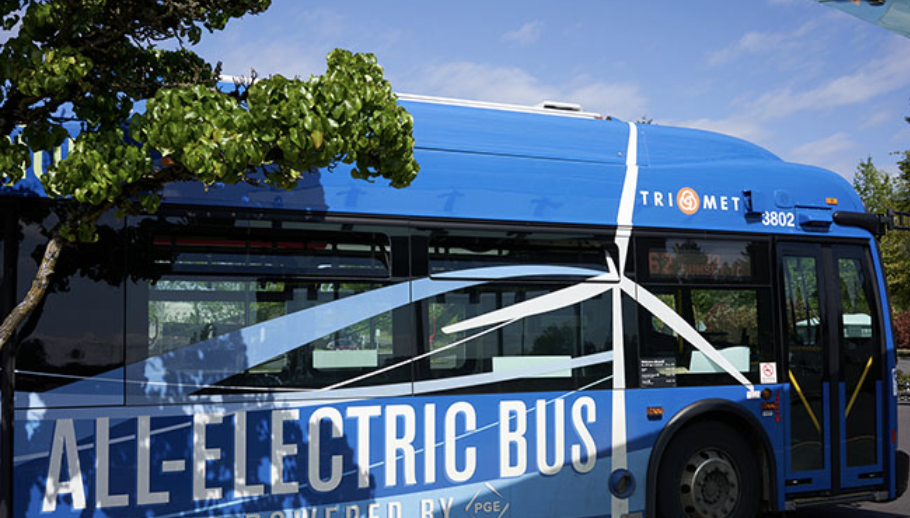
New York -- Today, in response to a formal petition filed by the Sierra Club and a coalition of 40 environmental, environmental justice, labor, and transportation industry stakeholders, the New York Public Service Commission opened a new proceeding to expand New York’s electric vehicle (EV) market.
The Maryland House of Delegates joined the Senate in passing the Maryland Metro/Transit Funding Act of 2018 today. The bill provides $167 million of annual dedicated funding to the Washington Metropolitan Area Transit Authority (WMATA) Metro system, secures much-needed additional funds for the Maryland Transit Administration and the Baltimore region, and requires additional planning for central Maryland’s transportation future.
Washington, DC -- Today, Scott Pruitt reportedly formally began the process of rolling back the clean car standards. The clean car standards will limit carbon pollution by 6 billion tons, save consumers $1.7 trillion dollars in fuel costs, and reduce oil consumption by up to 4 million barrels every day.
WASHINGTON, D.C. -- Today, the U.S. and South Korea reached an agreement “in principle” on the six-year-old U.S.-Korea Free Trade Agreement (KORUS) in which, among other things, South Korea has agreed to double the number of higher-polluting U.S. vehicles that may be imported each year without having to meet Korea’s stricter auto emissions standards. South Korea also agreed to consider the weaker U.S. standards when developing their 2021-2025 auto emissions standards.
Today, the Maryland House of Delegates passed the Maryland Metro Funding Act of 2018 with a 98-40 vote. The bill provides $150 million of annual dedicated funding for the WMATA metro system and additional funds for MTA and the Baltimore region.
New York -- Today, a coalition of 40 environmental, labor, and transportation industry stakeholders in New York submitted a formal petition to the New York Public Service Commission calling for an Order Establishing a Separate Proceeding to Advance New York’s Electric Vehicle (EV) Market. The requested proceeding would promote a coordinated, proactive approach to New York’s EV initiatives and the petition also asks that New York’s utilities submit proposals to accelerate installation of EV charging infrastructure and EV customer education.
WASHINGTON, D.C. -- Today, 17 Massachusetts mayors sent a letter to Senator Warren and Senator Markey urging their support for strong federal vehicle fuel efficiency and greenhouse gas emissions standards.
WASHINGTON, D.C. -- Today, nine Connecticut mayors sent a letter to Senator Blumenthal and Senator Murphy urging their support for strong federal vehicle fuel efficiency (CAFE) and greenhouse gas emissions (GHG) standards.
As reported in The Hill, in congruence with the DC Auto Show, the Sierra Club released a video calling out Ford for their work with the Trump administration to roll back the clean car standards. The video, targeted to the DC region, is accompanied by a petition calling on Ford to support strong clean car standards.
Today marks the start of the DC Auto Show. Despite recent claims of investment in electric vehicles by Ford, the auto company isn’t showcasing any of their electric vehicles. As a part of the Auto Alliance, Ford is lobbying the Trump administration to roll back vehicle fuel efficiency and greenhouse gas emissions standards.