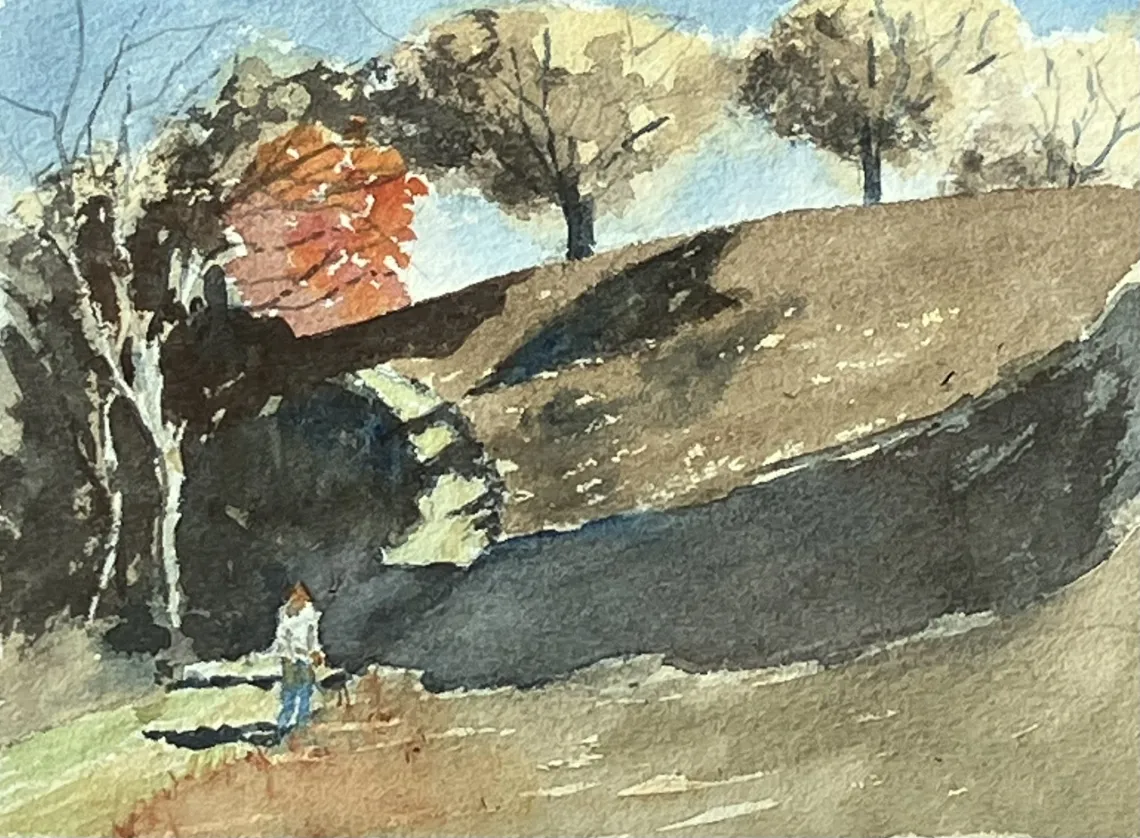
Artwork by Ed Nolde, Artist & Sierra Club Maine Volunteer
November 2025
In this issue:
In Defense of Public Lands: Sierra Club Volunteer's Experience in DC by Emma Conrad
Community Conversation with Susan Brawley
Fix Our Forests Persists by Matt Cannon
Fight the Hike! Coalition Protests CMP Rate Increases by Matt Cannon
Sierra Member Featured in UMaine's Spire Journal- and You Could Be Too!
Maine's Energy Past, Present, and Future with David von Seggern
Climate Truth Tellers
Introducing: the Great Turning Podcast
Do You Know Where to Vote?
Green Tip of the Month
The Month Ahead

Photo by Emma Conrad
In Defense of Public Lands: Sierra Club Volunteer's Experience in DC
By Emma Conrad, Volunteer
Recently I attended the National Wilderness Coalition fly-in in Washington D.C. as the Maine Sierra Club delegate. The Coalition is a diverse group of local, statewide, national, and Indigenous organizations working to champion federally designated wilderness as a critical conservation tool, overcome barriers to advancing wilderness legislation, and build a strong and vibrant wilderness movement reflective of the American public, Indigenous Peoples, and Tribal Nations.
As a coalition, we spent two days lobbying congress members on our outlined priorities which included asking senators and representatives to co-sponsor the Roadless Area Conservation Act (H.R.3930), senators to oppose using the Congressional Review Act to overturn BLM Resource Management Plans (The Latest Congressional Threat to Public Lands : Public Lands), and representatives to join the Bipartisan Public Lands Caucus.
I met with Senator Susan Collins and her staff as a part of a constituent coffee event and I directly asked her to co-sponsor RACA (her team said they'd consider it). I was able to push for another meeting with her staff later that day so that other coalition members could join. During the afternoon meeting I was joined by the Alaska Wilderness League, Wilderness Alliance, and the Next 100 Coalition. I met with Representative Pingree's staff later that day and Senator King's staff the following day. Representative Golden's staff declined a meeting with me since I am no longer a constituent of his district (although I grew up in District 2), but I was able to catch his environmental staffer in their office and give them some coalition resources anyway.
I'd never participated in lobbying activities before and although the threats to our public lands were at the forefront of many tough discussions throughout the week, I was also inspired by the coalition and the diversity of the groups fighting to protect our public lands. Representatives from the Hopi Tribe, Navajo Nation, and Santa Domingo Pueblo Tribe as well as several members of GreenLatinos helped ensure that indigenous voices were reflected in the perspectives and objectives of the coalition. Last week reminded me that we are in no way alone in the fight to preserve and protect public lands and wilderness areas. I really enjoyed my first lobbying experience and am grateful for the opportunity to serve as the Maine Sierra Club delegate in D.C.!
Thanks,
Emma Conrad
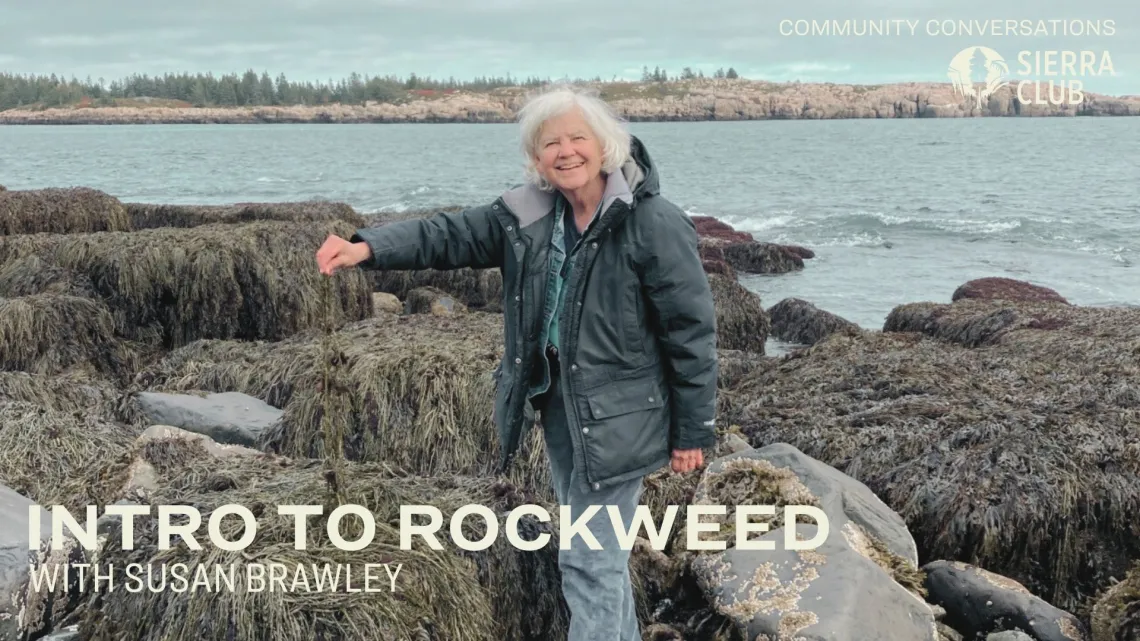
Photo by Susan Brawley
Community Conversation with Susan Brawley
By Corrine Kucirka-Adamowicz, Chapter Coordinator
Ascophyllum nodosum (“rockweed” to Mainers) is one of the most abundant species in the mid-intertidal zone of the North Atlantic (Arctic to Portugal in the northeastern Atlantic; Arctic to Delaware/Maryland in the northwestern Atlantic). Ascophyllum is particularly abundant on calmer shores, including bays, within this range. This talk will discuss its biology, (e.g., sexual reproduction, regeneration mechanisms), ecology/ecological roles, and value as a sustainably harvested crop. Some of these features will be compared to the other rockweeds (5 species of Fucus) on the Maine coast.
Susan Brawley has published extensively on rockweed biology (distribution, ecology, cell and developmental biology, relationships among different rockweeds) beginning with her Ph.D. thesis on rockweeds at UC-Berkeley (1978). She is a Professor Emerita of Plant and Marine Biology at the University of Maine. Susan has been a Life Member of the Sierra Club since 1978 and belongs to the Sierra Club’s Sequoia Circle.
Register for this learning opportunity today!

Photo by Sierra Club Creative
Fix Our Forests Persists
By Matt Cannon, State Conservation and Energy Director
Vote No- Fix Our Forests Act (S.1462)
Tell Senator King and Senator Collins to vote 'No' on the 'Fix the Forests Act'
Recently, the Senate Agriculture Committee passed the “Fix Our Forests Act” with six Democrats joining Republicans in support of the bill. This bill functionally takes the public out of public lands by severely limiting our ability to influence how these lands are managed. Among other issues, the legislation authorizes 15 square-mile-sized logging projects with little to no public input and environmental analysis, making this one of the scariest plans to face public lands in a generation.
Next, this bill will head to the full Senate for a vote. Your senators need to hear from you — our communities, wildlife, and public lands deserve real solutions to addressing the threat of wildfires, not handouts to corporate logging interests.
This misleading bill fails to provide dedicated funding for the type of wildfire strategies that save lives and livelihoods — home hardening, defensible space, and emergency planning. It guts the Endangered Species Act consultation and removes essential protections for vulnerable fish and wildlife. It undermines the National Environmental Policy Act, making it easier for the Trump administration to advance destructive logging projects without public input. And it shortens the judicial review window on logging projects, placing an unfair burden on frontline communities and Tribes who deserve equal say in how their public lands are managed.
Supporters of the bill are manipulating the public's very valid fear of wildfire to remove protections for public lands at a time when we need them most. The Trump administration is attempting to gut environmental laws, ramp up logging, and rescind the Roadless Rule. Anyone paying attention should know now is not the time to cave to corporate interests attempting to maximize profits at the expense of public lands.
Thank you for all you do to protect our public lands and forests!
Contact Senator King and Senator Collins to let them know that Maine wants them to VOTE NO!
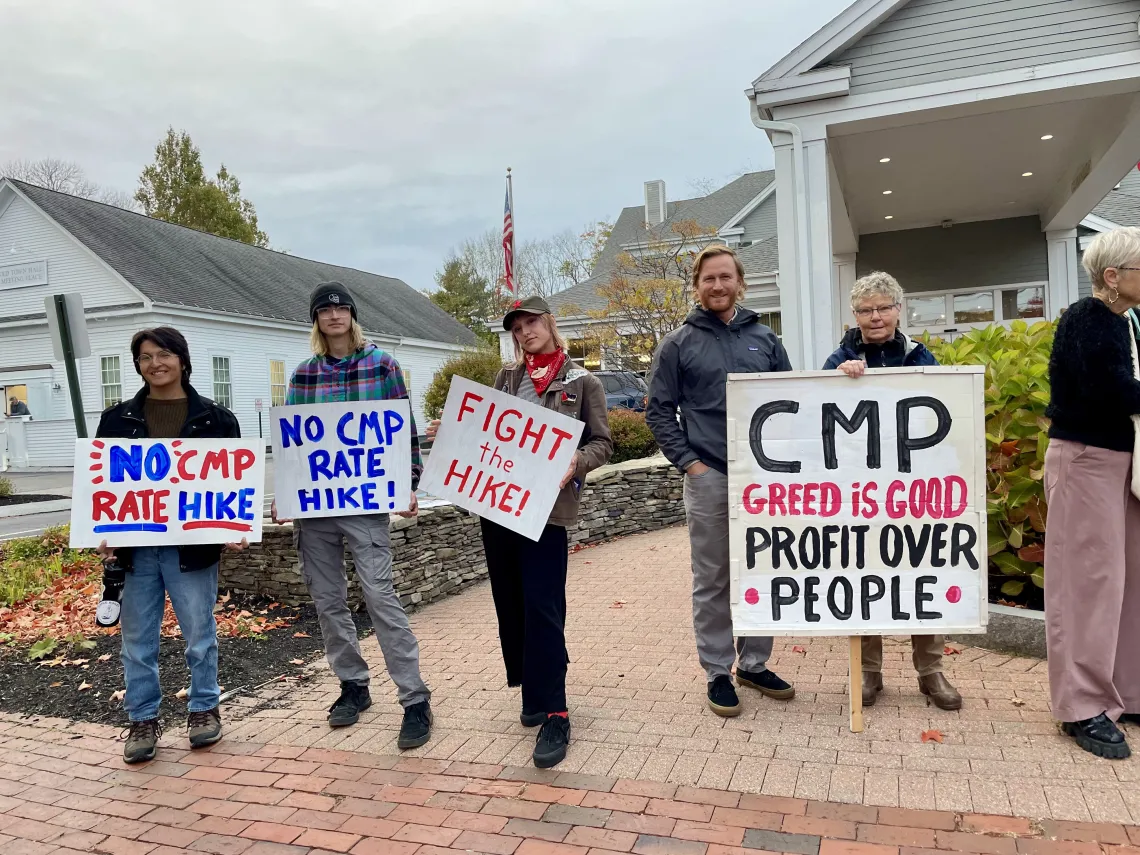
Photo by Our Power/ Fight the Hike Coalition
Fight the Hike! Coalition Protests CMP Rate Increases
By Channa Steinmetz of the Maine Beacon
"Mainers gathered Tuesday evening in Freeport to protest Central Maine Power’s proposal to raise residential electricity rates by an average of $420 per year.
The rally, organized by a new grassroots coalition called Fight the Hike, took place just before the Maine Public Utilities Commission’s (PUC) first of two public witness hearings on the proposal. If approved, the rate hike would increase CMP’s revenues by more than $1.4 billion over five years.
“People are struggling — that is especially true here in Maine,” said Seth Berry, executive director of Our Power, a organization of Mainers focused on clean energy initiatives and local control. “The gap between the very, very wealthy and the truly low income is widening quickly, and energy costs, unfortunately, are one of the primary reasons for that gap.”...."
Read the full article from the Maine Beacon HERE
Share public comments here, and share your story on social media, with friends, in letters to the editor. We know this price hike is unacceptable, especially for working Mainers, and we need to tell the Public Utilities Commission!

Artwork by Nate Davis
Sierra Member Featured in UMaine's Spire Journal- and You Could Be Too!
Have you created artwork reflecting on humanity’s intricate and embedded relationship with nature or photography that communicates to others how you see the natural world? Made an animation about habitat loss and ecosystem change? Written a poem about the hidden beauty of forest food webs? Or perhaps you’d like to reflect in an essay about the increasing challenges for farmers in the face of climate change. If so, Spire: the Maine Journal of Conservation and Sustainability, would like to hear from you!
Spire’s editorial team at the University of Maine invites submissions for the tenth issue of the online journal, planned for release in Spring 2026. Issue 9, released April 2025, is now live!
We seek to include voices from a diverse range of people throughout Maine and the Northeast to join our mission to galvanize action for conservation and sustainability by promoting impactful, awareness-raising dialogue. Submissions should in some way concern the environment, conservation and/or sustainability — whether it’s current developments, ongoing issues, scientific findings, or artistic insights on environmental themes. Work that can be broadly connected to Maine is encouraged.
Please visit our website to explore past issues for insight into the range of work included in our journal, and guidelines for submitting. January 23, 2026 is the deadline for submissions. Submissions can be sent to spire@maine.edu, as well as any questions or interest in joining our team behind the scenes.
Spire’s most recent issue featured Sierra Club member Nate Davis and his artwork “Flora II”, which uses specialized software to generate a visual representation of biological and evolutionary processes. See the rest of Nate’s work here, or submit your own!
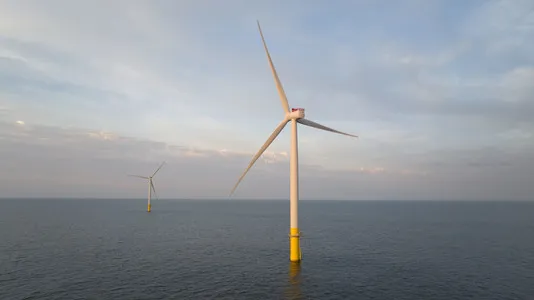
Photo by Jimmy Oliviero, 2022
Maine's Energy Past, Present, and Future
By David von Seggern
This webinar will cover the energy history of Maine, the current energy status, and the projections into the future, with a slide deck of facts and photos of past and present energy infrastructure, and scenarios for the future in 2050. A Q&A time will be made available after a 40-minute presentation. The past, present, and future segments of the webinar are an adaptation of the Charles Dickens classic story “A Christmas Carol”.
Segment 1: The Past (post-industrial revolution)
Maine started, as all colonial states, with a heavy dependence on wood for thermal and industrial energy but soon developed hydropower to run mills for wood product, textiles, food processing, and industrial products. In the 1900s, Maine turned to coal and oil, all imported, as a primary energy source for growing communities, industries, and transportation. More recently, natural gas (also imported) has become a significant energy source. Without having any primary fossil-fuel resources itself, Maine depended entirely on imports for the fossil-fuel sector of its economy while domestic wood and water still served part of the energy market.
Segment 2: The Present
Maine has far from ignored the energy transition that is happening in the US today. Although still heavily dependent on our historical fossil-fuel energy sources, Maine is aggressively turning to renewable energy sources to replace them. By state statute, we consider biomass and small hydropower to be part of that “renewable” domain of energy, but both of these sources are coming under increased scrutiny as truly clean and renewable. Maine’s transportation sector is almost wholly fed by fossil-fuels (gasoline and diesel) while space heating is predominantly done with oil and propane. Having hosted one nuclear plant which was decommissioned in the 1990s, Maine no longer generates nuclear power. While the electrical supply in Maine is increasingly fed by renewable sources, it is still maintained with ample fossil fuel input. Thus, today, Maine is still a net importer of energy.
Segment 3: The Future
The Maine 132nd legislature has already prescribed the future for electrical energy production in Maine: 100% “clean” sources (90% of which are to be renewable) by the year 2040. Accompanying that is a statute to drive our net greenhouse gas emissions to zero (carbon neutrality) by the year 2045. These are, compared to other states, aggressive goals that are nonetheless achievable. In fact, the Governor’s Energy Office shows how this can be realized in its Pathways to 2040 report. We do not wish to return to nuclear power, a power source which is not supported by Sierra Club policy. Large hydropower projects have neither broad public support nor Sierra Club endorsement. Solar and wind facilities will be our primary energy generators with large battery systems smoothing the supply curve. Distributed energy resources will become commonplace, such as community solar and geothermal systems for serving multiple end users. We will show what the implementation may look like by 2050, roughly a generation from now, in terms of land use; physical infrastructure for energy generation and distribution; energy use in homes, businesses, and industries; and transitions in transportation infrastructure.
Segment 4: Q&A and Advocacy Suggestions
Register for this exciting webinar today!

Photo by Sierra Club Creative
Climate Truth Tellers
Do you enjoy social media? Do you want to help combat misinformation online? Please consider joining the Climate Truth Tellers team! By writing comments and sharing personal stories on high priority posts, each of us can help shape public discourse and promote the truth.
What to expect
Each week, we will be asking you to comment, share, or otherwise engage with one to three social media posts. We'll also share learning opportunities for you to build your communications, storytelling, and social media skills.
Why this work is so important
We're asking you to comment and engage on social media posts to drown out misinformation across platforms. Because social media algorithms often value controversial content, dangerous dis and misinformation can thrive, while valuable content can get lost in the noise. The more likes and comments a post gets, the more likely it will be shown to a wider audience. By engaging with strong, educational content you ensure more people will see it.
Research shows that someone needs to see information three times before they remember it. By making sure the facts about our democracy, climate, lands, and environment are shared far and wide, people will be less likely to believe the lies.
Ready to get started?
Watch National’s training workshop recording here! In this video, you can learn more about our goals for this team, how social media algorithms work, how to make the most impact, and more.
No time to watch the full recording? Check out the Welcome Guide for more information and resources. You can sign up here, too!
Make sure you're in our WhatsApp group (instructions for joining can be found in the Welcome Guide). If you don't feel comfortable using WhatsApp, that's okay too! You'll still get the assignment emails and will be able to fully participate in the group.
Need help? Contact us by emailing truth.tellers@sierraclub.org
Thanks again for joining this team. Your voice matters.

Photo by MCAN
Introducing: The Great Turning Podcast
Maine Climate Action Now is hosting a space to engage with the podcast We Are the Great Turning: Love, Courage and Connection in the Climate Crisis. About the podcast:
"We welcome you to the kitchen table of the legendary eco-spiritual teacher Joanna Macy, where we’ll dive into what it takes to live with our hearts and integrity intact in this time of global crisis. You’ll be guided into these conversations by Jess Serrante, a longtime activist and student of Joanna’s. Together, we’ll discover abiding wisdom that can help us stay joyful and energized as we work toward a more just and life-sustaining world."
MCAN's goals for the group are to:
- Provide an intergenerational connection point where youth, elders, and people in between can share and learn from each other
- Practice skills for emotional resilience, learning simple tools that participants can take into other spaces
- Express anxiety and grief, explore ways to access joy, and provide support to address the root causes of burnout.
The group will meet three times on Wednesdays, 7:00-8:15pm on Oct. 29, Nov. 5 and Nov. 12, on Zoom. Sign up here. Participants are encouraged to join all three sessions since they will build on each other somewhat. We will listen to one episode of the We Are the Great Turning podcast (under 30 minutes) on our own time before each group meeting.
Stipends are available if needed to address barriers to participation. Sign up here.

Do You Know Where to Vote?
Make sure you have a plan to vote on Election Day: Tuesday, November 4th!
If you don’t know, here is where you can find your voting place. And, if you want to learn more, including local and statewide Referendum Questions, see the Secretary of State’s website.
To find your voting place, visit here.

Photo by Igan Ness on Unsplash
Green Tip of the Month: Use Less Water Without Even Trying
By Mike Trombley, Sierra Club Maine Volunteer
Did you know you can easily reduce your water usage for only a few bucks? The sinks in your home are probably using aerators (little screens at the end of the faucet) that they came with. Standard ones flow at 2.2 gallons per minute (GPM). You can buy replacement aerators that will restrict the flow anywhere from 1.5 GPM all the way down to 0.5. They’re easy to replace without any special tools—usually, they twist off like a bottle cap. Aerators will only set you back about $7 each at your local hardware store.
If you want to save even more water, look at your shower head. According to the EPA, a household could save around 2,700 gallons per year by switching to a low-flow shower head. In 1992, the EPA mandated a max flow rate of 2.5 GPM for shower heads, and that’s likely what you have. But it’s possible you’d be fine with a WaterSense-certified shower head that uses even less. Replacing a shower head isn’t hard—there are hundreds of YouTube videos that can teach you. Of course, remember to keep your showers short, so your water savings don’t go down the drain.
Do you have a green tip that you would like to have included in a future newsletter? Please share it with us here!

The Month Ahead
Here are some of the meetings and events we have coming up. We hope to see you soon!
Events Team Meetings: Help us organize events to educate and engage Mainers across the state.
11/6 at 12PM
11/12 at 12pm: Volunteer Orientation
Learn how you can get involved with the Maine community!
11/12 at 5:30pm: Conservation Team Meeting
Learn how you can help protect Maine's environment.
11/18 at 12pm: Clean Energy Team Meeting
Join our team and ensure a clean and just energy future for Maine, specifically focused on renewable energy development!
11/18 at 5:30pm: Executive Committee Meeting
Please email maine.chapter@sierraclub.org for more info.

Climate Impacts of Pine Tree Power
Labor and Environmental Advocates Call on Gov. Mills to Engage in ‘Meaningful Consultation’ with Wabanaki on Energy Future
Energy Profile and Goals for Maine
Offshore Wind
Sierra Club Maine Endorses Question 3 - Call for Volunteers!
Workers Needed for Maine's Clean Energy Transition
2023 Legislative Session in Review