Overview
The enactment of tax breaks for new data center projects by the Michigan legislature in 2024 has led to a considerable uptick in proposals for these facilities statewide. Without adequate safeguards our state’s water, energy infrastructure, and Michiganders bills are at risk.
What are data centers?
Data centers are large warehouses that store large servers, hardware, networking equipment, and other computing technologies. Most data centers prior to 2024 are ‘traditional’ or ‘conventional’ data centers that consume less water and require less energy. Newer hyperscale data centers proposals can pose a serious threat to the environment as they require massive amounts of water and power to operate.
What is Sierra Club doing about it?
As more of these projects pop up across Michigan, we are focused on preventing unchecked growth without transparency and creating stronger environmental safeguards. Data centers must not drive new fossil-fuel generation, strain water supplies, or shift infrastructure costs onto Michigan households and communities.
Here are some of our policy priorities:
- Data Center Moratorium - We need to immediately press pause while we work to get robust data center regulations that have real teeth
- Why? The pace and scale of data center proposals is overwhelming communities. Our state urgently needs a pause button to give time to get strong regulations in place.
- Strong data center regulation - The best protection for our communities and natural resources is real regulations with teeth. This includes:
- Data centers fully paying for all energy needs and grid upgrades
- Public disclosure of energy and water impacts
- Implementing best water conservation practices
- Not relying on dirty fossil fuel energy.
- Why? This will protect ratepayers, our natural resources, and communities from unchecked pollution and footing the bill for data centers.
- Transparency - Advocating for transparent processes in which communities and regulators have a clear, public role in approving data center projects to protect climate goals, affordability, and local resources.
- Why? The prevalence of NDAs and private deals to avoid expensive legal fights is troubling. We need transparency and public engagement to ensure local communities aren’t left footing surprise bills or unexpected harms from hyperscale data center activities.
- Repeal tax incentives for data centers
- Why? Our state struggles to have enough revenue for crucial public goods and services, including environmental programs. The most profitable companies in the world should pay their fair share to keep crucial environmental programs and support other important public goods and services.
Why are so many data centers proposed in Michigan?
Big tech companies are flocking to Michigan with their data center projects for a few key reasons.
First, our Great Lakes offer an abundance of water and a cooler climate that lowers operating costs, as well as an abundance of land near major infrastructure. Additional and perhaps most enticing to these companies, however, are the generous tax incentives in Michigan that are aimed at attracting large-scale development.
As the hype for artificial-intelligence technology and cloud-computing drive explosive demand for energy-intensive data centers nationwide, companies are looking beyond saturated coastal markets to Midwest states like Michigan that can accommodate rapid growth. This surge is driven by infrastructure and tax incentive advantages — not by local demand — and raises important questions about energy use, utility costs, and long-term public benefit.
Learn More
Worried about data centers in your community and how to engage? Check out our toolkit!
Take Action
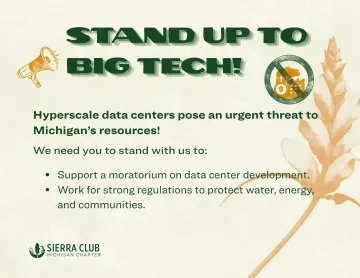
We have a shot at getting data center legislation moved forward this fall - but we need your help! We need people calling and emailing their state senators and representatives to learn of their commitments, and then sharing back their responses. This both helps us temperature check who needs more constituent pressure to support legislative action on data centers. Take Action Here
Help us get Michigan lawmakers ON THE RECORD with their stance on data centers. Fill out the form and then follow the instructions afterwards so we can keep track of every legislator's response.
The Michigan Public Service Commission is considering DTE's proposed rules for serving data centers and other enormous electricity users. This is our opportunity to demand strong upfront collateral -- cash or bank letters of credit that can be drawn on if these companies fail to pay.
Tell Michigan Regulators: Make Data Centers Pay Upfront
We consistently update our campaigns and track data center proposals statewide, so please continue to check back for new actions. If you'd like to bring something to our attention, please visit our contact form.

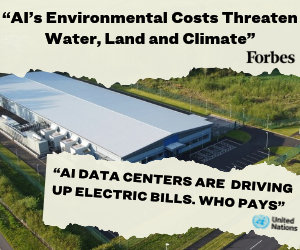

Data Center Legislation Under Consideration
Stop the Buildout
HB 5394–5396: Moratorium on all new data center construction through April 2027. HB 5396/5397: Repeal the 2024 data center tax exemptions. HB 5362: Revoke the $100M in state funds directed to the Ypsilanti Township data center.
Protect Our Water
SB 761: Cap data center water withdrawals at 2 million gallons/day. SB 762: Require public reporting of data center water and energy use. SB 763: Ban utilities from passing data center water infrastructure costs to ratepayers.
Demand Transparency & Accountability
HB 5399: Ban NDAs between tech companies and public officials. HB 5677: Make MPSC commissioners elected, not appointed. HB 5776: Close the university property tax loophole. HB 5777: Require data centers to register with the state, disclose impacts, and post financial security.