The legislature is moving toward the second funnel on April 4, the date when many bills will be winnowed from further consideration. We are watching a number of important pieces of legislation, including the Governor's energy bill, a bill that dictates how the three counties hosting the state universities select their members of the Board of Supervisors, and numerous pipeline issues. If you want to keep on top of the key issues the Sierra Club is following, check out our blog. The legislature is expected to end on May 2, when the per diem expense money for the legislators ends. That is usually the signal to wrap things up for the year. In the meantime, we will be monitoring introduced legislation, lobbying on bills that interest us, and blogging and reporting on the issues.
By the way, the photo at the top of this page is from the Sierra Club antler shed outing which was held this month.
Take care,
Pam Mackey Taylor, Chapter Director and Newsletter Editor
What you can do to help the environment
Ask the governor to veto SF75, the bill that mandates how Johnson, Black Hawk, and Story Counties select their Boards of Supervisors.
Let your legislators know that you oppose the Governor's energy bill. Ask your Representative to oppose HF834 and also ask your Senator to oppose SF585.
Ask your state representative to support carbon dioxide pipeline legislation - HF943 and HF610. Note: HF943 is expected to be debated by the House on March 26.
Ask your state senator to support the carbon dioxide pipeline legislation HF943 and HF610 once these bills are moved to the Senate.
Attend the Family-Fun Fishing Outing, Saturday, April 19, 2025, at 11:00 am, Walnut Trail Farm, 2857 Walnut Trail, Stuart, IA. Register Now
Donate to the Iowa Chapter of the Sierra Club so that we can continue our work on protecting Iowa's environment.
In this issue of the Iowa Sierran
Legislative Update
REAP - Resource Enhancement and Protection funding
CO2 Pipeline Update
South Dakota Banned Eminent Domain for Carbon Pipelines!
Protecting the Environment
NextEra Plans to Restart Duane Arnold nuclear plant
Have Fun in April
Plus
Lunch and Learns Fridays at noon
Contribute to the Iowa Chapter
Volunteer for the Iowa Chapter
Calendar of events
To see the archive of previous Iowa Chapter newsletters
Legislative Update
The legislature is moving toward the second funnel on April 4, the date when many bills will be winnowed from further consideration. We are watching a number of important pieces of legislation, including the Governor's energy bill and numerous pipeline issues. If you want to keep on top of the key issues the Sierra Club is following, check out our blog. The legislature is expected to end on May 2, when the per diem expense money for the legislators ends. That is usually the signal to wrap things up for the year. In the meantime, we will be monitoring introduced legislation, lobbying on bills that interest us, and blogging and reporting on the issues.
In the next few weeks, the legislators will be laying out the budget issues and then settling on a final budget. The state revenues are falling, primarily due to the reduction in state income tax rates. The Revenue Estimating Conference met in early March and estimated that the state would bring in $9.13 billion in revenue next fiscal year, while the Governor's budget for next fiscal year is set at $9.4 billion. Next fiscal year, the income shortfall will be covered by reserves and money residing in the tax-payer relief fund, a pot of money that is holding taxpayer revenue that is not being spent and is not being added to the reserve accounts.
Last month, we wrote about an attempt to repeal the constitutional amendment for a 3/8 cent sales tax to fund outdoor recreation (I-Will). That bill died in the first funnel. We still need to keep our eyes open, since the legislation may crop up again, as part of another bill or as an amendment to a bill.
You may notice that the bill numbers have changed on pieces of legislation you are tracking. That is normal as bills move through the legislative process.

Photo - the dome of the Iowa Capitol.
REAP - Resource Enhancement and Protection funding
One of the important sources of funds for natural resources, water, and soils is a program called REAP. Every year the legislature must fund this program. The program is authorized to be funded at $20 million a year; the legislators must determine how much will actually be allocated to REAP.
REAP funds protect Iowa’s natural areas, soil conservation, water quality and historical resources.
REAP provides jobs, encourages tourism, protects historical and cultural resources, provides recreation opportunities, and protects Iowa’s soil and water.
Money is provided to state, cities, counties and soil conservation districts. Every county in Iowa has benefited from money spent on REAP projects.
Although statutorily mandated at $20 million annually, each year the Iowa legislature determines the actual appropriation.
The REAP law expires on June 30, 2026, unless the legislators vote to extend it.
Ask your state senator and state representative to support fully funding the REAP programs at $20 million and to extend REAP beyond 2026.
Email, address, and phone number for Representatives
Let voters decide on their Supervisor Representation
Currently the voters get to choose for themselves how they are represented by boards of supervisors, using one of the three plans. They can be elected at-large (Plan 1), at-large but in districts (Plan 2), or in districts and voted on by the residents of each district (Plan 3).
The Iowa legislature passed a bill that would change that. SF75 is on its way to the Governor's desk. This is the bill that mandates that large counties (those with 60,000 or more people) must have a two-thirds vote in a special election to switch from Plan 3 to either Plan 1 or Plan 2 and counties with the main campus of a regents school (ISU, UNI, UI) must select their supervisors by district. The counties with regent campuses are Story, Johnson, and Black Hawk. Each district would be of equal population size. Only the voters of that district can vote for that supervisor. This is known as Plan 3. That is why Sierra Club is opposed to SF75.
There is absolutely no reason to dictate how the large counties or the counties with regent schools select their supervisors. This focus on counties with Democratic majorities blatantly strives to get more Republicans elected as supervisors in those counties in spite of what the voters want. The voters should decide. This is a matter of local control.
The system for deciding how supervisors should be elected is not broken.
There is absolutely no reason to mandate how the large counties or the counties with regent schools select their supervisors.
The voters should decide, as they are currently allowed to in Iowa Code, what is best for their county.
This is a matter of local control.
What you can do

Energy Bill has issues
The legislature is working on the Governor’s energy act. The Sierra Club has concerns about this legislation. By concentrating on economic development, the legislation fails to address keeping power reasonably priced for the consumer.
The bill does not emphasize energy efficiency and demand response programs, which can provide some of the cheapest energy sources.
Integrated resource planning – it is important for utilities to plan for future power generation to meet future needs. But the bill restricts how members of the public and the Utilities Commission can weigh in on the plans. Without careful consideration of future generation needs and the build out of power plants, the utilities could be left with assets that are not needed to supply power to Iowans. That would result in large costs to consumers.
The bill advocates for the Right of First Refusal for building transmission lines. Right of First Refusal allows new and expanded transmission lines to be built by companies already operating in the state, without a competitive bid from other companies that want to work in Iowa. That may not result in the least cost to the customer.
We oppose putting nuclear power plants in Iowa. Nuclear power is some of the most expensive power that is generated which would be paid for by consumers and subsidized by the taxpayers. It is not clean and it is not renewable. Mining for uranium leaves behind large piles of toxic waste. Uranium is not a renewable resource. Spent nuclear fuel is radioactive, and thus, harmful to people for thousands of years. There is no permanent repository for the spent fuel.
We oppose anaerobic digesters and the expansion of the confinement and open feedlot operations in the state. With poor water quality in rivers, streams, and lakes across the state, impaired waters due to manure and nitrates in the water, and beaches that are flagged as unsafe for swimming due to contamination resulting from manure, we should not be advocating for more and larger livestock operations.
Lower energy rates, public oversight, and the clean energy transition matters to all of us and our families.
What you can do
- Ask your Representative to oppose HF834 (formerly HSB123). To look up your House member, see www.legis.iowa.gov/legislators/house and to find your legislators, see www.legis.iowa.gov/legislators/find
- Ask the Senate Senator to oppose SF585 (formerly SSB1112). To look up your senate member, see www.legis.iowa.gov/legislators/senate or to Find your legislator
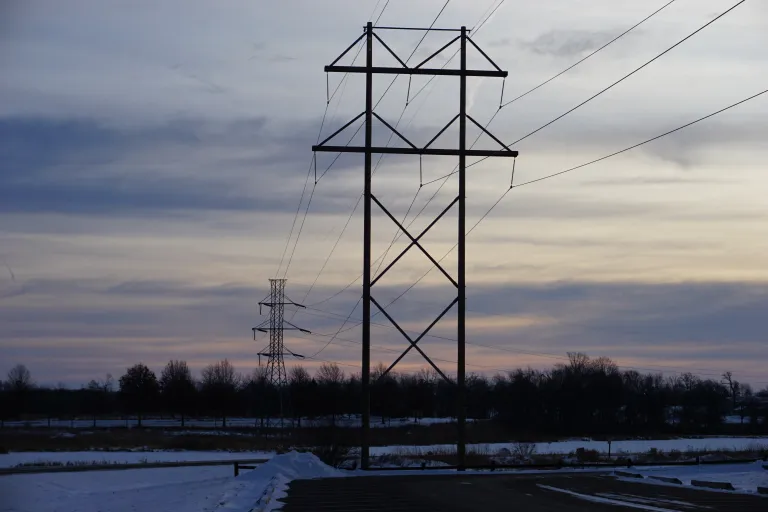
Carbon Pipeline Legislation Update
Following the First Funnel, there are 11 carbon pipeline bills still in play. The two most important bills are HF943 and HF610.
If passed, HF943 would ban the use of eminent domain for carbon pipelines on agricultural zoned land. This bill is nearly identical to the bill that South Dakota just signed into law last month. Eminent domain should not be abused for private gain and Summit’s project is clearly a for-profit private project.
HF610 is our other priority bill. HF610 is one way to ensure Iowans can participate in the Iowa Utilities Commission (IUC) permitting process. Traditionally, the IUC allows anyone with an interest in the case the ability to intervene or participate in the process at a higher level. In 2023, when two new members were appointed to the Commission by Governor Reynolds, IUC began denying all intervention requests from neighbors, tenant farmers, community members and others who are impacted but don’t have the pipeline on their land. HF610 would ensure that the right to intervene is given to affected people, legislators, county officials and others. We would like HF610 to be amended to include “Any organization having an interest in the subject matter of the proceeding when a decision that may be rendered in the proceeding will have an effect on the organization's interest.”
We support these bills and need the Senate and the House to pass the bills and put them on Governor Reynolds’ desk.
Ask your state representative to support HF943 and HF610. Note: HF943 is expected to be debated by the House on March 26.
Ask your state senator to support HF943 and HF610 once these bills are moved to the Senate.
Email, address, and phone number for Representatives
Email, addresses, and phone numbers for Senators
South Dakota Banned Eminent Domain for Carbon Pipelines!
Landowners across the midwest are celebrating a hard-fought victory against Summit Carbon Solutions. Earlier this month, South Dakota Governor Rhoden signed HB1052 into law, which bans the use of eminent domain for carbon pipelines.
With Summit’s project now in limbo, Iowa landowners call on the Iowa Senate to finally take on the issue and pass a bill to protect Iowa landowners’ rights as well. A similar bill to ban eminent domain on agricultural land has been introduced in the Iowa House, HF943.
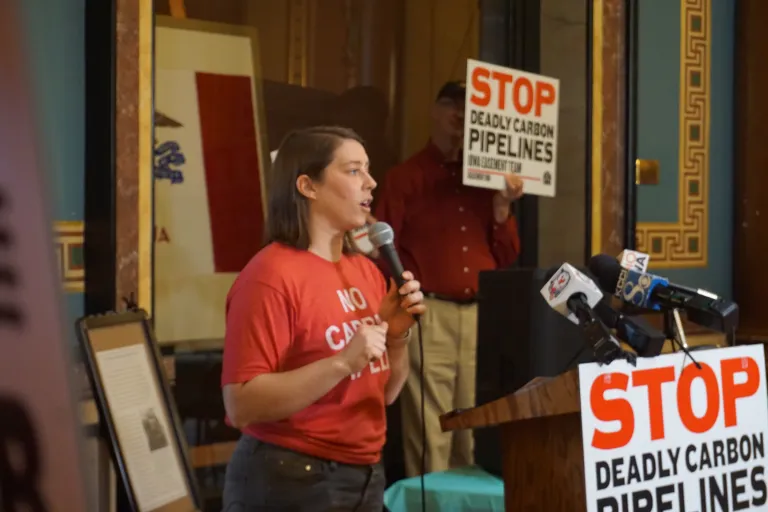
Sierra Club Iowa Chapter and impacted landowners rallied at the capitol last week to pressure the Iowa legislature to pass HF943.
“We are proud of all the hard work that we’ve done over the last 4 years. It shows that when people unite around a common cause, we are unstoppable. Iowa’s HF943/SF92, like South Dakota’s HB1052, are fair bills that protect property rights. Governor Reynolds and the Iowa Senate should take a lesson from South Dakota and listen to their constituents.” said Jess Mazour, Sierra Club Iowa Chapter.
“This will effectively end Summit’s project. The Iowa Utilities Commission must stop any further proceedings on Summit's Phase 2 proposals. And, Summit’s phase 1 project is now a moot point.” said Sierra Club’s Attorney Wally Taylor.
“Carbon pipelines are not a public use, public purpose or public necessity and should not have the right to use eminent domain in Iowa. It’s common sense and protects our rights. Iowa doesn’t need a threshold like what the Senate proposed, we need an outright ban on eminent domain for private-profit carbon pipelines.” said Kim Junker, Butler and Grundy County landowner.
“For almost 4 years the Iowa Senate has refused to protect Iowa landowners from the threat of eminent domain at the hands of Summit Carbon Solutions. South Dakota just protected their landowners, now Iowa needs to move along the bill that would do the same for Iowans,” said Sioux County landowner Meghan Sloma.
“South Dakota is protecting their landowners' freedoms and property rights. Time for Iowa and Governor Reynolds to do the same,” said Hardin County landowner Kathy Stockdale.

NextEra Plans to Restart Duane Arnold nuclear plant
Last summer and fall NextEra, the owner of the Duane Arnold nuclear plant, near Cedar Rapids, made comments indicating that it might try to restart the plant, which was shut down and placed in decommissioning status in 2020. This was reported and discussed in an article in the Iowa Sierran last November - Don’t Restart Duane Arnold. The article also explained why restarting Duane Arnold would be a bad idea. Nuclear power is expensive for consumers, mining for uranium results in toxic waste, the spent fuel rods remain radioactive for thousands of years which will pose health risks to any person coming into contact with them.
On January 23 of this year NextEra made it official that it will attempt to restart Duane Arnold. NextEra submitted to the Nuclear Regulatory Commission (NRC) a proposed regulatory plan and a request for an exemption from the NRC’s decommissioning rule. In those documents, NextEra admits that “NRC regulations do not prescribe a specific regulatory path for reinstating” a closed nuclear reactor to operational status.
The first step proposed by NextEra is an exemption from the decommissioning rule. That rule says that the decommissioning process starts with certifications that the reactor will be permanently shut down and that all fuel has been removed from the reactor. The rule then sets forth requirements for completing the decommissioning process and eventually terminating the reactor license. The rules never contemplated a nuclear power plant being restarted once it was in the decommissioning process.
Duane Arnold is one of three nuclear power plants attempting to get a license to restart after they began the decommissioning process. All three are asking for an exemption to the NRC rules concerning nuclear power plants that have begun decommissioning.
The NRC rule that provides for an exemption is meant to be used only in extraordinary circumstances to avoid undue hardship to the reactor operator. Unfortunately, it is not clear what the NRC describes as an undue hardship.
In addition, the exemption must only address a temporary situation. Based on those requirements, it is obvious that an exemption allowing Duane Arnold to restart must not be granted. This is especially apparent when two other reactors, Palisades in Michigan and Three Mile Island in Pennsylvania, have also requested the same exemptions in order to restart those reactors.
In all of these circumstances, the exemption becomes the unofficial creation of a new rule, without going through the official rulemaking process, and it is not an extraordinary action to avoid undue hardship.
Unfortunately, it is likely that the NRC will approve this exemption and the rest of the process, even though it would violate the NRC’s existing regulations. Sadly, the NRC protects the nuclear industry, not the public or the environment.
The Iowa Chapter will continue to be in the forefront of the effort to stop Duane Arnold from restarting.
Family-Fun Fishing Outing
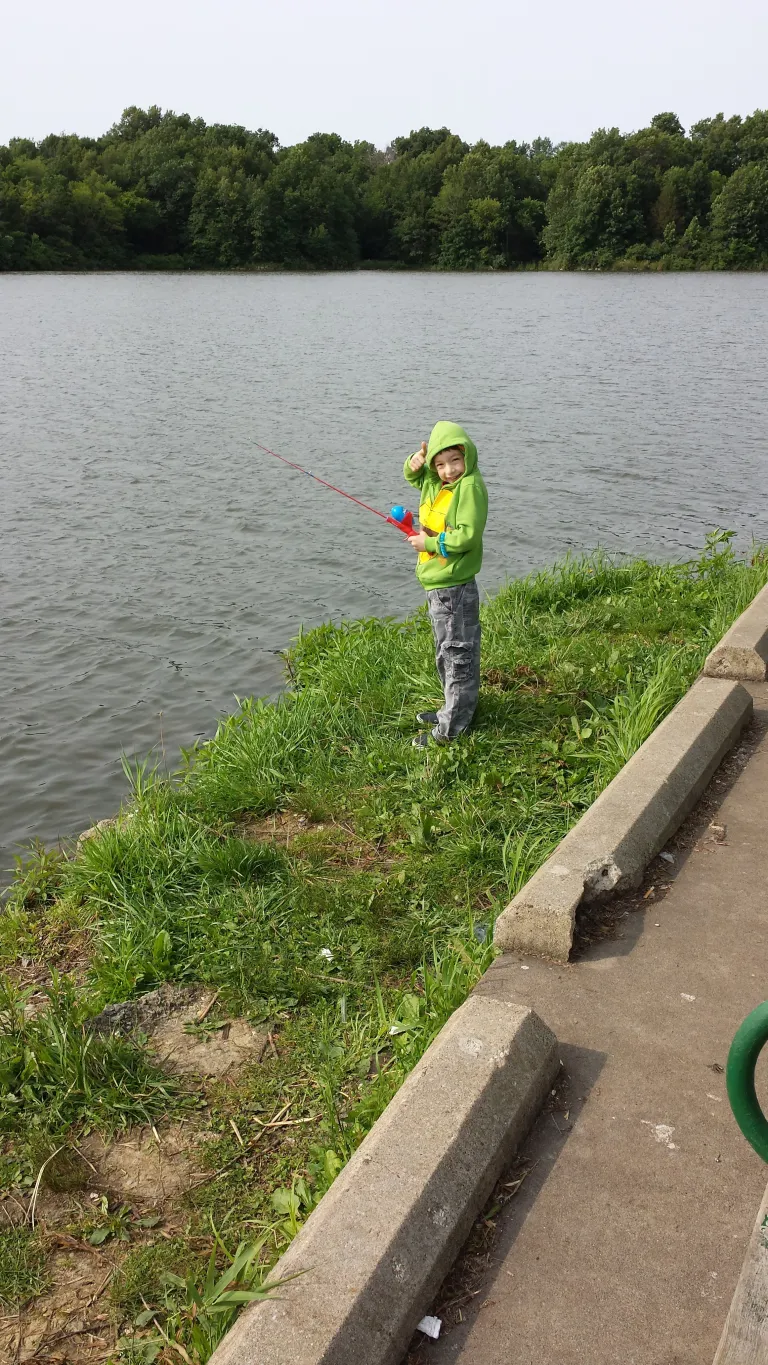
You're invited to a fun-filled Fishing Outing on Saturday, April 19, 2025, at 11:00 AM! We'll spend the day fishing, searching for microinvertebrates, and enjoying the outdoors.
Location: Walnut Trail Farm, 2857 Walnut Trail, Stuart, IA 50250
What to Bring: Your own fishing pole, snacks, and drinks (bait will be provided)
Fishing License: Kids under 16 do not need one
We’d love for you to join us! Please register for the outing here: Register Now
Lunch and Learns Fridays at noon
Fridays at noon, we do a Lunch and Learn livestream. See us on Facebook at "Sierra Club Iowa Chapter". These will be recorded so you can watch them anytime. Topics will be selected based on what is happening during the week. During the legislative session, we cover issues coming before the Iowa legislature.
In case you missed our past webinars and lunch and learn sessions, you can still see them.
Watch "2025 Carbon Pipeline Legislation Update", March 21, 2025
See "Update on the 2025 legislature", March 14, 2025
See "Victory in South Dakota! SD Governor Rhoden signed a bill into law that bans eminent domain for carbon pipelines. We went to Senator Bousselot's forum in Ankeny today to make sure Iowa does the same thing. ", March 7, 2025
Watch "Protecting Iowa’s Aquifers – HF480", February 28, 2025
How to Ensure Emails Make it to your Primary Inbox
Gmail by Google is great for organizing emails. It includes several built-in folders that automatically sort incoming messages: Primary, Promotions, Social, and Spam. These folders are usually found at the top of your inbox or in the sidebar near your Drafts and Sent folders.
If an important email is sorted incorrectly, you can fix this by dragging it from its current folder into your Primary inbox folder. This tells Gmail to send future emails from that sender to your Primary inbox, so you won’t miss them again.
Step 1: Find Gmail Folders


Step 2: Drag email to your Primary Inbox Folder.
Volunteer for the Iowa Chapter
Almost everything we do is done by volunteers like you. If you would like to volunteer for the Iowa Chapter, please let us know by sending an E-mail to Iowa.chapter@sierraclub.org. Or sign up by using the online form. There are many opportunities for you to make a difference:
making phone calls
developing graphics for banners and flyers
working on legislative issues
working on elections
fundraising
organizing events
joining an issue committee
If you would like to join our legislative action team, sign up here. Keep on top of what is happening at the Iowa legislature. Be alerted when you should contact your legislators about pending legislation.

Photo: camping by Jess Mazour.
Contribute to the Iowa Chapter
Sierra Club - working every day on Iowa’s environmental problems
Sierra Club is Iowa’s oldest and largest grassroots environmental organization. Not only that, we are the best bet in the state for achieving bold solutions to Iowa’s environmental problems.
We work in the courts, before Iowa’s public agencies, and in the halls of the legislature. The Iowa Chapter's effort to protect the environment takes financial support. The Chapter receives very little financial support from the national Sierra Club. Can we count on you for a donation to ensure even more victories? Your contribution will be put to work here in Iowa on issues that affect every day Iowans – water quality, clean air, protection of Iowa's soil, parks and natural areas, and a strong democracy. The Iowa Chapter is relentless in fighting back bad legislation that affects every one of us.
Your non-deductible contributions make it possible for us to fight bad legislation and to promote good legislation. We appreciate your past and on-going support of these efforts. You can make a non-deductible donation with a credit card. A non-deductible donation supports the Chapter's effective, citizen-based advocacy and lobbying programs. If you prefer, a non-deductible check can be written to the Sierra Club Iowa Chapter and mailed to:
Treasurer
Sierra Club, Iowa Chapter
PO Box 1058
Marion, IA 52302
You can also make a tax-deductible donation with a credit card. Tax-deductible activities are limited to public interest education, research and legal actions. A deductible check can be written to the Sierra Club Foundation with “Iowa Chapter” written in the memo line.
Thank you for your support.
Donate your used vehicle
As the Sierra Club Foundation's Iowa Chapter continues to raise charitable funds to support its work in Iowa, won’t you consider participating in our vehicle donation program? Our partners over at CARS have made the process of donating your unused or unneeded car, truck, motorcycle, boat or RV easy, efficient and secure. They’ll take care of everything from picking up your vehicle to sending you a tax receipt for your generous gift. To learn more about The Sierra Club Foundation's Iowa Chapter vehicle donation program, please call 844-674-3772. Or visit our webpage to get started today!
Sierra Club Foundation promotes climate solutions, conservation, and movement building through a powerful combination of strategic philanthropy and grassroots advocacy. The Foundation is the fiscal sponsor of Sierra Club’s charitable environmental programs.
For more information
Planned giving . . . naming the Sierra Club Iowa Chapter in your will
Ensure your environmental legacy by naming the Iowa Chapter in your will or trust. These gifts cost you nothing now. You can hold onto your assets for as long as you need them.

Thank you for supporting our work!
| When | Earliest: Latest: |
| What |
|
| Word or Phrase | Word or phrase to search for: |
| Leader | All or part of leader name to search for: |
No Matching Activities Found
Loading
| Date | Activity (click title for full description) | Sponsor | Category | Type | Difficulty | Links |
|---|
Loading ...
 Outing
 Team/Committee
meeting
Team/Committee
meeting
 Volunteer Event
 Activist event
 Multiple events
(map only)
Multiple events
(map only)