This summer, water quality issues have become front and center in people's minds. The issue was high-lighted earlier this summer when the Central Iowa Water Works, which provides drinking water to over 600,000 Iowans, were required to restrict lawn watering. The source water from the Des Moines and Raccoon Rivers were so polluted with nitrates that the Water Works was unable to provide the quantity of safe drinking water to its customers. Note, the restriction was because of water quality, not quantity. There was more than enough raw untreated water polluted with excessive amounts of nitrates.
The issue was again brought to light when the Polk County Supervisors released a report called "Currents of Change" which was written as part of the Central Iowa Source Water Research Assessment team of 16 experts in water quality issues. It has remained in the minds of Iowans each week this summer when they go to Iowa's beaches and are greeted with swim advisories because the waters are contaminated with high levels of E. coli and microcystin toxins.
It is time for the state to implement numerical standards for nutrients in the state's water bodies, set reasonable target dates, and begin enforcement actions to see that the targets are met. The network of water sensors needs to be adequately funded so that efforts to reduce nutrients can be measured.
It is time for voters to pressure and encourage elected officials and political candidates to implement sensible policies that will improve Iowa's water quality.
Iowans expect that the water we drink is free of harmful pollutants. We expect to fish, boat, paddle, and wade in our streams and lakes without getting sick.
Take care,
Pam Mackey Taylor, Chapter Director and Newsletter Editor
What you can do to help the environment
If you use a well for your drinking water, have your well tested for nitrates and other pollutants. Contact your public health department.
Sign up for the book discussion of Iowa’s Changing Wildlife: Three Decades of Gain and Loss. Pick up the book now and join us for the virtual discussion on September 17 at 6pm central time. Sign up today to join the virtual discussion.
Save the date to Experience Peak Hawk Migration at Hitchcock Nature Center, Honey Creek, Iowa, September 20
Donate to the Iowa Chapter of the Sierra Club so that we can continue our work on protecting Iowa's environment.
Lunch and Learn presentations - Live-streamed on Facebook on Fridays at noon - https://www.facebook.com/IowaSierraClub
Missed the live-stream lunch and learn? No problem, find them on our YouTube: https://www.youtube.com/@IowaSierraClub/videos
In this issue of the Iowa Sierran
Water Quality
Wild Spaces
Book reading: Iowa's Changing Wildlife, September 17
Experience Peak Hawk Migration at the Hitchcock Nature Center, Outing, Honey Creek, Iowa - September 20
Protecting the Environment
Utility Commission Resumes Monthly Public Meetings After 2-Year Hiatus
Lunch and Learns Fridays at noon
Plus
Contribute to the Iowa Chapter
Volunteer for the Iowa Chapter
Calendar of events
To see the archive of previous Iowa Chapter newsletters
Reconnecting Iowa’s Wild Spaces
Iowa once teemed with native prairie, wetlands, and a remarkable diversity of wildlife. That vibrant ecosystem exists only in fragments. In just under two centuries, the landscape has changed dramatically. More than 99% of native prairie and 98% of wetlands have disappeared, replaced by vast fields of corn and soybeans. Today, Iowa is the most biologically altered state in the U.S., and the remaining fragments of natural habitat are too small and too disconnected to support healthy ecosystems.
Earlier this month, the Sierra Club Iowa Chapter released the Protecting Biological Diversity In Iowa Through Connectivity report during a press conference with scientists, a legal expert, and an environmental advocate. The message was clear: Iowa must act now to reconnect its fragmented habitats, for wildlife, for clean water, for climate resilience, and for future generations.
Why Connectivity Matters
When natural areas become isolated, wildlife populations suffer. Animals can’t move freely to find food, mates, or shelter. Gene flow is restricted, which weakens genetic diversity and resilience. Habitats become islands, and entire ecosystems begin to break down.
As Dr. Tom Rosburg, biology professor at Drake University, said during the press conference, “We’re asking small, scattered patches of land to support entire ecosystems, and it’s simply not sustainable.”
The solution lies in wildlife corridors, strategic connections between habitats that allow animals to move safely across the landscape and ecosystems to function as a whole. Other states, like Florida and California, have already made major strides by designating official wildlife corridors through legislation. It’s time for Iowa to do the same.
Policy Solutions
The report outlines several practical, science-based strategies to help restore Iowa’s natural heritage:
Renew and fully fund the REAP Act (set to expire in 2028), preserving its original commitment to protecting open space.
Activate the Natural Resources and Outdoor Recreation Trust Fund, which voters approved over a decade ago but lawmakers have yet to fund.
Pass legislation directing conservation agencies to collect ecological data and identify key wildlife corridors.
Propose an amendment to the Iowa Constitution guaranteeing the right to a healthy environment for all Iowans.
These actions wouldn’t just benefit wildlife, they’d improve water quality, reduce flood risk, create outdoor recreation opportunities, and strengthen Iowa’s climate resilience.
As Dr. David Hoferer, professor at Briar Cliff University, emphasized during the press conference that investments in conservation offer long-term economic returns. Like installing solar panels, the upfront cost of habitat restoration can seem high, but the long-term savings, from avoided costs like deer-vehicle collisions to boosted outdoor recreation, far exceed it. “These projects pay for themselves in relatively short order,” he said, “and the benefits, from more wildlife to better hunting and recreation, last for generations.”
Public Awareness Is Key
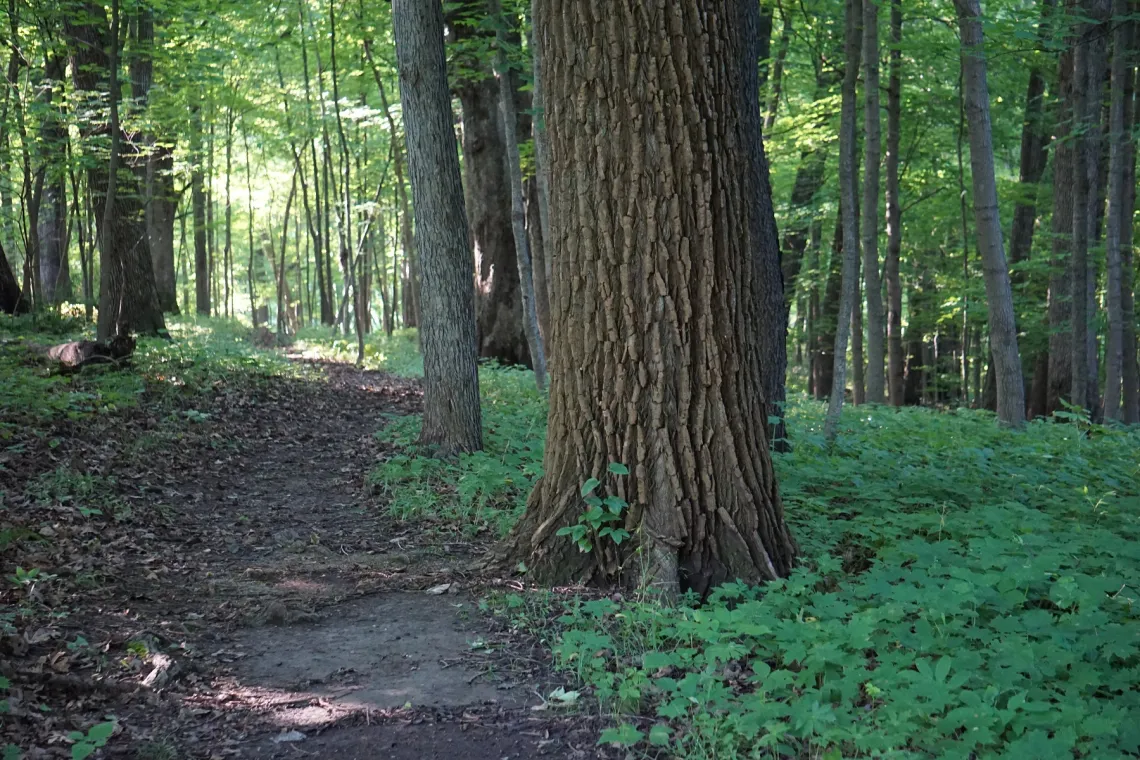
Many Iowans have never experienced a truly wild prairie or intact woodland, making education a critical part of any conservation strategy. When natural ecosystems have largely disappeared from the landscape, and from public memory, it becomes even more important to raise awareness of what’s been lost and what’s still possible to restore.
Protecting and restoring Iowa’s ecosystems isn't just a job for state agencies or conservation groups, it depends on the people who live and work on the land. That’s why engaging farmers, landowners, and local communities is absolutely essential to building wildlife connectivity in Iowa.
More than 85% of Iowa’s land is used for agriculture, and over 30 million of Iowa’s 36 million acres are listed as farmland. At the same time, Iowa ranks 49th in the nation for the amount of public land owned by federal, state, and local governments. Only 2.8% of Iowa is public land, and nearly half of that is made up of road rights-of-way, not wild spaces. To put it in perspective, all of Iowa’s public lands would fit into a square just 40 miles wide.
This means that the vast majority of Iowa’s remaining natural resources, and the potential to rebuild habitat connectivity, lies in privately owned land. During the press conference, Pam Mackey Taylor, Director of the Sierra Club Iowa Chapter, emphasized this point, “Conservation isn’t something that only happens in parks. It can happen on farms, along roadsides, in backyards, and it starts with understanding what’s at stake.”
To make real progress, we must move beyond traditional top-down conservation models and bring landowners into the conversation. The Sierra Club Iowa Chapter is committed to hosting community events, listening sessions, and educational programs across the state to raise awareness and build grassroots support for conservation. Whether it’s through voluntary conservation easements, participation in USDA programs, or local land stewardship, farmers and rural communities can play a leading role in reconnecting Iowa’s landscapes.
Each week, the Iowa Chapter hosts a Friday “Lunch & Learn” series that explores different environmental topics, from wildlife habitat and clean water to sustainable agriculture and climate action. These conversations are open to the public and designed to help Iowans connect with nature, understand the challenges we face, and take meaningful action.
Public understanding and support are not just helpful, they are vital. When more Iowans recognize the value of preserving and restoring native landscapes, we can begin to reverse the trend of fragmentation and ensure that Iowa’s wildlife, and future generations, have room to thrive.
Moving Forward
Reconnecting Iowa’s landscapes is not a distant dream; it’s a necessary and achievable goal. The science is clear, the solutions are available, and the urgency is real. By investing in habitat connectivity, engaging landowners and communities, and holding policymakers accountable, Iowa has the chance to restore balance to its ecosystems and reimagine a future where both people and wildlife can thrive. The choices we make now will determine whether Iowa remains a patchwork of isolated remnants or becomes a vibrant, connected landscape once again. Let’s choose to reconnect.
Link to Full Report: https://www.sierraclub.org/sites/default/files/2025-07/wildlifeconnectivityreport.pdf
Link to the Press Conference: https://youtu.be/sTB8NAZ4kqw
Join us Fridays at noon on Facebook for our Live Lunch & Learn’s! https://www.facebook.com/IowaSierraClub/
Book reading: Iowa's Changing Wildlife
In September, Tom Reardon, Executive Committee Vice-Chair of the Sierra Club Iowa Chapter, will lead a discussion and explore the book Iowa’s Changing Wildlife: Three Decades of Gain and Loss. This discussion will dive into how Iowa’s wildlife and natural landscapes have evolved over the past 30 years along with what species are thriving, which are disappearing, and what these changes mean for the future of conservation in our state. The authors are James Dinsmore and Stephen Dinsmore. Pick up the book now and join us for the virtual discussion on September 17 at 6pm central time. Sign up today to join the virtual discussion.
Experience Peak Hawk Migration - Hitchcock Nature Center
Join us on Saturday, September 20 from 11:00 AM to 1:00 PM for a special outing at Hitchcock Nature Center, one of Iowa’s most scenic and biologically rich areas. Mid-September marks the height of hawk migration, and we’ll be hitting the trails with naturalists and HawkWatch biologists to learn all about these incredible birds. Sign up today
This guided hike includes a stop at the park’s observation tower, a look at Loess Hills plant and animal life, and a short talk with Dr. Tom Rosburg at the overlook. Bring your lunch, wear sturdy hiking gear, and get ready for an unforgettable nature experience.
Cost: $5 per person
Location: Hitchcock Nature Center, 27792 Ski Hill Loop, Honey Creek, IA 51542
If you have some time after the event, you might consider a visit to nearby DeSoto National Wildlife Refuge.
Don’t miss this chance to connect with nature, learn from experts, and witness one of the most exciting migrations of the year! Sign up today
Polk County Supervisors Issue Report on Central Iowa Source Water
Mike Tramontina is a member of the Iowa Chapter Executive Committee. He delivered the following comments to the Polk County Board of Supervisors on July 1, 2025.
The Central Iowa Source Water Research Assessment report can be found at www.polkcountyiowa.gov/public-works/water-resources/polk-county-water-quality-initiatives/
For the past month and into the foreseeable future, 600,000 Central Iowans are under mandatory water use restrictions from Central Iowa Water Works because of poor water quality in the Des Moines and Raccoon Rivers. It is important to note this restriction is not caused by lack of quantity but solely due to pollution. According to a draft of the Central Iowa Source Water Research Assessment, the pollutants in the water are nitrates, well above the Safe Drinking Water standards. Nitrates get into the water from over-application of livestock manure and commercial fertilizers on farmland that then runs-off into our rivers and streams. The Assessment found that agriculture contributes about 80% of all nitrogen in the rivers. This situation is only one symptom of having over 700 “impaired” lakes, rivers and streams in our state that are unsafe for drinking, fishing or swimming. This is truly an alarming situation.
I thank the Polk County Board for commissioning Central Iowa Source Water Research Assessment which can be a first step in bringing about statewide policies to clean-up the people’s water. I believe the assessment and recommendations can be a turning point in the long-running struggle over pollution in Iowa’s water. The assessment is the result of over 4,000 hours of work by 16 scientists based on solid science. I am disappointed the Board did not schedule a presentation of the results of the assessment and the recommendations.
I also thank Polk County for an investment in demonstrations of “edge-of-field” practices. I look forward to reading and hearing more about what you’ve learned and what progress has been made. However, it is important to recognize those practices will never be sufficient to make meaningful progress on the problems in the Des Moines and Raccoon River watersheds. The edge-of-field practices are micro in scale. They can improve a single farming operation but the problem we face is watershed-wide in scale and requires watershed-wide and statewide changes.
In every news report I’ve read or seen on the draft report, a political leader has said we need to consider the effects on the farmers and landowners. Of course, their views will always be taken fully into account. They have power and wealth, and their concerns will no doubt be fully aired.
But I want to remind you today about what usually goes unsaid. The other half of that equation: What about the babies who can’t drink water that comes out of our taps; and what about the pregnant mothers who put their babies at risk if they drink the tap water; and the what about the rest of the hundreds of thousands of people in Iowa who are purchasing filters and cases of bottled water every time they shop because they are afraid to give tap water to their children? And what about the Dead Zone in the Gulf where no fish, shrimp, crab or clams can live? The EPA says the biggest contributor to the Dead Zone is Iowa. I hope that in all future discussions every time someone says, “What about the farmers?”, one of you will say “What about the babies, will they be able to drink the water?”
It is obvious Iowa’s Nutrient Reduction Strategy has failed. It has been in place for more than 12 years and the water quality is worse now than it was then. I don’t think the problems are with the conservation steps outlined in the strategy, rather the problem is that there are no measurements, no goals, no deadlines by which to measure progress. As a result, there has been no progress. Progress cannot be measured in the numbers of farmers who implement a conservation plan. Progress needs to be measured in the quality of water flowing in those rivers and lakes.
I’ve worked on legislation and public policy in Iowa for 30 years. The real obstacle to progress is not the steps outlined in the strategy. The real obstacles are the lawyers and lobbyists who write the loopholes in legislation and administrative rules, and public relations firms and advertisers who manipulate public opinion and finally, the people who control the political action committees. That group denies there is a problem or they blame someone else. They will never voluntarily agree to clean up our water. We need to take the decisions out of their hands and expect our governmental officials to put in place policies to protect the public.
I look forward to receiving the report and reading it. We look forward to working with you on the recommendations. As a first step I urge you to use your power to convene to give the public a full presentation of the report. Allow Jennifer Terry, Coordinator of the report and 5 or 6 of the scientists who contributed to explain it in a public forum and answer questions.
I’ll close on a positive note- It doesn’t have to be this way. Our rivers can be cleaned up. The Des Moines and Raccoon can be brought back to drinkable, swimmable and fishable quality and by natural processes. Pick up a Sierra Club magazine or any nature or conservation magazine and you’ll find lots of stories about water bodies the size of Chesapeake Bay and the Everglades, the Klamath River and more. They are being cleaned-up with natural processes and fish and wildlife are returning in a short time. I expect the recommendations in this report will show us the way to clean Iowa’s water.
I plead with you- Be the bridge to healthier drinking water and healthier farms. Don’t be the roadblock.
Thank you for this opportunity. I look forward to working with you on the recommendations.

Photo by Tom Reardon: Mike Tramontina at the Sierra Club fishing outing that was held on July 12.
Get your well water tested today
Play it safe and have your well water tested every year for nitrates. When you do that, also ask that the water be tested for coliform bacteria, total dissolved solids, and pH levels. Contact your county public health department to determine where to take your water for testing.
This year, the levels of nitrates entering the state's rivers and streams has been quite high and not just in the Raccoon and Des Moines Rivers. The nitrates began as a component of fertilizer and manure that were applied to farm fields. Rain and snow melt move the nitrates off the fields and into rivers and streams. The nitrates also move through the soil and enter the groundwater. Once the nitrates have moved off the farm fields, they can enter drinking water wells. The only way you know if the well is contaminated with high levels of nitrates is to have it tested.
If contaminants are found in the water, then you may need to install a reverse osmosis water filter or you may need to find an alternate source of drinking water.
Des Moines River and Coal Ash Pollution
The Ottumwa Generating Station is seeking permission from the Iowa Department of Natural Resources (DNR) to give them an NPDES permit that would allow them to transport polluted water from its coal ash landfill to the sewage treatment plant which would then process the liquid and discharge it to the Des Moines River. The problem is that the sewage treatment plant does not have the technology to remove the pollutants and will be discharging them into the River. The Sierra Club and our allies are challenging this permit request. The DNR will be holding a public hearing, but it has not been scheduled.
The Ottumwa Generating Station is a coal-fired power plant located north of Ottumwa, Iowa. It is co-owned by Interstate Power and Light (a subsidiary of Alliant) and MidAmerican Energy (owned by Berkshire Hathaway). Interstate Power and Light (IPL) is the operator of the plant.
When a power plant burns coal, coal ash is among the substances left behind. Coal ash contains toxic and hazardous contaminants that can pollute waterbodies, ground water, drinking water, and the air. Coal ash has several forms:
Fly ash – fine, powdery, mostly silica
Bottom ash – coarse particles that form in the bottom of the coal furnace
Boiler slag – molten bottom ash that turns into pellets
Flue gas desulfurization material – what is left over after emissions are processed to remove sulfur dioxide
Currently IPL trucks the coal ash 5.5 miles from the power plant to the Ottumwa Midland Landfill. The Midland Landfill is 24 acres in size. It is a giant pit with a clay liner. Underneath the landfill is a series of pipes called the underdrain which collect groundwater so that it does not reach the landfill.
IPL had a stormwater permit which allowed discharge into a wetland which then flowed to a creek and the Des Moines River. The mouth of the creek is near the City of Ottumwa’s drinking water intake on the Des Moines River. The stormwater permit required the underdrain liquid to be uncontaminated with pollutants.
Testing of the underdrain water confirmed the presence of cobalt, lithium, manganese, and molybdenum at levels greater than groundwater protection standards. Other pollutants were detected in the underdrain liquid, including arsenic, barium, boron, calcium, iron, magnesium, zinc. All of the pollutants detected are found in coal and coal ash.
Presence of the pollutants in the underdrain liquid is in violation of the stormwater permit as well as the water quality standards in the Clean Water Act and the Safe Drinking Water Act. In August, 2023, the Iowa Department of Natural Resources alerted IPL that they needed an additional permit and had 1 year to obtain the permit. IPL did not request a permit.
In December, 2024, IPL requested an NPDES permit to build a pipe from the landfill to the Des Moines River, without treating the water before discharging it. The discharge would include the toxic and hazardous substances.
In May, 2025, IPL presented a new plan for dealing with the underdrain liquid. IPL would collect the underdrain liquid in storage tanks at the Midland Landfill. They would then truck to the liquid to the Ottumwa Water Pollution Control Facility (the sewage treatment plant) plus the liquid would also be evaporated at the power plant as cooling water. The Iowa Department of Natural Resources wrote a draft permit to allow this. This draft permit is a concern:
The biological setting and chemical settling processes are ineffective in removing the toxins and heavy metals in the underdrain liquid.
Once the treatment processes have been completed, the liquid will be discharged into the Des Moines River. Downstream counties are Wapello, Davis, Van Buren, and Lee Counties in Iowa and the river flows along neighboring Missouri.
Trucking the underdrain liquid to the Water Pollution Control Facility is expensive. The electric customers will be paying for this trucking.
The Sierra Club and our allies are challenging this draft permit. We will send out a notice about the public hearing about this draft permit.
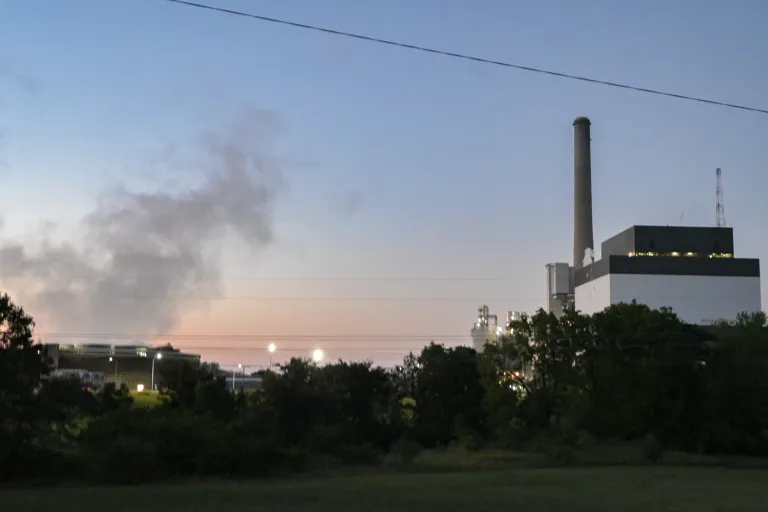
Photo: Ottumwa Generating Station by Emma Colman
Utility Commission Resumes Monthly Public Meetings After 2-Year Hiatus
Historically, the Iowa Utilities Commission (IUC) held monthly meetings to update the public on open dockets, litigation and to provide a public comment period for anyone to address the Commission. Sierra Club Iowa Chapter and impacted Iowans attended those meetings regularly to hear updates and address the board about problems with open dockets, including Dakota Access, MidAmerican Energy Rate hikes, clean energy proposals, carbon pipelines and more. The IUC public meetings were canceled in 2023 after a sea-change of IUC members.
In 2023, IUC member Richard Lozier retired from the Commission and Governor Reynolds replaced him with a controversial pick, Erik Helland. Reynolds immediately appointed him as Chair, replacing the longstanding Chair Geri Huser. At that point, Huser resigned from the Commission. Reynolds then appointed Sarah Martz as the third member of the IUC.
Immediately after Helland took over as IUC Chair, Summit’s docket was fast-tracked and many IUC practices changed. Summit’s hearing was moved up two-months and scheduled in the middle of harvest. The IUC removed public comment from pipeline hearings, limited who could intervene, and canceled their monthly public meetings.
Iowans pushed hard during the 2025 legislative session to pass a bill (HF639) that held the IUC accountable and to make sure Erik Helland was not reappointed as Chair of the IUC. Despite all odds, those efforts were successful lobbying the Iowa House and Senate to do both. Unfortunately, Governor Reynolds vetoed HF639. But her reappointment of Erik Helland as Chair of the IUC failed. Erik Helland is still an IUC member but he is no longer chair. Sarah Martz is the new Chair of the IUC.
In June, the IUC announced that it will resume monthly public meetings in August. We need to show up en masse and request that IUC operate in a fair and transparent manner.
We are also at a critical point in our campaign to stop the Summit Carbon Pipeline. Summit filed its “Final Exhibit H” list - the list of parcels that won’t sign voluntary easements. The list is powerful - around 90% of targeted parcels on Summit’s route are refusing to sign. Summit will likely begin requesting the IUC to hold a hearing on its permit. We need to make sure the IUC does not move forward with Summit’s permit until they have at least 75% of the easements signed voluntarily, which is the level of easements Summit had in Phase 1 of its project.
Please join us on Wednesday, August 20 at 8:45am at the IUC Office to address the Commission during public comment and to hear what they have to say after canceling monthly public meetings for nearly two years.
August Iowa Utilities Commission Monthly Public Meeting
Wednesday, August 20 at 9:00am (arrive early at 8:45am)
IUC Office, Board Room
1375 E Court Ave, Des Moines
Lunch and Learns Fridays at noon
Fridays at noon, we do a Lunch and Learn livestream. See us on Facebook at "Sierra Club Iowa Chapter". These will be recorded so you can watch them anytime. Topics will be selected based on what is happening during the week. During the legislative session, we cover issues coming before the Iowa legislature.
In case you missed our past webinars and lunch and learn sessions, you can still see them on YouTube.
See "Protecting Iowa Black Bears", July 18, 2025
Check out: "Protecting Biological Diversity In Iowa Through Connectivity", July 11, 2025
See "Central Iowa Water Crisis", June 27, 2025

Photo by Tom Reardon: Successful fishing at the Sierra Club's fishing outing on July 12.
Volunteer for the Iowa Chapter
Almost everything we do is done by volunteers like you. If you would like to volunteer for the Iowa Chapter, please let us know by sending an E-mail to Iowa.chapter@sierraclub.org. Or sign up by using the online form. There are many opportunities for you to make a difference:
making phone calls
developing graphics for banners and flyers
working on legislative issues
working on elections
fundraising
organizing events
joining an issue committee
If you would like to join our legislative action team, sign up here. Keep on top of what is happening at the Iowa legislature. Be alerted when you should contact your legislators about pending legislation.
Photo: camping by Jess Mazour.
Contribute to the Iowa Chapter
Sierra Club - working every day on Iowa’s environmental problems
Sierra Club is Iowa’s oldest and largest grassroots environmental organization. Not only that, we are the best bet in the state for achieving bold solutions to Iowa’s environmental problems.
We work in the courts, before Iowa’s public agencies, and in the halls of the legislature. The Iowa Chapter's effort to protect the environment takes financial support. The Chapter receives very little financial support from the national Sierra Club. Can we count on you for a donation to ensure even more victories? Your contribution will be put to work here in Iowa on issues that affect every day Iowans – water quality, clean air, protection of Iowa's soil, parks and natural areas, and a strong democracy. The Iowa Chapter is relentless in fighting back bad legislation that affects every one of us.
Your non-deductible contributions make it possible for us to fight bad legislation and to promote good legislation. We appreciate your past and on-going support of these efforts. You can make a non-deductible donation with a credit card. A non-deductible donation supports the Chapter's effective, citizen-based advocacy and lobbying programs. If you prefer, a non-deductible check can be written to the Sierra Club Iowa Chapter and mailed to:
Treasurer
Sierra Club, Iowa Chapter
PO Box 1058
Marion, IA 52302
You can also make a tax-deductible donation with a credit card. Tax-deductible activities are limited to public interest education, research and legal actions. A deductible check can be written to the Sierra Club Foundation with “Iowa Chapter” written in the memo line.
Thank you for your support.
Donate your used vehicle
As the Sierra Club Foundation's Iowa Chapter continues to raise charitable funds to support its work in Iowa, won’t you consider participating in our vehicle donation program? Our partners over at CARS have made the process of donating your unused or unneeded car, truck, motorcycle, boat or RV easy, efficient and secure. They’ll take care of everything from picking up your vehicle to sending you a tax receipt for your generous gift. To learn more about The Sierra Club Foundation's Iowa Chapter vehicle donation program, please call 844-674-3772. Or visit our webpage to get started today!
Sierra Club Foundation promotes climate solutions, conservation, and movement building through a powerful combination of strategic philanthropy and grassroots advocacy. The Foundation is the fiscal sponsor of Sierra Club’s charitable environmental programs.
For more information
Planned giving . . . naming the Sierra Club Iowa Chapter in your will
Ensure your environmental legacy by naming the Iowa Chapter in your will or trust. These gifts cost you nothing now. You can hold onto your assets for as long as you need them.

Thank you for supporting our work!
| When | Earliest: Latest: |
| What |
|
| Word or Phrase | Word or phrase to search for: |
| Leader | All or part of leader name to search for: |
No Matching Activities Found
Loading
| Date | Activity (click title for full description) | Sponsor | Category | Type | Difficulty | Links |
|---|
Loading ...
 Outing
 Team/Committee
meeting
Team/Committee
meeting
 Volunteer Event
 Activist event
 Multiple events
(map only)
Multiple events
(map only)