The legislature will soon gavel into session. Top of many of our minds is the need to improve Iowa's water quality. Iowans want to see improvements - fewer beaches contaminated with E coli and microcystin toxins, fewer waters impaired with pollutants, and fewer incidents of large releases of manure and other pollutants into our water bodies.
Unfortunately, without an infusion of $600,000 to support the water sensor network, 60 sensors that measure nitrate and nitrate pollution in Iowa's waterbodies will go silent. Iowa's legislature withdrew financial support for the sensor network and interim funding support is ending in 2026.
It is time for the Iowa legislature to implement the 3/8 cent sales tax voters overwhelmingly supported in 2010, with no changes in the funding formulas. With the funding that is expected from the sales tax, significant efforts could be made to improve Iowa's water quality.
Take care,
Pam Mackey Taylor, Chapter Director and Newsletter Editor
Photo above, Hitchcock Nature Center, Pottawattamie County, Iowa. Photo by Tom Reardon.
What you can do to help the environment
Send a note to the federal Environmental Protection Agency about the proposed water rules using our Action Alert!
Ask the members of the Fiscal Committee to schedule the meeting to review the bottle deposit law
To send a comment to the Utilities Commission opposing the restart of Duane Arnold, go to https://efs.iowa.gov/submit/comment ; make sure to select docket number GCU-2025-0013
If you use lead ammunition for hunting and lead fishing tackle, it is time to switch to non-lead alternatives
Save the date for our Annual Meeting Sept. 26, 2026, Newton Arboretum, Newton, Iowa
Contribute to the Iowa Chapter of the Sierra Club so that we can continue our work on protecting Iowa's environment
Missed the live-stream lunch and learn? No problem, find them on our YouTube: https://www.youtube.com/@IowaSierraClub/videos
In this issue of the Iowa Sierran
Iowa's environment
Bottle Deposit Law - legislative committee dragging its feet in scheduling a review
NextEra Needs a Permit From the Iowa Utilities Commission to Restart the Duane Arnold Nuclear Plant
Polluted Water Rule - EPA just issued new water rules, public comments are requested
Pipeline Update - Over 50 Counties Vote to Support Iowa State Association of Counties and Local Control
This Hunting Season, Go Lead-Free for a Healthier Ecosystem
Lessons from Hosting: One Member’s Outdoor Adventures - an interview with Greg Nepstad
Plus
Annual Meeting Sept. 26, 2026, Newton Arboretum, Newton, Iowa - Save the date
Calendar of events
To see the archive of previous Iowa Chapter newsletters
Bottle Deposit Law
LEGISLATURE MUST RELEASE REPORT ON BOTTLE DEPOSIT LAW CHANGE EFFECTS
Sierra Club Iowa Chapter calls on legislature to expand Bottle Deposit Program
In 2022, Governor Reynolds signed changes to the Iowa Bottle Deposit Program into law. The changes included increasing the handling fee paid by distributors to redemption centers, which Sierra Club Iowa Chapter supported. However, the bill also allowed retailers the ability to refuse to participate in the program altogether, making it harder for Iowans to participate in the program.
The Legislative Fiscal Committee, which last met in 2019, is required to hold a meeting to review how the changes have affected the program and submit a report to the legislature by the start of the 2026 legislative session. It is now November and, as of now, the committee has not scheduled a meeting to review the bottle deposit changes, as required by law.
Sierra Club Iowa Chapter polled its members in 2024 to see how the changes to the bottle deposit program have affected their ability to participate in the program.
60% redeem 76-100% of eligible containers
60% find it harder to redeem cans and bottles since the change
62% said a redemption center or collection site has closed in their area
21% travel more than 10 miles to participate in the program
94% support increasing the number of places that accept redemptions
Some respondents commented:
“It’s very difficult to redeem bottles here: limited number of places, reduced hours, long lines and limit on the amount you can bring in at a time.”
“Taking cans to a redemption center that has fluctuating, part time hours is VERY inconvenient when I'm a resident of rural Iowa and have to haul cans somewhere. I used to be assured that I could take them any time I went to the grocery store, but that ended and the can redemption became a pain in the rear.”
“I remember when it was enacted in the 1980s and how proud I was of Iowa at the time. It was a source of pride but recently it has become increasingly difficult to return and I fear the change in 2022 was just a preamble to revoke the law. I would be disappointed in Iowa if that is what happens.”
“We want to expand the Bottle Redemption Program and make it more accessible. We hope the Legislative Fiscal Committee will hold their meeting soon so we can get to work improving the popular and important program. It’s time to schedule the meeting now so they can do a thorough review and not violate Iowa law.” said Jess Mazour, Sierra Club Iowa Chapter.
The Fiscal Committee is required to review:
the enforcement of chapter 455C by the department of natural resources, including the collection of civil penalties
the report submitted by the attorney general
whether and how many redemption centers have been approved by the department of natural resources
the adequacy of the reimbursement amount under section 455C.2, and
any other information the committee deems important.
Ask the members of the Fiscal Committee to schedule the meeting to review the bottle deposit law. Members of Fiscal Committee can be contacted via email to tim.kraayenbrink@legis.iowa.gov , gary.mohr@legis.iowa.gov , tony.bisignano@legis.iowa.gov , dan.dawson@legis.iowa.gov , janet.petersen@legis.iowa.gov , dan.zumbach@legis.iowa.gov , timi.brown-powers@legis.iowa.gov , david.jacoby@legis.iowa.gov , shannon.latham@legis.iowa.gov , carter.nordman@legis.iowa.gov
Read more about the Sierra Club Iowa Chapter’s survey here.

NextEra Needs a Permit From the Iowa Utilities Commission to Restart the Duane Arnold Nuclear Plant
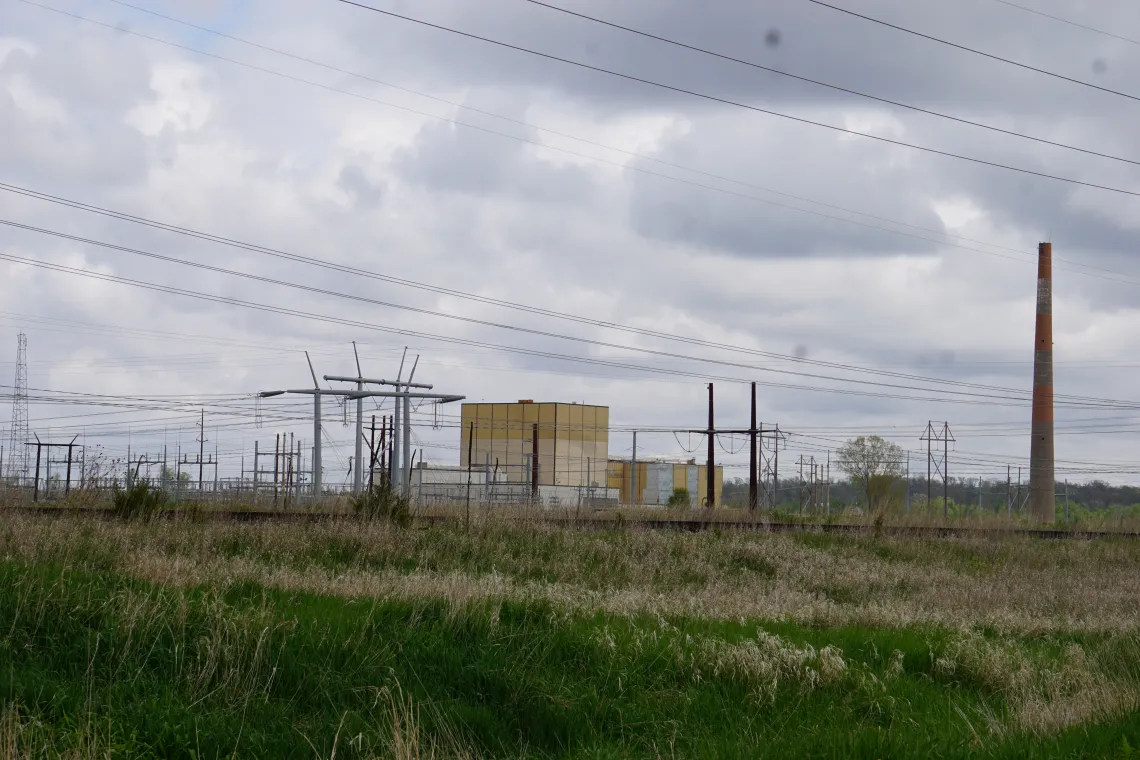
As we have discussed in previous issues of the Iowa Sierran, NextEra Energy plans to bring the Duane Arnold nuclear plant in Linn County back on line, after it has been shut down and in decommissioning status since 2020. One phase of this proposal is that NextEra needs a permit from the Iowa Utilities Commission.
Iowa Law requires that, in order for NextEra to obtain a permit, the Utilities Commission must find that restarting Duane Arnold would be consistent with legislative intent to:
Provide sufficient quantity of reliable electric service to Iowa consumers
Provide economic benefits to the state
Provide electric generation compatible with environmental policies of the state
Encourage the development of renewable electric power generation
Restarting Duane Arnold does not comply with legislative intent.
Duane Arnold would not provide electric service to Iowa consumers. The plan is that the power from Duane Arnold would primarily power data centers owned by Google. A small portion of the power would allegedly be purchased by Central Iowa Power Cooperative to serve its members, but that would not be sufficient to satisfy the legislative intent.
Although there may be some short-term economic benefits, there are long-term costs and adverse impacts. Overall, there will be no economic benefits to the state.
The environmental policies of the state are established to protect Iowa’s land, air and water. The nuclear industry claims nuclear power is clean and renewable. It is not renewable. Nuclear power uses uranium for fuel, which is a finite resource mined from the ground just like coal, gas or oil. Nor is nuclear power clean. The mining and processing of uranium leaves tailings and toxic pollutants.
During the operation of a nuclear plant, pollutants are emitted or leak from the plant, including tritium, a highly radioactive material that leaks into the groundwater or falls to the ground and surface water from the air.
Finally, nuclear power produces thousands of tons of highly radioactive waste for which there is not adequate plan for long-term storage. This waste remains radioactive for thousands of years.
With respect to Duane Arnold specifically, it is also necessary to consider the environmental impacts of the Google data centers, which are an integral part of the plan to restart Duane Arnold. Data centers require a significant amount of water. Google will almost certainly get water from an underground aquifer or from the City of Palo, which gets its water from the aquifer. Either way, the aquifer would be at risk. The status of Iowa’s aquifers has recently become an issue of concern, and Google’s impact on the aquifer adds to that concern.
As explained above, nuclear power is not renewable. Especially troubling with regard to Duane Arnold, in light of the legislative intent to encourage renewable energy, is that fact that NextEra abandoned three solar energy projects in order to transfer its interconnection tariff from those projects to the restart of Duane Arnold. That is directly contrary to legislative intent.
At this point, Next Era has filed its application for a permit with the Utilities Commission. The Iowa Chapter will petition to intervene in the proceeding and present our evidence as to why NextEra should not receive a permit. The Commission will then conduct a hearing to take evidence and will eventually issue a decision.
To send a comment to the Utilities Commission opposing the restart of Duane Arnold, go to https://efs.iowa.gov/submit/comment
Make sure to select docket number GCU-2025-0013.
Photo below: Duane Arnold nuclear power plant
Polluted Water Rule
Our nation's waters have been dealt a MASSIVE blow. The federal Environmental Protection Agency (EPA) recently proposed a Polluted Water Rule, which would drastically eliminate streams and wetlands protected under the Clean Water Act. By the EPA's own estimates, the proposed rule cuts protections for 80% of wetlands and 5 million miles of streams. This rule hands corporate polluters a license to damage and degrade our country's streams and headwaters.
Major rivers and lakes cannot be effectively protected from pollution if the small streams that flow into them are unprotected. Tens of millions of acres of wetlands lost protections. Wetlands protect our communities during floods, provide safe drinking water, improve our water quality, and provide wildlife habitat. This move ignores science and puts safe drinking water at risk for millions of people.
There is a huge disconnect between the administration and the vast majority of people across the country who value clean, safe water and have no interest in more pollution in their water.
A 45-day comment period will close January 5, 2026. Please help us demonstrate that we DEMAND clean water protection by sending a note to EPA using our Action Alert!
We have a very long fight ahead of us to reclaim the Clean Water Act's original intention - to ensure safe, clean water!
For those who have been following water issues for many years, this rule replaces the WOTUS (Waters of the US) rule that was proposed during the Obama administration.
Pipeline Update
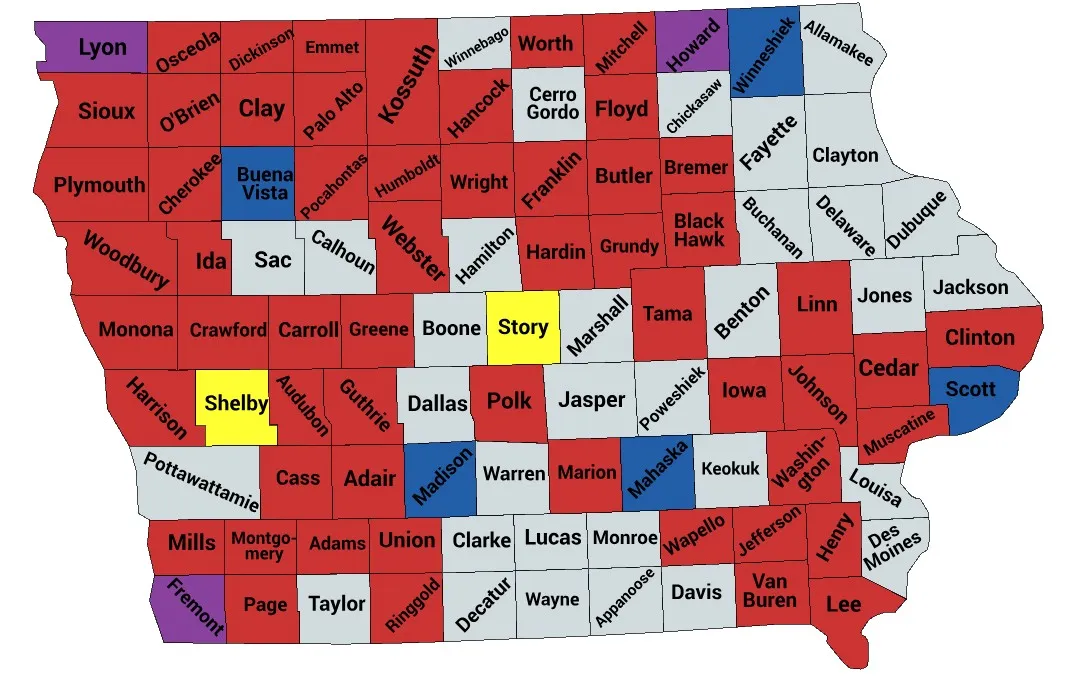
Over 50 Counties Vote to Support Iowa State Association of Counties and Local Control.
Since the Summit project was announced in 2021, we’ve used dozens of strategies to protect Iowa from carbon pipelines. One of those efforts was working with counties to pass carbon pipeline zoning ordinances that include setback distances from homes, schools, parks, city limits, etc. Eleven counties in Iowa passed similar zoning ordinances protecting local control - Summit was not happy about it.
In retaliation, Summit sued Shelby and Story Counties for passing zoning ordinances - an attempt to remove local control of zoning from counties. The counties, Represented by Ahlers and Cooney, argued in court that counties do have the ability to zone and that our ordinances should be upheld.
After some split and conflicting decisions from judges in different jurisdictions, the counties are now trying to get their case to the US Supreme Court to protect local control and zoning. The Iowa State Association of Counties (ISAC) is submitting an Amicus Brief to help stress the importance of local control and help increase the chance of the case being taken up by the Supreme Court.
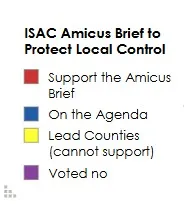
Sierra Club and landowners worked with Supervisors all across the state to ensure they voted in favor of the brief. As of today, over 54 Counties voted to support and help contribute to the cost of filing the Amicus Brief.
The ISAC Amicus Brief will join briefs from Preemption Law Professors, states of Minnesota, Arizona, Michigan, New Mexico, Oregon and Vermont, and the Iowa Farm Bureau Federation.
This Hunting Season, Go Lead-Free for a Healthier Ecosystem
Each year, raptors and scavenging wildlife across North America suffer from lead poisoning, an invisible but devastating consequence of using lead ammunition, fishing tackle, and weights. Tiny fragments of lead remain in the environment long after a shot is fired or a lure is lost, and when eagles or other wildlife ingest even a small amount, the results can be fatal.
Just a grain of rice sized piece of lead can kill a bald eagle. For humans, the Centers for Disease Control and Prevention (CDC) identifies a blood lead level of just 3. 5 micrograms per deciliter (µg/dL) as high enough to trigger medical monitoring in children.
To put that in perspective, a deciliter (dL) equals about 3. 4 fluid ounces, or just under half a standard cup of liquid, and a microgram (µg) is one-millionth of a gram. A gram is roughly the weight of a small paperclip, so we’re talking about 3.5 millionths the weight of a paperclip in less than half a cup of blood. Even at this microscopic level, lead exposure is considered dangerous.
The CDC states that no safe level of lead in humans has been identified. In children even low levels of lead in blood have been shown to reduce children’s IQ, ability to pay attention, and academic achievement. Because any blood lead level can be harmful, our focus is on eliminating exposure in the first place.
Lead is one of the most thoroughly studied environmental toxins. It damages nearly every major system in the body, nervous, cardiovascular, reproductive, immune, and renal, and it’s recognized as a probable carcinogen by multiple federal and international health agencies. Exposure, even at low levels, causes lasting neurological harm, and similar impacts are seen in mammals and birds.
Despite this, lead-based ammunition and fishing tackles remain among the largest unregulated sources of lead released into the U. S. environment. Ammunition production alone accounts for more than 60,000 metric tons of lead annually, second only to batteries. Unlike paint, gasoline, and plumbing, all of which have been regulated or phased out because of lead’s proven toxicity, the use of lead in bullets, shot, and sinkers remains largely unaddressed.
Lead doesn’t stay where it’s used. Fragments from bullets, unrecovered game, discarded fishing weights, and lost tackles persist in soil and waterways for decades. Rain and runoff can carry these particles into streams, rivers, and lakes, where they accumulate in sediment and enter the food chain. This contamination affects not only wildlife, raptors, waterfowl, and fish, but can also make its way into the water we drink and recreationally enjoy. Because lead is toxic even in tiny amounts, every piece that enters the environment increases the risk to both animals and humans.
Safer Alternatives Are Readily Available
Copper bullets are reliable, accurate, and effective. Copper and copper-alloy bullets expand predictably and do not fragment into toxic particles. Many hunters find them equally or more accurate than traditional lead rounds.
Lead-free fishing gear such as tin, bismuth, tungsten, or steel weights and lures are durable and widely available, preventing lead from leaching into waterways where fish, loons, and other wildlife feed.
What You Can Do
Make the switch to copper ammunition and non-lead fishing gear.
Bury or remove gut piles and carcasses from open areas to protect scavenging birds.
Spread the word! Share the science with fellow hunters, anglers, and outdoor groups.
A responsible outdoor ethic means leaving behind clean water, healthy wildlife, and safe food chains. By switching to non-lead alternatives, we can continue our hunting and fishing traditions while protecting raptors, preserving ecosystems, and keeping toxic metals out of our shared environment, a simple change with life-saving impact.
Sources:
https://www.cdc.gov/lead-prevention/php/news-features/updates-blood-lead-reference-value.html
https://www.cdc.gov/lead-prevention/hcp/clinical-guidance/index.html
https://soarraptors.org/eagles-and-lead/
Lessons from Hosting: One Member’s Outdoor Adventures
For many Iowans, the best way to connect with nature is not always at a state park or wildlife refuge, it’s on the land cared for by fellow community members. Over the past year, Sierra Club Iowa Chapter has explored outings taken place on private property, offering participants a more intimate way to explore Iowa’s ecosystems. To help discover what it’s like to host one of these events, we spoke with member Greg Nepstad, who has welcomed groups onto his land.
Greg didn’t start out as an outings leader. In fact, he says his first formal event was this year. But guiding people outdoors wasn’t new to him. “I’ve always taken my three daughters out to parks and fossil hunting. Back then, I was basically their guide,” he said. That experience, combined with a deep love for his own property, made opening his land to others feel like a natural next step.
One of the biggest worries we hear from members is that they’re “not knowledgeable enough” to lead a walk. Greg wants to put those concerns to rest.
“You don’t have to have degrees, and really you don’t need to be formally trained,” he explained. “Sierra Club attracts knowledgeable people. Someone in the group will know bird calls, someone else will know plants. You end up learning from each other.”
He found that shared discovery was one of the best parts of hosting. During his last outing, participants pointed out plant species he hadn’t noticed before which helped enrich everyone’s experience.
Greg’s land features a pond, a variety of plants, and forested areas, all bustling with wildlife. But you don’t need a large property to host, just a place you care about and are willing to share. Hosting can be as simple as a slow walk, a conversation about land stewardship, or pointing out the changes you’ve seen over the years.
“If you love your land and want to show people why, that’s enough,” Greg said. “People appreciate seeing how others care for the places they live.”
Greg also shared insights he’s learned through years of observing his land, particularly about wildlife dynamics. Raccoon overpopulation, for example, surprised him.
“When I moved here, the raccoon density was so high it was affecting everything, songbirds, frogs, turtles, clams,” he explained. It was a reminder that hands-on land stewardship often includes balancing ecological pressures that most people never see.
Outings offer a perfect opportunity to talk about these realities, what it takes to maintain healthy habitat, what surprises show up over the years, and how careful management supports ecosystems we all depend on.
Members who host outings help bring people together in ways that public spaces sometimes can’t. Participants get to see land care up close, hear the stories behind restoration efforts, and learn directly from the challenges and joys of stewarding a private landscape.
For Greg, the motivation is simple: “I like showing people what’s out there, what’s living on this land and how we can take care of it,” he said. “And every time, I end up learning something new too.”
Interested in Hosting?
If you’ve ever thought about opening your land to a small group walk, a birding morning, a pollinator tour, or even just a casual conversation under a shade tree, we’d love to hear from you. Greg’s experience reminds us that you don’t need special credentials, just a willingness to share space and curiosity.
To help make hosting as stress-free as possible, all participants sign online safety waivers when they RSVP for events. This simple step ensures everyone understands basic guidelines and expectations, removing worry about liability so hosts can simply focus on sharing their land.
Sierra Club can assist with planning, safety guidelines, group size, and promotion. Hosting an outing is one of the most meaningful ways to build community and inspire others to care for Iowa’s natural places. Contact iowa.chapter@sierraclub.org if you are interested in hosting a Sierra Club event.
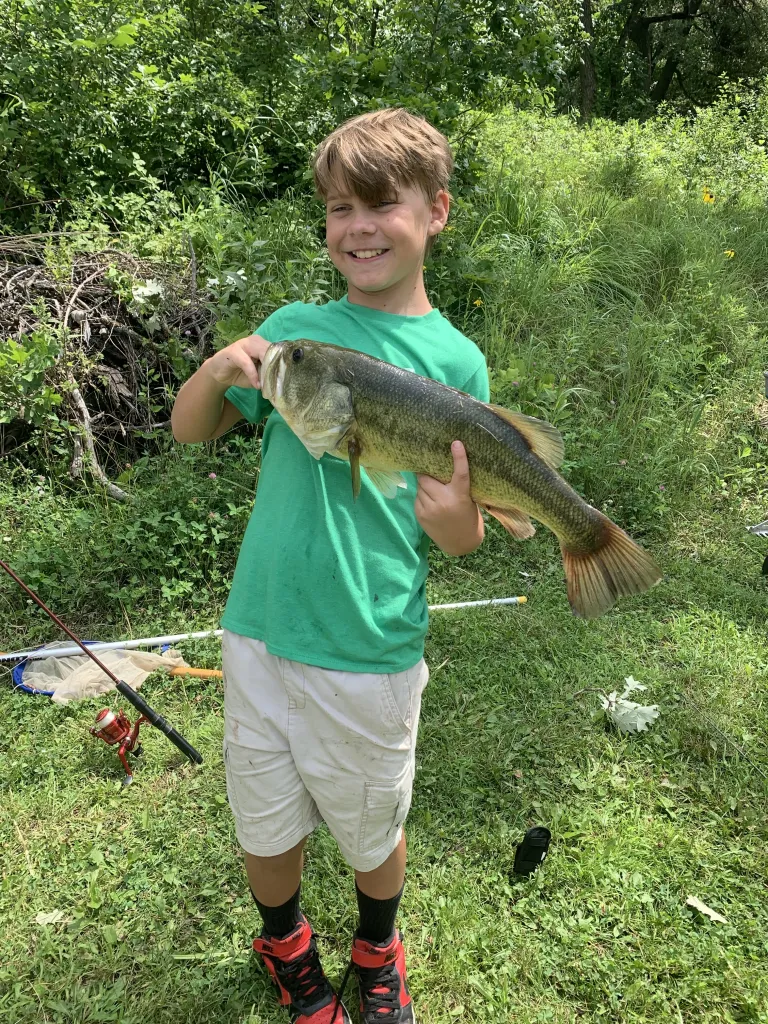
Below is a photo of a kid who caught a large fish caught during the fishing outing at Greg Nepstad's property in the summer of 2025.
Lunch and Learns Fridays at noon
Fridays at noon, we do a Lunch and Learn livestream. See us on Facebook at "Sierra Club Iowa Chapter". These will be recorded so you can watch them anytime. Topics will be selected based on what is happening during the week. During the legislative session, we cover issues coming before the Iowa legislature.
Upcoming Lunch & Learns:
Update on Duane Arnold Nuclear Plant Restart, November 21, 2025
Review the "Iowa Bottle Redemption Program Changes", November 14, 2025
What are "Nuclear Waste Canisters", November 7, 2025
Hear the latest on "Carbon Pipelines and the Courts", October 31, 2025
Hear it from the experts: "Risks of Nuclear Energy", October 24, 2025
The more you know: "From Lead to Copper: A Smarter Shot for Hunters and Wildlife", October 17, 2025
In case you missed our past webinars and lunch and learn sessions, you can still see them on YouTube.
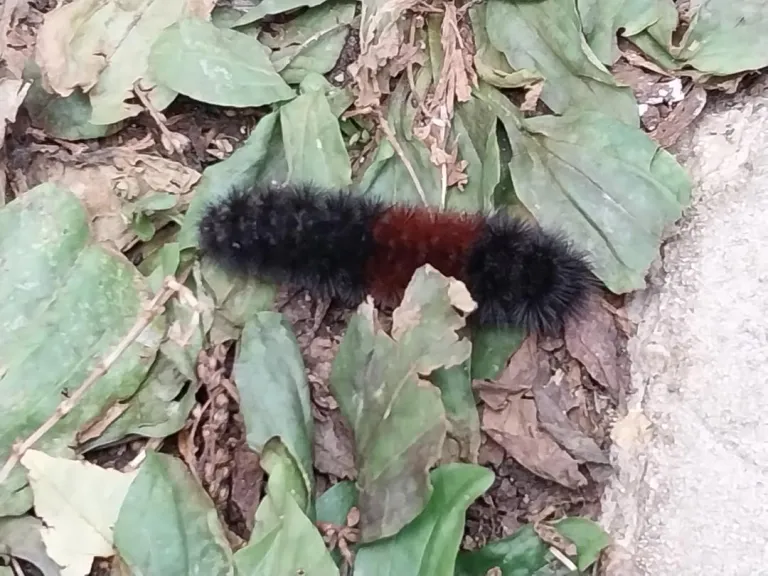
Photo of caterpillar by Donoven Graceffa.
Volunteer for the Iowa Chapter
Almost everything we do is done by volunteers like you. If you would like to volunteer for the Iowa Chapter, please let us know by sending an E-mail to Iowa.chapter@sierraclub.org. Or sign up by using the online form. There are many opportunities for you to make a difference:
making phone calls
developing graphics for banners and flyers
working on legislative issues
working on elections
fundraising
organizing events
joining an issue committee
If you would like to join our legislative action team, sign up here. Keep on top of what is happening at the Iowa legislature. Be alerted when you should contact your legislators about pending legislation.
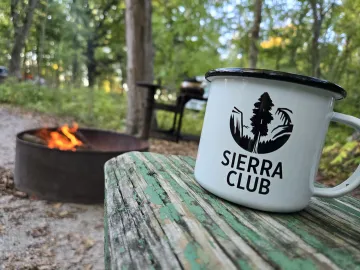
Photo: camping by Jess Mazour.
Contribute to the Iowa Chapter
Sierra Club - working every day on Iowa’s environmental problems
Sierra Club is Iowa’s oldest and largest grassroots environmental organization. Not only that, we are the best bet in the state for achieving bold solutions to Iowa’s environmental problems.
We work in the courts, before Iowa’s public agencies, and in the halls of the legislature. The Iowa Chapter's effort to protect the environment takes financial support. The Chapter receives very little financial support from the national Sierra Club. Can we count on you for a donation to ensure even more victories? Your contribution will be put to work here in Iowa on issues that affect every day Iowans – water quality, clean air, protection of Iowa's soil, parks and natural areas, and a strong democracy. The Iowa Chapter is relentless in fighting back bad legislation that affects every one of us.
Your non-deductible contributions make it possible for us to fight bad legislation and to promote good legislation. We appreciate your past and on-going support of these efforts. You can make a non-deductible donation with a credit card. A non-deductible donation supports the Chapter's effective, citizen-based advocacy and lobbying programs. If you prefer, a non-deductible check can be written to the Sierra Club Iowa Chapter and mailed to:
Treasurer
Sierra Club, Iowa Chapter
PO Box 1058
Marion, IA 52302
You can also make a tax-deductible donation with a credit card. Tax-deductible activities are limited to public interest education, research and legal actions. A deductible check can be written to the Sierra Club Foundation with “Iowa Chapter” written in the memo line.
Thank you for your support.
Donate your used vehicle
As the Sierra Club Foundation's Iowa Chapter continues to raise charitable funds to support its work in Iowa, won’t you consider participating in our vehicle donation program? Our partners over at CARS have made the process of donating your unused or unneeded car, truck, motorcycle, boat or RV easy, efficient and secure. They’ll take care of everything from picking up your vehicle to sending you a tax receipt for your generous gift. To learn more about The Sierra Club Foundation's Iowa Chapter vehicle donation program, please call 844-674-3772. Or visit our webpage to get started today!
Sierra Club Foundation promotes climate solutions, conservation, and movement building through a powerful combination of strategic philanthropy and grassroots advocacy. The Foundation is the fiscal sponsor of Sierra Club’s charitable environmental programs.
For more information
Planned giving . . . naming the Sierra Club Iowa Chapter in your will
Ensure your environmental legacy by naming the Iowa Chapter in your will or trust. These gifts cost you nothing now. You can hold onto your assets for as long as you need them.

Thank you for supporting our work!
| When | Earliest: Latest: |
| What |
|
| Word or Phrase | Word or phrase to search for: |
| Leader | All or part of leader name to search for: |
No Matching Activities Found
Loading
| Date | Activity (click title for full description) | Sponsor | Category | Type | Difficulty | Links |
|---|
Loading ...
 Outing
 Team/Committee
meeting
Team/Committee
meeting
 Volunteer Event
 Activist event
 Multiple events
(map only)
Multiple events
(map only)