During the special session of the legislature held earlier this month, Iowa legislators increased the financial incentives that can be offered to a company wanting to build or expand in Iowa. That opens the door for the Iowa Economic Development Authority to negotiate the largest incentive package the State of Iowa has ever offered a company to build in Iowa - $1.5 billion dollars in taxpayer money. The Sierra Club wrote a letter to Iowa Economic Development Authority urging state officials to ensure any taxpayer-funded incentive package for Mesabi Metallics’ steel mill must include provisions that benefit the public, not just an unconditional handout for industry.
This incentive package will be offered at a time that the state is running a $1.3 billion deficit, where the deficit is made up by reserves held in the Taxpayer Relief Fund. The reserves are expected to be depleted within a couple of years. This deficit could have huge negative impacts on the environment - affecting the state's ability to protect parks and public lands, enforce environmental protection, and enhance the environment.
Sierra Club will continue to monitor this project and its tax incentive package.
Take care,
Pam Mackey Taylor, Chapter Director and Newsletter Editor
What you can do to help the environment
Vote - This is an important election and every vote counts.
Join us for a book discussion of "Emerald Horizon: The History of Nature in Iowa", written by Cornelia F. Mutel, November 11, 2026; 6:30pm - 7:30p, via Zoom, register here to receive the link
Missed the live-stream lunch and learn? No problem, find them on our YouTube
Contribute to the Iowa Chapter of the Sierra Club so that we can continue our work on protecting Iowa's environment
In this issue of the Iowa Sierran
Protecting Iowa's Environment
How Legislators Voted on Mesabi Metallics Subsidies and incentives
"Who Eats Whom" citizen science project
Sierra Club’s Utility Report Card Shows MidAmerican and IPL Failing to Reduce Pollution
Morgan Valley Gas Plant Proposed For Linn County
Plus
Contribute to the Iowa Chapter
Volunteer for the Iowa Chapter
Calendar of events
To see the archive of previous Iowa Chapter newsletters
How Legislators Voted on Mesabi Metallics Subsidies
On October 2, 2026, Iowa's legislature modified the Major Economic Growth Attraction Program (MEGA) which clears the way for Iowa Economic Development Authority to provide $1.5 billion in incentives and subsidies to Mesabi Metallics to build a steel plant in Lee County. The Sierra Club opposed the changes to the MEGA incentive package that can be awarded to Mesabi, due to the overly generous size of the incentives given the $1.3 billion deficit the state has been running for last fiscal year and this fiscal year. Given that the deficit is being covered by reserves, and the prospect the reserves will be depleted in a couple of years, the Sierra Club believes that a package of this size was detrimental to the overall fiscal health of the State of Iowa's treasury. This deficit could have huge negative impacts on the environment and the state's ability to protect our parks and public lands, enforce environmental protection, and enhance the environment.
Senate vote - The Senate voted 28 in favor of the legislation, 19 opposed to the legislation, and 2 members were absent.
Thank you to the Senators who voted opposed to the legislation - Senators Bennett, Bisignano, Blake, Campbell, Dawson, Donahue, Dotzler, Drey, Hardman, McClintock, Petersen, Quirmbach, Schultz, Sires, Staed, Taylor, Trone Garriott, Weiner, and Winckler.
Those who were absent are Senators Knox and Wahls.
House vote - The House voted 75 in favor of the legislation, 17 against the legislation, and 8 members were absent.
Thank you to the Representatives who voted opposed to the legislation - Representatives Bagniewski, Cisneros, Gaines, Jeneary, Rob Johnson, Konfrst, Kressig, Levin, Matson, McBurney, Ramirez, Scholten, Srinivas, Wessel-Kroeschell, Wichtendahl, Wilburn, and Zabner.
Those who were absent are Representatives Croken, Dieken, Golding, Hayes, Lohse, Madison, Sieck, and Wheeler.
Sierra Club Weighs-in on Steel Mill Incentives
In a letter to Iowa Economic Development Authority, the Sierra Club Iowa Chapter is urging state officials to ensure any taxpayer-funded incentive package for Mesabi Metallics’ steel mill must include provisions that benefit the public, not just an unconditional handout for industry. The letter suggests terms that would limit health- and climate- harming pollution and create good-paying union jobs, while avoiding higher energy costs or a strained electrical grid.
Among its recommendations, Sierra Club is calling on Mesabi Metallics to procure new renewable energy to meet its electricity needs, ensure the cost of new power generation and electric infrastructure required for the facility does not negatively impact residential ratepayers, and implement energy efficiency measures and electrify as much equipment as possible.
The letter also calls for strong pollution controls, including measures to limit fugitive dust; covered and zero-emissions trucks; and enclosed indoor storage for ore, scrap, slag and other materials and waste. Sierra Club further urges the company to establish a credible pathway to using 100% green or geologic hydrogen in its direct reduction process.
Beyond environmental protections, the letter emphasizes the importance of ensuring the project benefits workers and surrounding communities. Sierra Club is calling for minimum local hiring commitments, a pledge not to interfere with workers’ efforts to organize a union, fair labor negotiations, and workforce training partnerships with local universities, community colleges and high schools.
In reaction, Director of Sierra Club Iowa Chapter Pam Mackey Taylor issued the following statement:
“If Iowa is going to offer public incentives to a major industrial project, Iowans deserve enforceable commitments that protect their health, lower pollution, support good union jobs and deliver lasting benefits to local communities. Public dollars should come with public benefit and accountability. These commitments must be credible, put in writing and backed by real consequences if the company fails to deliver. We know Iowa can attract businesses on the cutting edge of clean American manufacturing, and while we can offer incentives to ensure these companies build here, we can also not sacrifice healthy communities and a just economic future in the process.”
"Who Eats Whom"
Who Eats Whom is a citizen science project that is counting on people to post photographs of animals eating along with the location where the photo was taken. Scientists traditionally spend time in the field observing animal behavior, including what they eat. They also spend unpleasant time collecting scat and looking at what is in it as an attempt to determine what they are eating. Scientists can use the photos and location to learn more about wildlife, predation, and prey. That can help in protecting species and their habitat, identifying ranges of species, and identifying invasive species. If you would like to participate in this project by adding your own photos or reviewing photos that have already been submitted, go to Who Eats Whom.

Photo: Squirrel taken by Nick Graceffa
Changing Nature's Smells Affects Insects
Hannah Thomasy recently wrote about the work of scientists who study the effects of changes in smellscapes in “Nature No Longer Smells So Natural – and That’s Our Fault” in Mother Jones. [1]
Many of us have noticed that the number of insects is rapidly declining in the state. There are many reasons, including habitat loss, pesticide usage, light pollution, and climate change. Changes in the odors in the environment are also being implicated in the loss of insects. Insects use odor to detect flowers, pheromones from potential mates, and dead and decomposing plants and animals.
The changes in odors can come from industrial pollutants and agricultural chemicals. Scientists are detecting changes in plants and their scents as they adapt to a changing climate.
When the expected smellscape is altered, then the insects have to adapt or they perish. Fertilizers and fungicides increase volatile organic chemicals in the air. Oxidizing air pollutants, such as ozone and nitrate radicals, are emitted by cars, power plants, and oil and gas production. Scientists have detected:
air pollution degrades volatile organic compounds in lavender's scent
increased temperatures decrease the perfumes from strawberry plants and wild petunias
fungicides interfere with bumblebees' ability to detect floral odors
oxidizing pollutants degrade the scent in floral perfumes which interferes with honeybees' ability to detect the scents
nitrate radicals degrade floral and herbaceous scents, which reduced the hawkmoth visits to pale evening primrose
ozone breaks down pheromones, which affects insects finding mates
This research shows how important restoring natural smellscapes is to maintaining insect populations.
[1] Hannah Thomasy, “Nature No Longer Smells So Natural – and That’s Our Fault”, Mother Jones, June 14, 2026
Consequences of Unchecked Expansion of Data Centers
There are serious consequences with unchecked expansion of data centers. From personal health to community health, to cost of living to energy production and climate, the stakes are high. Iowa has no protections at the state level for setbacks, noise control, ratepayer protections, transparency, etc. At least 25 counties in Iowa have passed moratoriums so they have time to study the impacts and put protections in place and determine if this is the future their community wants.
At the same time Iowans are raising these concerns, the data center industry is doing a massive PR campaign to convince Iowans that there is nothing to fear and everything to gain. Data center corporations make big promises like jobs and low water usage but the reality is that everything is hidden behind a non-disclosure agreement. That’s a huge red flag. NDAs should be banned for data center projects. The public has a right to know before the deal is done.
For months the citizens of Clinton have been organizing and speaking out against a giant QTS data center. Palo residents are fighting the annexation of land to cater to Google and its effort to avoid a newly passed Linn County Ordinance. Rural residents of Fairfax are watching their community change overnight with the Google and QTS’s new data center alley. The citizens of Salix are questioning whether members of their council are working against them and violating open meeting laws. And just this month, over 300 residents of Woodward packed a questionable “residents-only” meeting to speak out against a Microsoft proposal that already felt like a done deal when it was announced to the public.
Are any of our elected officials listening to us? Or have they already signed away our future under the guise of NDAs? What’s wrong with slowing down so we can protect Iowans from an industry that will clearly have such a big impact on our communities, our budgets, and our lives.
A long time ago, Iowans decided to be on the path to renewable and clean energy. We’ve invested in wind and solar, and began the decommissioning of fossil fuel energy production. For over a decade we’ve celebrated our transition to a renewable energy state. Massive data center expansion has put Iowa on a different path and threatens all the progress Iowa has made.
These data centers use so much electricity that new energy infrastructure is currently being built to mainly provide energy for the data center - not Iowa communities.
It’s time for our elected officials at the local, state and federal levels to start listening to their constituents. We want rate protections to ensure data center infrastructure costs aren’t passed down to the consumer. We want a comprehensive study of Iowa’s aquifer health and a requirement that data centers use a closed-loop system or air cooling. We want the state to ban NDAs that keep critical information secret from the public. We want transparency of electricity and water usage and costs. Heck, it would even be nice to have a statewide database of the existing 116+ data centers in our state.
This points to a state that is not prepared for a massive hyperscale data center expansion. It’s time to slow down and bring the public up to speed on how this industry could drastically change the future of our state for the worse.
Sierra Club’s Utility Report Card Shows MidAmerican and IPL Failing to Reduce Pollution
Iowa Utilities Are Meeting Data Center Energy Demand with Dirty Fossil Fuels Despite Health Risks
Sierra Club recently released its sixth annual Dirty Truth Report, which reveals how Iowa’s two largest electric utilities are failing to phase out polluting fossil fuels and transition to healthier renewable energy options. The report grades utilities across the country based on how much renewable energy they are adding, how much coal they are retiring, and how much gas they are planning. Amid an onslaught of AI data centers, Iowa is one of several states where expensive gas projects are increasingly being proposed to meet growing energy demand.
Nationally, the 76 utilities included in the Dirty Truth Report scored 7 out of 100 in aggregate — eight points lower than last year’s report and the lowest score in the report’s history. In Iowa:
MidAmerican Energy, a Berkshire Hathaway subsidiary, scored 3 out of 100, earning the company an F. MidAmerican plans to build 2,442 MW of wind and solar power by 2035, but it also plans to keep operating five coal-burning power plants across the state and build 1,217 MW of new gas. Berkshire Hathaway is positioned to profit not only from MidAmerican powering data centers, but from other utilities using its massive network of gas pipelines and its significant investment in Google’s parent company, Alphabet.
Interstate Power and Light, an Alliant subsidiary, scored 0 out of 100, which also earned the company an F. IPL plans on building 1,638 MW of wind and solar power by 2035, as well as 3,014 MW of gas. The company is currently awaiting approval from the Iowa Utilities Commission for two big gas-burning power plants in Linn County and Cerro Gordo County, largely to provide electricity to new AI data centers.
Renewable energy remains the cheapest way to generate electricity, while coal and fossil fuels remain expensive and extremely harmful to public health. Despite this, the Dirty Truth Report shows that utilities like MidAmerican and IPL are doubling down on dangerous, expensive fossil fuels. This is leading to higher bills for families, more dangerous pollution, and less reliable energy.
The full report is available on the Dirty Truth website or here.
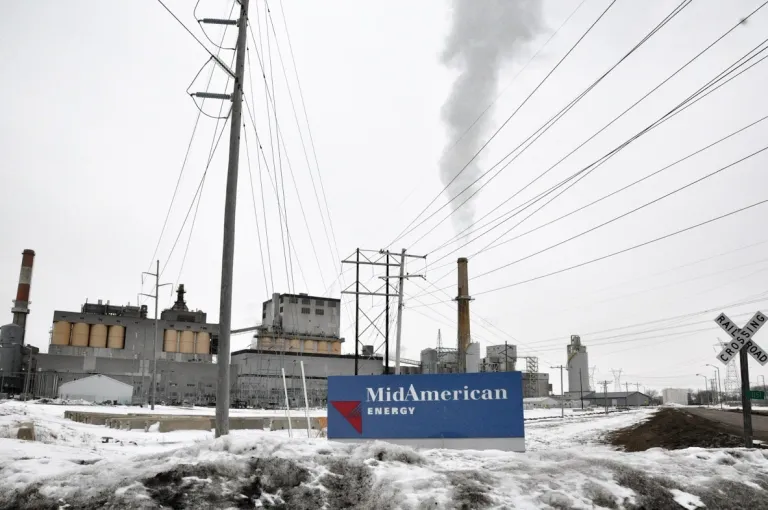
Photo of George Neal North coal plant, by Emma Colman
“MidAm and IPL are failing to seize a critical moment that could save lives simply by doing what they already know how to do — build renewables,” said Sierra Club's Iowa Chapter Director Pam Mackey-Taylor. “We are no stranger to wind and solar in Iowa, and our utilities are running out of excuses for why we should put up with more fossil fuels polluting our air and water and threatening our health. Instead of catering to Big Tech and rich utility executives, Sierra Club expects the next governor’s administration to help lead on affordable clean energy for all Iowans.”
“The Dirty Truth report has once again revealed utilities’ overwhelming failure to plan a phase-out of their expensive and dirty fossil fuel infrastructure, and transition to clean energy,” said Sierra Club Chief Program Officer Holly Bender. “Every year that utilities drag their feet on the clean energy transition is another year where families pay record bills for expensive fossil fuels, another year of extreme weather events, and another year of air and water pollution threatening our health. We cannot afford to wait any longer to bring our grid into the 21st century. As artificial intelligence data centers drive demand for energy, utility companies are rushing to expensive and dangerous fossil fuels, leading to soaring electricity prices and worsening air pollution. The time is now for these companies to transition to affordable, reliable, clean energy to build a healthier and more sustainable energy future. The Sierra Club will continue to push utilities to deploy more renewable energy and work to lower costs and emissions.”
Morgan Valley Gas Plant Proposed For Linn County
Interstate Power and Light Company (IPL), a subsidiary of Alliant Energy, proposes to build a gas-fired power plant in Linn County, called the Morgan Valley Energy Center. Three single-cycle gas turbines would be built on the property, which is currently being farmed. IPL failed to receive the approval to rezone the farmland to allow the gas plant to be built.
On October 19, 2026, the Linn County Planning and Zoning Commission met to discuss a rezoning request for the land where the proposed plant would be located. The Commission deadlocked with 3 members voting to deny the rezoning request and 3 members who supported the zoning request. That means that the Commission would not be making a recommendation to rezone the property to the Board of Supervisors.
This was the second meeting where the Planning and Zoning Commission considered the rezoning request. At the first meeting which was held in September, the commissioners raised a number of questions about the gas plant, including how they would obtain the cooling water. IPL was instructed to bring answers to the second meeting. IPL failed to adequately answer the questions during the second meeting. Furthermore, several of the commissioners expressed concerns that the project did not meet the county’s comprehensive land use plan.
The Supervisors were scheduled to consider the rezoning request on October 20. During that meeting the Board of Supervisors stated clearly that the request did not follow Linn County's comprehensive land use plan and expressed frustration with IPL's lack of answers to their questions. Consequently, all three supervisors voted against changing the zoning of the property.
IPL still has an application before the Iowa Utilities Commission which will be heard on December 7.
The decision made by the Supervisors shows the power of community members - organizing in opposition to the rezoning, learning as much as possible about the project and process, and speaking out during public comment periods.
Lunch and Learns Fridays at noon
Fridays at noon, we do a Lunch and Learn livestream. See us on Facebook at "Sierra Club Iowa Chapter". These are recorded so you can watch them anytime. Topics will be selected based on what is happening during the week. During the legislative session, we cover issues coming before the Iowa legislature.
In case you missed our past webinars and lunch and learn sessions, you can still see them on our YouTube.
Mesabi Metallics Should Benefit Public, October 16, 2026
Vote NO on Amendment 1, October 9, 2026
Special Session Mid-Day Reportback, October 5, 2026
Iowa Voting 101, September 25, 2026
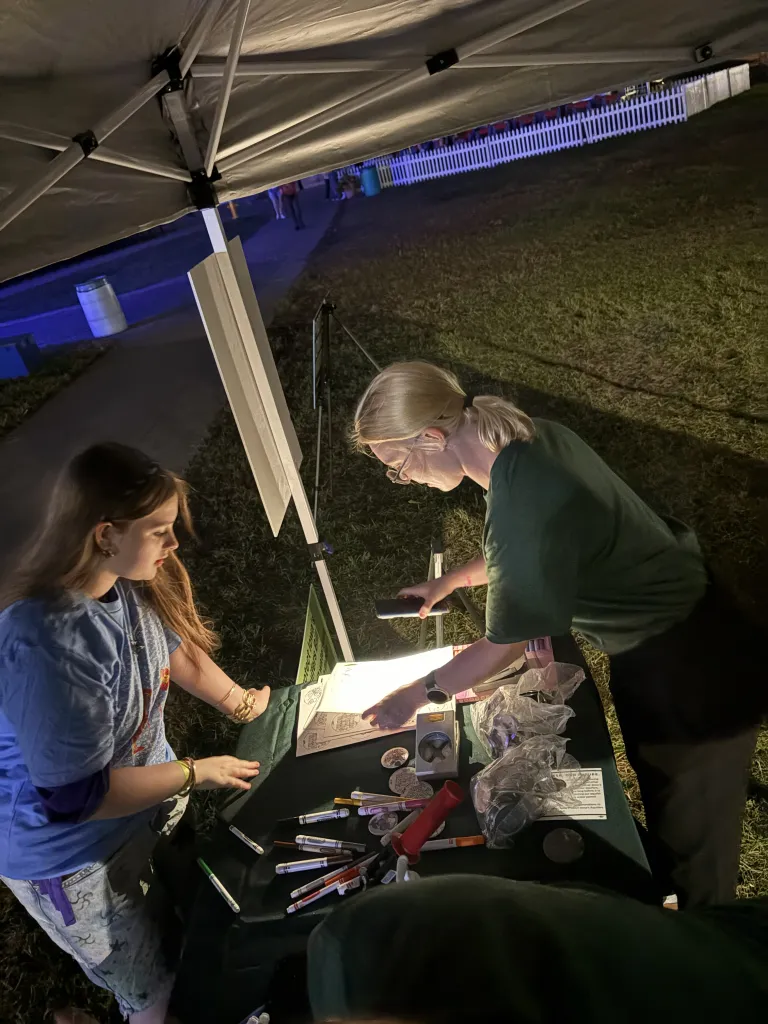
Photo: Briana Kouma staffed the Sierra Club booth at the AJR concert at the Iowa State Fair.
Volunteer for the Iowa Chapter
Almost everything we do is done by volunteers like you. If you would like to volunteer for the Iowa Chapter, please let us know by sending an E-mail to Iowa.chapter@sierraclub.org. Or sign up by using the online form. There are many opportunities for you to make a difference:
making phone calls
developing graphics for banners and flyers
working on legislative issues
working on elections
fundraising
organizing events
joining an issue committee
If you would like to join our legislative action team, sign up here. Keep on top of what is happening at the Iowa legislature. Be alerted when you should contact your legislators about pending legislation.

Photo: camping by Jess Mazour.
Contribute to the Iowa Chapter
Sierra Club - working every day on Iowa’s environmental problems
Sierra Club is Iowa’s oldest and largest grassroots environmental organization. Not only that, we are the best bet in the state for achieving bold solutions to Iowa’s environmental problems.
We work in the courts, before Iowa’s public agencies, and in the halls of the legislature. The Iowa Chapter's effort to protect the environment takes financial support. The Chapter receives very little financial support from the national Sierra Club. Can we count on you for a donation to ensure even more victories? Your contribution will be put to work here in Iowa on issues that affect every day Iowans – water quality, clean air, protection of Iowa's soil, parks and natural areas, and a strong democracy. The Iowa Chapter is relentless in fighting back bad legislation that affects every one of us.
Your non-deductible contributions make it possible for us to fight bad legislation and to promote good legislation. We appreciate your past and on-going support of these efforts. You can make a non-deductible donation with a credit card. A non-deductible donation supports the Chapter's effective, citizen-based advocacy and lobbying programs. If you prefer, a non-deductible check can be written to the Sierra Club Iowa Chapter and mailed to:
Treasurer
Sierra Club, Iowa Chapter
PO Box 1058
Marion, IA 52302
You can also make a tax-deductible donation with a credit card. Tax-deductible activities are limited to public interest education, research and legal actions. A deductible check can be written to the Sierra Club Foundation with “Iowa Chapter” written in the memo line.
Thank you for your support.
Donate your used vehicle
As the Sierra Club Foundation's Iowa Chapter continues to raise charitable funds to support its work in Iowa, won’t you consider participating in our vehicle donation program? Our partners over at CARS have made the process of donating your unused or unneeded car, truck, motorcycle, boat or RV easy, efficient and secure. They’ll take care of everything from picking up your vehicle to sending you a tax receipt for your generous gift. To learn more about The Sierra Club Foundation's Iowa Chapter vehicle donation program, please call 844-674-3772. Or visit our webpage to get started today!
Sierra Club Foundation promotes climate solutions, conservation, and movement building through a powerful combination of strategic philanthropy and grassroots advocacy. The Foundation is the fiscal sponsor of Sierra Club’s charitable environmental programs.
For more information
Planned giving . . . naming the Sierra Club Iowa Chapter in your will
Ensure your environmental legacy by naming the Iowa Chapter in your will or trust. These gifts cost you nothing now. You can hold onto your assets for as long as you need them. Thank you for supporting our work!

Resources for Planning for the Future
The Iowa Chapter has three resources to assist you in planning for the future - one pagers about giving via Donor Advised Funds, IRA Qualified Charitable Distributions, and planned gifts.
The flyer Donor Advised Funds (aka DAF) covers basics of Donor Advised Funds and how an individual can designate support specifically to the Iowa Chapter.
The flyer Giving through an IRA covers how to make a Qualified Charitable Distribution (aka QCD) and how it can be directed to the Iowa Chapter.
The flyer Plan Today Protect Tomorrow covers the basics of planned giving, including bequest language to make a gift to the Iowa Chapter.
If you need assistance, contact Julia Curtis at 800-932-4270, giftplanning@sierraclub.org .
| When | Earliest: Latest: |
| What |
|
| Word or Phrase | Word or phrase to search for: |
| Leader | All or part of leader name to search for: |
No Matching Activities Found
Loading
| Date | Activity (click title for full description) | Sponsor | Category | Type | Difficulty | Links |
|---|
Loading ...
 Outing
 Team/Committee
meeting
 Volunteer Event
 Activist event
 Multiple events
(map only)