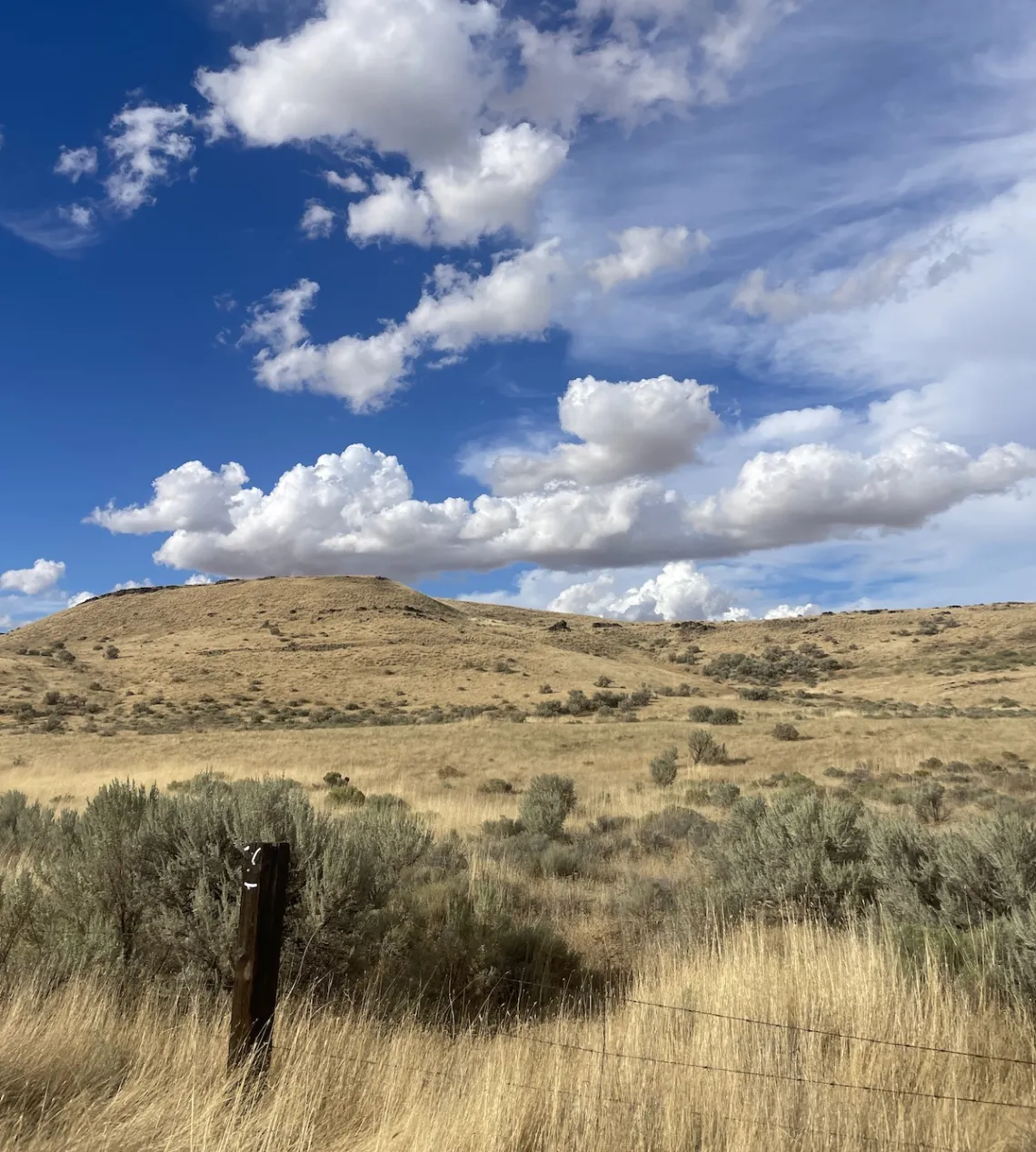
Outside Pasco, WA / Photo by Lia Brewster
By Lia Brewster
NW Conservation Campaign Strategist
Sierra Club
It's hard to describe the smell of sagebrush. A sort of musky mint, or an earthy spice at the back of your throat. If you go out to the high deserts of Nevada on an early fall morning this time of year you can set up a few chairs and sit bundled-up with a cup of hot coffee, watching the steam curl up towards you as the sky gains its color. Cool clear light touching onto the crystals of frost on frozen ground, and that strange and familiar scent rising up from sage as far as you can see as it warms in the sun.
Those deserts on BLM land in Nevada are where I used to go to just be when life was a bit much, and that's what I've always loved about BLM lands across this country, even despite their sometimes ragged and overgrazed edges—a place where I could feel the Earth breathing a bit in my own solitude. They may not always be granted the same headliner status as other designations like national parks, but having natural spaces on this scale is so important for maintaining the ecosystems we love.
There are 245 million acres of BLM land across the US. I grew up in Rhode Island, and always thought the way my state was the measuring stick for land masses was somewhat comical. That being said, there is a certain satisfaction in being able to tell you that you could fit 310(!) hypothetical Rhode Islands within that space. This is perhaps the largest hypothetical number of Rhode Islands I've ever used in an example, and it makes sense, given that BLM land makes up about a tenth of our nation's landmass. Whatever policy governs that amount of land has huge implications for all of us.
Which is why the Biden Administration’s adoption of the Public Lands Rule in 2024 was such a good idea. The rule made clear that conservation—protecting wildlife habitat, clean water, cultural sites—is an essential use of these lands, alongside oil drilling, mining, and logging. It required BLM to uphold existing law by prioritizing the designation and protection of Areas of Critical Environmental Concern: places with important wildlife, clean water sources, scenic values, or cultural or historic significance that need safeguards from industrial development or other irreparable damage. It opened doors for tribal co-stewardship, recognizing that Indigenous communities have been caring for these lands since long before BLM existed. And it advanced actual restoration—creating plans to remove invasive cheatgrass choking out native sagebrush, restore overgrazed hillsides, and heal degraded watersheds. It was revolutionary because for the first time in over 40 years, extraction wasn't the default priority. And it was wildly popular, with 92% of public comments supporting it when it was first proposed in 2023.
This rule is now under attack. The Trump Administration is moving systematically—proposing to sell off public lands, slashing budgets and firing park rangers, repealing the Roadless Rule, and now going after the Public Lands Rule. Each attack weakens the safeguards that keep our shared lands from being handed over to corporations.
That's exactly why we need to push back on each piece, every step of the way. Without this rule, we return to extraction-first management. No agency-wide direction to heal those cheatgrass-invaded landscapes or protect critical areas. No requirement for incorporating Indigenous Knowledge. And leasing for oil, gas, or mining doesn't mean these places will ever look, or smell, the same again.
Submit a comment by November 10 at sc.org/LandsRule. We won't let this happen quietly.
Lia lives in western Washington state and works on lands, water, and wildlife conservation campaigns for the Sierra Club.