Dear Nicholas,
Happy Summer!News from the ChairCelebrating Our Student Interns
This fall, we bid a fond farewell to six of our outstanding student interns as they begin the next chapter of their educational journeys. We couldn't be prouder of all they have accomplished in helping educate our community about local environmental issues. Their passion, dedication, and leadership have inspired everyone who has had the privilege of working with them. (Photo: Student interns, members of the Excom and interested Sierra Clubbers from our recent Conservation Committee meeting.)
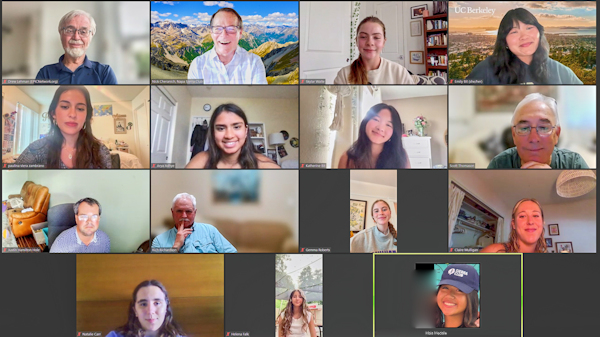
• Kate Bit, from American Canyon High School, has been with us the longest—nearly four years. She is headed to UC Davis, where she plans to major in Ecology, Evolution, and Biodiversity
• Arya Adhye, from Vintage High School, will attend UC Berkeley, majoring in Environmental Science
• Claire Mulligan, also from Vintage High School and the youngest member ever to serve on our Executive Committee, will study Environmental Science at UCLA
• Gemma Roberts, from Napa High School, is headed to the University of Washington, where she will major in Public Service and Policy
• Maia Medalle, from American Canyon High School, will attend US San Diego, majoring in Chemical Engineering
• Natalie Carr, from Justin-Siena High School, will study Environmental Science and Engineering at Caltech
Fortunately, not everyone is leaving! We are delighted that Helena Falk, from Napa High School (be sure to read her wonderful article below), and Skylar Waite, from Vintage High School, have both chosen to continue in our internship program for another year.
We're also fortunate to have Paulina Viera Zambrano, a former intern from Vintage High School and now a student at Napa Valley College, continuing her leadership with us as Chair of our Conservation Committee. Paulina plans to transfer to UCLA to study Neuroscience next year.
And now for a welcome home! We're thrilled to welcome Emily Bit back to the Napa Sierra Club. Emily, Kate's sister, recently graduated from UC Berkeley and has joined our Executive Committee, where she will represent American Canyon along with Scott Thomason. Please see her bio below.
Our internship program continues to grow thanks to the enthusiasm and commitment of remarkable young people like these. If you know a motivated, collaborative high school student who is passionate about protecting the environment and making a difference in our community, please encourage them to contact me to learn more about our internship program.
____________________________
 Don't Be Spooked—Be Inspired! Don't Be Spooked—Be Inspired!
A Halloween Gathering for Environmental Action
Mark your calendar for our 3rd Annual Regional Environmental Gathering on Saturday, October 31, from 1:30–4:30 p.m. at Skyline Wilderness Park. (Photo: A scene from our last November's event.)
Join environmental advocates from Napa, Sonoma, Solano, Lake, Mendocino, and neighboring counties for an afternoon of inspiring speakers, engaging discussions, delicious food and wine, live music, and opportunities to connect with others working to protect our region's environment.
Featured speakers include Congressman Mike Thompson, Sierra Club California Director Miguel Miguel, Sierra Club Redwood Chapter Executive Director Alicia Bales, former NASA scientist Drew Isaacs, environmental historian David Schmidt, local conservation leaders, and one of our outstanding student interns.
Watch for a separate email with complete program details and RSVP information.
____________________________
 Bay Area Air District’s Regulation (Rule 9-6) Explained Bay Area Air District’s Regulation (Rule 9-6) Explained
Please see our article below about this important regulation. Essentially, Rule 9-6 improves air quality and public health by transitioning to cleaner water heaters over time, while protecting homeowners through exemptions, flexibility, and generous rebates. (Photo credit: Dreamstime.com)
Please help us getting it passed by submitting a public comment here before August 13 at 6pm.
____________________________  This Just In: Please Attend This Monday's LAFCO Hearing to Protect Skyline Wilderness Park This Just In: Please Attend This Monday's LAFCO Hearing to Protect Skyline Wilderness Park
The proposed housing development at Skyline Wilderness Park could permanently change one of Napa County's most treasured public spaces. If you value Skyline Park, now is the time to make your voice heard. (Photo credit: Visit NV - Josiah Roe)
Please attend the LAFCO hearing and speak, if you're able. Even a brief statement expressing why Skyline Park matters to you can make a difference. Whether you hike its trails, camp with your family, volunteer, or simply appreciate having this remarkable natural area preserved for future generations, your perspective is important.
Skyline Park has served our community for 43 years and is unique among Napa County parks in operating entirely without taxpayer funding. It is a community asset worth protecting.
LAFCO Hearing
Monday, August 3 – 2:00 PM
1195 Third Street, Third Floor, Napa
If Skyline Wilderness Park matters to you, please be there.
____________________________  Outdoor Adventures Coming Soon Outdoor Adventures Coming Soon
We're excited to announce that the Napa Sierra Club Group will soon be offering guided hikes and bike rides for our members and supporters. Our goal is simple: to explore the beauty of Napa County together while enjoying the camaraderie of fellow nature lovers. (Photo: Future Sierra Club outdoor leaders from the Napa, Sonoma, Mendocino, and North Groups during Outdoor Leader Training at Skyline Wilderness Park.)
Several of our members are currently completing Sierra Club Outdoor Leader Training to become certified hike and bike leaders. As part of that training, we recently participated in a required CPR and First Aid course at Skyline Wilderness Park.
Stay tuned for announcements about upcoming outings—we look forward to sharing some of Napa County's most beautiful places with you.
____________________________  Napa Sierra Club T-shirts for Sale Napa Sierra Club T-shirts for Sale
Oh la la, comme c'est chic! Needing something new for your wardrobe? If so, please see below for colors and sizes that work for you. We can ship it to you free. Bonus: every shirt sold supports our local work and helps fund future programs.
____________________________  We hope you enjoy the other articles in this issue, written by members of the Napa Sierra Club Group, including the winning art piece from the Napa Schools for Climate Action's Our Future Is In Your Hands Art Contest. We hope you enjoy the other articles in this issue, written by members of the Napa Sierra Club Group, including the winning art piece from the Napa Schools for Climate Action's Our Future Is In Your Hands Art Contest.
____________________________ Our next Conservation Committee meeting will be September 21st at 6:00PM. If you would like to attend, just click on the RSVP button below and I'll send you a Zoom invite a few days before the meeting. Thank you. - Nick Cheranich, ExCom Chair
napavalleysierraclub@gmail.com
|
Bay Area Air District's 9-6 Rule Is for the Greater Goodby Rich Richardson You may have read about the Bay Area Air District’s (BAAD) proposed Rule 9-6 which, if adopted, will phase out the sale of nitric oxide-emitting water heaters, in favor of cleaner alternatives. (Nitric oxide is a colorless gas produced mainly during fuel combustion and is responsible for more air pollution than every passenger car in the region combined!). The following explains why the Napa Sierra Club Group supports Rule 9-6, addresses common concerns about affordability, and reflects on the broader responsibility we all share to care for our common home—the Earth. After reading the article, we hope you’ll express your support for the Rule by submitting a public comment about its importance here, before the August 13 at 6pm deadline.Overall, Rule 9-6 has six key objectives: • Protecting public health • Reduce pollution from millions of small sources (water heaters) • Phase in the transition over time • Include flexibility and exemptions • Encourage more efficient technology with long-term savings through lower energy bills • Move our region toward a cleaner and more sustainable energy future  Rule 9-6 does not require anyone to replace an existing working water heater. You can continue using your current one until you need a new one. So, it only applies when a new water heater is purchased in the future. And Rule 9-6 does not apply to gas stoves, ovens, dryers, or other household appliances. Rule 9-6 does not require anyone to replace an existing working water heater. You can continue using your current one until you need a new one. So, it only applies when a new water heater is purchased in the future. And Rule 9-6 does not apply to gas stoves, ovens, dryers, or other household appliances.Rule 9-6 also includes provisions to lessen the one-time initial impact of converting from gas to electric water heaters, including: • Targeted flexibility for low-income households • Protections for vulnerable households and certain small businesses • Flexibility for electrical and space constraints • Emergency replacement financing pathways • State and local rebate programs and financing, and • Direct-install programs that will significantly reduce upfront costs.  One question that comes up frequently is affordability which ignores the cost of inaction, including health impacts such as heart disease, asthma, air pollution, and ongoing rising fuel expenses. Switching to electric water heaters will also reduce long-term operating costs and protects against volatile gas prices. At the same time, focusing only on upfront costs ignores utility bill savings (electricity is cheaper than gas) and reduced health expenses. The irony of Rule 9-6 is that the costs for replacing gas heaters would be incurred anyway, since gas appliances require replacement over time. Article continues here. |
Taking On Sea Level Riseby Scott Thomason 2026 has already seen flooding on the Embarcadero in San Francisco, on the streets of San Rafael and in Marin City – not from seasonal rainstorms, but from King Tides pushing the ocean and the Bay into cities and neighborhoods in northern California. Scientists now project as much as a six-to-seven-foot sea level rise along coastal California the remainder of this century. If this happens, it will impact virtually all California coastal cities and towns, including those in the Bay Area, like southern Napa County, where the Napa River empties into the Bay along the American Canyon Wetlands. (Photo: NY Times)  Sea level rise goes hand in hand with global warming. There are two main reasons. First, as oceans warm, the water actually expands in volume, taking up more space. Second, ice from places like Greenland and Antarctica is melting and flowing into the ocean, raising the ocean levels. (Photo: CNN.com) California legislators recently passed a law that requires every city and town that borders any part of the ocean or bay to prepare a plan addressing the threat of sea level rise and how each municipality intends to deal with it. Many cities have already begun to prepare for the projected sea level rise.  San Francisco Bay Alive Campaign San Francisco Bay Alive Campaign Here in the Bay Area, the Sierra Club is providing critical support and information on sea level rise through a generous bequest provided by the Rohloff Family. Funds are earmarked specifically for the environmental protection of the San Francisco Bay. (Photo: An American Avocet, by Mark Stephensen) With these funds, three Bay Area Sierra Club chapters – Loma Prieta, the Bay Chapter and the Redwood Chapter, which includes Napa County – are working to preserve the Bay’s health in the face of sea level rise. Article continues here. |
Napa Group's New ExCom Memberby Emily Bit Hi everyone, my name is Emily! As some of you may remember, in 2021, I was a former Napa Sierra Club intern during high school. I recently graduated from the University of California Berkeley this past Spring, where I studied Society & Environment, Public Policy, and City & Regional Planning. I've been accepted into a fellowship program with the Sustainability Service Corps, and starting in September, I will be working for the City of Walnut Creek in the Sustainability Planning division. I’m super excited to join the Napa Group’s Executive Committee and to contribute to the local community with its various environmental initiatives! Looking forward to all the great progress to come! |
To Act or Not to Act by Nick Cheranich
“Our doubts are traitors,
And make us lose the good we oft might win,
By fearing to attempt.”
— Measure for Measure, Act I, Scene IV

For those paying close attention, climate change can feel like a slow-motion emergency unfolding in plain sight. The science is clear, the stakes are high, and the window for meaningful action is narrowing (according to the Intergovernmental Panel on Climate Change, 2023). And yet, collective response remains uncertain, divided, and often inadequate. Why? As a volunteer with the Napa Sierra Club, I’ve been circling this question for about seven years. Before that, as a middle school science teacher, I found myself thinking about it in a different way: what kind of world are these kids walking into—and why aren’t we acting like it matters? Why aren’t we acting as if our hair is on fire?  It’s easy to call it indifference. But that explanation doesn’t quite hold up. Most people, when pressed, will say they care. A lot of them genuinely do. So something else is going on. I’ve taken a look across many fields such as psychology, behavioral economics, and evolutionary theory. They suggest a less satisfying answer: it’s possible we are behaving exactly the way we’re wired to behave. The problem may not be that we don’t care. It may be that we’re not particularly well-equipped to respond to a threat like this. ________________________________________
The Mismatch Problem
Many scientists argue that the human brain evolved to handle immediate, visible threats: predators, food scarcity, hostile neighbors. Climate change is none of those things. It is abstract, gradual, and often invisible in daily life. The result is what’s known as an evolutionary mismatch.
A global temperature increase of 1.5–2°C doesn’t trigger the same instinctive alarm as a wildfire—even if its long-term consequences are far more severe. The threat unfolds slowly, across decades and continents. Our brains struggle to register that as urgent. I’ve long been interested in Evolutionary Psychology, which suggests that just as we evolved physical traits to survive—like the opposable thumb—we also evolved mental shortcuts and instincts shaped by a very different world. Work by Leda Cosmides and John Tooby points to a growing gap between that ancient wiring and the modern risks we now face. As Psychology Professor Daniel Gilbert has argued, climate change lacks the qualities that typically trigger human alarm: immediacy, intent, and moral clarity. I sometimes wonder whether our ancestors could have recognized a shifting climate as a threat at all. Probably not. But what we’re experiencing now isn’t a slow, natural shift—it’s rapid, human-driven change unfolding on a timescale no species has previously encountered. That alone should be enough to set off alarms. It doesn’t. Article continues here. |
Connecting the Next Generation to Nature by Helena Falk, Student Intern “Thousands of tired, nerve-shaken, over-civilized people are beginning to find out that going to the mountains is going home; that wildness is a necessity; and that mountain parks and reservations are useful not only as fountains of timber and irrigating rivers, but as fountains of life." “Thousands of tired, nerve-shaken, over-civilized people are beginning to find out that going to the mountains is going home; that wildness is a necessity; and that mountain parks and reservations are useful not only as fountains of timber and irrigating rivers, but as fountains of life."― John Muir, Our National Parks, 1901 This summer, I had the opportunity to work as a counselor at an outdoor education Christian camp in Scotts Valley called Frontier Ranch, surrounded by towering redwood forests, native plants, and incredible biodiversity. Every day, I watched these young campers explore trails, identify plants, and discover the natural world in ways many of them never have before. (Photo credit: Helena Falk) One thing that stood out to me was how fascinated the campers were by nature. They were excited to learn the names of plants, search for wildlife, and asked questions about the ecosystems around them. During hikes, many were amazed to discover that some local plants were edible and had been used by Indigenous communities for generations. What seemed ordinary to those who spend time outdoors often felt like a completely new world to these young people.  At the same time, their curiosity highlighted an important challenge. Many campers told me that they rarely spend time outside at home. Between busy schedules, technology, and limited access to natural spaces, opportunities to connect with nature are far and few between. As a result, many children have not had the chance to develop a deeper appreciation for the environment simply because they have not been exposed to it. The redwood forests of the Santa Cruz Mountains provided an ideal outdoor classroom. Campers learned about native species such as coast redwoods, California bay laurels, redwood sorrel, and sword ferns while experiencing these plants firsthand. They gained a greater understanding of how these species support local ecosystems and why protecting natural habitats is so important.  Through outdoor experiences, children began to build a personal connection to the environment. Instead of viewing conservation as a confusing concept, they could actually see themselves as part of the natural world. Whether they were examining a fern, tasting an edible plant, or standing beneath a hundred-year-old redwood tree, these moments created lasting memories that could inspire environmental stewardship for years to come. (Photo credit: thepointsguy.com) Working at camp reinforced my belief that getting young people outside is one of the most effective ways to cultivate future conservationists. When children are given the opportunity to explore nature directly, their curiosity grows into appreciation, and appreciation often grows into a desire to protect the places they love. In a time when many young people are increasingly disconnected from the outdoors, experiences like these are more important than ever. |
S4CA Art Contest Winner by Nick Cheranich
Napa Schools for Climate Action recently held its annual Our Future Is In Your Hands Creative Piece Contest, inviting students from schools throughout Napa County to express their thoughts and feelings about climate change through creative works. Entries included poetry, paintings, photography, and other artistic forms, and were evaluated by a panel of judges using a standardized rubric.
The Napa Sierra Club Group proudly sponsored the contest's $500 First Prize. Below is the winning entry, along with a brief statement from the artist, Jessica H. of Napa High School, describing the inspiration behind her work. Congratulations, Jessica, on your outstanding achievement!  Nostra Mater, Terra, by Jessica HernandezFrom the Artist Nostra Mater, Terra, by Jessica HernandezFrom the ArtistThe title of my piece is Nostra Mater, Terra, which is Latin for “Our mother, earth.” My piece illustrates a woman in a fetal position resting on earth. I noticed that some of the continents had the curvature of a fetal position, and with my knowledge that we commonly refer to Earth as “mother” I decided to depict a woman in a fetal position. The design of this woman was inspired by “Tefiti” from Moana with the way she was meant to blend in with the continents with an abundance of green and florals. The flow of her hair is the location where some of the continents are. However, like in Moana, the “demon of earth and fire” Teka is also present, it is meant to symbolize the corruption of our Mother Earth from the way the darkness and orange (lava) latches onto Tefiti draining away her beauty (inspired by Moana and the plot when the darkness drains the life from island after island). |
We Have Your Tees! Time to Gear Up for Summer 2026

Napa Sierra Club T-Shirts For Sale!
We Have Them In Cocoa and Pine
Support Local Climate Action Each shirt is $30 (S–XL) or $35 (XXL), and about half your purchase goes directly to the Napa Sierra Club Group to support student interns and community conservation work. Great gift ideas for the holidays!
How to Order
Pick the size and color you want. At the checkout, add the quantity of the shirt, and click "Buy." If you’d like more than one type of shirt (color/size), just repeat the process for each choice.
Pickup Locations
After your purchase, we’ll reach out so you can pick up your shirts in either Napa (at the Earth Day Event) or American Canyon—whichever is more convenient for you. Or, if you can't pick them up, we'll deliver them to you (no charge). Napa Sierra Club T-ShirtsUnisex fit • S–XL $30 • XXL $35 Cocoa T-Shirts | Pine T-Shirts |
|
|
|