Public Lands Were Made Free to All
Protecting wild places was once a radical idea. It still is.
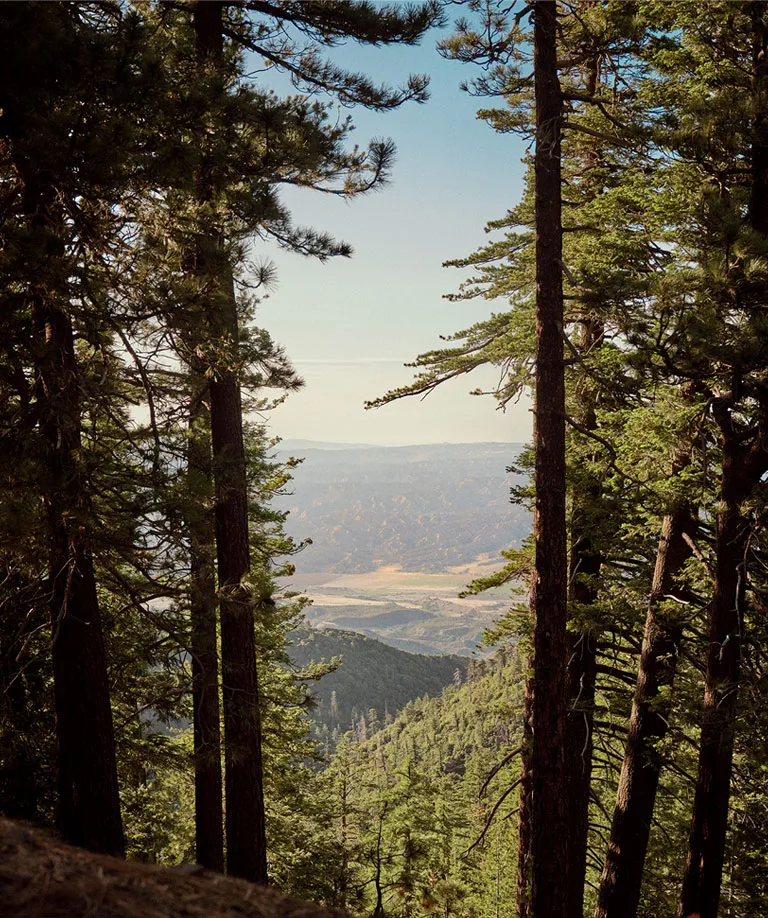
Photo by Wray Sinclair
In 1916, a group of conservation-minded individuals set out to do something radical.
Concerned about the ravages of development and tourism in Maine, George B. Dorr, John D. Rockefeller Jr., and Charles W. Eliot pursued the creation of a national park. They established a corporation to buy up thousands of acres of wild forest, wetlands, and freshwater ecosystems. These they offered to the federal government in exchange for a commitment to preservation. President Woodrow Wilson agreed, and in 1916 he announced the Sieur de Monts National Monument—the precursor to Acadia, the nation’s first national park established by a private gift.
In his book, The Sieur de Monts National Monument and Its Historical Associations, Dorr celebrated the park’s creation as “not a purchase by the government but a gift from citizens ... guarded in beauty and made free to all.”
This act, to dedicate wild lands for public use and protection, was driven by a universal ideal: that wild places exist not for the profit of a few but as a public commons and a social good. It took over a century after the birth of the United States for that ideal to gain hold in American life. The country’s first “public park” was created after a team including artists and photographers captured images of transcendent beauty in northern Wyoming’s landscapes, which enamored the nation. They inspired President Ulysses S. Grant to establish Yellowstone National Park in 1872. But those early efforts to create public lands came at a cost: They often displaced Indigenous peoples—one reason the conservation movement has evolved to better center Native American voices and partnerships.
Those who championed the idea of conserving wild lands had the foresight to protect what many could not see: natural beauty whose permanence and grace transcend the transient financial interests of oil and gas extraction, logging, and mining. Political leaders over time have tried to undo what those visionaries achieved. This is nothing new. But the reelection of President Donald Trump has opened a darker chapter in that story. Just as we enter one of the most consequential moments in human history—when the earth, thanks to mass industrialization, is tipping past the 1.5°C threshold of preindustrial temperatures—a cohort of climate deniers and profiteers are trying to dismantle old-growth protections, toss out environmental regulations, undo clean energy programs, and sell off America’s public lands to the lowest bidder.
Those who championed the idea of conserving wild lands had the foresight to protect what many could not see: natural beauty whose permanence and grace transcend the transient financial interests of oil and gas extraction, logging, and mining.
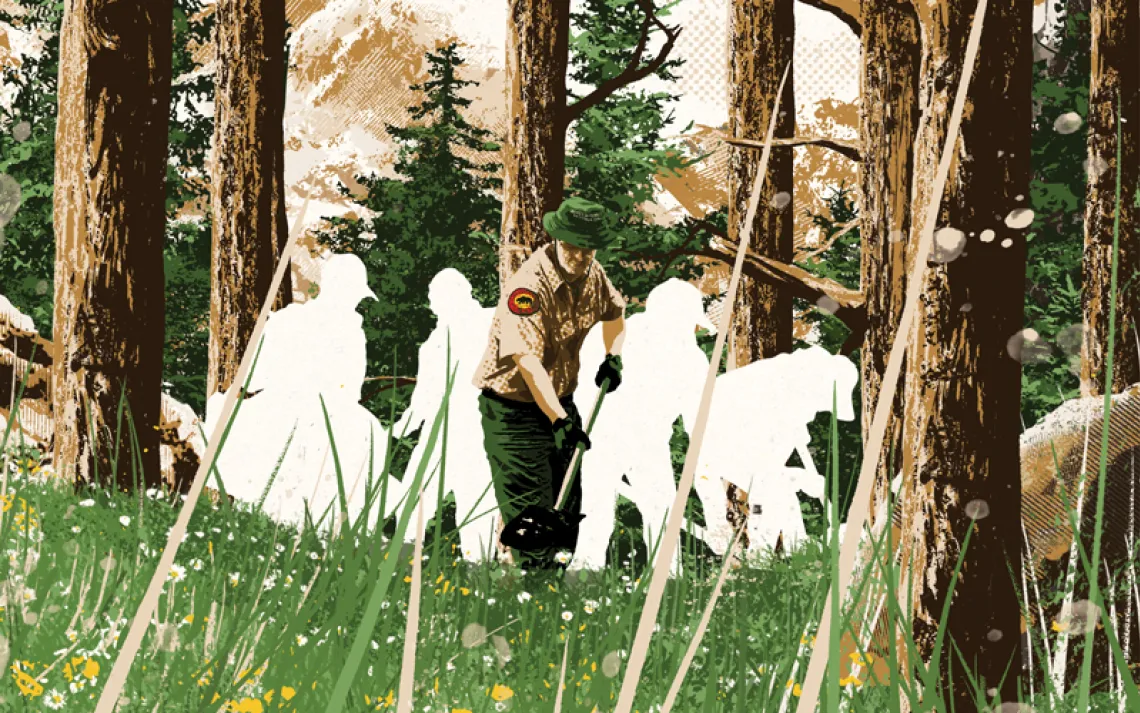
As Jeremy Miller reports in “Public Lands Are On the Line,” the Trump administration is waging an all-out campaign to undo public land protections and weaken the federal agencies that oversee them, with California’s Los Padres National Forest in the crosshairs. In “This Land Is Your Land,” Christine Peterson considers the future of our shared lands on a bike ride with her eight-year-old daughter through Wyoming’s Red Desert. And in “Resistance Rangers Wants You”, Juliet Grable explores a movement created by off-duty and former National Park Service employees who are protesting agency cuts and fighting to uphold the ethos of wildlands preservation.
Public lands were made free to all of us. They enshrine spaces for recreation, meditation, and preservation into the very geography of our nation. And we need them more than ever. As habitat loss accelerates mass extinctions, these lands are some of the last places of refuge for species struggling to survive in a human-dominated world. As deforestation continues, we risk triggering a dangerous feedback loop: Less habitat for wildlife, fewer ecosystem services, and reduced carbon storage will in turn increase greenhouse gas emissions, further destabilizing our planet.
Like the visionaries before us, we teeter on a knife’s edge, where the fate of the natural world hangs in the balance. We are all part of that world. It’s time we stepped forward to protect it.