 The Magazine of The Sierra Club
Tapping Indigenous Knowledge Can Help Us Navigate a Changing Climate
Ancient language informs climate adaptation in the hottest region of the US
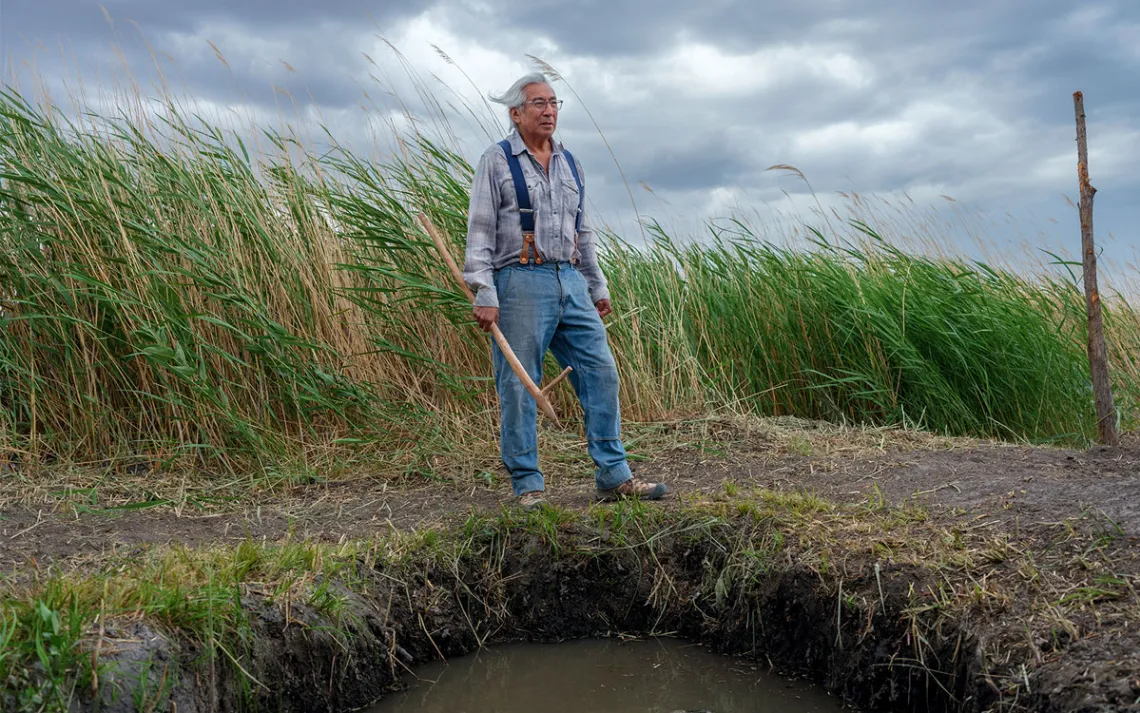
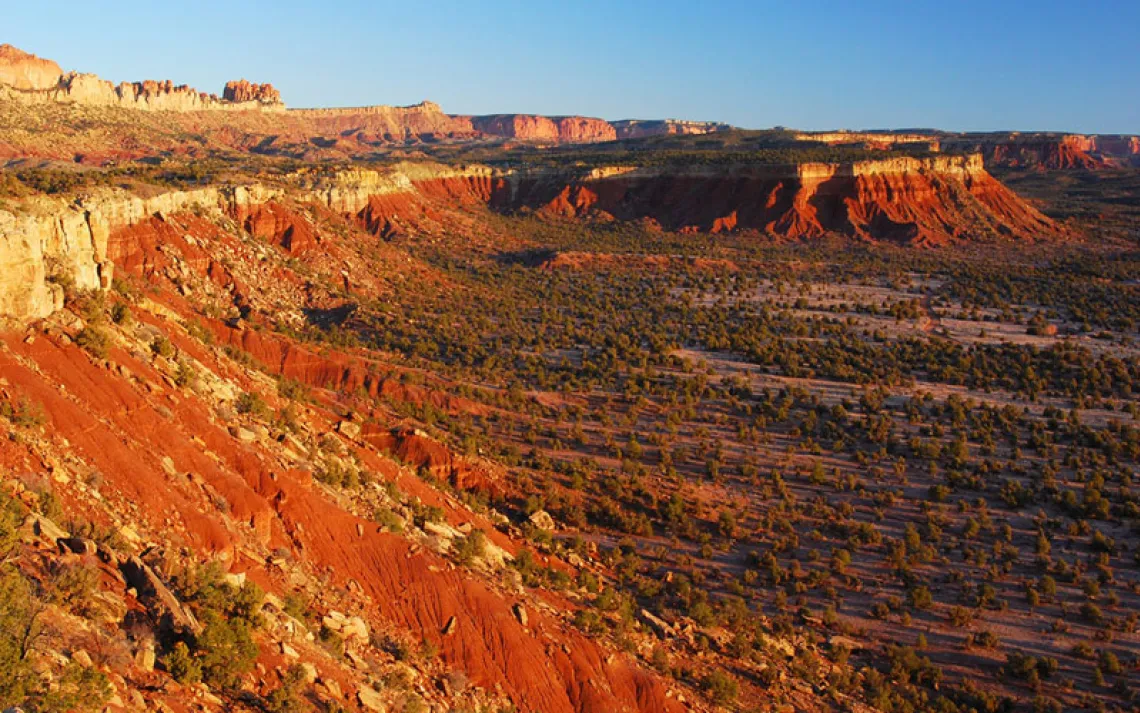
Photo by Steven St. John
Two years ago, a natural spring in Zuni Pueblo, New Mexico—one of the driest patches of land in the United States—began to disappear. It was a source that many people, including Jim Enote, a Zuni tribal member, used for watering their fields and gardens. Enote had farmed the area for 68 consecutive years, so when his neighbors tried to revive the crucial water supply, he joined them.
Despite their best efforts, the spring dried up—a casualty of the worst megadrought experienced in the Southwest for more than a millennium. Still, Enote believed there had to be a way to quench his community’s thirst. As a boy, he had learned the traditional names of local places from his grandfather. And he remembered that an area just 100 feet from one of his fields had a Zuni name that referred to water.
The spot was covered with dry grass, but Enote decided to start digging. Less than a foot down, he hit standing water. “I come from a place where the land speaks a language older than any nation, where the names of mountains, springs, and canyons are instructions, stories, and memories,” Enote said. “As a Zuni person and as a farmer, I know that language and land are inseparable.”
Enote practices an Indigenous method of growing fruits and vegetables called waffle gardening. It involves creating blocklike depressions bordered by earthen walls, forming a grid that maximizes water conservation. He carried this newly discovered spring water, “careful with every drop,” to his garden.
Soon Enote noticed elk visiting his water hole. Milkweed grew around it. Dragonflies and monarch butterflies appeared. Today his garden isn’t the only thing thriving; so is the surrounding landscape. Enote believes that this kind of “time-tested climate adaptation” helped his ancestors survive extreme drought cycles—as evidenced by the ancient pottery shards he found around the spring. “Language is where land and memory meet, and that reverence is not nostalgia—it’s a responsibility. Every place-name in our languages is a lesson in survival and respect,” he said.
The consensus among climate scientists is clear—the Southwest is a quarter century into the region’s driest period in the last 1,200 years. As a result, water levels at Lake Mead and Lake Powell, the largest reservoirs in the country, have shrunk to historic lows. Megafires, such as New Mexico’s Calf Canyon–Hermit’s Peak Fire in 2022, have raged across the region, intensified by dry conditions. And New Mexico officials report that the state has lost up to 52 percent of its wetlands.
Adding to these pressures, local aquifers continue to be depleted by expanding cities such as Phoenix and Tucson, while climate change is reducing mountain snowmelt, a key source of groundwater replenishment. Farms, the largest users of water in Arizona and New Mexico, have been forced to leave fields fallow.
But many Native peoples of the region know that this is nothing new. Tribal lore, petroglyphs, and scientific studies, including tree ring data, tell of the Ancestral Puebloans weathering several extreme droughts, including one that led to the abandonment of major settlements. These ancestors passed down knowledge and tools that equipped their descendants for weathering the climatic hardships of today.
“Native traditional knowledge has a climate insight. So climate science should not just include Native knowledge but begin with it as a foundation for understanding the way the world changes,” Enote said. “It’s not just about climate resilience. I use the term climate reverence to shift from technical to relational language. That way, we honor climate and land as kin and not as commodities.”
Enote believes that Native knowledge could help alleviate the water crisis and help promote sustainability in the Southwest, where more springs and rivers are drying up—including the Jemez River, east of Zuni Pueblo. Imagine, Enote said, if tribes were consulted about the location of historic springs to prevent them from being destroyed by development.
Enote, who is also the founder and executive director of the Colorado Plateau Foundation, which helps finance Native-led conservation and cultural preservation in that desert region, said the megadrought conditions are catalyzing intertribal solutions. Flower Hill Institute, based in Jemez Pueblo, is one of the groups the foundation supports. In May, it kicked off a program to honor Pueblo farmers and advance a combination of traditional and modern practices, including for water conservation. Michael Kotutwa Johnson, a Hopi dryland farmer and natural resources expert, called the gathering “a historic event,” given that Pueblo tribes “have not been united around a key issue like this since the Pueblo Revolt of 1680.”
Bryn Fragua, the institute’s agricultural, technical, and tribal coordinator, said it was powerful to hear different Puebloan languages being spoken “in harmony” as leaders and others in the community gave offerings and prayers for the work about to be done. The weather on the days leading up to and during the event was windy, dusty, dry, and hot. “After that meeting, it seemed like those words that were spoken and those prayers that were given brought to us rain clouds,” Fragua said. “It’s been raining ever since.”
“In our languages, climate is not something ‘out there,’” Enote said. “It is the breath of the wind, the timing of the snowmelt, and the silence before the summer monsoons. The Colorado Plateau teaches us that reverence is not passive. It’s active care, it’s ceremony, and it’s choosing to listen.”