
What Is Mouth Brooding?
These daddy frogs take their parental-care duties to the next level
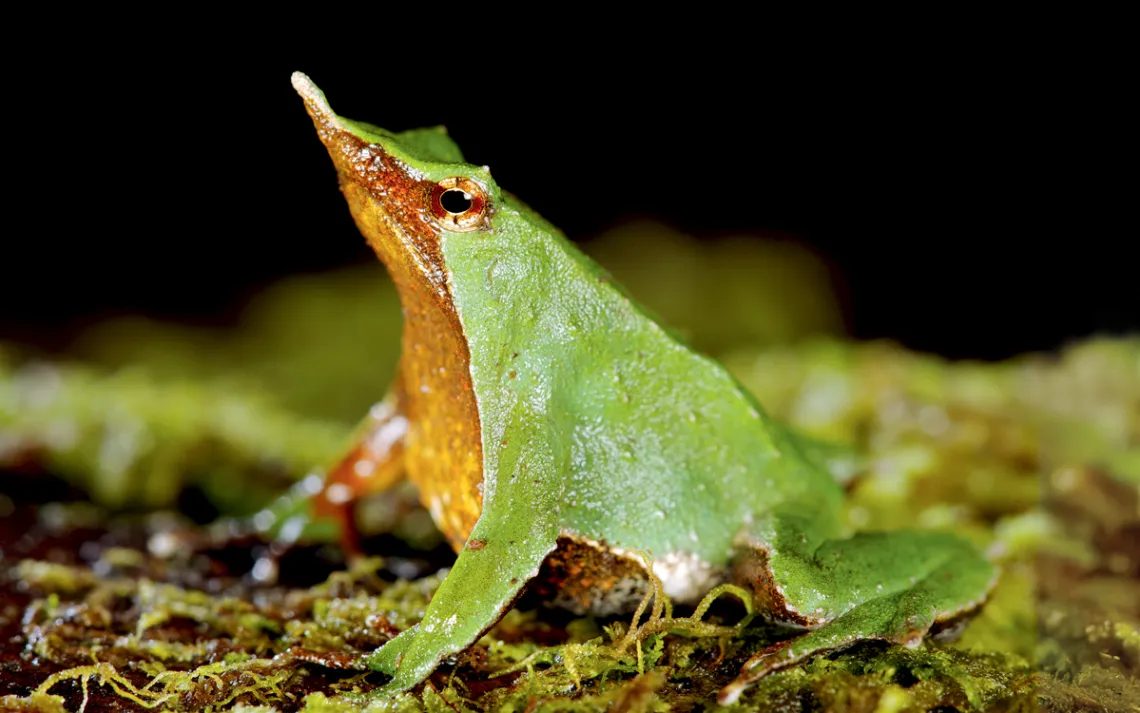
Photo by Bert Willaert/Nature Picture Library
When you think of a devoted animal parent, what comes to mind? A mother bird sitting on her eggs, perhaps, or a dog nursing her pups? On the forest floors of southern Chile and Argentina, a rare amphibian species takes parenting to another level. Male Darwin’s frogs—named after the biologist Charles Darwin, who first documented them—carry and nurture their babies inside their mouths until the froglets are ready to hop away on their own.
First, a female Darwin’s frog lays up to 40 eggs in a damp spot, and a male fertilizes them. A few weeks later, the dad slurps up the eggs into an inflatable pouch called a vocal sac. Over the course of about two months, the eggs hatch and develop into tadpoles, then froglets, inside the pouch.
Nestled in their dad’s body, the frogs develop while feeding on a nutrient-rich fluid that he produces. This “mouth brooding” process helps Darwin’s frogs survive in a relatively dry habitat. Sadly, they’re now endangered.
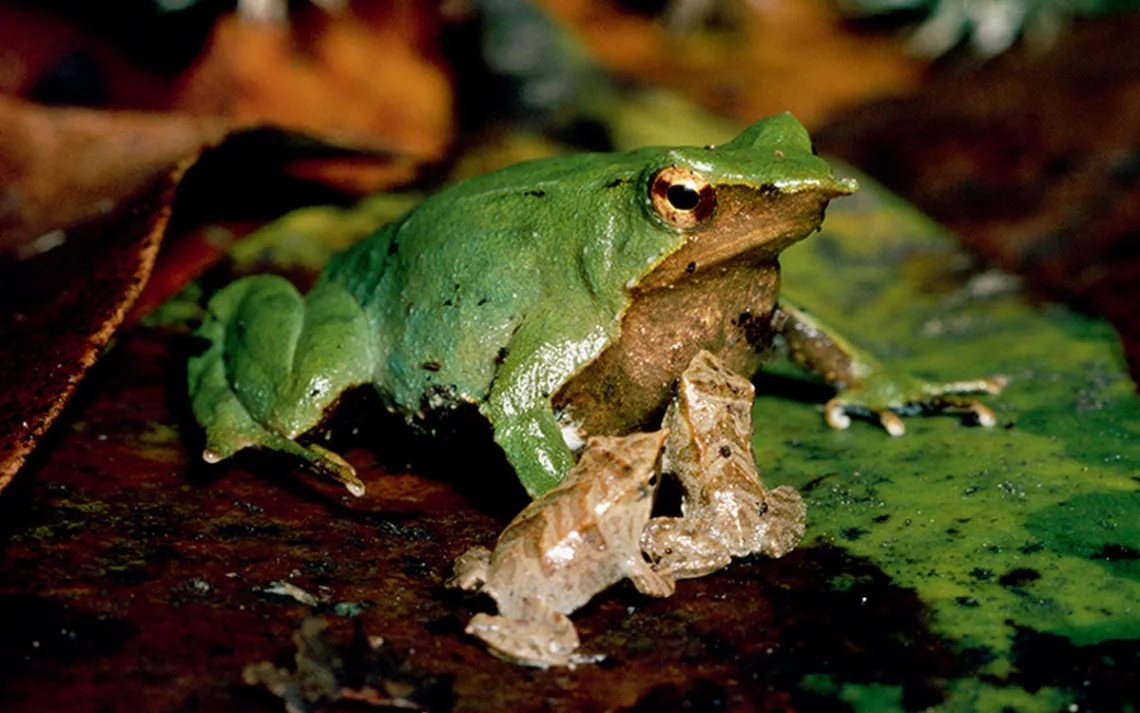
Photo by Michael and Patricia Fogden/Minden Pictures
Darwin’s frogs are tiny, about the size of a quarter. Their favorite snacks are insects, worms, and other small invertebrates.
The frogs’ pointy green-and-brown bodies look like fallen leaves, helping them blend into the forest. Sometimes, they roll onto their backs and play dead to ward off predators.
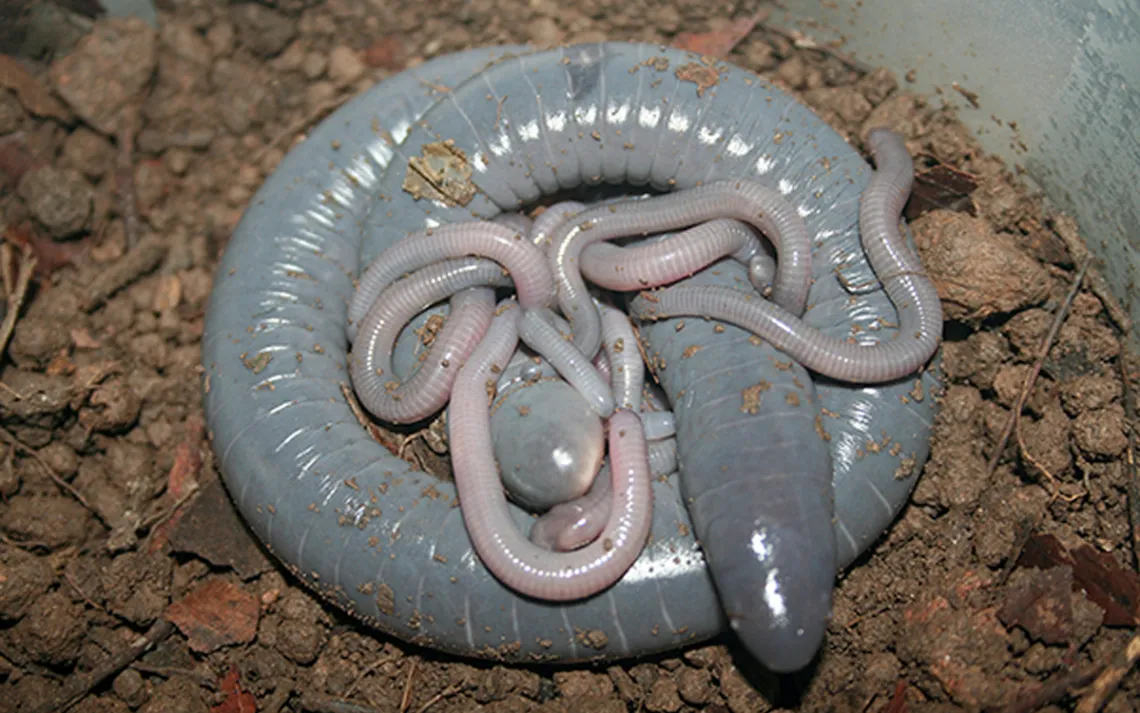
Caecilian mother and babies. | Photo by Hilary Jeffkins/Nature Picture Library
Darwin’s frogs aren’t the only amphibians that parent in surprising ways. Rosenberg’s gladiator frogs, for example, sculpt mud nurseries. Caecilian mothers nourish their young with their own skin. And some salamanders guard their eggs like ferocious mama bears.