 The Magazine of The Sierra Club
Want to Be a Climate Kid?
Students are getting creative to increase their schools’ sustainability. Here’s how you can too.
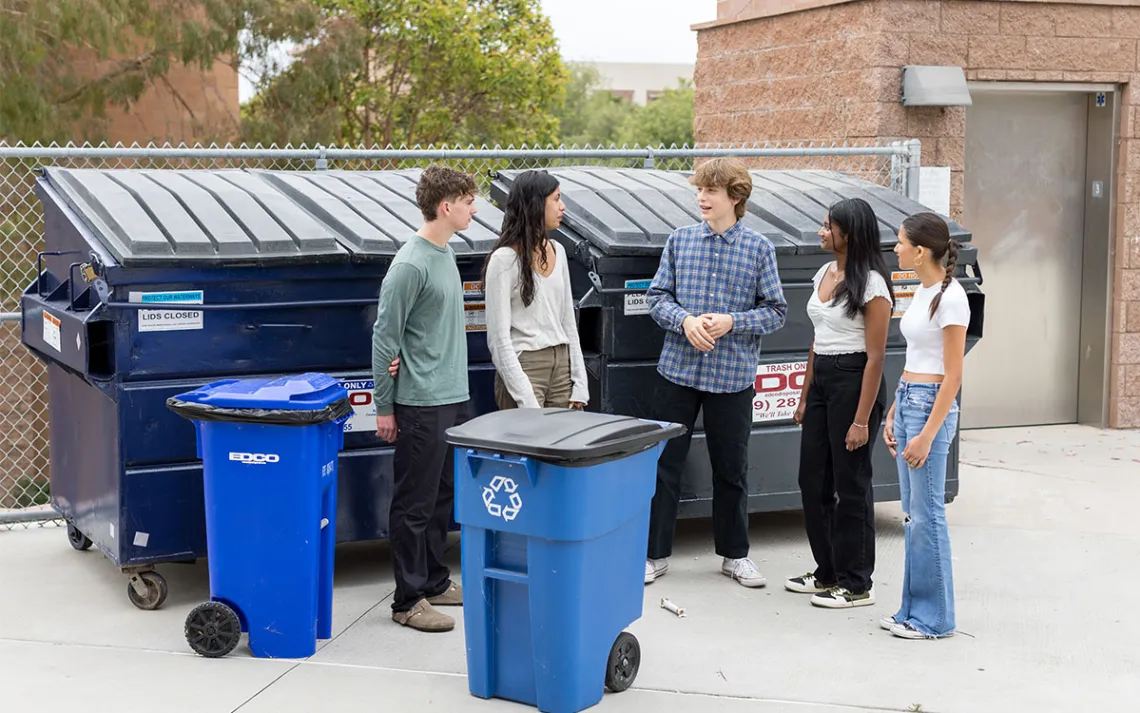
As a freshman, Hayden Crocker noticed that his high school in Solana Beach, California, had plenty of recycling bins around the campus but no recycling dumpsters in which to empty them. Where were all those cans, bottles, and papers going, he wondered?
Crocker asked his school administration about it. He learned that everything was ending up in the trash. So, he and some classmates called their city’s school district to complain. It worked, and soon thereafter, there were recycling dumpsters on every campus so the custodians could properly separate the recyclables from the waste.
But Crocker didn’t stop there. He rallied his classmates to ask about composting on campus, leading his school and nine others in the district to adopt composting bins. That’s when Crocker, now 18, decided to start Go Greenish: a nonprofit organization focused on implementing sustainability initiatives in schools across California.
Since then, Go Greenish has raised nearly $100,000 for projects not just in California but also with partner organizations in middle and high schools across nine states, from Hawai‘i to Louisiana. Students across the country are implementing their own sustainability projects: building school gardens, installing air-quality sensors, electrifying school bus fleets, and even creating aeroponic (air-based) gardens that are powered by solar panels the students build themselves.
It’s normal to feel anxious about climate change, Crocker says—especially when the news is filled with climate disasters, or you’ve had your own experience with events like flooding or wildfires. But instead of feeling helpless, he says, it’s important to stay motivated about doing your part.
“[Making a difference] is not as difficult as people think it is,” Crocker says, adding that students can start small. His most important piece of advice is to simply ask a question. “Go Greenish was started from a question,” he points out. Even if your school has rules or processes in place, it’s important to question them—especially if they get in the way of making progress on sustainability.
On the opposite coast, in New York, students are taking a similar approach. Many schools have their own “green clubs,” where students have regular meetings to talk about ways their families and schools can be more environmentally friendly.
Meanwhile, other New York City students are participating in efforts aimed at changing policy for better climate education in classrooms. A few times each year, students and teachers in the Climate and Resilience Education Task Force drive to the state capitol to convince politicians why they should vote for bills that will fund students’ understanding of climate change.
But what if your district doesn’t have sustainability clubs? Or maybe your school doesn’t have the resources to send you and your peers to the state capitol? What’s a climate kid to do?
Here’s what student leaders from the East Coast to the West Coast have to say.
1. Start with your school, says Amaya Williams, a high school senior in Brooklyn.
What’s missing? Many schools lack a recycling program. Students could tell their peers, “Look, there's a lot of trash in our halls; what can we do about it?” she says. That can help increase interest in environmental stewardship. “And it can kind of create a larger ripple, because it pushes schools as a whole to be more conscious as to what they're doing, while also engaging yourself and others.”
You might get your school to take action by pointing out the financial benefits of going green—lowering energy bills by installing solar panels and using less air conditioning, for example. A group of middle schoolers in Miami concerned about climate change formed the Green Team to help their school cut carbon emissions and become more energy efficient, partly by highlighting changes that would also save the school district money.
Another middle schooler in Miami helped get electric school buses in her school district after measuring CO2 levels inside and outside diesel-powered school buses for a science project and becoming alarmed at what she found.
2. Join (or start) a club. Lots of schools have after-school clubs focused on sustainability, such as “green teams” in New York City. If your school doesn’t have a club, ask a teacher if you can start one, say Brooklyn high school seniors Shakira Rimal and Saranika Chakraborty.
“During the school day, it’s really hard for teachers to talk about sustainability through their lesson plans, so having a club that talks about it in depth would be a great way for students to learn about it,” offers Chakraborty.
During these club meetings, students can hear from guest speakers about different aspects of sustainability, create crafts with upcycled materials, or spend time maintaining school gardens.
3. Suggest new tools. Teachers can use websites like the Climate Action Hub to get ideas for climate-focused lessons.
Amanda Ho and Ellery Spikes, who are involved with the policy-focused task force in New York City, presented a workshop to teachers in March on how to integrate climate topics into their lessons—without adding more to their plates.
An elementary school art teacher could show short films about sustainability, they offered. Middle school math teachers could create math problems based on carbon emissions. And high school social studies teachers could touch on the history of agriculture.
Crocker adds that schools often skip over important life skills related to climate change, such as how to read an energy bill, understanding where our energy comes from, and where our tax money goes. “You can kind of integrate it within every class,” he says.
4. Tailor your solutions. At Go Greenish, Crocker and his team have taken a school-specific approach. Sustainability solutions can’t be one-size-fits-all, he says, because each school has a different set of resources, challenges, and needs.
“The work that I’m doing in my school district is not going to be the work you’re doing in yours,” he says. “(Students) can find and create what works for their school.”
One elementary school in California’s Encinitas Union School District recently built a farm lab where students learn about regenerative agriculture, carbon sequestration, and how to grow their own food. The produce is then used in their cafeterias. “That is climate education, but it’s practical,” he says.
5. Call your local officials, Spikes urges. Share your personal story with politicians, and tell them why climate education matters to you as a young person.
Doing so keeps them accountable for their job of listening to stakeholders—including young people. “No one's taking them to task for not doing their jobs and not giving us climate education,” she says. “Policy is the only way that we're going to be able to reach all these students.”
Hayden also recommends keeping sustainability ideas simple. For example, some schools have started using “share bins”: coolers where students can put their lunch leftovers or unwanted food items for anyone to take. Some schools will even donate these food items to a local homeless shelter.
So far, the initiatives Go Greenish and its partners have created are working, he says, and the results are clear from student and parent feedback and from the funding they continue to receive.
“If other districts do this, if we take an approach that looks at our community. . . . There’s so much hope to be had.”
Sign up for the Sierra Club's student environmental action society: sc.org/kid-action.