We All Need a Home of Our Own. The Burrowing Owl Is No Different.
A new effort is underway to restore this owl's population and habitat
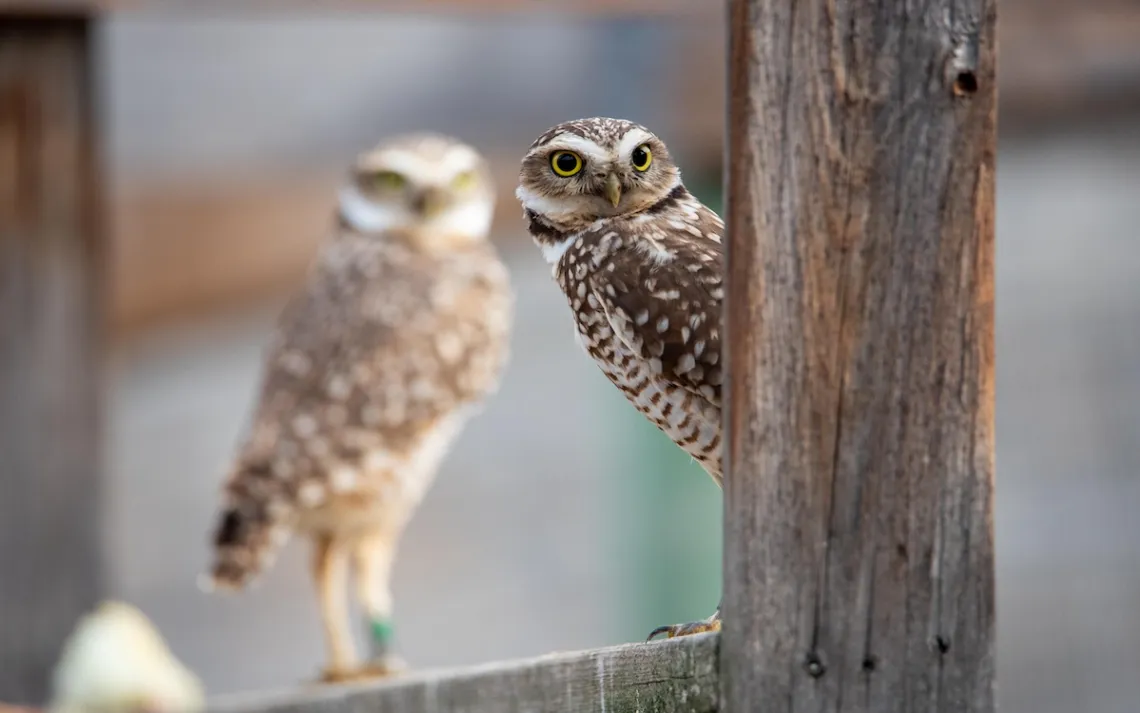
In the moonlight, their call is mournful, like a dove's or a roadrunner's, except higher pitched. When startled, they resort to a tremulous chatter, alerting one another to dangers across the prairie. When hiding from marauding predators in their burrows, they retreat to the very bottom and mimic the sound of a rattlesnake’s tail, an empty threat, but a convincing one. And in private, cozy and safe, they chirp together gently, a show of familial trust.
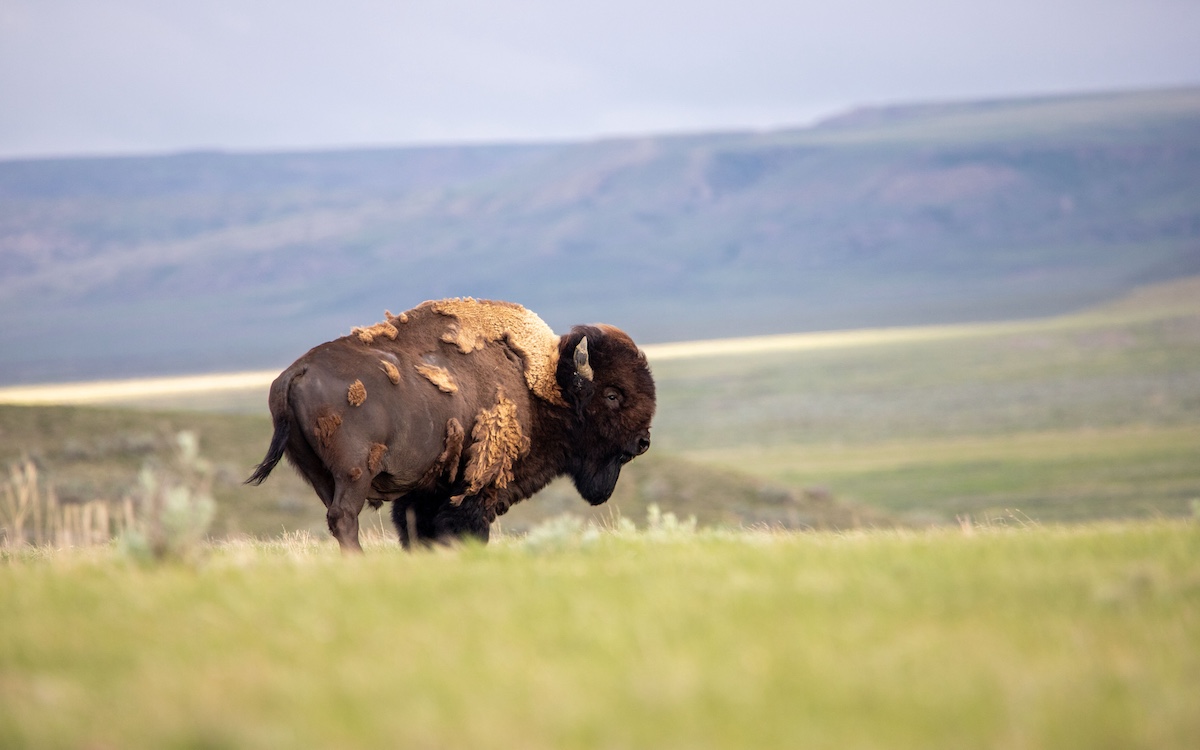
The western burrowing owl belongs to the Great Plains, and to the pastures, prairies, deserts, grasslands, and rangelands of the treeless West, scurrying on stilted legs from central Alberta down through Panama, from California in the west to the Dakotas in the east. They are as fundamental to these spaces as bison, pronghorn, coyote, and cattle, though much less conspicuous.
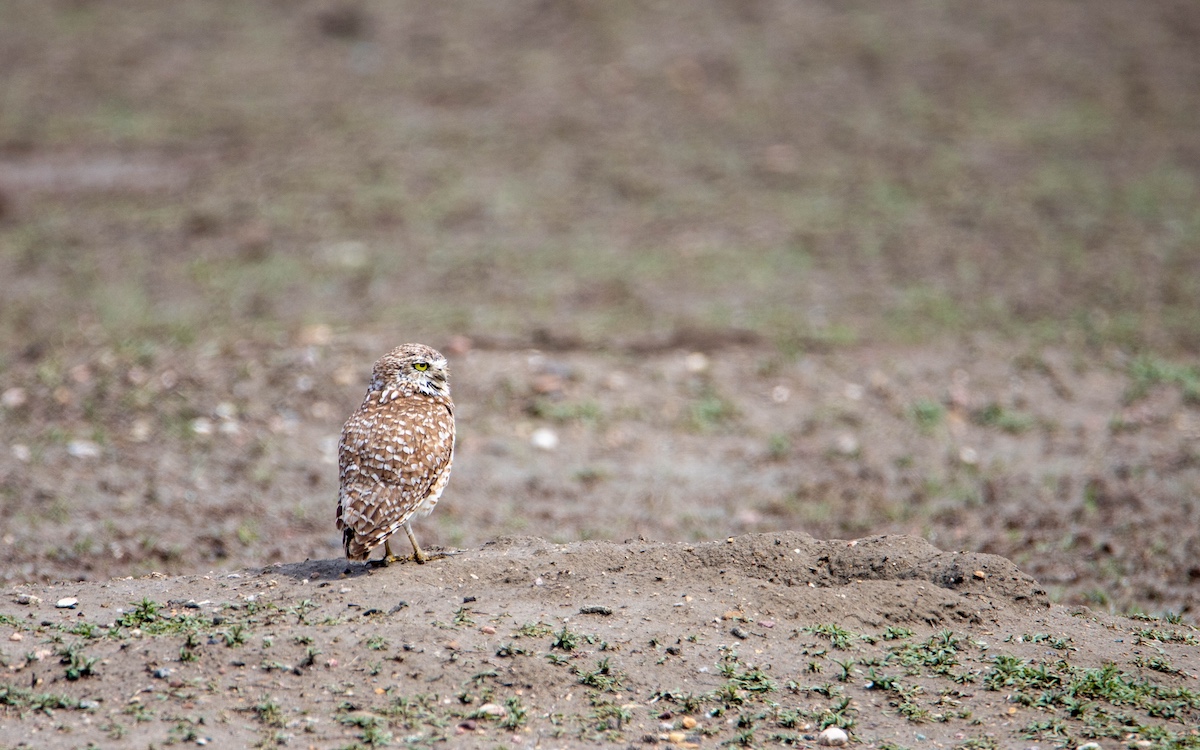
By day, they stand outside their burrows with bored yellow eyes scanning the horizon—tiny, narrow creatures almost indistinguishable from the sage greens and dry browns of surrounding grass and dirt. By twilight, they are a terror, hovering a couple dozen feet over their domain, falling on insects and rodents, even gophers, rabbits, snakes, and small birds.
And they do, indeed, nest underground—the only owls in the world to do so exclusively—but rarely do they dig these burrows themselves. Instead, they depend on those dug and abandoned by the mammals with whom they coexist, living inside the colonies and the tunnels of prairie dogs, badgers, marmots, ground squirrels, and others, benefiting from their safety in numbers, and from their labor.
“In the Trans-Mississippian territories of the United States,” wrote naturalist Thomas Say in the early 1800s, “the burrowing owl resides exclusively in the villages of the marmot or prairie dog, whose excavations are so commodious as to render it unnecessary that our bird should dig for himself.”
This owl’s deep roots in western ecology have also been its undoing. As prairie dogs and ground squirrels, marmots and badgers, rangelands and grasslands retreated over the 19th and 20th centuries, so did the burrowing owl. Most populations are in decline across the continent, a trend sharpest in the extreme north of their range.
The burrowing owls of British Columbia are an extension of those of the Columbia River Basin, pocking north across the border from Washington state. Theirs are the semiarid deserts of the provincial southeast, especially those of the Thompson and Okanagan Valleys, and to a lesser extent the Fraser River delta.
Then came crops and livestock. These dry valley bottoms became ranches and vineyards; burrow-digging mammals were persecuted off the landscape; prey species declined with the chemical might of modern agriculture; and people shot owls as pests. The decline of the burrowing owl was underway as early as 1909, when entomologist Edmund Peter Venables, of Vernon, BC, wrote that “sometimes in the evening [their] call note may still be heard, but it comes from a long distance, and is a rare sound.”
For most of a century, the species retreated to fewer and fewer stalwart colonies, until 1979, when the province’s final half dozen burrowing owls migrated south for winter, and didn’t bother coming back.
Upon this rock, I’ll dig some holes
The 1980s and '90s were a bit of a scrum. A lot of people decided the burrowing owl should be reintroduced, promptly, to British Columbia’s southeast. The Owl Foundation, in Ontario, bred and donated a few dozen owls for release near Kamloops, BC, in 1983, while the provincial government imported entire families of burrowing owls from Washington state—adults, chicks, and eggs—for release near Penticton. The BC Wildlife Park started breeding owls on its own in the early 1990s, as did a small army of volunteers from Vancouver, erecting breeding facilities wherever they could get permission. It was a simpler time, unhampered by international relations, endangered species legislation, or the lurking threat of avian flu.
All these efforts had one thing in common: burrows. If the burrowing owl was struggling for lack of abandoned badger burrows, marmot burrows, and ground squirrel burrows (BC doesn’t have prairie dogs), then why not establish a few human burrows? Maybe more than a few?
“It was the type of program where we could involve people from all walks of life,” said Mike Mackintosh, one of the folks from Vancouver. “You didn’t have to be a biologist to help out. We needed backs. We needed people to go out and dig holes.”
Dig they did. Wooden burrows were the fashion for a while, but these biodegraded quickly and were prone to spiders. The province used empty five-gallon plastic ice cream tubs at one time—spacious and sturdy—though it was never clear what they did with all the ice cream.
This isn’t the California condor, with multimillion-dollar facilities and staff. We have shovels.”
Modern burrows use the “two bucket” system: one bucket empty, upturned, and buried to provide the main chamber, another upright, full of dirt, and balanced on the back of the first. Removing the top bucket gives volunteers easy access to a hole in the bottom bucket—for the addition or subtraction of owls—while the owls themselves use a 10-foot curved pipe connecting their burrow’s main chamber to the surface. In total, over a thousand artificial burrows have been dug in British Columbia, the overwhelming majority by volunteers.
All these efforts consolidated in the year 2000, with the formation of the Burrowing Owl Conservation Society of British Columbia. The BC Wildlife Park agreed to be the largest of its three captive breeding facilities, Mike Mackintosh chaired its inaugural board, the provincial government loaned expertise and land, and a core of funding came from two places: the Burrowing Owl Estate Winery, which has donated all its tasting fees to the effort since the early 1990s, and from Community Gaming Grants, redirecting casino money to the purchase of owl feed. Et voila—the largest, and longest running, burrowing owl reintroduction program on the planet, dedicated entirely to a few slivers of habitat in southeastern British Columbia.
“It’s always been a very low-budget operation,” said Mackintosh. “This isn’t the California condor, with multimillion-dollar facilities and staff. We have shovels.”
The migration problem
The science of burrowing owl reintroduction has sharpened over the years. The Burrowing Owl Conservation Society found, for example, that establishing burrows close together—“owl subdivisions”—increased survivorship, and that placing “soft release cages” overtop burrows for the first few weeks of occupancy helped captive-bred owls adjust to life in the wild, as did supplemental feeding. All these interventions increased reproductive success.
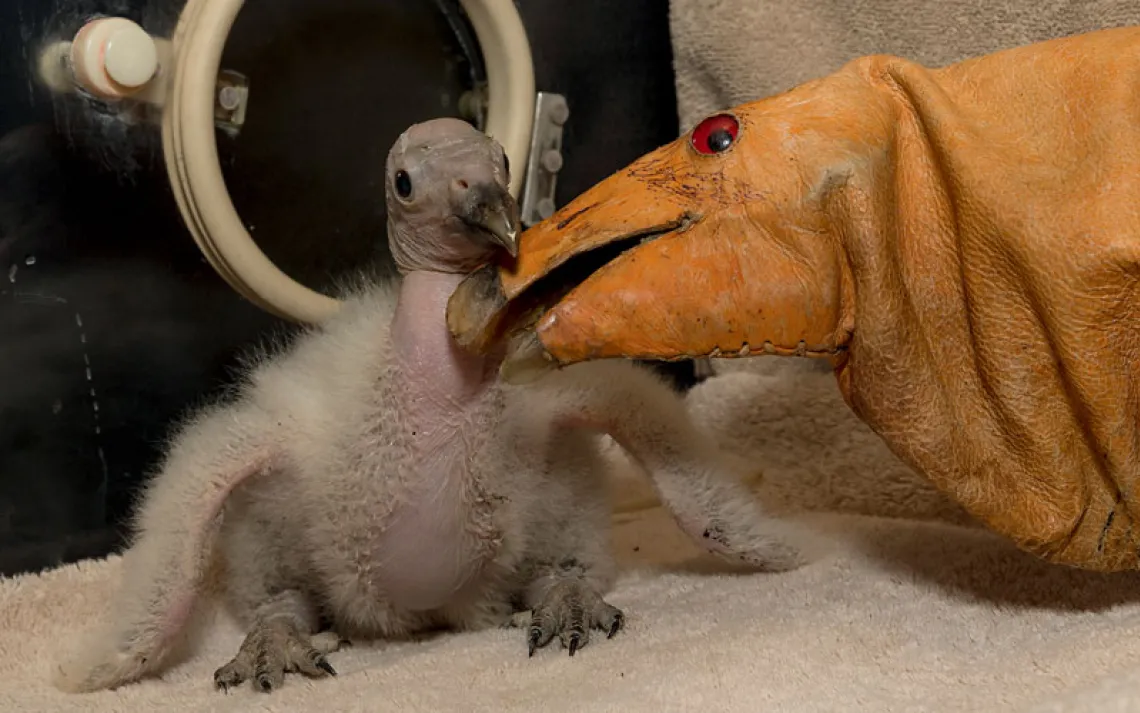
And the owls were easy to breed in captivity. Give them a few burrows, a caged flyway for exercise, and a mountain of dead mice on which to feed, and they’ll have reliable clutches of eight eggs per pair, or thereabouts. The society’s three breeding facilities can, in a good year, turn out 100 healthy owls, provided there’s enough money to feed them all.
Between 1992 and 2024, they have released 2,131 captively raised owls into artificial burrows throughout southeastern British Columbia, some on provincial land, some inside nature trusts, and some on private property. These owls, in turn, have hatched 3,101 wild-born chicks. For a program running off thirst tourists and slot machines, these are impressive numbers.
But then, each September, their owls migrate, embarking on the long and perilous journey to overwintering grounds in the south—Washington, Oregon, California, and Mexico—and very few, 8.3 percent on average, come back the following spring.
“If they didn’t migrate out of BC,” said Mackintosh, “I think we would have been out of this program 10 or 15 years ago.”
“Burrowing owls are declining everywhere."
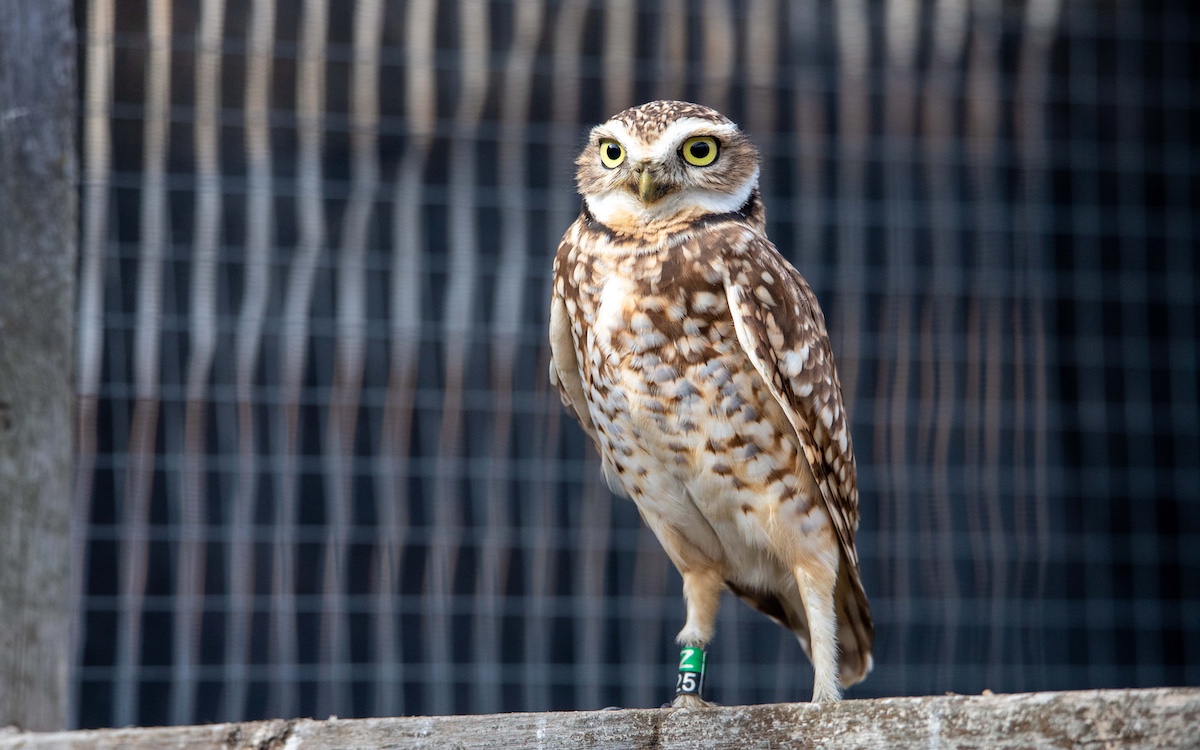
The fate of these owls remains unclear. Some are certainly setting up shop in the United States—one was caught nesting in California nine years after release—but if this explained the absence of all the society’s owls, then surely some populations in the south would be growing. The influx of over 5,000 owls in a tight couple decades, all wearing the distinctive leg bands of British Columbia (alphanumeric, green over black) would surely have be noticed. It wasn’t.
“Burrowing owls are declining everywhere,” said Lauren Meads, the society’s executive director since 2016. The factors that pushed these owls out of British Columbia in the first place are playing out across the continent, she said, so wherever BC’s owls are going in winter, they probably aren’t finding safe harbor. She expects the majority are dying.
Four decades and counting
“People are always asking me what the wild population of burrowing owls is in BC,” said Meads. “The answer is, well, zero.”
This puts the society in an odd position. It can’t stop, because the burrowing owl will actually disappear, along with the society's hard-won network of facilities and volunteers. Its expertise, too, would no longer be available to the provinces and states just now losing their owls and considering reintroduction programs of their own.
At the same time, the society cannot expand, because its very real victories are difficult to explain in a grant application, and because everything—from the lumber going into captive breeding facilities to the mice going into owls—is getting more expensive. The first, and most obvious, path forward is to raise and release more owls. Although 8.3 per cent might not sound like a lot, if the starting population were large enough, even this modest return rate could be enough to sustain a viable population.
“If we had people down there doing much the same work we were doing up here, like monitoring and building burrows, that might give our owls the opportunity to survive."
And then there is the South Okanagan–Similkameen National Park Reserve, a forthcoming 273 square kilometers of protected area proposed in the Okanagan Valley. If and when this park is established, it could mean a safe space not only for burrowing owls but also for all the species on whom burrowing owls depend. American badgers could once again dig and abandon burrows unhindered. Bighorn sheep could graze native grasses nice and low, exposing owl predators and prey. Insects and rodents could flourish in the absence of pesticides. Such a space could, perhaps, anchor burrowing owls in British Columbia.
The final piece is by far the most elusive: international cooperation. The Burrowing Owl Conservation Society needs more of its owls to survive migration, which means it needs to know where, and why, its owls are dying.
Meads is participating in some satellite telemetry research, tracking her owls into the United States and Mexico, while Mackintosh is trying to establish a network of observers in western states to watch for, and report upon, owls with BC leg bands. With these data, and these partnerships, it might be possible to strategically establish artificial burrows in the overwintering grounds of BC owls, increasing survivorship and return rates. A few, dug in the right place, could make all the difference. In its own way, the Burrowing Owl Conservation Society is going international.
“We’re looking at establishing a network of like-minded individuals all the way down the west side of North America, basically Washington, Oregon, and California,” said Mackintosh. “If we had people down there doing much the same work we were doing up here, like monitoring and building burrows, that might give our owls the opportunity to survive.”