The Wonders of Weird Duck Time
Beat the winter doldrums by going birding
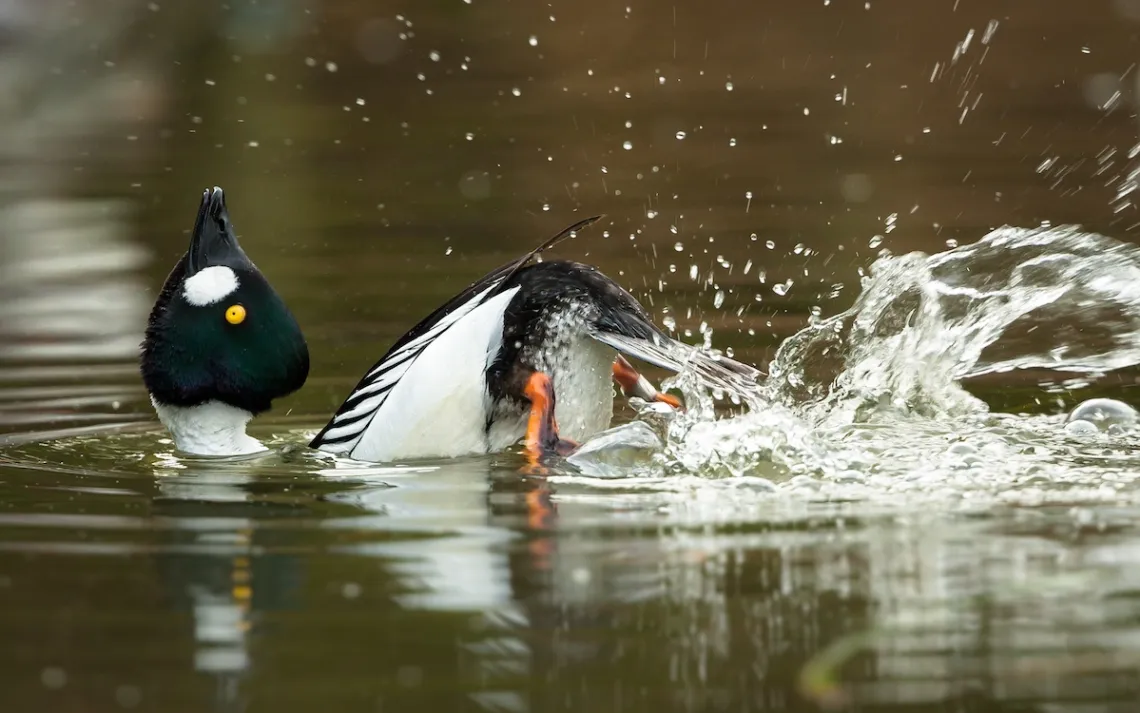
Common goldeneye. Photo by DamianKuzdak/iStock.
Though it might sound counterintuitive, the best antidote to a cold winter season is birding. Watching birds not only gets us outdoors, but it also gives us an opportunity to observe the many species that thrive during the time of year many of us spend largely indoors.
The cartoonist and science communicator Rosemary Mosco has a nickname for birding in winter—weird duck time—because of the waterfowl that sport their spiffiest attire to attract a mate. Winter is courtship season in the duck universe. While ducks breed and raise their young mostly in the wetlands of the boreal forest in late spring and early summer, they come south for the winter, where food is more abundant.
Females notoriously pick up the males with the most flamboyant outfits and most outlandish displays. “The ducks are weird, they’re pumped full of hormones, they’re everywhere, and they’re putting on the show of their lives,” Mosco says. “You can see them bobbing their heads and hear their bizarre noises, like the snores of hooded mergansers to the group wails of black scoters.”
It's nothing short of exhilarating to watch a glistening black-and-white male common goldeneye perform an elaborate display that features a classic “head throw kick” move that includes bending his head all the way back before letting out a yelp and kicking up water with his red feet. There are also elaborate avian hairdos to admire, including the red-breasted merganser’s spiky Edward Scissorhands do, and his cousin the hooded merganser’s enormous black-and-white puffed-up crest resting atop its diminutive, boldly patterned black, white, and rust-colored body. And that’s saying nothing of the long, thin serrated bills on these mergansers, perfectly adapted to slice through fish with the precision of the world’s best sashimi knife.
Ducks aren’t the only birds putting on a show for us. Winter is also an ideal time to admire common birds that we often overlook during adrenaline-fueled spring migration, when we’re on the lookout for tiny, fast-flying warblers, fluttering from one tree to the next. “I might not get excited about a northern cardinal when the trees are full of warblers, but a single bright cardinal in a leafless tree can save my mood on a gray snowy day,” Mosco says.
Learning to love common species is equally important for the birds themselves. Of the 3 billion birds lost since 1970, many are in fact common birds. Scientific studies now link exposure to birds with improved mental health, but birds need our care and attention as much as we need them. Winter helps us connect with these abundant birds we often take for granted and awakens us to their magic. “Doesn’t the sass of a titmouse make you smile on a cold day?” muses Jordan Rutter, director of communication at the American Bird Conservancy.
Winter also happens to be the best time for novice birders to hone their skills. Without the hindrance of foliage, with fewer species to attend to and many of them stationary—ducks! gulls!—or feeding less frenetically than they do in peak migration, birds are easier to see and identify in the winter. In the winter, Rutter finds herself “appreciating individual birds and feeling gratitude for the interactions with specific birds.” It’s an opportunity to get to know them more closely, admire their antics at feeders—who doesn’t love watching a blue jay imitating hawk sounds just to scare everyone away and get the feeder all to himself—and marvel at their resilience and ingenuity.
Winter behaviors and adaptations sometimes verge on feats of biological shape-shifting. Just think of the black-capped chickadees whose brains grow by up to 30 percent to accommodate their ability to find the thousands of food caches they’ve accumulated for sustenance during the cold months.
In addition to the Christmas Bird Count, which takes place every December, the Great Backyard Bird Count (February 13 to 16, 2026), is a global community science project that gathers data about bird populations in the winter. The project offers an opportunity to contribute to conservation science watching birds for 15 minutes over the course of the weekend and logging sightings on eBird. Not only is winter birding good for our well-being, but it also helps the birds!
The beauty of winter birding—in addition to the wonderfully weird ducks you’ll see—is that you don’t need fancy equipment apart from a pair of binoculars and a capacity to be wowed. However, all of this comes with a caveat: Weird duck season is a slippery slope. After marveling at avian hairdos and courtship displays, you might find yourself counting down the days to spring migration, setting your alarm earlier and earlier, and even looking out for the next opportunity to visit a sewage lagoon. Don’t say I didn’t warn you.