Driving around the highways and backroads of Wyoming, you see a lot of wind turbines. You might not think much about them, but politicians at the state and federal level are thinking about them a lot. Renewable energy projects are getting caught up in the “whirlwind” of state and federal debates about the future of energy production in the U.S., Donald Trump and his Energy Secretary, Chris Wright, have claimed they want to “unleash American energy,” but their policies around homegrown, renewable energy aim to do the exact opposite.
Donald Trump said that he would stop the progress of wind energy in its tracks, making sweeping (and often false) claims about the economic viability and environmental impacts of renewable energy. Meanwhile, the federal government is planning to severely curtail critical environmental regulations like the National Environmental Policy Act and the Endangerment Finding- leaving citizens out of the processes responsible for oversight around energy projects on public land.
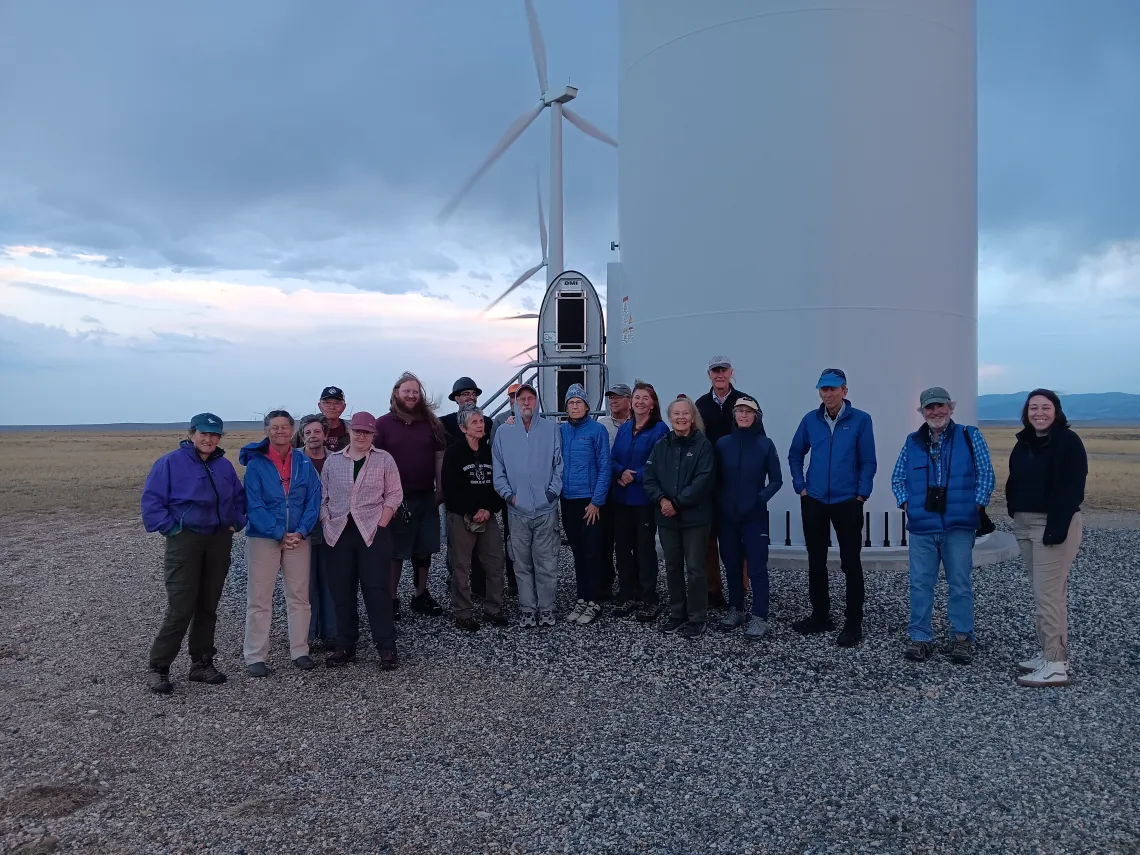
Seeing all these wind turbines throughout Laramie and Albany County, I got curious about Wyoming’s wind energy production and wanted to learn more- so I went to the source. Last month, a group of 25 residents of Laramie and Casper took a tour of the High Plains/McFadden Ridge wind farm in northern Albany County- courtesy of Wyoming’s largest utility company, Rocky Mountain Power. It was an eye-opening experience to see how these wind farms operate and generate energy in real time.
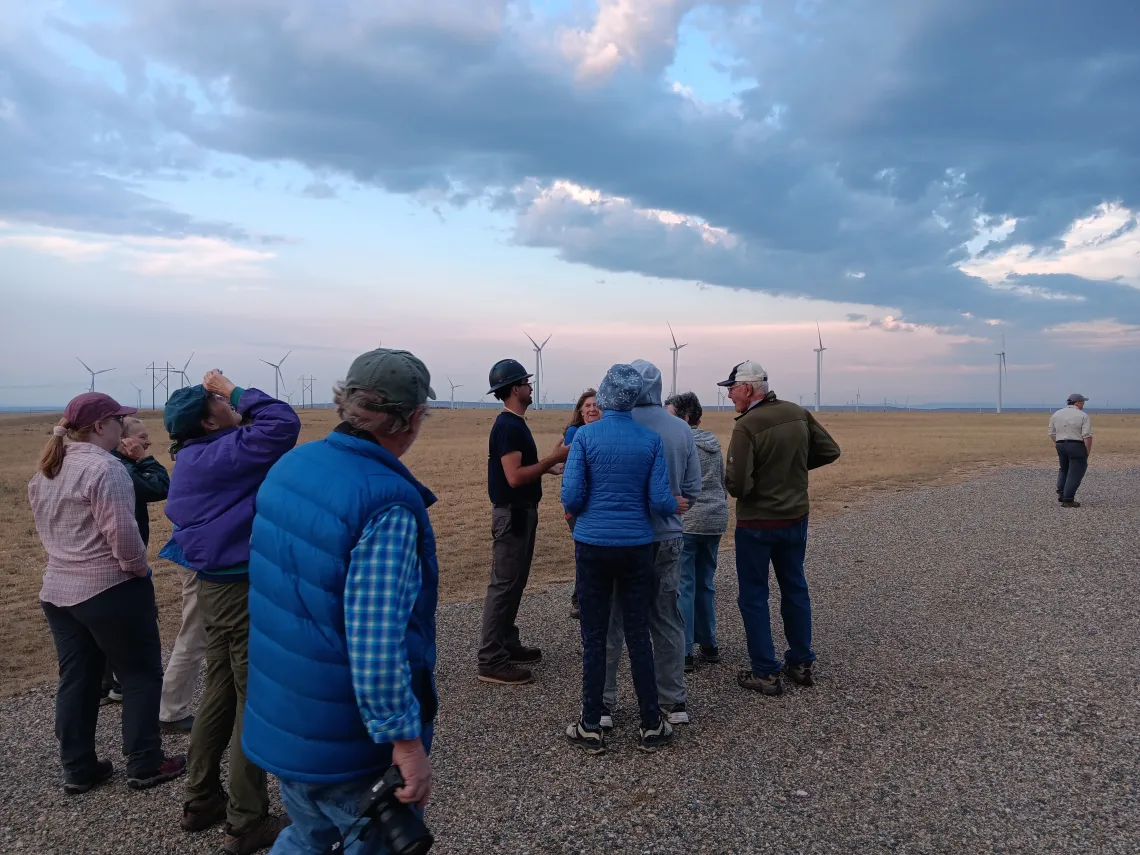
We talked about the nitty gritty of how power is produced at the 99 megawatt wind farm- that’s about enough energy to power 100,000 homes. We learned about the construction of turbines and the complicated computers operated within each turbine, which automatically adjust the position and angle of the blades to allow for optimized energy production, and can even be used to remotely shut down turbines during periods of higher bird migration.
The 85 turbines created 600 initial construction jobs, and the farm is now maintained by about a dozen permanent employees scattered across the plains of Southeastern Wyoming.
25 of us crowded inside a turbine, taking shelter from the perpetual wind. The farm is sited on a combination of state and private lands and is on an active cattle ranch. It is true that wind turbines have a larger footprint than other traditional energy sources, but when sited appropriately, they can allow for multiple uses and often provide an additional financial incentive for ranchers in the form of excise taxes.
Some folks were surprised to learn about the economics of turbines after hearing years of wild speculation about the economics of wind energy production. The truth is, wind energy is often significantly cheaper than other forms of electricity production- especially when compared to coal pricing. After Rocky Mountain Power’s 2023 rate increase case, Rocky Mountain Power themselves admitted that 95% of the increase was tied to high coal and gas prices, while renewable energy saved ratepayers 47 million dollars over the course of a single year.
Some participants raised concerns about eagle mortality in this windy corridor of southern Wyoming, and it is certainly important that we mitigate harm to wildlife in our quest for clean energy. That’s why we should continue to hold utility companies and energy developers to high regulatory standards. It's also why we should be thinking about the bigger picture, and understand the large-scale impacts that unmitigated climate change is having on wildlife populations and ecosystems.
It’s true that energy development is complicated. It comes with difficult decisions about where the best siting is, what externalities to consider, and how communities will be impacted. Those decisions shouldn’t be dictated by political interests that demand we prop up certain forms of energy regardless of the needs and desires of community members.
Earlier this year, the Wyoming state legislature attempted to pause wind and solar development indefinitely, while simultaneously struggling to grapple with a mass exodus of young workers from the state. The blanket dismissal of renewable energy like wind is not only a shortsighted move based around culture war politics, it’s bad for Wyoming. It is clear that our officials are less interested in fact-based decision making and more interested in protecting fossil fuel assets at all costs.
Meanwhile, PacifiCorps’ latest energy portfolio calls for expensive carbon capture plans and keeps coal assets online even as they become less and less cost effective for customers.
We should be demanding more from those responsible for shaping our energy future. We should be asking for energy that is affordable, clean, and good for communities. Our representatives and our utility companies shouldn’t be afraid to say that often, the answer is appropriately sited renewable energy.