The Red Desert at a Crossroads: Stand Up for Public Lands
December 12, 2025
By Debra Park
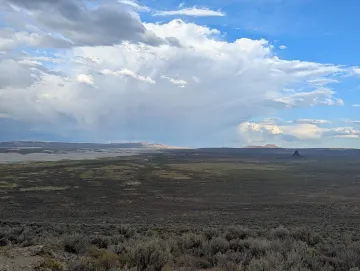
The Boar’s Tusk and Killpecker Dunes are just a couple of the features that make the Red Desert so special.
For some, the word “desert” speaks only of dreary dryness. Around here, we tend to prefer mountains, gravitating toward our peaks, pines, and sparkling waters, and I must admit that I lived in Wyoming many a year before I was persuaded to give the Red Desert a try. Now I can’t get enough of its many unique features: the hoodoos of Adobe Town, the soaring granite glory of Boar’s Tusk, the creamy sands of the Killpecker Dunes dotted with tiny wildflowers and tracks of creatures large and small, a herd of desert-loving elk, and even the occasional wild horse. Yet there’s more: Honeycomb and Oregon Buttes and petroglyphs at White Mountain and, my favorite of all, the widest sky and a healthy dose of solitude and silence. I can’t recommend it enough, but to quote Ed Abbey, ”We need wilderness whether or not we ever set foot in it. We need a refuge even though we may never need to set foot in it. We need the possibility of escape as surely as we need hope.” Yes, let’s leave it as it is.
Which brings me to my point: the Red Desert is both a treasured landscape and a managed resource, 3.6 million acres of which is overseen by the Bureau of Land Management’s (BLM) Rock Springs Field office on behalf of the public. It’s public land. Public.
After a decade of work by communities, businesses, and conservation groups, a thoughtfully balanced Resource Management Plan (RMP) for the Red Desert was finalized by the BLM in 2024. Many of us attended meetings, read articles, wrote letters, and gave input to help create this RMP. The public stood up and asked that key areas of the Red Desert be left as is, protected from private development. In the end, over 90% of the public comment received by the BLM supported a conservation-forward approach to managing the field office.
Now the Trump Administration seeks to roll back key protections and expand the areas open to unrestricted development—discarding years of public input and threatening wildlife, cultural resources, and the desert’s future. The BLM claims the intent is to “reassess policiesthat may unnecessarily restrict access to domestic energy and mineral resources.” In other words, this amendment would shift the RMP toward corporate energy interests and away from the collaborative vision developed through years of dialogue between the public and the BLM.
The vast majority of BLM-managed lands are available for oil and gas drilling and other development. The Rock Springs plan sought to provide balance in the planning area, to ensure places were conserved for wildlife, cultural resources, and recreation.
The Trump Administration's primary targets are special designated areas within the field office called Areas of Critical Environmental Concern (ACECs). ACECs are designated during planning revision processes, and are designed to protect sensitive environmental, cultural, or other important resources. They allow the BLM to implement tailored, site-specific management strategies to protect those resources, while also continuing to allow public access. The ACECs in the Rock Springs Field office were designated after more than a decade of input from the public, and only a relatively small subset made it to the final plan. This has been an intricate, painstaking process involving enormous amounts of data, analysis, and diverse viewpoints from our state.
Just a few of the ACECs in the Red Desert include the Greater Sand Dunes ACEC, which contains the Boar’s Tusk, and the Oregon Buttes ACEC, which covers a pine-dotted, hilly region east of Farson. Steamboat Mountain is one of the largest ACECs and contains part of the Sublette Mule Deer Migration Corridor and important sage-grouse habitat. Altogether, the Rock Springs Field Office contains twelve of these unique spaces, plus five Special Recreation Management Areas, a National Historic Trails corridor, and thirteen Wilderness Study Areas!
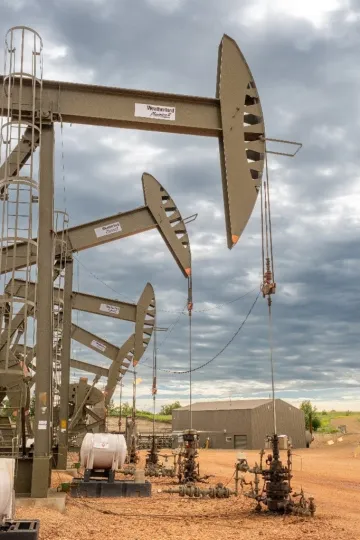
That may sound like a lot, but 2.6 million acres, over 70% of the field office, remains open to oil and gas development in the final plan. That type of development can often limit public access and restrict land that might otherwise be managed for conservation, recreation, or other purposes. Now the BLM will be required to re-examine these designations to determine “whether special management is still warranted” and “where development may be appropriate.” The agency says the amendment will consider advances in technology, changes in industry interest, and updated data on mineral potential—but has offered few specifics about what that will actually entail.
These days it’s easy to feel apathetic when hard-won progress on conservation issues is reversed, easy to wonder what can a single soul actually do anyway? But the national Sierra Club and its Wyoming Chapter have seen that individual voices, when united, can indeed move mountains–or at least help protect them–today and for future generations. Our letters to the BLM and legislators, our voices at meetings, and even our presence on-line, guided our leaders to create and approve this critical Resource Management Plan for the Red Desert, and this same kind of effort can protect it from Trump’s amendment. So we are calling on you once again to act to protect this public land for us all. Your voice matters–submit a comment todaybefore the December 18th deadline!
Be a champion for Wyoming's environment
Folks like you are the backbone of the movement to ensure wildlife and wild places are protected, clean air and water are accessible to all and devastating effects of climate change are fought. Give today to continue this vital work.