The 2026 midterm elections delivered important victories for climate champions across the country. From congressional races and governor’s offices to state legislatures, voters showed up to elect leaders who will fight for a healthier environment, affordable clean energy, and corporate accountability.
But the wins didn’t stop with candidates. Across the country, voters also sent a clear message about the future they want through a range of ballot initiatives.
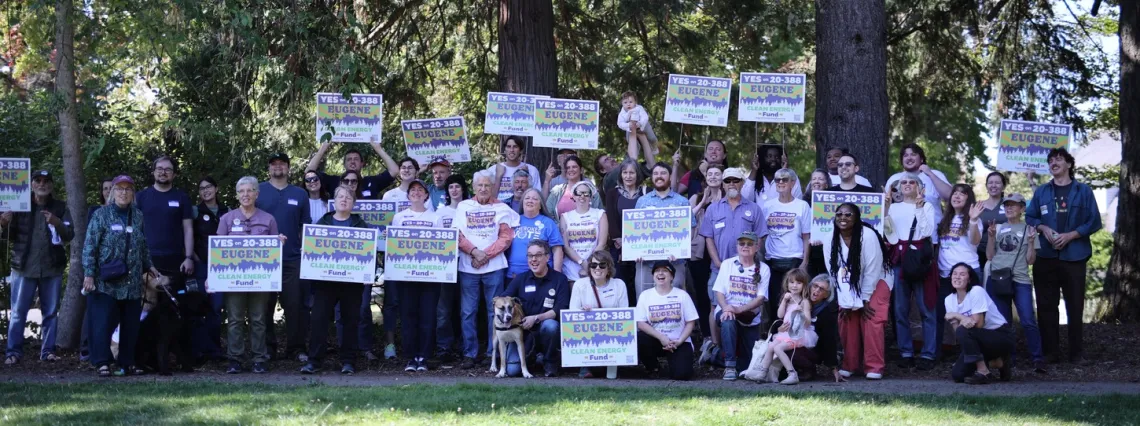
In Eugene, Oregon, voters passed a measure to require major corporations like Amazon and Walmart to contribute through a 2% large retailer license fee, which will generate an estimated $15 million annually for investments in renewable energy, energy efficiency, workforce development, and climate resilience. Measure 20-388 establishing the Eugene Clean Energy Fund passed resoundingly with close to 59% of the vote. The fund specifically names funding for building electrification and whole home retrofits, with an emphasis on low income households.
The victory was powered by a broad coalition of more than 120 small businesses, labor unions, community organizations, and elected officials, alongside volunteers and community organizers who built support through grassroots outreach. Importantly, the fund will prioritize investments in low-income communities and communities of color, which too often bear the greatest burden of pollution and climate impacts.
The measure builds on the success of Portland’s Clean Energy Fund, which has invested more than $1.7 billion in climate, sustainability, and clean energy projects since its passage in 2018. Together, Eugene and Portland are demonstrating how local communities can take the lead in advancing climate solutions, creating good jobs, and making corporations pay their fair share.
Meanwhile, in Colorado, voters rejected harmful ballot initiatives, like Amendment 82, a dangerous proposal backed by the dark money group Advance Colorado that aimed to change the state constitution to benefit corporate polluters while harming Colorado communities. The policies threatened by Amendment 82 range from safety rules that prevent pipeline explosions to consumer protections against utility rate hikes for new gas pipelines that customers don’t want or need.
This rejection of Ballot 82 came alongside the election of Colorado Governor-Elect Phil Weiser and other environmental champions across the state. Voters made clear that they want leaders who will prioritize climate resilience, protect clean air and water, and move the state toward its emissions reduction goals, not policies that put corporate interests ahead of the public good.
Taken together, these results offer an important counterpoint to the Trump administration’s attacks on environmental protections and clean energy investments. While the administration continues to prioritize fossil fuel interests and corporate profits, voters are demonstrating that they want something different: lower energy costs, healthier communities, good-paying clean energy jobs, and a future that doesn't sacrifice public health for industry profits.
The midterms were a reminder that the movement for climate action is bigger than any one candidate or election. It is powered by communities organizing for change, workers demanding a fair energy transition, and voters who understand that clean energy is not just an environmental issue, it's an economic and public health opportunity.