Battery Electrical Storage Systems (BESS): why is BESS necessary?
Battery Energy Storage Systems (BESS) are essential because they provide a "buffer" for modern power grids, which were originally built to produce and consume electricity simultaneously. As we shift toward intermittent energy sources and face higher electricity demands, BESS has become a critical piece of infrastructure for several reasons:
Economic Benefits (Cost Savings)
BESS helps lower costs for both utilities and individual consumers.
Energy Arbitrage: Systems charge when electricity prices are low (off-peak) and discharge when prices are high, saving users money and relieving grid pressure.
Peak Shaving: By providing power during "peak" hours, BESS helps businesses avoid expensive demand charges from utilities.
Infrastructure Deferral: Utilities can use batteries at "bottlenecks" in the grid (such as in the Hudson Valley) to fill the gap in the building of slow to market billion-dollar transmission lines and/or substations.
Grid Stability and Reliability
BESS acts as a "Swiss Army Knife" for grid operators to manage real-time fluctuations.
Fast Frequency Response: Batteries can discharge power in sub-seconds to correct frequency drops, a speed that traditional energy plants cannot match.
Voltage Support: They help stabilize grid voltage levels, preventing flickering or damage to sensitive electronic equipment.
Black Start Services: In the event of a total grid failure, BESS can provide the initial spark needed to restart large power plants without relying on diesel generators.
Balancing Renewable Energy
Renewable sources like solar and wind are somewhat unpredictable, as they produce power when there is available sun and wind, not necessarily when demand is highest.
Energy Shifting: BESS captures excess energy generated during sunny or windy periods and stores it for use during the night or when the wind dies down.
Capacity Firming: By filling in production gaps, BESS ensures that a renewable plant can provide a guaranteed, steady amount of power to the grid.
Supporting a Decarbonized and Healthier Future
Replacing "Peaker" Plants: Traditionally, the grid relies on "peaker plants" (usually natural gas) to handle demand spikes. BESS can perform this role with zero on-site emissions.
Electrification Support: As more people switch to electric vehicles (EVs) and heat pumps, BESS helps manage the surging demand for electricity without overwhelming existing local power lines.
Energy Resilience and Independence
Backup Power: For critical facilities like hospitals and data centers, BESS provides near-instantaneous backup power during outages, ensuring continuous operation.
Microgrids: BESS is the backbone of microgrids, allowing communities or remote sites to operate independently from the main grid if it fails.
Discussing Battery Electrical Storage Systems: Facts vs. Misinformation
BESS projects have been opposed because of perceived safety issues. Examples of concerns expressed include:
Risk of fire: Are BESS installations safe from fire?
Environmental and Water Contamination: Are BESS installations safe in terms of chemical contamination?
Inadequate Emergency Training: Are fire fighters and emergency service personnel adequately trained for emergencies at these installations?
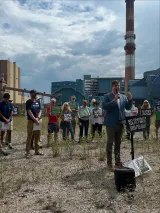
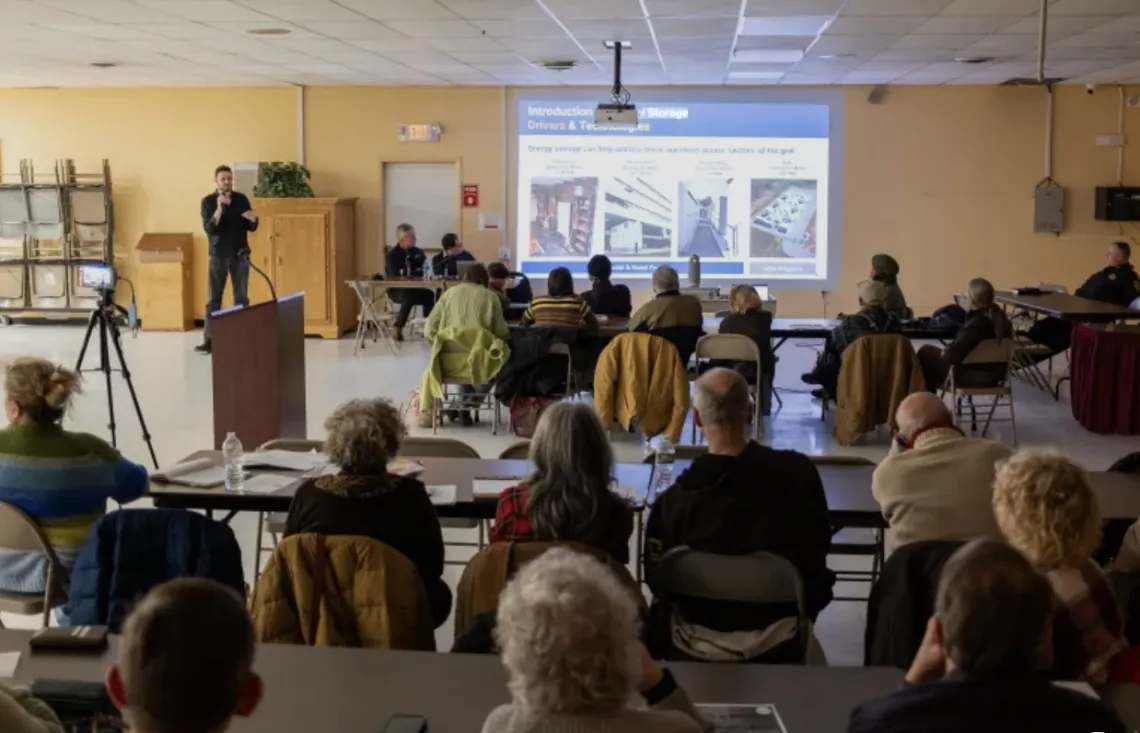
Jeff Seidman, who teaches philosophy and environmental studies at Vassar College, has joined Ian Latimer of the New York State Energy Research and Development Authority (NYSERDA) and Paul Rogers, a retired New York City firefighter who consults for the energy firm ERSG, in presenting to a number of Town and Planning Boards throughout the Hudson Valley. This panel has argued that safety risks have been overstated and that battery storage is critical to stabilizing the state’s electric grid.
Fire Risks
While BESS units have experienced fires, fires have typically occurred in older facilities built before our current safety standards were in place. Although the number of installed BESS has risen exponentially, the number of incidents in recent years have remained small, meaning that the incident rate (incidents per kilo-watt hour (kWh) of installed energy storage) has dropped dramatically - 98% lower in the sixteen years from 2008 to 2024. Furthermore, fire experts concur that BESS fires are equivalent to a structure fire in terms of toxicity. Hazardous chemicals are present, but the same is true of a house fire, given the poisonous cleaning chemicals and materials (vinyl and other plastics) typically in a home.
An important factor is that the technology has evolved rapidly. You might recall that years ago there were major product recalls and concerns with Lithium battery explosions and fires in smartphones, tablets and laptops. We don’t hear about such problems anymore largely because there have been technological advances made to correct and prevent these problems from continuing. This is the case with most technologies, including those associated with BESS installations. The efficiency (costs) and effectiveness (safety and utility) of technology scales rapidly, bringing increasing safety and value at a lower cost.
So, risks are largely mitigated by ongoing improvements in battery technology and established more stringent regulations relating to the fire code specific to BESS installations.
Improvements generated by technological advances, regulatory requirements, and increased safety standards include:
Chemistry Shifts: Most new utility-scale projects use Lithium Iron (Fe) Phosphate (LFP) rather than Nickel Manganese Cobalt (NMC). LFP has a much higher thermal stability and is significantly less prone to thermal runaway.
Redundant Safety: Systems are now built with "unit separation" and internal fire suppression. Experts point out that modern BESS must meet UL 9540A standards, which require rigorous large-scale fire testing to ensure a fire in one cabinet cannot jump to the next.
Incremental Requirements: New York State has introduced more stringent requirements specific to BESS that ensure installations in New York State meet the highest of safety standards and mandate higher levels of first responder training. These regulations are the result of a task force of experts convened to study the safety issues and make recommendations following issues with earlier BESS installations.
Gas Monitoring: Systems include off-gas detection that can shut down the battery and alert first responders before a spark even occurs.
The only human harm ever attributed to BESS occurred in Surprise Arizona in 2019, when four firefighters were injured because of lack of training/knowledge: they mistakenly opened a door to a burning container, allowing in air which flared the conflagration. Current protocol is to let the fire burn, using water only on surrounding vegetation if there is any risk of spread.
The infamous Moss Landing battery installation, which erupted into the worst BESS fire in USA history, could not be built today because of new fire safety rules. Moss Landing suffered from obvious safety flaws: essentially a warehouse stuffed with batteries with no containment between the many battery racks; a high energy density battery type (NMC) was used, instead of less energy dense and safer LFP, causing the fire to be much more energetic.
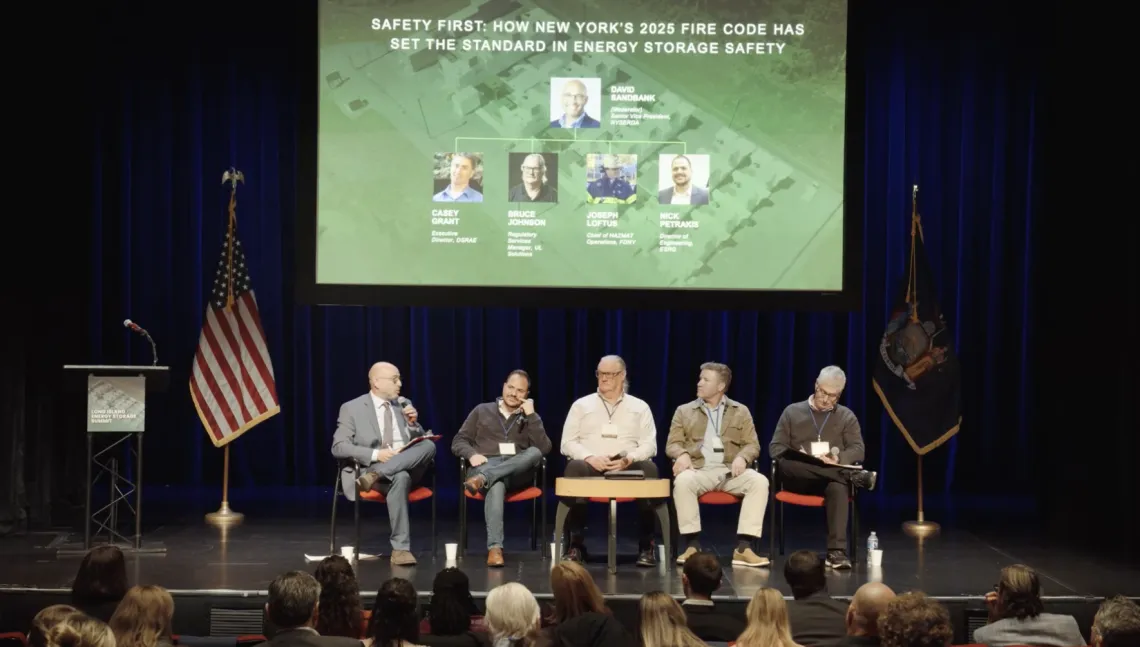
To fully understand and appreciate the magnitude of impact that the updated Fire Safety Code represents, as well as the process associated with code requirements for BESS installations, please watch the following video regarding New York State’s updated 2025 Fire Code. The code establishes a new national benchmark for battery energy storage safety. This panel brought together fire safety experts at the Long Island Energy Storage Summit on November 18, 2025 at the State University at Stony Brook to discuss the collaborative work of the Fire Safety Working Group, lessons from real-world site inspections, and the policies and standards now shaping safe deployment across the state and beyond. The new code has been effective since January 1, 2026. Panel experts included Casey Grant (Executive Director of D&S Research Associates & Engineers), Bruce Johnson (Regulatory Services Manager for Buildings and Fire Safety at UL Solutions), Joseph Loftus (Chief in Charge of HAZMAT Operations at FDNY), and Nick Petrakis (Director of Engineering at ESRG), and the panel is led by David Sandbank, (SVP of Integrated Energy Solutions at NYSERDA).
Environmental and Water Contamination
There is absolutely no evidence of short- or long-term contamination of any New York State BESS site that has or has not experienced an instance of fire or other issue. Following any fire the State carefully examines the site for the release of chemicals and any evidence of these chemicals on area buildings or the soil. Very rigorous and thorough analysis of surfaces at battery fires and nearby areas did not indicate any contamination remained at the facility and did not spread to other areas.
Solid State: Unlike a car engine or a chemical plant, BESS batteries are "dry" systems. There are no large vats of liquid to spill. The electrolyte is absorbed within the battery cells.
Containment: Standard designs include secondary containment (like a bathtub liner under the racks) to catch any coolant or water used during fire suppression.
Toxicity: Modern LFP batteries do not contain heavy metals like lead, cadmium, or mercury.
Property Values and Aesthetics
There are concerns about any development of almost any kind in terms of the aesthetic and economic impact on the community in proximity of the development. In the case of BESS projects there are existing solutions for the aesthetic concerns, and their similarity to other energy infrastructures suggest the economic concerns are inflated as well.
Visual Screening: BESS facilities have a smaller footprint and lower profile than almost any other industrial or energy infrastructure. They can be hidden behind "living fences" (evergreen trees), berms, or decorative fencing. Your Town and/or Planning Board can negotiate a solution in terms of these aesthetic concerns.
Economic Impact: Studies on property values near BESS are still emerging, but historical data on similar “quiet” utilities (like electrical substations) show negligible long-term impacts on value, especially when compared to the tax revenue the project provides to local schools and infrastructure. Also remember, utility-grade BESS installations must be paired with transmission lines and substations, and these both already represent a far greater footprint and profile than the BESS installation will.
Summary: BESS = Battery Energy Storage SAFETY
It is critically important to be aware that in the instances of every fire at a BESS installation in New York State, no individual (fire department, first responder, or resident) has been injured, no property outside the affected facility has been damaged, and there has not been any evidence of hazardous chemicals anywhere in our water, soil, or elsewhere in the environment. The concerns regarding a lack of safety where BESS is concerned are unfounded and misleading. The risks associated with a BESS installation as compared to peaker plants and other fossil fuel burning energy plants are minimal in comparison.
We often think of the status quo as being harmless compared to a new technology being proposed that we perceive as potentially harmful. But in this case the status quo is fossil fuels, and it is doing immense harm daily to our health, our environment, and our climate. No power system is entirely risk free, but much has been done to greatly lower the risk of battery fires.
Remember also that in the case of peaker plants, we burn fossil fuels all the time and release those toxic fumes into the air we breathe; therefore, in comparing the status quo to BESS the small risk of a battery fire is nothing compared to the higher costs relating to our monthly energy bills and the constant, harmful, continuous burning of fossil fuels poisoning our air.