July 10, 2018
Washington, DC -- Today, the Sierra Club, Center for Biological Diversity, and Environmental Defense Fund filed a request to EPA to withdraw its decision to cease enforcing the glider truck requirements.
Revolutionizing our transportation systems is a crucial piece of Sierra Club's work to ensure we all can live in healthy communities, move around safely, and build a future powered by renewable energy.

We all want to breathe clean air and protect our families from toxic pollution and climate change. Unfortunately, transportation is currently our nation's largest source of greenhouse gas emissions and a major source of air pollution. To build a livable future, we must shift away from fossil fuel-powered vehicles and towards clean, renewable transportation.
Right now, Donald Trump and Republicans in Congress want to make it harder to drive clean cars, which will increase how much money you spend at the pump. We can stop them, but we need your help to protect access to public transportation, electric vehicles, and other clean transportation options.

Over the lifetime of the vehicle, a gas car puts out 4.5x more carbon pollution and infinitely more toxic tailpipe air pollution than an electric car.
We all want to breathe clean air and protect our families from toxic pollution and climate change. Unfortunately, transportation is currently our nation's largest source of greenhouse gas emissions and a major source of air pollution. To build a livable future, we must shift away from combustion vehicles and towards clean transportation.
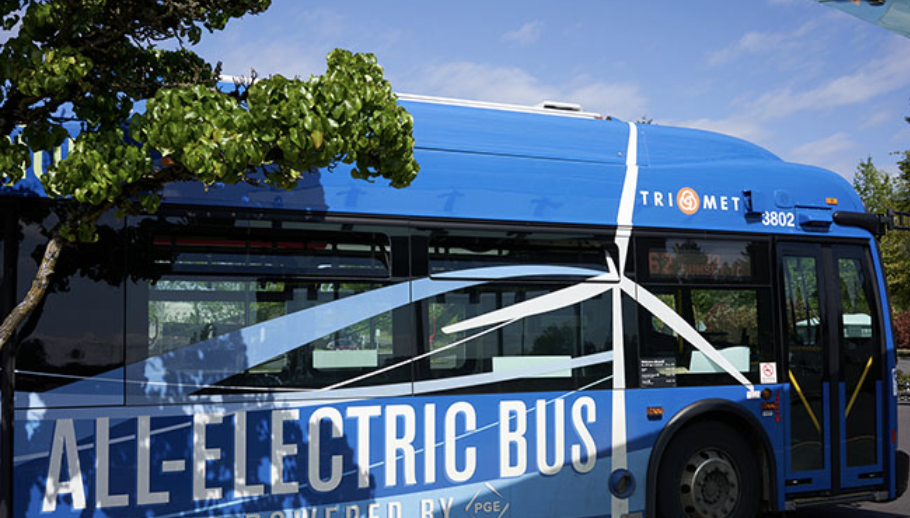

In a landmark legal win for clean transportation, a federal court has permanently barred the Trump administration from freezing funds for the National Electric Vehicle Infrastructure (NEVI) program – that is, a $5 billion federal initiative to build reliable, high-speed electric vehicle charging stations along America's highways!
The ruling means all 50 states, Washington, DC, and Puerto Rico now have the legal certainty they need to move forward building a nationwide charging network, free from unlawful interference. Sierra Club and partners brought this case on behalf of members who were directly harmed by the freeze.
This is what people power looks like: Sierra Club members standing up to protect clean transportation investment, cleaner air, and better access to affordable electric vehicle driving for everyone.
Washington, DC -- Today, the Sierra Club, Center for Biological Diversity, and Environmental Defense Fund filed a request to EPA to withdraw its decision to cease enforcing the glider truck requirements.
Today, the Public Utilities Commission of Nevada voted unanimously to approve several new investments by NV Energy, including $5M for electric vehicle charging infrastructure, a new energy storage incentive program, and updates to its existing solar incentives program.
Portland, OR -- This week, automakers, utilities, labor groups, and consumer advocates are joining environmental groups in signing the Transportation Electrification Accord. The Accord seeks to serve as a roadmap, offering a shared vision detailing how states and communities can establish an equitable electrified transportation future.
Denver, CO -- Today, after Colorado Governor Hickenlooper began the process to adopt advanced clean car standards, the Alliance of Automobile Manufacturers -- a trade group representing Ford and other car manufacturers -- began a public campaign to undermine the effort. This comes while the Trump administration -- while coordinating with the Auto Alliance -- has been working to roll back the clean car standards. However, amid swift backlash to rolling back the standards, the Alliance has attempted to distance itself from their efforts.
Today, Plug In America and the Sierra Club released the AchiEVe: Model State & Local Policies to Accelerate Electric Vehicle Adoption toolkit. This policy guide details the most effective policies for growing the electric vehicle (EV) market at the state, city, and local levels.
Sierra Club and allies have entered into an agreement with Duke Energy Carolinas that will remove barriers to clean energy, decrease greenhouse gas emissions, and bring a $25 million investment in electric vehicle infrastructure that is unprecedented in the Southeast.
Washington, DC -- Today, the Sierra Club and other environmental and consumer advocacy groups filed a petition for review with the U.S. Court of Appeals for the District of Columbia against Scott Pruitt’s Environmental Protection Agency’s (EPA) decision that the light-duty vehicle standards for model years 2022 to 2025 are no longer appropriate and should be revised.
Washington, DC -- Today, Ford and other auto executives are set to meet with Donald Trump, Scott Pruitt, and Elaine Chao to discuss the administration’s plans to rollback the clean car standards. The Auto industry has been working feverishly to claim that they intend to lobby Trump to protect parts of the standards after having spent the past year pushing to roll them back, despite overwhelming objections from the majority of Americans, scientists, and environmental experts.
Washington, DC -- After having worked with Donald Trump and his administration for more than a year to rollback the clean car standards, Ford and other automakers’ trade group, the Auto Alliance, is seeking to spin its efforts in the face of intense public opposition.
The Public Utilities Commission of Ohio issued an order approving a settlement agreement reached by the Sierra Club, AEP, Commission Staff and other stakeholders last fall.