
September 2025
In this issue:
- Recharging for the Fight Ahead by Nate Davis
- Wilderness Under Attack: What Does Rescinding the Roadless Rule Mean? by Axel Ringe
- What is Your Purpose? Discovering Meaning in a Cause by Lauren Strohmeier
- Coal Free Victory! by Matt Cannon
- Moving Maine by Matt Cannon
- Presenting Maine Energy: Past, Present, and Future
- Sun Day of Action: Celebrating Maine's Clean Energy Industry
- Introducing Karen Tilberg: Conservation Powerhouse, Author, and Keynote Speaker
- Evergreen Homes Spotlight
- Volunteer at the Common Ground Country Fair!
- Hear Here! Portland Community Music Fest
- Green Tip of the Month
- The Month Ahead
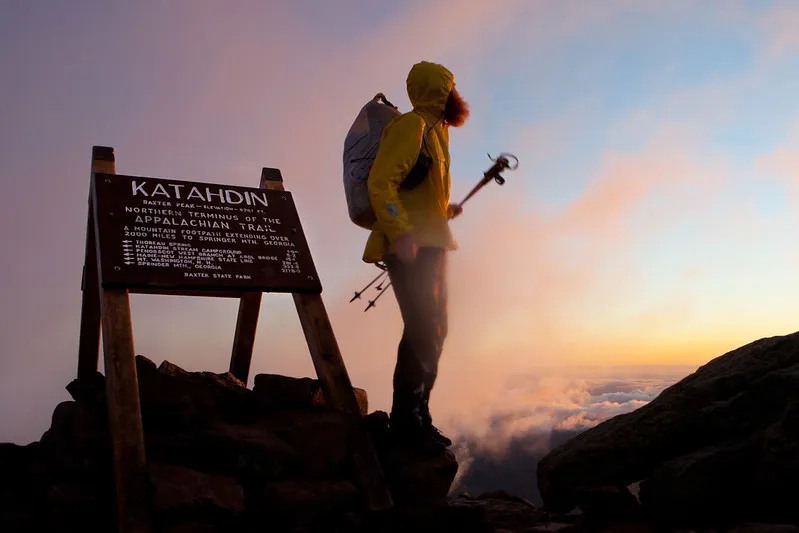
Recharging for the Fight Ahead
In July, having lived in Maine for over twelve years, I climbed Katahdin for the first time. I had planned summit attempts for each of the past two summers but was each time thwarted by factors outside my control, and so for this summer my wife and I reserved a lean-to at Chimney Pond early enough in the season that even if the weather or work or who-knows-what spoiled a third attempt, I could always try again later.
Chimney Pond is a spectacular place to spend the night, or even just a moment. It lies at the bottom of a huge glacial cirque enclosed by 2,000-foot rock walls. The setting fills one with reverence and gratitude. It is unique on the east coast, at least in my experience. Baxter State Park maintains a campground at Chimney Pond, but reservations are competitive; we snail-mailed our reservation form four months before the dates of our desired stay, timed to the day to optimize our chances of snagging a coveted spot. There are no roads to Chimney Pond; you must hike in 3.3 miles and carry an overnight pack if camping there. You can hike to Chimney Pond and summit Katahdin in a single day (most people do this who climb from the east side of the mountain), but camping at Chimney Pond breaks the hike up nicely and allows you to spend more time in that awesome place.
Four trails lead from Chimney Pond to Baxter Peak, the summit of Katahdin. These trails vary in difficulty and geography, and I had pondered my choices for weeks. My wife planned to hike to little-visited Blueberry Knoll (judging from her photos, a worthy and beautiful destination in its own right) while I hiked to the top, so I would be solo. I wanted a challenge, so I chose the steepest, roughest way up: the Cathedral Trail, a sustained, intense boulder scramble along a ridge named for three prominent rock formations whose columnar structure is said to resemble that of cathedrals.
I’m an experienced hiker, but not a rock climber (and also relatively short), and the trail tested my limits. More than once, I had to pause for several minutes and figure out exactly where I could stretch my hands and angle my feet to get enough leverage to pull and push myself over a particularly steep incline or around a particularly awkward corner. Though the trail was rugged and exposed, I never felt at serious risk of a dangerous fall. I didn’t see another soul until I arrived with battered shins and sunny disposition at the top of the trail, a short walk from the summit. After relaxing on top with a gaggle of other folks who had come up different routes, I took the comparatively gentle (and crowded) Saddle Trail back down to Chimney Pond, where my wife and I spent a relaxed afternoon and night before hiking back to our car the next morning. It was a fantastic trip.
We all know (I hope!) that time spent in nature is restorative, but to what does it restore us? There’s not much wisdom in facile comparisons between the distracted tumult of modern life and an idealized state of nature; like it or not, our distracted tumult is part and parcel of a world that is, by historical standards, astonishingly safe and prosperous, and which I would not give up. But it’s easy to forget yourself and to lose track of the threads that have woven your life. Distance allows contemplation and recollection, and one of the simplest ways to achieve that distance is to shut your phone off and walk into the woods.
Katahdin is a strenuous and difficult hike regardless of which route you choose, and the weather above tree-line can change suddenly and dramatically. Do your research, be prepared, set a turn-around time, and let your loved ones know of your plans. Living to hike another day is more important than reaching the summit.

Wilderness Under Attack: What Does Rescinding the Roadless Rule Mean?
Tennessee Chapter Sierra Club
For nearly 25 years, the U.S. Department of Forest Service's Roadless Area Conservation Rule has protected over 58 million acres of national forestland from new road construction, reconstruction, and most timber harvesting. There are protected Roadless Areas in 39 states, including 85,000 acres in Tennessee's Cherokee National Forest; nearly a quarter of New Mexico’s Gila National Forest; and 9 million acres of coastal rainforest in Alaska’s Tongass National Forest.
On June 23, Agriculture Secretary Brooke Rollins announced that her agency is rescinding the Roadless Rule, calling it “overly restrictive” and “outdated.” Rescinding it, Rollins promises, will “remove prohibitions on road construction, reconstruction, and timber harvest … allowing for fire prevention and responsible timber production.” Rollins is using two of Donald Trump’s executive orders to justify the move: One demands expanded timber production; another calls for making wildfire prevention and response more effective, in part by easing burdensome rules and regulations. But these justifications betray ignorance about the lands the Roadless Rule protects and the reasons the rule was created.
The Roadless Area Conservation Rule was established in 2001 following decades of unrestrained logging that left an $8.5 billion backlog of deferred maintenance on its vast network of roads. The rule protected the best of what was left—acreage that wasn’t protected as wilderness, but that was relatively intact and undeveloped.
Rollins’s retrograde proposal doesn’t just ignore the multi-layered benefits Roadless Areas provide; it also ignores the transformation of the Forest Service’s culture and mission over the last quarter century.
The Roadless Rule revocation is part of a suite of actions the Trump administration has taken to disempower and deregulate the Forest Service, from mass firings and forced resignations to attacks on safeguards like NEPA and the Endangered Species Act. The Forest Service has lost around 5,000 employees through deferred and early retirements.
Undoing the rule will require a rulemaking process that includes public notice and comment and environmental analysis under the National Environmental Policy Act and the Endangered Species Act, as well as national Historic Preservation Act consultation with tribes and states. There is a long administrative record justifying the Roadless Rule. Reversing it requires a rational explanation that judges will accept.
In the meantime, all of us who care about forests and public lands need to take actions to oppose the Administration's actions and to support the Roadless Area Conservation Act, which has been introduced in Congress and would codify the Roadless Rule into law. Write LTEs, spread the word over social media, sign petitions, and write your Congressional representatives and senators. Remember these are your lands. They shouldn't just be turned over to the logging and fossil fuel industries.
Revoking the rule could affect more than 230,000 acres of wild forest in the White Mountain National Forest, including 6,000 acres in Maine, according to the service's inventory. Rescinding this rule also impairs Maine's strong outdoor recreation economy. The percent of Maine's GDP made up by outdoor recreation, which has ties to public lands and wild spaces, is among the strongest in the country.
The comment period is open, so please take action today!

What is Your Purpose? Discovering Meaning in a Cause
It’s a beautiful and refreshing day, the air crisp and cool. With vibrant reds, oranges, greens, yellows, browns, and other hues, the colors of autumn have arrived. As I walk decisively, the leaves crunch, each footstep a reminder of changes. Walking solo, I’m both deep in thought and tuned into the forest’s tempo. It’s an ‘in the moment’ and contemplative feeling.
Wandering without a destination in mind, the promise of more sights, sounds, and horizons is my compass. Looking up, I gaze at the canopy of trees and listen to the wind, one of the most ethereal sounds. The sunlight dances through the branches, cascading onto the ground into a mosaic.
A trailhead appears. And with it, a decision. Should I hike this trail? Curiosity compels me to, and I step in the new direction. The winding path gets steeper, and I feel the strain. I have faster breathing, and tired legs, but that’s all part of the journey. Helpful markers count down to the summit. Two miles, 1.5, .5 to the summit, they say.
Suddenly, I see an opening ahead and the pristine blue of the sky. There it is: the mountaintop. What are the views going to be like? I wonder. After carefully scrambling to the summit with its 180-degree views, I take it all in: the expanse of colorful forests, the aqua lakes and ponds, and the glowing horizon. Breathing in the cool air, I observe the subtleties of the landscape.
Like this experience, I feel a deep sense of renewal every time I venture outside. I feel it when I walk in a forest, hike up a mountain, paddle on a river, swim in the ocean, and more. To me, there’s something deeply moving about being outdoors in nature. It brings peace, joy, and meaning. It’s where I feel at home.
Even the challenging moments are fulfilling, with the strain and exhaustion that come with physical exertion. When I’ve reached the peak of my performance, it’s like reaching a wall. Can I get past this barrier? With determined resolve, I press on. Pushing past my limitations is always a time of change and personal growth.
After being outdoors, I have a stronger perspective about this amazing world. The awe and wonder I experience make me wiser and more enlightened. I’m ready to experience more of the unknown.
Because I love nature, it’s my purpose to enjoy, protect, and find inspiration in its beauty.
This story describes why I love the outdoors. It’s why I am on a mission to protect the environment.
When we dedicate ourselves to good causes we care about, the world becomes a better place.

Coal Free Victory!
We did it! Last week, Portland City Council chose to adopt our ordinance unanimously!! This means that instead of going to the ballot in November, the Council agreed with our effort and decided to pass it themselves.
That means that Sprague's coal pile must be covered by 2027 and that Portland will be coal free by 2030.
The Coal Free Portland campaign started years ago with local residents, Sierra Club members, City Councilors trying to find a solution to stop toxic, fugitive coal dust from polluting the air in surrounding neighborhoods. After big wins in New Hampshire retiring the last two coal-fired power plants in New England, Sierra Club was contacted for help with one final piece of coal infrastructure here in Maine: a 45,000 ton industrial coal storage facility on Portland's waterfront.
While educational efforts had been on-going through Portland City Council and some data had been collected by Maine DEP, there were no state or local regulations that could protect the community from coal dust being shed off this pile. After unsuccessful pushes for City Council to take action, Sierra Club Maine joined the grassroots effort to get this over the finish line. In partnership with Conservation Law Foundation, we drafted an ordinance to protect communities from coal dust and worked with local organizers to gather 1,500 signatures to put it on the ballot this year. Coal Free Portland, with over 25 volunteers, collected over 1,800 signatures from Portland voters.
Given the popularity of the measure, we pushed to have City Council adopt the ordinance directly and not send it to the ballot. Sierra Club staff and Coal Free Portland volunteers mounted a strong outreach effort to City Councilors and city staff to ensure that we would have a positive vote at the public hearing.
We're so so grateful for all of the amazing grassroots support that made this campaign a success. Not only did we get a unanimous vote, but each councilor individually thanked Coal Free Portland for our effective and thoughtful advocacy. Plus, the applause in the chambers after the ordinance passed offered a rare feel-good moment in City Hall.
There is more to do, but it’s important to acknowledge and celebrate great organizing efforts and local action whenever we can!

Moving Maine
In case you missed it — you can now watch the recording of June’s Mobility Learning Community session, where Moving Maine Network's Executive Director Zoe Miller presented key findings from their new report, Try to Imagine it's You: How Transportation Barriers are Hurting Maine and How We Move Forward.
The report exposes the extent of transportation insecurity in Maine, revealing that two in five Mainers struggle to access safe, reliable, and affordable transportation. Drawing from over 500 firsthand accounts and data from the Transportation Security Index, it highlights how these barriers are keeping people from jobs, medical appointments, grocery stores, and staying connected with their communities.
Sierra Club has had a Transportation for All campaign for many years, as transportation is at the intersection of clean energy, land conservation, and healthy communities. Our Maine Chapter has been collaborating with Move Maine Network and other partners to build a statewide campaign that supports public/active transportation. More to come, so stay tuned!
Presenting: Maine Energy: Past, Present, and Future
This webinar will cover the energy history of Maine, the current energy status, and the projections into the future, with a slide deck of facts and photos of past and present energy infrastructure, and scenarios for the future in 2050. A Q&A time will be made available after a 40-minute presentation. The past, present, and future segments of the webinar are an adaptation of the Charles Dickens classic story “A Christmas Carol”.
Segment 1: The Past
Maine started, as all colonial states, with a heavy dependence on wood for thermal and industrial energy but soon developed hydropower to run mills for wood product, textiles, food processing, and industrial products. In the 1900s, Maine turned to coal and oil, all imported, as a primary energy source for growing communities, industries, and transportation. More recently, natural gas (also imported) has become a significant energy source. Without having any primary fossil-fuel resources itself, Maine depended entirely on imports for the fossil-fuel sector of its economy while domestic wood and water still served part of the energy market.
Segment 2: The Present
Maine has far from ignored the energy transition that is happening in the US today. Although still heavily dependent on our historical fossil-fuel energy sources, Maine is aggressively turning to renewable energy sources to replace them. By state statute, we consider biomass and small hydropower to be part of that “renewable” domain of energy, but both of these sources are coming under increased scrutiny as truly clean and renewable. Maine’s transportation sector is almost wholly fed by fossil-fuels (gasoline and diesel) while space heating is predominantly done with oil and propane. Having hosted one nuclear plant which was decommissioned in the 1990s, Maine no longer generates nuclear power. While the electrical supply in Maine is increasingly fed by renewable sources, it is still maintained with ample fossil fuel input. Thus, today, Maine is still a net importer of energy.
Segment 3: The Future
The Maine 132nd legislature has already prescribed the future for electrical energy production in Maine: 100% “clean” sources (90% of which are to be renewable) by the year 2040. Accompanying that is a statute to drive our net greenhouse gas emissions to zero (carbon neutrality) by the year 2045. These are, compared to other states, aggressive goals that are nonetheless achievable. In fact, the Governor’s Energy Office shows how this can be realized in its Pathways to 2040 report. We do not wish to return to nuclear power, a power source which is not supported by Sierra Club policy. Large hydropower projects have neither broad public support nor Sierra Club endorsement. Solar and wind facilities will be our primary energy generators with large battery systems smoothing the supply curve. Distributed energy resources will become commonplace, such as community solar and geothermal systems for serving multiple end users. We will show what the implementation may look like by 2050, roughly a generation from now, in terms of land use; physical infrastructure for energy generation and distribution; energy use in homes, businesses, and industries; and transitions in transportation infrastructure.
You can register for this webinar event here.

Sun Day of Action: Celebrating Maine's Clean Energy Industry
We’re winning the clean energy fight – but we need to win it faster.
Solar installations are breaking records every month. Electric vehicles are outselling gas cars in key markets. Clean energy jobs are growing faster than any other sector. The transition we’ve been working toward for years is finally happening at scale.
But powerful fossil fuel interests and their allies are fighting back harder than ever, spending millions to slow progress and protect their profits. They’re rolling back clean energy policies, spreading misinformation and blocking the infrastructure we need to complete this transition.
That’s why Sierra Club has joined Third Act Maine, A Climate to Thrive, and Maine Climate Action Now! To host Sun Day on September 21st.
Sun Day is a nationwide celebration of clean energy progress and a call to accelerate the transition that's already underway. We'll be joining communities across the country to showcase the businesses, organizations, and families that are already leading the way to a clean energy future.
The truth is, we have solutions in abundance. Solar, wind, geothermal, and other clean energy innovations are becoming more reliable and more affordable by the year, while dirty fossil fuels continue to destroy our planet and health. We are no longer 20 years away from a clean grid- we’ve made it. Join us in celebrating- and demanding- a sustainable power grid that is better for people and planet.

Intdroducing Karen Tilberg: Conservation Powerhouse, Author, and Keynote Speaker
Author of “Loving the North Woods: 25 Years of Historic Conservation in Maine”, Karen Tilberg is an accomplished conservation activist and the former CEO of the Forest Society of Maine. Before becoming one of the state’s most consequential powerhouses of environmental law, Tilberg spent summers guiding backpacking trips along the Appalachian Trail, where she fostered a deep love of the lush forests and mountains. Tilburg has spent time as a biologist, lobbyist, and attorney, and has used her talents and passion to drive forward initiatives that protect wildlife, lands, and people.
We are excited to share that Karen Tilberg will be our keynote speaker for our member’s annual celebration on October 4th. Join us at the Wolfe’s Neck Center for Agriculture and the Environment to enjoy an afternoon of family friendly activities, live music, and amazing food. Mingle with a like-minded community from across the state while exploring Wolfe’s Neck trails, fields, and facilities. Purchase tickets in advance here.
Evergreen Homes Spotlight
Twenty years ago, I was just a homeowner in Rockland with an 1880s Victorian that had no insulation. After living with drafty rooms and high heating bills, I started researching how to make my home more energy efficient. I got a few quotes from contractors, but in the end I decided to try it myself—insulating the walls and attic to see if I could make a real difference.
What I discovered was that insulating properly wasn’t simple. It required specialized equipment, training, and a lot of learning. That journey of trying to solve the problem in my own house in 2006 became the beginning of Evergreen Home Performance. Now, as we enter our 20th year, I see homeowners in Maine facing the best opportunity I’ve ever witnessed to make their homes more comfortable, efficient, and climate-friendly.
Here’s why: we’re in a unique moment where Efficiency Maine rebates are at record highs, Green Bank financing is affordable, and the federal insulation tax credit (25C)
adds another $1,200 in savings—but that tax credit ends December 31, 2025. For Maine families, this “stacking” of incentives means it has never been more affordable to
make a real impact on your energy bills while cutting carbon emissions.
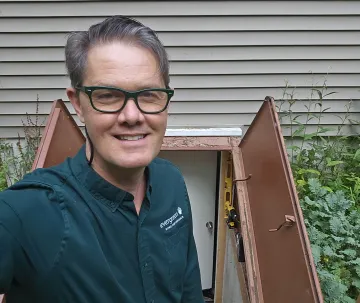
Since Evergreen began, I’ve always been a do-it-yourselfer. And even now, I still enjoy working on my own house. Just last weekend, I added a proper exterior door at the bottom of my basement bulkhead. Most Maine homes have a metal bulkhead, but without a sealed door at the bottom of those stairs, it’s a wide-open entry point for cold
air—and even rodents. Installing a door there is not exactly a beginner project, but with some carpentry skills and a weekend or two, it’s an approachable DIY job. Even better,
it qualifies for up to $250 in federal tax credit. That’s a small but powerful example of what’s possible before the end of the year.
Of course, for comprehensive improvements—attic, wall, and basement insulation—I
strongly recommend working with an Efficiency Maine Registered Vendor like Evergreen. We know the programs, the paperwork, and how to line up rebates, tax
credits, and financing so you capture every dollar available. If you’d like to learn more, I’ve written more about the tax credits Here and you can also see our overview of Efficiency Maine rebates and financing.
If you’re considering upgrades, now’s the time. Contractor schedules are filling up quickly, and these historic incentives won’t last forever. Acting this year ensures you
don’t miss the federal tax credit—and locks in the full value of the Efficiency Maine rebates while they’re at their peak.
—Richard W. Riegel Burbank
President, Evergreen Home Performance
The Maine Chapter extends our gratitude to Evergreen Home Performance for their generous support of our Annual Celebration.

Volunteer at the Common Ground Country Fair!
Please consider volunteering at Sierra Club Maine’s table in the Environmental Concerns Tent at the 2025 Common Ground Country Fair! We’ll be there from 9:00 am Friday, September 19th through Sunday, September 21, 2025 at 5:00 pm in Unity, ME.
If you've never helped at the fair before, it's a wonderful experience! As a volunteer, you may choose to receive a free entry ticket (a $20 value) good for the entire day for working a 2 or 3-hour shift. If you've never attended the fair, here's the link to the Common Ground Country Fair info. There's great food and music, animal exhibitions, an organic farmer's market, sustainable living vendors from across the state, and so much more!
Please use this link to sign up for your shift(s).
For those of you who enjoy camping and are traveling a distance, there is free camping at the fair with showers/restrooms. There will be more information coming your way closer to the event if you sign up.
Thanks so much for your help with this wonderful opportunity to connect with the public in a meaningful way at an event that is one of the highlights of living in Maine. Please contact Corrine Adamowicz at corrine.kucirkaadamowicz@sierraclub.org with any questions.

Hear Here! Portland Community Music Fest
Hear Here! Creative Portland invites you to Hear Here 3, an exceptional celebration of Portland's local performing artists at Merrill Auditorium on Sunday, September 7th, featuring Maine-based African drummers, dancers, classical strings, soul singers, Broadway actors, and more. Get your affordable tickets at PortTIX or click here to request FREE community passes for the LIVE variety show beginning at 6pm.
Any questions, contact info@creativeportland.

Green Tip of the Month
Most of us now get our music, TV, and movies through streaming platforms. And while streaming media does have some environmental benefits (less plastic, for example), it’s not all good for the planet. Unlike the old ways of watching or listening, streaming relies on large and energy-hungry data centers. If you look at the greenhouse gas emissions of the internet as a whole, the numbers rival that of the global airline industry – and 65% of internet traffic comes just from video streaming. The simplest solutions are cheap and easy:
- Instead of streaming movies, check out free DVDs at your library.
- Download your favorite albums and songs to your phone. That way, your device only contacts the data center once. This is possible with Apple Music, Spotify, etc.
- Enjoy hunting for used music and movies at local thrift stores.
- Listen to the radio (and support your local, community-based stations)!

The Month Ahead
Here are some of the meetings and events we have coming up. We hope to see you soon!
- 9/21 11am-2pm: Sun Day of Action
Join us in observing the autumn equinox at Lincoln Park in Portland ME! Celebrate the power of the sun and clean energy! Enjoy live music, speakers, and food trucks as you browse our line up of tables demonstrating, teaching, and celebrating clean, green solutions for our energy needs. Find more information here! - 9/19-9/21: Common Ground Country Fair
Check out the Sierra Club table at this year’s Common Ground Country Fair! The Maine Organic Farmers and Gardeners Association’s (MOFGA) annual celebration of rural living features 1000-plus exhibitors and speakers, and emphasizes vibrant communities, sustainable living and local economies, while highlighting organic agriculture. Learn more or buy your tickets here. - 9/19 at 10am: Political Team Meeting
- Join us for the political work of endorsing candidates and other local actions.
- 9/16 at 12pm: Clean Energy Team Meeting
- Join our team and ensure a clean and just energy future for Maine, specifically focused on renewable energy development!
- 9/10 at 12pm: Volunteer Orientation
- Learn how you can help protect Maine’s environment.
- 9/9 at 2pm: Advancement Team Meeting
- Raise the crucial funds necessary for us to do our work.
- Events Team Meetings
- Help us organize events to educate and engage Mainers across the state.
- 9/4 at 12pm
- 9/11 at 12pm
- 9/18 at 12pm
- 9/24 at 12 pm
- Help us organize events to educate and engage Mainers across the state.

Sierra Club Maine Announces Initial Endorsements Ahead of State Primary
Coal Updates: New England Setting a New Path
Testimony in Opposition to LD 2261: An Act Designating New Motor Vehicle Emissions Rules as Major Substantive Rules
Testimony in Opposition: LD 2266: An Act Regarding Restoration and Protection of Coastal Sand Dune Systems and Permitting of an Offshore Wind Terminal on Sears Island
Testimony in Support of LD 2007: An Act to Advance Self-determination for Wabanaki Nations