After driving an electric vehicle (EV) for six months, I am convinced that EVs are superior to other vehicles. This blog post will correct the current misinformation about the technology. Much of the misinformation about EVs is propagated by the fossil fuel industry, creating a false perception that presents half or less of the picture.
Many people are hesitant to buy an EV in part due to misinformation about cost, upkeep and fueling. In 2023, the United States ranked 25th in the world in the percentage of new EV car sales. These figures do not include hybrids, which come in plug-in and non-plug-in varieties.
The technology for EVs is progressing rapidly. What was true of EVs three years ago may not be true today. Additionally, people tend to present the shortfalls of EVs without pointing out the negatives of internal combustion engine (ICE) vehicles.
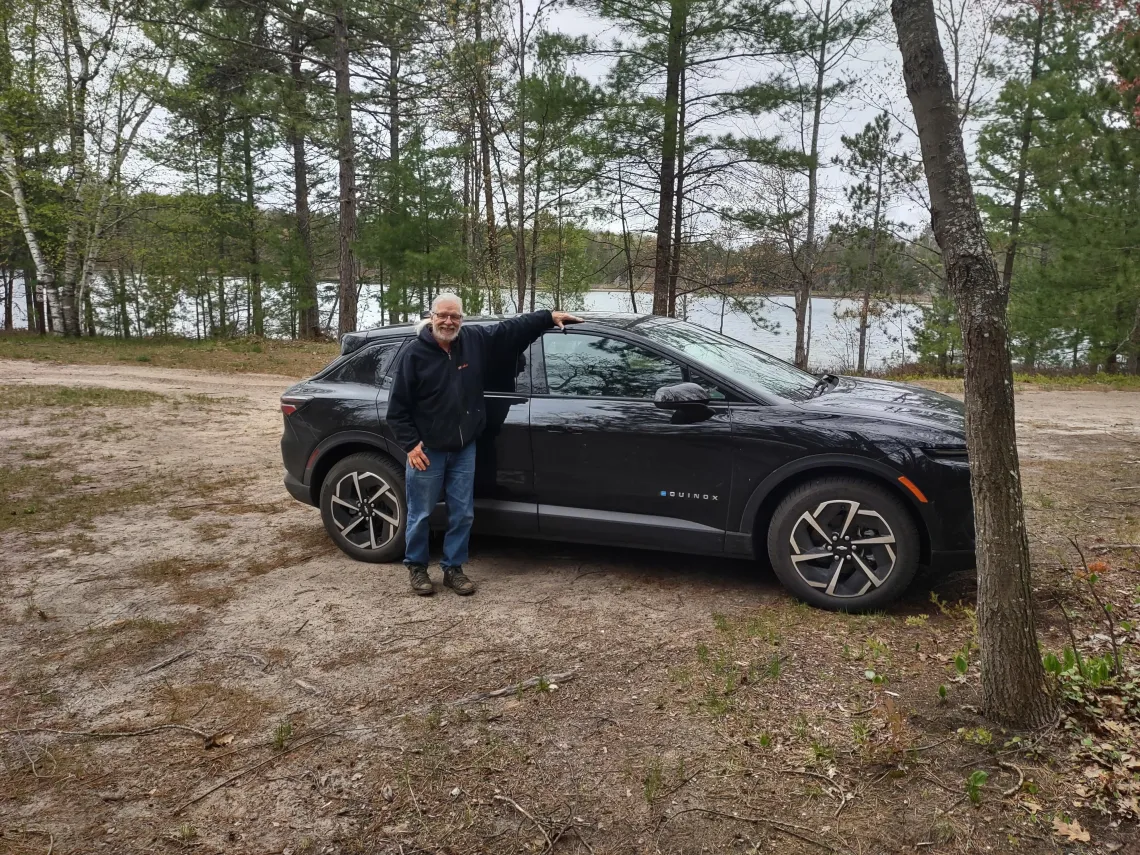
Six months ago, I purchased a 2025 Chevrolet Equinox EV. Since then, I have taken several trips. I have made round trips from Swartz Creek (the Flint area) to Detroit, Lansing, St. Clair, Midland and Lake Odessa (about 170 miles round trip).
Chevrolet recommends a charge between 20% to 80% at all times. You can occasionally exceed these recommendations with minimal effect on the battery, but doing so regularly will prematurely wear on the battery. While charging infrastructure remains spotty, many people find they can do most of their charging at home.
A trip to Alpena (a round-trip of 398 miles) was the first trip I made that required me to depend on public chargers. To find public chargers, I used an app called PlugShare.
When linked with Google Maps, PlugShare provides turn-by-turn directions to a public charger. The app also gives one to 10 ratings on each charger for a very accurate evaluation of the charger’s reliability. Most chargers are rated at 10.
The app also lists the price of electricity at each charging station. It has a comment section for drivers to relate their experience at these sites and information on nearby restaurants and amenities. PlugShare plans a route for you and recommends places to stop and charge.
One would expect that a trip to the UP would pose a challenge in finding fast chargers, but that was not my experience. A charge in St Ignace got me to Escanaba. I could also camp with my EV at Mowe Lake in the middle of the UP away from any hint of civilization. I had no concerns driving along a stretch of US 2 without any fast chargers, knowing there would soon be chargers in Manistique.
The Trump Administration and Congress are bound to cut funds to develop a network of fast chargers. Despite these probable cuts, several charging companies and automakers are bringing new chargers online on a regular basis.
Eight major car manufacturers banded together to form a company named iONNA. iONNA plans to develop a network of chargers throughout the country with probable additional amenities. This combined effort should speed up the number of charging stations available.
Most chargers accept credit card payments. To use a Tesla charger, you need to use a phone app and an adapter if you’re not driving a Tesla, which with practice is typically a smooth experience. I recommend getting the Tesla app on your phone and practicing using it before leaving on a long trip.
While charging times on the road can be longer than a stop for fuel at a gas station, the majority of drivers do most of their charging at home. Due to this downtime refueling, I have found that I spend less time charging than filling up with gas.
When I get home, it only takes a few seconds to plug my car in. I then go about my business and come back later to a fully charged car. There is no standing out in the elements to "refuel" your car, or inhaling gas fumes. Every year, there are breakthroughs in the speed of charging.
When I charge while on a trip, I make good use of my time. I use my phone to catch up on my email and social media posts. I grab a bite to eat and do other tasks. Depending on a variety of driving conditions, I can drive two and a half to three and a half hours on a charge. Wise practicality and safety procedures require a break after that much time on the road.
How long does it take to charge a car? This depends on four main factors: the kilowatts (KW) delivered by the charger, the KW your car can accept, the temperature of the battery and your battery's charge. It is usually between 15 to 25 minutes.
The price of an EV has been coming down recently, in some instances dramatically. The base price of a 2025 Chevrolet Equinox EV is around $35,000, up from $33,500 when I bought my car 6 months ago. This does not include tax and license. I received a $7,500 federal incentive at the point of sale. I also received a $2,500 GM loyalty incentive. My out-the-door price was a little over $28,000.
Toyota, Kia and other car manufacturers have recently released low-cost options. The federal incentive is expected to be eliminated at the end of 2025 so now is the time to buy a discounted EV.
EV fires, which can be more difficult to extinguish, have also scared off would-be buyers, but a look at the statistics reveals that EVs are much safer from fires than ICE vehicles. Car and Driver reported on a study that shows ICE cars have 1,350 fires per 100,000 cars whereas EVs have only 35 fires per 100,000 cars.
The cost of replacing an EV battery is not as outrageous as people may think. For example, most EV's have a warranty of at least eight years or 100,000 miles.
Additional advantages to EVs include instant heat for defrosters and the cabin, instantaneous acceleration and instant torque. EVs are also quiet and require less maintenance.
The Sierra Club has reported on the urgency of decreasing emissions to mitigate climate change and is suing the Trump administration over EV funding freezes. The future of our children and grandchildren depends on protecting our environment. It is imperative we reduce our carbon emissions quicker than we have to this date. EVs are part of the solution. On your next vehicle purchase the author urges you to seriously consider the superior choice, an EV.
This blog does not address all of the unfounded criticisms of EV's. There are simply too many. If you have questions or comments please direct them to Mike Buza at theoriginalzuba@yahoo.com.