By Sonja Hegel • Visitor Experience Guide, Edelman Fossil Park & Museum
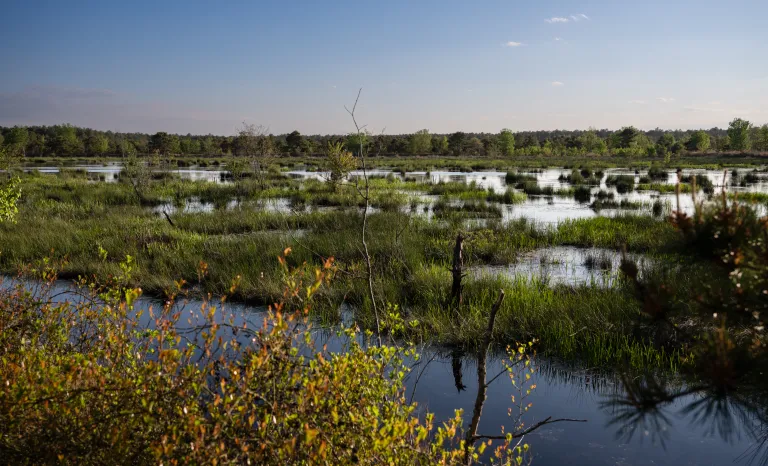
South Jersey’s beloved Pine Barrens National Reserve and Shore towns rely heavily on one of our lesser-known great treasures, the Kirkwood-Cohansey Aquifer. Seventeen trillion gallons in scope, the aquifer is surficial, meaning it is a shallow groundwater system that sustains the region’s wetlands and waterways.
The waterways the aquifer supports are home to many unique species that have evolved to the Pinelands’ acidic, nutrient-poor conditions. The aquifer also supplies thousands of New Jersey homes with freshwater, including roughly 200,000 acres of farmland. The aquifer’s freshwater is essential for supporting the health of local bays, too. Yet, this aquifer and, subsequently, the nature that relies on it, are under massive threat from rising sea levels and other extreme weather that result from climate change and human activity.
Water Scarcity
Firstly, both public and private wells extract water from the aquifer, and rainwater and snowmelt are the primary ways it gets replenished. However, New Jersey has been experiencing more frequent and prolonged droughts, not only preventing the aquifer from replenishing, but also causing waterways to lower or disappear entirely.
For example, vernal pools—which are temporary, seasonal wetlands that offer a safe breeding ground for native amphibians—are forming less, or if they appear at all, are drying up rapidly in the drought conditions. Without these pools, species, such as the endangered pine barrens treefrog, become more vulnerable to predators and face further population decline.
Small-scale, localized burns are beneficial to the Pinelands ecosystem, since native species such as the pitch pine have evolved to survive in its fire-prone conditions. However, more frequent and stronger droughts are creating drier landscapes—literally creating more fuel for the fire—and sparking more expansive and destructive wildfires. Prolonged droughts compound the likelihood of severe wildfires that incinerate new-growth forests.
The aquifer and South Jersey’s landscapes are at further risk of drying out because of saltwater intrusion. Typically, freshwater flows out toward the sea, but since freshwater levels are so low from drought conditions and excessive pumping, while climbing global temperatures are causing sea levels to rise, salt water has begun to seep into freshwater reserves.
This saltwater contaminates the water supply and renders wells unsuitable for use. Chemical interventions in wells to combat saltwater intrusion and artificial recharge of aquifers are possible and are increasingly necessary, but they are costly and do not resolve the other impacts of salt stress, such as habitat loss and soil salinization.
Saltwater intrusion also is drying out native forests and farmland. Rising salty tides kill off any young growth and allow more salt-tolerant species to take over, typically bringing invasive species along with them. The result is encroaching marshland littered with dead pines and cedars and invasive grasses, dubbed ghost forests, and is a striking example of how climate change is causing ecosystem loss.
Human development is one of the greatest threats to the Kirkwood-Cohansey Aquifer and the Pinelands ecosystem. Besides habitat loss, increasing human development places more demand on the already-threatened aquifer, increasing the risk of saltwater intrusion. Recently, across the region, plans to build data centers—which demand substantial quantities of water—have caused widespread concern in New Jersey
All combined, these human and environmental forces are putting immense stress on the Kirkwood-Cohansey Aquifer and, thereby, threatening the survival of South Jersey’s landscapes and the nature and human life they support. Individual and society-wide interventions are urgently needed to sustain the freshwater supply and bolster surrounding ecosystems.
So, how can you help protect the aquifer and the Pinelands? Help scientists track emerging ghost forests by documenting ones you see and submitting the data to SciStarter here: https://scistarter.org/ghosts-of-the-coast. Another way to support the health of waterways and wetlands is to avoid using fertilizers and chemical pesticides on your lawns. Rainwater carries these harmful chemicals from lawns to local waterways. Lastly, join the Pinelands Alliance’s Save the Source campaign to stay informed on emerging threats and more ways you can get involved.
Resources
Safer insecticides: https://shorturl.at/OI0v6
Saltwater intrusion: https://shorturl.at/BVueY