By Becca McFarlane
The Sierra Club’s local hikes have long distinguished themselves from many other group outings—not only through their focus on environmental stewardship, but through the intentionality with which leaders support participants through their extensive knowledge of local trails and the flora and fauna on the trail encouraging new participants to see their nature neighbors in a new light. This distinct experience is made possible by a comprehensive, multi-step leader training process designed to ensure that every outing is safe, accessible, and grounded in the organization’s broader mission of conservation.
I recently completed the required two-day Outings Leader Training, held on an appropriately rainy November weekend in San Luis Obispo. Although the weather kept us indoors, it proved to be an ideal backdrop for reflecting on the important preparation required before guiding others into outdoor spaces, like checking weather and always having a plan. Twenty-four participants attended, representing a wide range of ages and abilities. Veteran organizers and volunteers noted that it was the largest cohort in years—a promising sign of community engagement and renewed interest in both outdoor recreation and environmental advocacy.
Day One: Foundations in Safety and Emergency Response
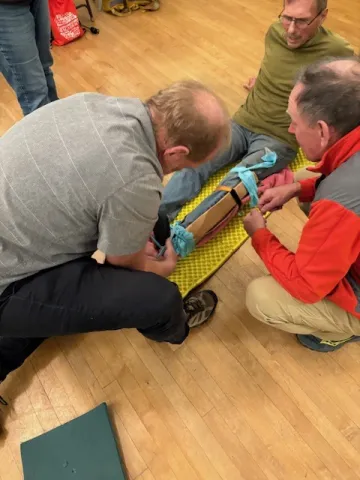
The first day of training took place at the historic Odd Fellows Hall in downtown San Luis Obispo. The curriculum focused on essential first aid, CPR, and the use of AED devices. Over the course of six intensive hours, we explored scenarios that leaders may encounter on trails and in backcountry settings, from heat-related illnesses to injuries requiring splinting or swift evacuation.
Instructors Mike “Moose” Garcia and Duane guided participants through hands-on practice and demonstration, emphasizing not only technical competence but also the calm, attentive presence required to assist hikers in distress. Their instruction underscored a central principle of Sierra Club outings: leaders must be prepared to safeguard the physical and emotional well-being of all participants.
Day Two: Mission, Protocols, and Creating Inclusive Access to Nature
The second day of training, held at the Elks Lodge, shifted toward organizational protocols and program philosophy. Participants examined the Sierra Club’s mission of promoting environmental protection through public engagement and grassroots leadership. Outings leaders, we learned, play a critical role in this mission by introducing individuals to the outdoors, fostering environmental awareness, and nurturing future advocates for ecological and social change.

Training sessions addressed the logistical and regulatory standards required for planning and executing outings, as well as best practices for cultivating inclusive and accessible experiences. Discussion topics ranged from developing backpacking and camping itineraries to designing outings that welcome individuals with disabilities and those new to outdoor activities. The emphasis on access and equity reflected the Sierra Club’s ongoing commitment to ensuring that all people—regardless of background, identity, or physical ability—have opportunities to experience the restorative benefits of nature.
The weekend concluded with a renewed sense of purpose and connection among participants as well as many questions on how to best promote Sierra Club locally. Beyond imparting practical skills, the Outings Leader Training highlighted the profound impact that thoughtfully led outdoor experiences can have on individuals and communities. By preparing leaders to guide with knowledge, empathy, and environmental responsibility, the Sierra Club continues to build a network of stewards who inspire a deeper relationship with the natural world and a collective commitment to its protection.