By Ranel Porter, Santa Lucia Chapter Chair
When we began our Chapter’s strategic planning process earlier this year, I think many of us expected that we would spend most of our time talking about environmental issues. What should we work on next? Where can we have the greatest impact? Which campaigns deserve more of our attention?
Instead, we came away with a conclusion that surprised many of us: one of the best ways to increase our impact on every environmental issue we care about is to bring more people into this work—and do a better job of helping them find a meaningful place in it and stay involved.
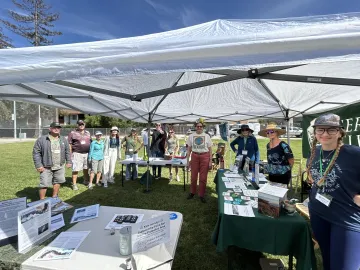
In other words, many hands really do make light work.
That sounds simple, but it has made me think a lot about my own Sierra Club journey and why volunteering matters so much in the first place. When I first became involved with the Santa Lucia Chapter, the Chapter was smaller. My onboarding consisted largely of conversations with Carole, who was Chapter Chair at the time, along with some of the formal online training offered by Sierra Club.
I was fortunate to come into the Chapter under a leader who had a real talent for helping people find where they could contribute. Carole and I talked about what interested me and where I might be useful. She first suggested that I become Membership Committee Chair, and I quickly incorporated the event planning I was interested in into that role.
Then Linda came along and wanted to take our programs and events to another level. That freed me up to become Vice Chair and, eventually, Chair.
None of that was planned when I first raised my hand. I just found somewhere to begin.
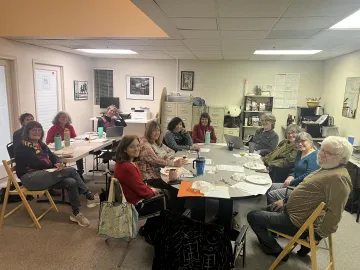
And I think that is one of the wonderful things about volunteering. You may arrive thinking you know exactly what you want to do, only to discover a completely different way to contribute. You meet people. You learn things. Someone sees a skill in you that you hadn't thought much about. Someone else arrives who is better suited to something you've been doing, which frees you up to try something new.Your place in the organization evolves because you evolve.
Our Chapter has evolved, too. We have benefited enormously from strong volunteer leadership over the years. Carole brought considerable experience and helped guide the Chapter through an important period of growth, Mila built on that work, Gianna has been instrumental as our staff person, and an ever-growing group of dedicated volunteers has helped turn us into a larger and busier Chapter than we were when I first showed up.
That is a very good problem to have.
But it also means that the informal, mostly conversational way of bringing people into the Chapter doesn't work as well as it once did.
We have created some good systems over the last few years, and I'm very proud of them. Thanks to our wonderful Volunteer Coordinator, Shawn, we now respond much more quickly when someone fills out the volunteer interest form on our website, and Gianna meets with prospective volunteers to learn what they care about and how they might like to help.
Now we want to take the next step. Because getting someone through the front door isn't enough.
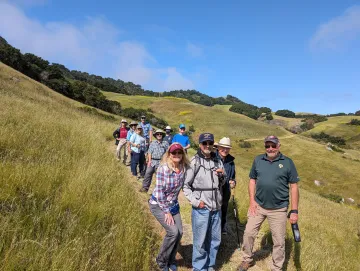
A person may want to lead hikes, help with political work, join one of our environmental committees, work on events, or contribute in some completely different way. It can be tempting to simply introduce that person to the right group and say, essentially, “Here you go!”
But anyone who has ever walked into an established group knows how intimidating that can be. Everyone else already knows the history. They know the acronyms. They know who does what. They know why a project is being handled a certain way. They may have been having the same conversation for months. Meanwhile, the new person is trying to figure out what everyone is talking about.
We've learned that enthusiasm alone isn't always enough to get someone through that experience. Sometimes we've moved people too quickly from “I'm interested” to “jump into the meeting,” and they haven't stayed.
I don't necessarily think that means they weren't a good fit. Sometimes I think we simply didn't do a good enough job of helping them find their footing. That's what we want to get better at. Not because we need more names on a volunteer list, but because there is so much joy to be found in this work once you feel like you belong.
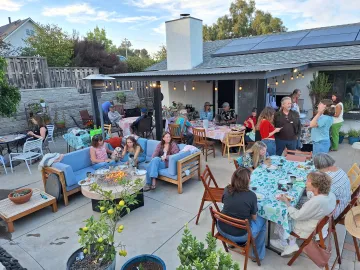
For me, one of the greatest gifts Sierra Club has given me is friendship. In the six years I have lived in San Luis Obispo County, I have made more friends through Sierra Club than through everything else combined. That still amazes me.
I've met people I never would have met otherwise. I've learned about issues I barely knew existed. I've worked alongside people who know far more than I do about conservation, politics, wildlife, energy, land use, communications, fundraising, and countless other things.
And yes, I've spent an astonishing amount of time in meetings. But I've also laughed a lot. I've met people I now consider close friends. I've had the satisfaction of watching something we worked on actually make a difference. And perhaps most importantly for me personally, volunteering has given me somewhere useful to put my energy.
Like many people, I can become overwhelmed by the national political noise. There is always another crisis, another headline, another reason to feel worried about the future. I can't fix all of that. But I can do something here.
I can work on an environmental issue in the community where I live. I can sit down with people who care about the same places I care about. I can help organize, advocate, write, plan, raise money, recruit volunteers or, apparently, spend an unreasonable amount of time doing Chapter Chair administrative work.
And at the end of all that administration, I know what it ultimately supports: our ability to make a difference right here at home. That feels very different from simply worrying. It feels hopeful.
I certainly won't pretend that every minute of volunteering is joyful. There are frustrating days. There are too many emails. There are meetings when I'd rather be doing almost anything else. There is also burnout when too few people are carrying too much of the work. And that is another reason our strategic planning conclusion matters.
More volunteers don't simply allow us to accomplish more. They allow us to spread the work around. They give longtime volunteers permission to breathe. They make it possible for someone to step away from one responsibility and try another. They bring new ideas, different skills, new friendships and new energy.
And sometimes, today's new volunteer becomes tomorrow's leader.
Not everyone needs or wants to become a committee chair, an ExCom member or a Chapter Chair—and thank goodness for that! Some people want to help at an event. Some want to lead an outing. Some want to research an issue, write letters, make phone calls, take photographs, attend a hearing or give us a few hours when they can.
Every one of those contributions matters.
But for the people who discover that they want to do more, we want there to be a clear path forward.
My own path certainly wasn't straight, and I don't know exactly where my Sierra Club journey will take me next. That's part of the fun of it.
What I do know is that I want people who raise their hands to find it easier to get connected, contribute, and discover where this work might take them.
So yes, we are leveling up our volunteer onboarding and retention work. We are going to become better at welcoming people, helping them understand where they fit, giving them what they need to succeed, appreciating what they contribute, and helping those who want to grow into leadership. And we are going to keep learning.
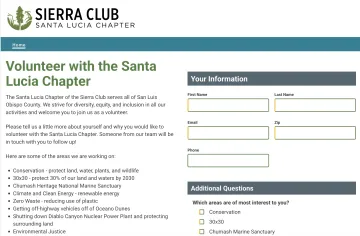
If you've been thinking about volunteering with us, I hope you'll give it a try.
If you already volunteered and somehow got lost in the shuffle, please be persistent. Don't be shy about nudging us. We have one staff member, and almost everything else this Chapter accomplishes is done by volunteers. Sometimes we drop a ball.
Please don't let our dropped ball be the end of your Sierra Club story.
And if you're already volunteering with us, I would love to hear what has kept you here. What made you feel welcome? What helped you find your place? What confused you at first? What would have made the experience better? What would help make it even more rewarding now?
Our strategic planning process reminded us of something deceptively simple:
If we want to do more good work, we need more good people doing it—and we need to take good care of the people who show up.
There is plenty of work ahead of us. But there is also friendship, purpose, laughter, learning, community and the deep satisfaction of knowing that you did something useful for a place you love.
That's the joy of volunteering. And we want to help a lot more people find it.