By Carolina Van Stone
I grew up a city girl. Although born in rural North Carolina, at one year of age, I boarded a train to southern California with my mother and sisters to meet my father, who had arrived ahead and bought a house. It was pretty much an urban sprawl east of Los Angeles.
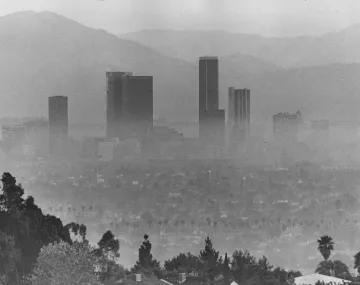
From my street I could see 9,000-foot mountains. Heading west, one ventured along the Santa Ana River, through the canyon that the river had carved, where the engineers built a road from Riverside to the Pacific. Nights were starry and magical until the smog flooded the valley. The snow-capped mountains, brilliant against the blue sky, disappeared. Semi-arid desert temperatures were our get-out- of-school-early card. Yet, one thing was certain, education was in my future.
I inherited my mother’s religion. The Holy Trinity was as habitual as a meal, although the Roman Catholic church and catechism were weekly rather than daily. At seventeen, I experienced an epiphany that may have been my first perception of Interdependence. All strands connect to the center. Throughout life I would advocate that this is a loving universe and, come what may, stand TALL: Think it, Affirm it, Love it, Live it.
I studied applied nutrition, not realizing there’s an enormous difference between “applied” and unprocessed or wholesome. Where were the courses about the web of life, the food web, ecosystems and the transfer of energy? I no longer wanted to be a city girl. I wanted to go “back to nature.” Coastal towns are more fluid, and in a forever changing state. There is sand and sun, and there are waves to ride. So, goodbye southern California coast, hello Central Coast, San Luis Obispo County. Rural! Country roads!
After becoming a Registered Dietitian, I worked with the criminally insane and gained valuable insights that changed my life. I took a leap of faith to increase my “marketability” and moved away from the steady, reliable livelihood and into the void. After some time in Mexico, my husband and I returned to the Central Coast and I landed a job as an Environmental Interpreter, aka naturalist, aka outdoor and environmental science school educator.
I was so out of my league. I was a city girl. In my heart I had faith. I am forever grateful to have landed in education teaching pre-teen sixth graders about ecology - the study of our home, the big blue marble, our planet Earth. I worked with field biologists, wildlife biologists, and environmental science majors. I loved the language. I loved the kids. I loved walking my way through the targeted ecosystems and their habitats that best fit the California Science Standards.
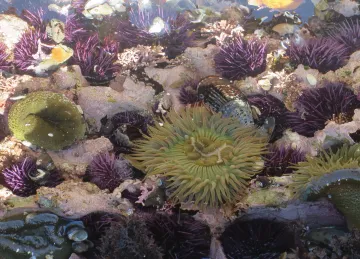
Interdependence refers to: living and non-living parts of the ecosystem sharing the ecosystem. Open ocean, sand dunes, tide pools, riparian, mountain, estuary - the design of the education program was the lived experience. Interdependence is a huge concept that is not easily understood. So what does it mean to live in an interdependent state? How do I find the niche where I am an essential and vital part of the whole?
Can we satisfy our own needs without consideration for the other and be satisfied with the outcome? Allowing you yours and me mine? Do we need to do a better job of sharing? In her closing comments, Robin Wall Kimmerer writes in Gathering Moss: A Natural History of Mosses, that, “We are all profoundly responsible for one another.” That stuck with me. All strands connect to the center. The impacts we have on an ecosystem are far reaching, both beneficially and detrimentally. The living parts are nourished by the non-living parts. What needs to happen for us to see the bigger picture, that ecosystems and habitats must be cared for while in use?
Can long-held livelihoods and practices change? Yes! Ranchers who are intolerant of apex predators killing their cattle have become more receptive to range riders patrolling and diverting those predators. Beavers are now gaining their due after 100,000s of them were killed as pests or for their luxurious pelts. It’s been proven that the architectural design and placement of beaver dams restore riparian habitats, sequester water, and enhance the aquifer. There is more green and wet, along with forest fire prevention, and flooding reduction.
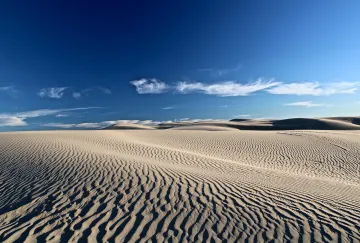
The Oceano Dunes is a wonder of nature. It began forming thousands of years ago, with parts of the broader dune ecosystem dating back roughly 10,000 to 18,000 years to the end of the last ice age. The Santa Maria River helped to shape the sand over the millennia. As part of the larger Guadalupe-Nipomo Dune complex, the landscape is a constantly shifting, active natural habitat. Native American Chumash tribes inhabited the area for up to 10,000 years. But, in the early 1900s, motorized vehicles appeared in this niche and in 1982, the California Coastal Commission created the Oceano Dunes State Vehicle Recreation Area.
If I were inclined to indulge in off-road recreation, of course, I would choose the Oceano Dunes. Millions of particles of sand, moving and undulating in unpredictable ways creating a challenge for even the most skilled motorist. And to be at the edge of the North American continent, sea and sky, eating, drinking, sleeping on the beach. Wow. Spectacular. Is the sky the limit? No! But an adventure and an ordeal are separated by an attitude.
Being in and enjoying nature, as we know, is therapeutic and good for the soul. Are we loving it to death? Can we expand our perception so that our experience of being responsible is described as abundance rather than loss? Can we change traditions to protect rather than exploit? I have lived many years with Standing TALL in mind. Now I recognize that it is about Standing TALLR: Think it, Affirm it, Love it, Live it, Renew it.