 The Magazine of The Sierra Club
How to Create an Aquarium Where Fish Thrive
Because your pets deserve more than a tank filled with water
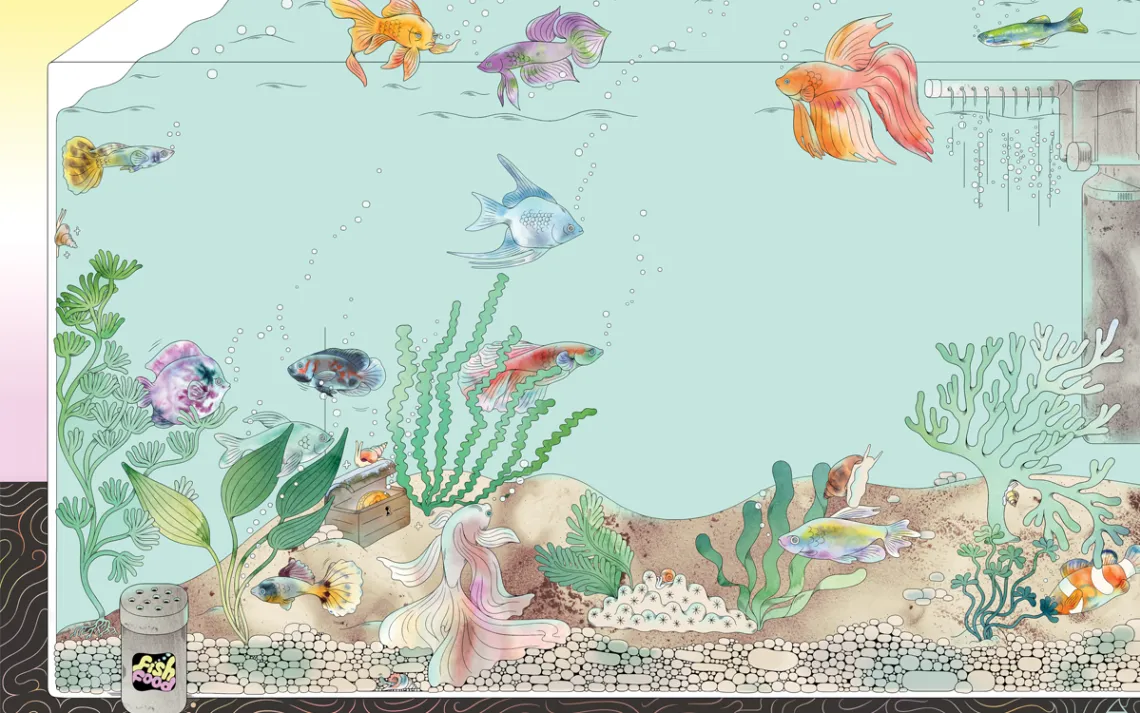
Illustration by Alëna Skarina
From the carp ponds of ancient China to the first glass tanks of 19th-century England, people have been welcoming fish into their hearts and homes for centuries.
The millions of Americans who have aquariums know that they are fun and soothing. Studies show that watching aquatic creatures swim helps people relax and improves their mood. As a fish caretaker, it’s important to return the favor and make sure your fish stay happy and healthy. “Fish are just as smart as every other vertebrate,” says Jonathan Balcombe, author of the book What a Fish Knows. Some species can even recognize human faces!
Before setting up your own home aquarium, here’s what you need to know.
Choosing the right fish
The number one rule for setting up an aquarium is to plan ahead, says Richard Ross, a former biologist at the Steinhart Aquarium in San Francisco. “Fish deserve the best life we can give them,” Ross says. After all, they will spend their entire lives—which could be 20 years!—in the world you create for them.
So which finned critters are right for you? There are thousands of fish species that thrive in aquariums, but each has its own habitat needs. For instance, Siamese fighting fish (bettas) can be extremely aggressive and like to have the tank all to themselves. Colorful tetras, on the other hand, prefer to swim with friends.
To start, look for fish that are easy to care for. Many freshwater fish (like goldfish) and algae eaters (like bristlenose pleco catfish) don’t require a lot of high-tech equipment. They’re also pretty lively and fun to watch.
Sourcing carefully
In general, choose freshwater fish over saltwater species. It’s usually a kinder choice, since many freshwater fish are born in tanks and are used to aquarium life. Can you imagine going from swimming in the ocean to a kiddie pool?
Work with an adult to find a local aquarium group. These communities know how to get fish from responsible sources. You can also find unwanted and abandoned fish to adopt on Facebook and Buy Nothing groups online instead of purchasing them from a pet store.
Setting up the perfect tank
Before you bring home any fish, find out how big they will grow, how much space they need, what they eat, and the temperature they thrive in. Start by talking to experts in local fish shops and aquarium groups. Experienced fish keepers are often willing to share advice and may offer used (even free) gear like filters, lights, and decor.
Begin with a small tank—but no smaller than 20 gallons, to ensure there’s enough space for fish to move and grow. You’ll also need a filter to keep the water clean and full of oxygen. Learn whether your fish species enjoy lots of sun or prefer the dark, and if they need plants (also good for natural filtration) or structures for playing or hiding.
“Be deliberate about what you’re doing,” Ross advises. “The best aquariums take years to build.”
Saying goodbye
If you can no longer keep your aquarium, reach out to local clubs and groups to help rehome your pets and make sure they splash into a great new aquarium. Never release them into lakes or rivers; even small fish can harm native wildlife. Also, it can be very sad when a fish dies, but please don’t flush it down the toilet. This can spread disease.
What about old aquarium water? Use it to water houseplants! Fish poop makes great fertilizer.